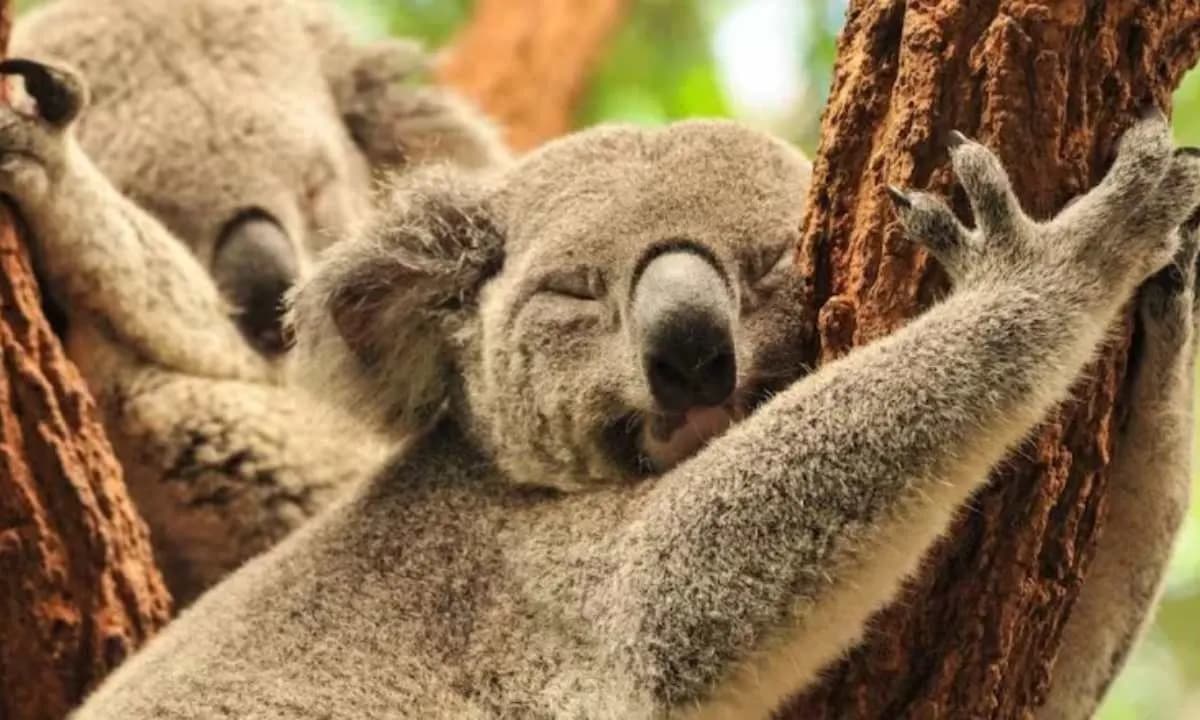
Koalas, those lovable, dozy creatures from Australia, are often celebrated for their adorable habits, especially their ability to sleep for up to 22 hours a day. However, these charming marsupials possess a unique, and rather relatable, way of dealing with romantic rejection, especially during mating season.
Every year, male koalas go all out to attract a mate. They emit loud, deep bellows that resonate through the eucalyptus woodlands. These vocalizations are not just random noises; they serve as a signal of the male’s size and dominance. It’s a classic mating call, designed to capture the attention of nearby females.
But what happens when a female koala is not impressed? Well, rather than persisting or getting upset, the male koala does something surprising – he simply goes to sleep. And not just any sleep – these koalas are masters at taking naps, clocking in between 18 to 22 hours of sleep daily.
If the female koala is uninterested, the male does not waste time or energy on further attempts. Instead, he retreats into slumber, saving his energy for the next opportunity. In this way, koalas have developed an efficient way to handle romantic setbacks: rest, recharge, and wait for a better shot.
This behavior might sound like pure laziness to the untrained eye, but scientists argue that it is a highly efficient survival strategy. Koalas primarily feed on eucalyptus leaves, which are low in nutrients and energy. These leaves can even be toxic in large quantities, so koalas must spend a significant portion of their day sleeping to aid digestion and detoxify.
This extended rest is not just a luxury—it’s essential for their survival. The sleep helps them process the food they’ve eaten, which is low in energy, and ensures they don’t burn unnecessary calories trying to court an uninterested mate.
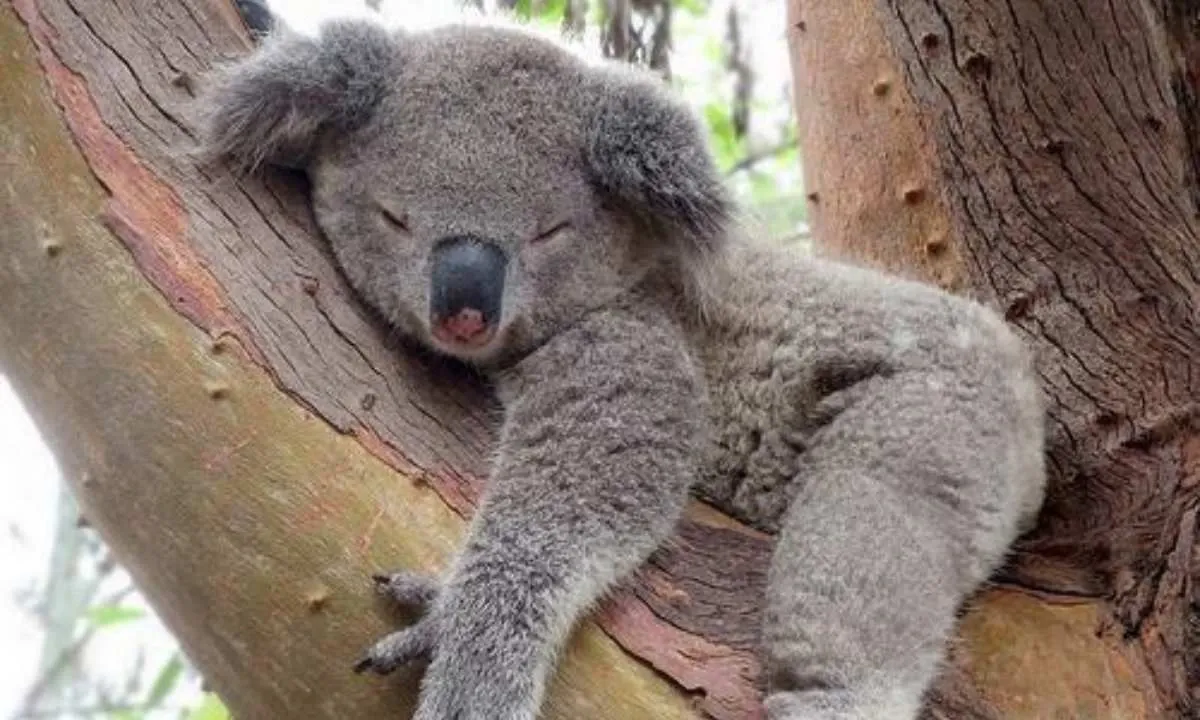
Interestingly, this efficient behavior is not just about energy conservation for the next day. It also allows koalas to recover emotionally. While a nap might not be the traditional way to heal a broken heart, it offers a temporary escape—a way to let go of frustration and forget about rejection. It’s a little like hitting the reset button.
So, while sleep may seem like an odd response to heartbreak, it turns out that for koalas, it’s the perfect way to deal with the emotional and physical demands of mating season.
But what happens when a female koala is actually interested? When the right female arrives, a male koala is ready to spring into action. However, the process is not always smooth. Despite the male’s loud calls and assertive behavior, the female koala is notorious for rejecting advances. Researchers have observed that female koalas often successfully reject males, sometimes biting, scratching, or even jumping to a different tree to avoid mating.
In fact, females may reject several males before they finally accept one, choosing a mate based on their bellow rather than size or dominance. It turns out that koala females value uniqueness and variety—each year, they mate with a different male, despite the dominance signals conveyed by the males’ bellows.
The mating ritual itself is quite straightforward, though not particularly gentle. When a female accepts a male, the two quickly mate, with the male biting the female’s neck before copulating briefly. Like many other marsupials, koalas have unique reproductive anatomy—males possess a double-headed penis, while females have two vaginas. This fascinating feature plays a key role in their reproduction, allowing the female to carry the offspring for a little over a month before giving birth.
Koalas’ mating behavior is a reminder that nature has an incredible way of ensuring survival and reproduction in even the most unconventional ways. The koalas’ strategy of energy conservation, paired with their surprisingly human-like response to rejection, sheds light on the delicate balance between nature’s demands and the need to conserve resources.
Though their lives may seem slow and lazy, there’s more to these cuddly creatures than meets the eye. By simply going to sleep after rejection, koalas demonstrate a quiet resilience—a lesson that sometimes, taking a break is the best way to move forward.