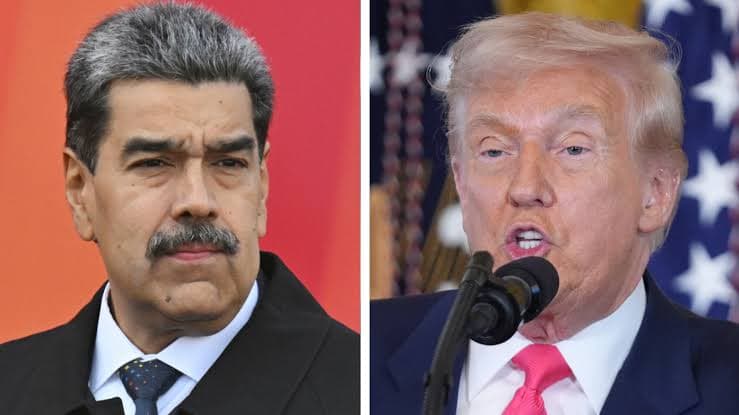
President Donald Trump recently announced that Venezuelan leader Nicolás Maduro is eager to open dialogue with the U.S., despite the current metaphorical storm clouds looming over both countries. Trump made these comments while dismissing any plans for land-based military strikes against Venezuela, a step he emphasized hasn’t been considered or authorized yet. This announcement came after the U.S. designated a Venezuelan-linked cartel, granting authority to target Maduro’s assets if deemed necessary—though no action like this has been initiated.
The situation is charged with complexity. The Trump administration, with Secretary of State Marco Rubio at the fore, is keeping Congress in the loop about measures to clamp down rampant drug trafficking routes stretching through Venezuela and Mexico. But more than keeping them informed, Trump echoed his critique of past immigration policies under President Biden, pointing out that narcotics and illegal immigration are interwoven challenges that need strategy shifts.
Trump’s rhetoric also pointed at the integral need to safeguard sensitive operational details, a swipe perhaps at the undercurrents of leaking classified intelligence, risking the safety of U.S. military and intelligence operations involved in these efforts. Moreover, it raises the question of how Maduro’s willingness to ‘talk’ stacks against historical skepticism and whether it’s a change of heart or a temporal strategy.
As Trump sharply puts it, sharing the same, usual line—”it’s all about drugs”—the narrative continues its play across the political spectrum. But as diplomatic whispers echo, the open-ended question remains: Is Maduro ready to engage in substantial dialogue, or is it a tactical move in a high-stakes game? The world watches.
Disclosure: We may earn a commission when you make a purchase through the ads.