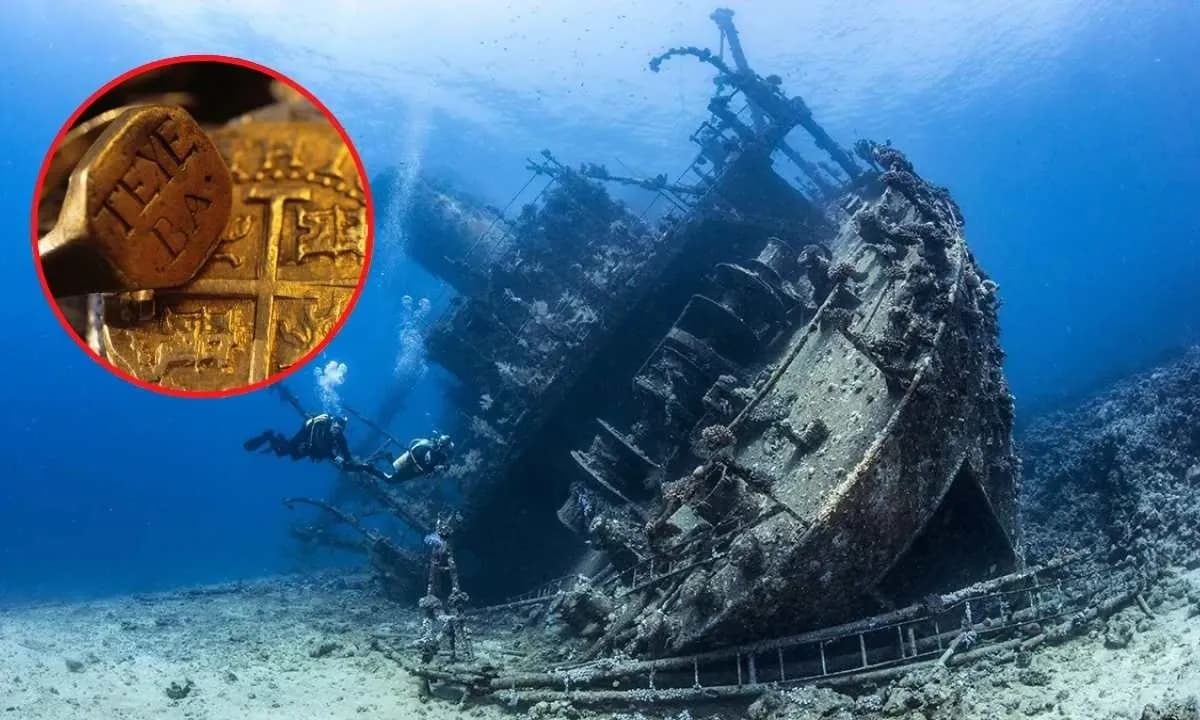
Off the coast of Madagascar, the waters have always been rich with stories of adventure and peril. Yet none can match the tale of the Nossa Senhora do Cabo. Once a Portuguese galleon bearing untold treasures, this legendary ship vanished in 1721 after being seized by the infamous pirate Olivier “The Buzzard” Levasseur. For three centuries, treasure hunters and historians scoured the seas, driven by whispers of riches lost to time.
In July 2025, the quest drew new attention when a team of American archaeologists announced they had uncovered the wreck of the Nossa Senhora do Cabo, off the coast of Madagascar. The ship, laden with gold, silver, and a stunning collection of rare artifacts, is now believed to contain treasures valued at a staggering $138 million.
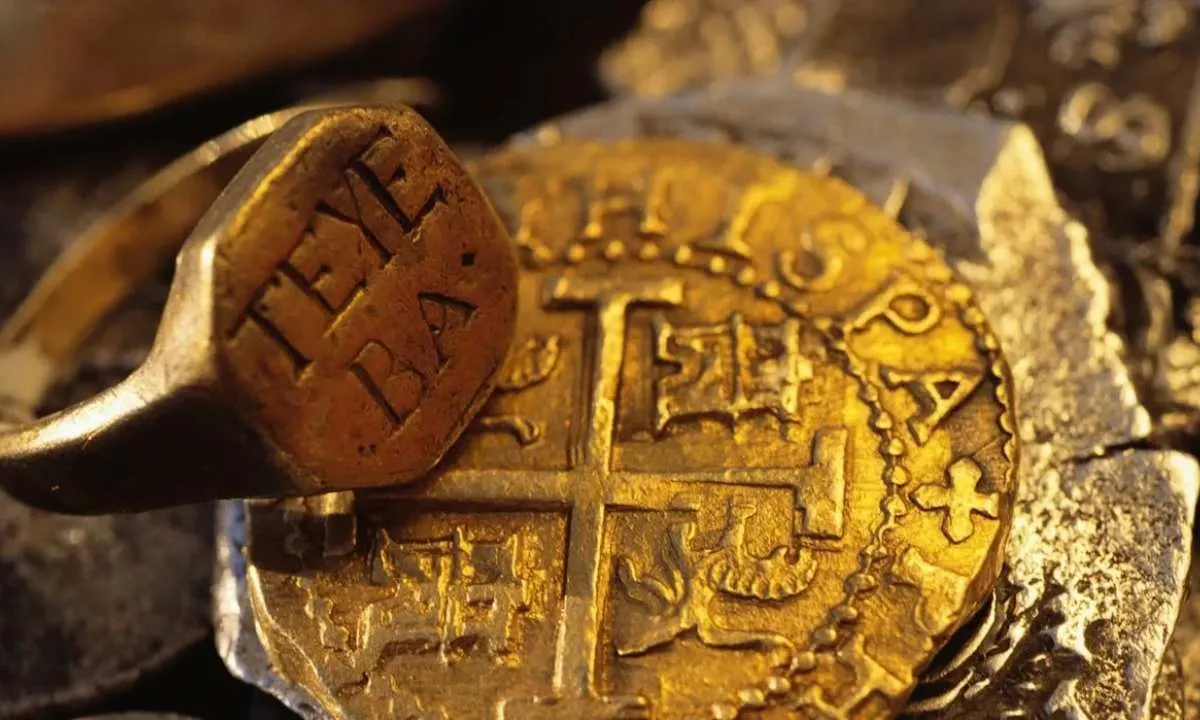
There are over 3,000 artifacts, including gold, porcelain, rare coins, and religious relics. If confirmed, this could be one of the richest pirate treasure finds in history, worth about $138 million.
What made the discovery even more thrilling was the legacy of the ship itself. The Nossa Senhora do Cabo was on a fateful journey from Goa to Lisbon, filled to the brim with valuables from India, when it met its tragic fate. This was not just a pirate tale; it involved fierce battles on the high seas, where the bravado of men like Levasseur turned the tide of history.
Levasseur, known for his cleverness and brutality, had orchestrated the attack with deadly precision. The seizure of the ship became a monumental event, one where pirates sought not just wealth, but notoriety. After the capture, Levasseur famously left behind a cryptic note about the treasure, leading to generations of treasure hunters attempting to decode its hidden messages.
‘Finding the Nossa Senhora do Cabo is nothing short of a miracle. The historical value is immense, but the treasures could change everything.’
As news of the discovery spread, excitement erupted. Richard, one of the research lead archaeologists, said.
Historians estimate that the wealth on board represents a pivotal moment in the Golden Age of Piracy.
This is more than just the story of riches; it’s the revival of legends long thought sealed underwater.
The story begins in 1721. Nossa Senhora do Cabo, which means “Our Lady of the Cape,” was on a long journey from Goa, India (then a Portuguese colony), to Lisbon, Portugal. On board was a valuable cargo: gold and silver bars, silks, Chinese porcelain, jewels, religious objects, and even spices like nutmeg. The ship also carried high-ranking passengers—Portugal’s outgoing viceroy and the Archbishop of Goa—as well as about 200 enslaved people taken from Mozambique.
But disaster struck. The ship got caught in a terrible storm near Réunion Island in the Indian Ocean. It lost its masts and most of its cannons. Weak and barely floating, it dropped anchor, hoping for safety. That’s when the pirates showed up.
Two of the most feared pirates of the time, Olivier Levasseur (also called “La Buse” or “The Buzzard”) and John Taylor, spotted the damaged vessel. They quickly took over the ship with little resistance. Most of the crew was already on shore, and the pirates disguised themselves as British traders at first. After looting the treasure, they towed the ship about 400 miles to a pirate base called Île Sainte-Marie, now known as Nosy Boraha, off Madagascar’s east coast.
Back in the early 18th century, Nosy Boraha was one of the most dangerous pirate hideouts in the world. The island had natural harbors and almost no law enforcement. Pirates from Europe used it to rest, fix their ships, and store stolen goods. It was here that Levasseur and Taylor divided the loot—and scuttled the ship to hide the evidence.
What happened to the enslaved people, the viceroy, and the archbishop remains unclear. Records say the viceroy was ransomed for $2,000. But at least 60 of the enslaved people reportedly died during the raid, and the rest were never accounted for.
After centuries of mystery, a team of U.S. archaeologists led by the Center for Historic Shipwreck Preservation began searching the waters around Nosy Boraha in 1999. They focused on an area called Îlot Madame. Over 16 years, they used sonar, underwater excavations, and old maps to investigate several shipwrecks. One site, buried under sand and coral, started to match the historical details of Nossa Senhora do Cabo.
They uncovered over 3,300 objects from the wreck site—gold coins, Chinese porcelain, religious statues, Mughal-period ceramics, cowrie shells, exotic seeds, and an ivory plaque inscribed with the letters “INRI,” short for the Latin phrase “Jesus of Nazareth, King of the Jews.” These items strongly suggest the ship was on a religious and diplomatic mission—just as the Cabo had been.
Researchers even found cannon parts and timber that matched the size and shape of a Portuguese East Indiaman ship—just like the Cabo. They believe that after the pirates took it over, Levasseur renamed it Victorieux (meaning “Victorious”) and made changes to the structure, like removing a bridge to make it faster and reducing the number of cannons.
While some legends claim the pirates took all the treasure, this discovery shows that much was left behind. Among the recovered items are gold coins from the Ottoman and Sherifian empires, religious artifacts likely crafted in Goa, and massive amounts of Chinese export porcelain—many pieces still beautifully intact.
The researchers say the wreck’s location and contents perfectly match the historical accounts of the Nossa Senhora do Cabo. Its cargo, ship design, and even the types of wood used for construction all point to this being the long-lost Portuguese ship captured in one of history’s most dramatic pirate heists.
The aftermath of such a discovery is still unfolding. While the treasure itself is being carefully cataloged and preserved, questions linger about Levasseur’s own legacy. Did he hide another treasure as he threatened on his deathbed? The intrigue surrounding his final words leaves the door open for more explorations.
As the news settles, many wonder: Are we witnessing something akin to a real-life Pirates of the Caribbean adventure? What does this mean for treasure hunting and the preservation of our history? As each artifact resurfaces from the depths, they tell stories and answer questions long lost to the tides.
What is it about buried treasure that draws us in? Is it the lure of wealth or the mystery of human ambition and greed that fuels our imagination? As we await more details on the treasure of the Nossa Senhora do Cabo, the world watches, captivated by the promise of discovery.