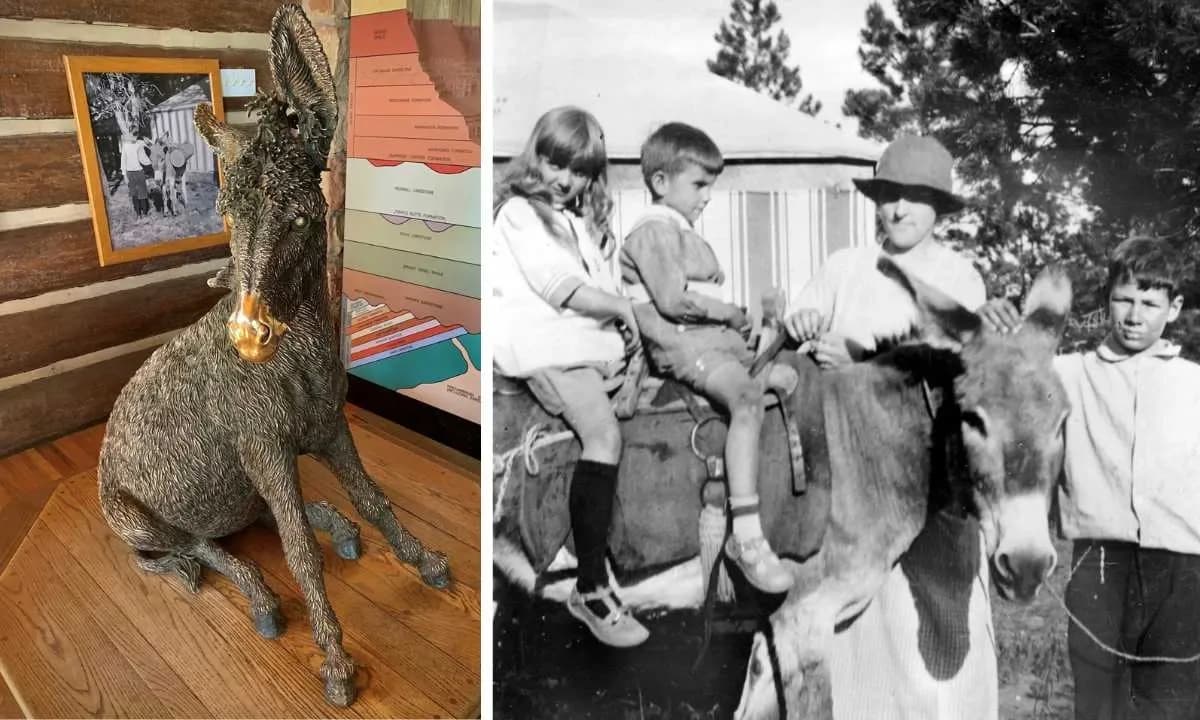
For over a century, visitors to the Grand Canyon’s North Rim would find a small bronze statue sitting quietly in the sunroom of the Grand Canyon Lodge. The figure wasn’t just decorative—it told a story. That statue was Brighty the Donkey, or more formally, Brighty the Burro. His nose, polished by thousands of hands, brought good luck and was a silent bridge between generations of travelers. But with the recent devastating fire that swept through the North Rim, Brighty may now be gone—again. Not many knew his real story, but those who did are now mourning the loss of a legend who already died once, long ago.
Brighty was a real burro who lived in the Grand Canyon from the early 1880s to 1922. Like many burros at the time, he was left behind by a prospector when the miner gave up the search for gold. The abandoned donkey stayed behind, living alone but not forgotten. When he was first spotted, Brighty was standing outside an empty tent near Bright Angel Creek. The name stuck, and he became known as Brighty—short for Bright Angel.
Unlike many animals, Brighty had a mix of wildness and familiarity with humans. He was known for his love of pancakes and would hang around tourists, the McKee family who managed the North Rim’s first visitor camp, and a game warden named Uncle Jimmy Owens. In summers, he’d help carry water from springs to camp, though he had a clever way of refusing tasks he didn’t like. Hunters who tried to load him with heavy gear soon found Brighty would rub himself against trees until the load slipped off.
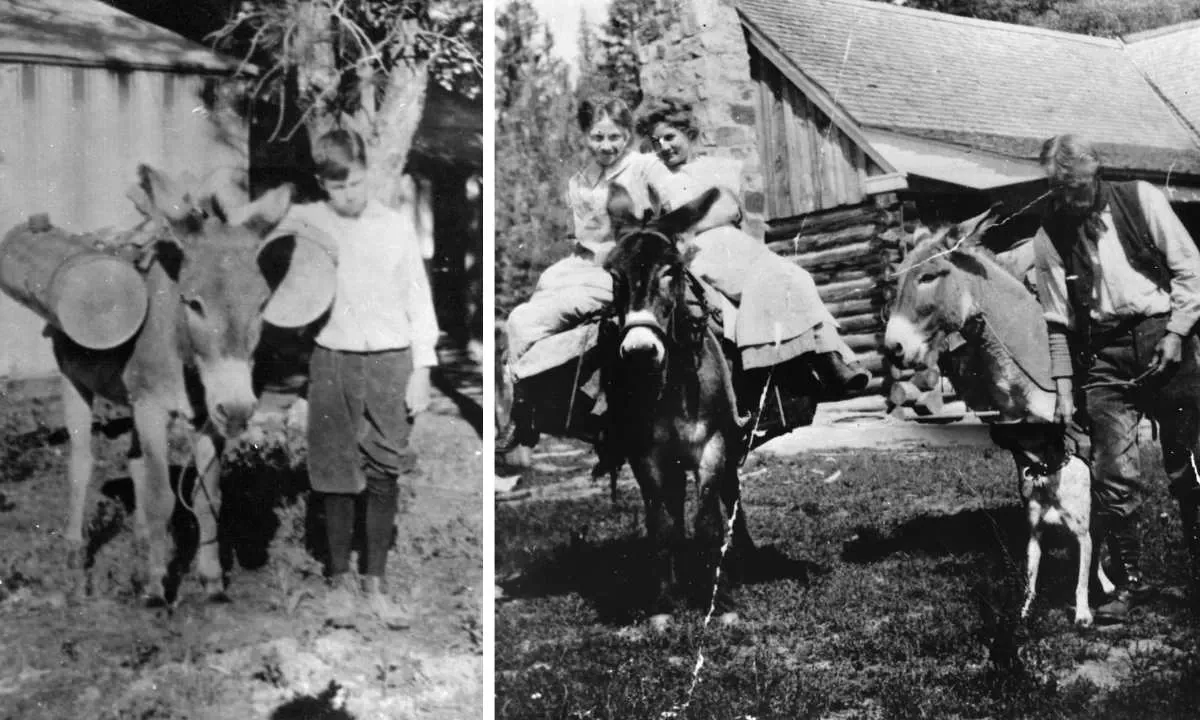
He wasn’t just a pet or a helper. Brighty had a life that fascinated people. He likely crossed paths with early tourists, park rangers, and possibly even Teddy Roosevelt during a mountain lion hunt in 1913. Some believe Brighty was one of three burros in the president’s party, though Roosevelt never mentioned him by name. What is confirmed, however, is that Brighty became a familiar sight along the Canyon’s North Rim, and in 1921, was even honored as the first to cross a new suspension bridge across the Colorado River, becoming the “bridge mascot.”
But Brighty’s story took a dark turn. In the winter of 1922, he was snowed in with two men in a cabin at the Bar Z Ranch. With food supplies running low, the men made a horrific choice—Brighty was killed and eaten to survive. When his remains were discovered in spring, cowboys respectfully buried him, hats in hand. For many, this was the end of Brighty’s journey.
Years later, the story resurfaced in a different form. In the 1950s, children’s book author Marguerite Henry came across a 1922 article written by Thomas McKee, the son of Brighty’s caretakers. Fascinated, she traveled from Illinois to the Grand Canyon, retracing Brighty’s steps. She rode a mule down Bright Angel Trail, drank from the creek, and even sampled the desert plants Brighty once ate. The result was Brighty of the Grand Canyon, a book that won the William Allen White Children’s Book Award and introduced Brighty to a whole new generation.
The book was emotional and adventurous, featuring mountain lion attacks, murder, and a young boy who helps Brighty seek justice. But unlike real life, it ended with Brighty surviving. The story was later turned into a 1967 film. To promote the movie, producer Stephen Booth commissioned a 600-pound bronze statue of Brighty. The statue was later donated to the National Park Service and displayed at the South Rim Visitor Center.
But the statue’s journey wasn’t smooth. Around the same time, the National Park Service had been eliminating wild burros from the park. Between 1924 and 1931, rangers killed over 1,400 burros. Between 1932 and 1965, they shot 370 more. Biologists saw the animals as non-native and harmful to the Canyon’s ecosystem. Burros competed with native animals like bighorn sheep for food and water, and their presence was blamed for damaging vegetation and causing erosion.
As the statue sat at the visitor center from 1968 to 1977, it clashed with the park’s ongoing efforts to remove feral burros. Visitors, unaware of the park’s policies, saw the statue as a tribute to beloved animals of the West. This contradiction led to public backlash when people realized the same burros celebrated by the statue were being killed. In 1978, the Park Service quietly put Brighty’s statue in storage, hoping to avoid more controversy.
Instead, it sparked the “Bring Brighty Back” movement. Supporters flooded the Park Service with letters and protests. Even Henry joined the cause. Around this time, the Fund for Animals raised $500,000 to rescue the remaining Canyon burros. Over 14 months in the early 1980s, 577 burros were airlifted from the Canyon and relocated to a ranch in Texas, where many were adopted. The rescue was dubbed “a donkey Dunkirk.”
With the burros gone and the protest calmed, the Park Service brought Brighty’s statue back out in 1980, placing it in the Grand Canyon Lodge on the North Rim—the same spot where Brighty had spent his happiest years. The lodge was built on the site of the McKees’ original tent camp, making it the perfect home for the statue.
For over four decades, the statue sat quietly in the sunroom, next to massive windows overlooking the Canyon. Visitors rubbed his nose for good luck, and children posed for pictures. The statue became one of the most photographed items in the lodge, second only to the view itself.
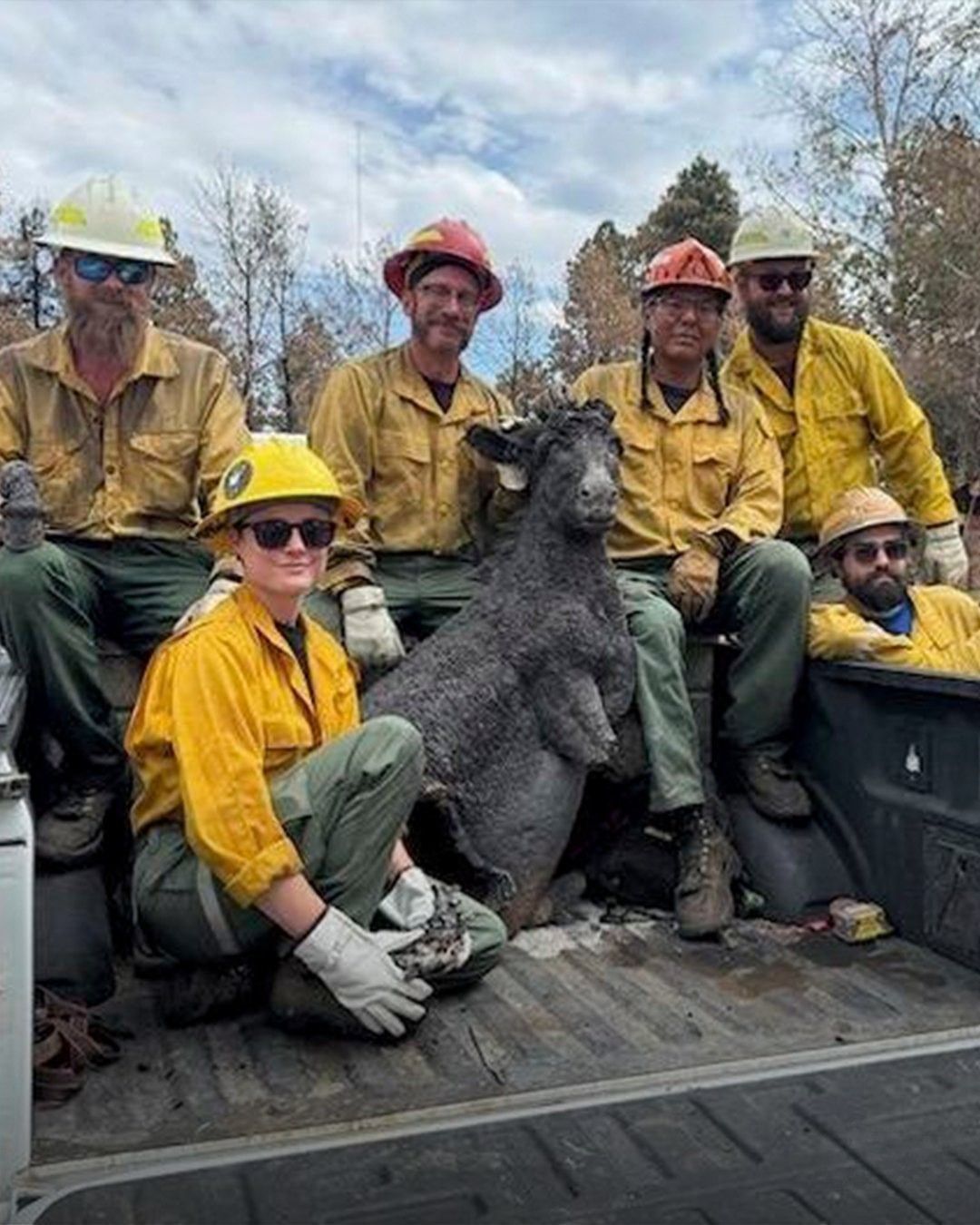
That’s what makes the recent fire at the North Rim even more heartbreaking. The Grand Canyon Lodge and surrounding areas have suffered serious damage, and as of now, no one knows if Brighty’s statue survived. Some hope remains—bronze can withstand high temperatures—but no one has confirmed the statue’s condition. For many, the thought of Brighty being lost in the fire feels like a second death.
His real story—filled with independence, tragedy, and legend—has now become a symbol of how easily we can forget the small lives that once made big impacts. Brighty wasn’t just a burro. He was a part of Canyon history, literature, film, and conservation debates. From being abandoned to becoming a bridge-crossing mascot, a book hero, a film icon, and the center of a controversy, Brighty’s legacy touched many lives.
Whether or not the statue survives, Brighty’s story will continue, because somewhere in the vast Grand Canyon, the spirit of that shaggy little burro still roams, “forever wild, forever free.”