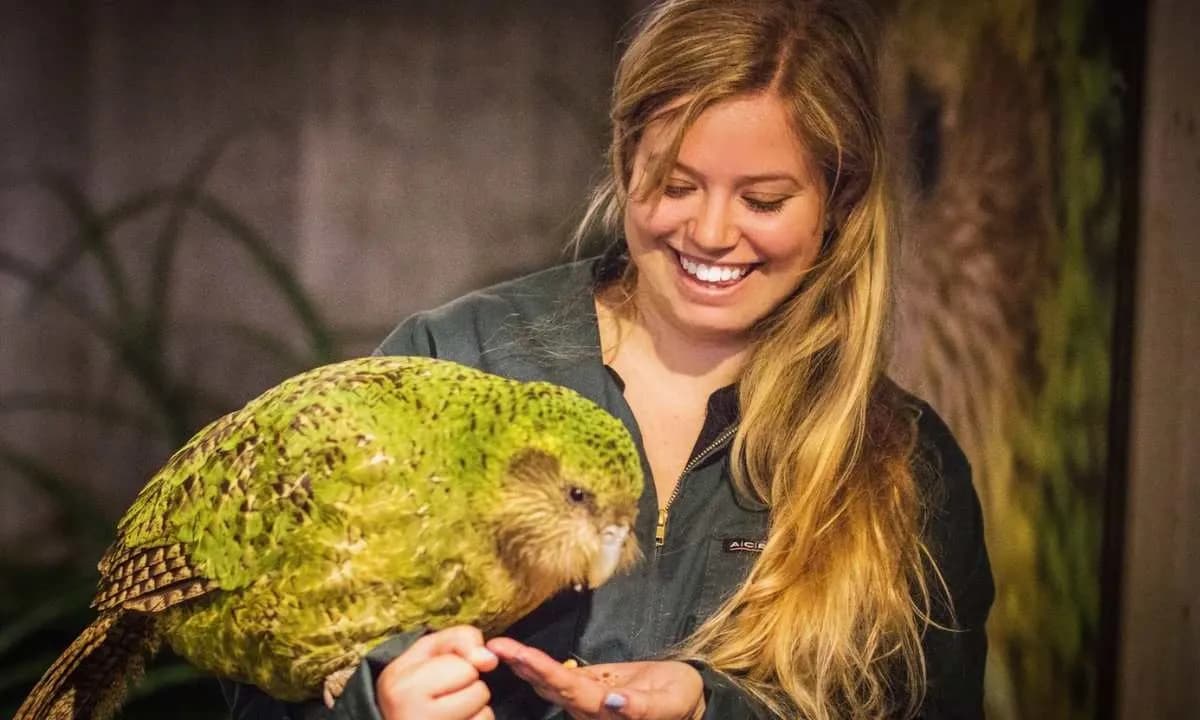
Once upon a time in the lush forests of New Zealand, the kākāpō thrived with its bold emerald feathers and an equally bold presence. These nocturnal parrots would roam freely, climbing trees and procreating without a care in the world. They evolved with some of the most unique traits found in any bird; their inability to fly became a hidden strength in an untouched paradise.
Kākāpōs are chunky, moss-green parrots with owl-like faces, short wings, and powerful legs. Males can weigh up to 9 pounds (4 kilograms) and reach 25 inches (64 centimeters) long. Their name in Māori, kākāpō, means “night parrot,” perfectly fitting their nocturnal habits. By day, they rest under dense forest cover. By night, they waddle through the underbrush or climb trees using claws and their stubby wings for balance.
They can’t fly—but they can climb high and parachute down using their wings. This odd movement is part of their unique set of evolutionary tools, developed in a land once free of mammalian predators. When scared, instead of running or fighting, a kākāpō freezes, relying on its green camouflage to blend in with the leaves. This strategy worked fine for millions of years — until humans and their animals showed up.
About 700 years ago, Polynesians arrived in New Zealand and brought the first mammalian predators — dogs and rats. Later, European settlers introduced cats, stoats, and weasels. Suddenly, the kākāpō’s freeze-and-hide instinct made it an easy meal. Its strong scent and booming mating calls didn’t help either. By the 1990s, fewer than 50 were left alive.
Today, there are 243 known kākāpōs, and every one of them has a name, a tracking device, and a health record.
However, all that changed when humans arrived. The unprecedented introduction of predators like rats and stoats decimated their numbers, exploiting the kākāpō’s natural instinct to freeze when frightened. With no evolutionary defense against such threats, this once-thriving species spiraled into near extinction. By the late 1990s, the population had plummeted to a shocking low of just 51 individuals.
This astonishing decline forced conservationists into action. In 1995, the Kākāpō Recovery Program was initiated. Led by passionate teams of scientists, volunteers, and iwi (Māori tribes), the plan was set to bring these incredible creatures back from the edge of the abyss.
Conservationists worked tirelessly to establish predator-free sanctuaries on remote islands, where the kākāpō could live and breed safely. They meticulously monitored the birds through a groundbreaking system that tagged each kākāpō, allowing tracker technologies to provide critical insights into their behaviors and mating patterns. Slowly, hope began to brew.
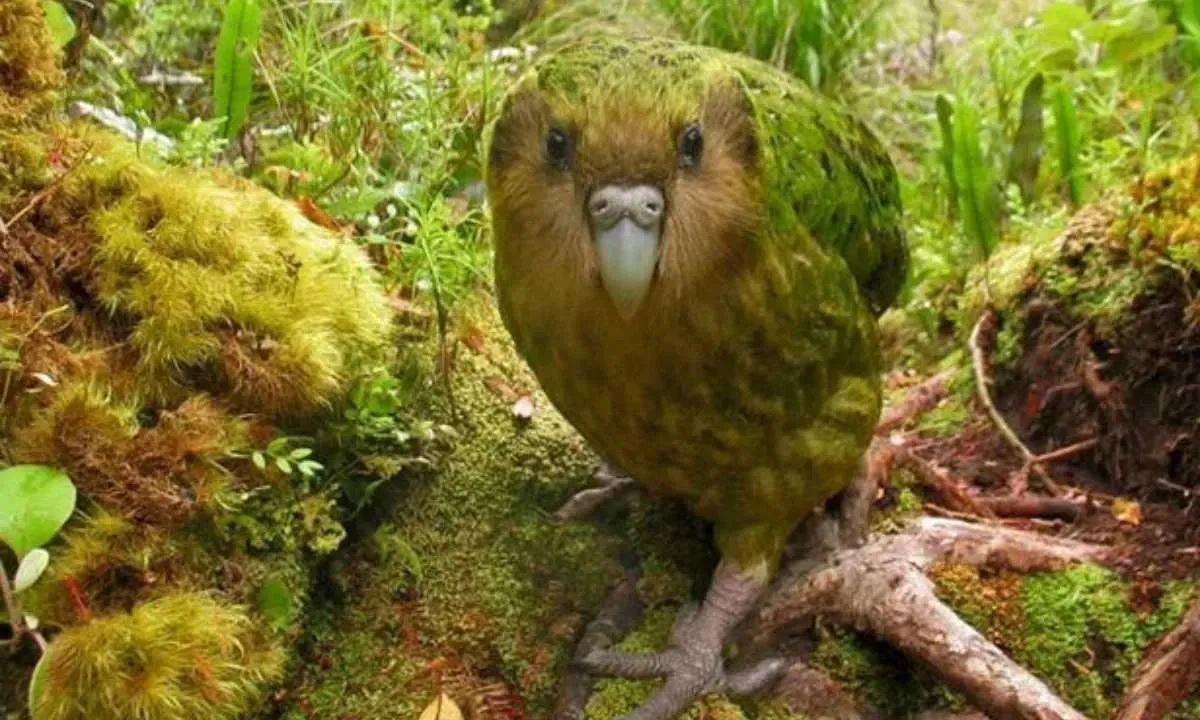
Recent reports indicate that the kākāpō population has seen a welcome increase, with numbers now estimated to be around 252. The most exciting news? After a four-year hiatus, breeding is expected to resume in 2026, promising hope for growing this incredible species even further. Conservationists are looking forward to the largest breeding season on record, as kākāpō only breed during certain conditions when their primary food source, the rimu tree, is abundant with fruit.
Sanctuary Mountain Maungatautari and Anchor Island are significant conservation areas where these unique parrots can thrive while being protected from predators. Watching a kākāpō in its homeland, witnessing its gentle demeanor, provides a deep connection to nature and a gentle reminder of the fragile balance within ecosystems.
These birds live long — some have been known to live up to 100 years — but they breed rarely, only once every few years when certain native trees like rimu produce enough fruit. Their mating ritual is as strange as the birds themselves. Male kākāpōs gather on ridges and build shallow bowl-shaped “booming bowls” in the dirt. Then, for months, they call out to females using deep, tuba-like booms and high-pitched chings. Some males even lose half their body weight while booming all night long.
The females, after walking miles to hear these calls, mate and then raise their chicks alone. They lay up to four eggs, often in tree hollows or dense brush, and leave them at night to forage. The chicks are fragile, and early conservation efforts had to involve nest cameras, artificial incubation, and even hand-feeding.
One bird, Sirocco, became unexpectedly famous when he tried to mate with a human’s head during a BBC documentary. He later became New Zealand’s official “Spokesbird” for conservation, bringing global attention to the species. Conservationists even invented a special “ejaculation helmet” to collect sperm for artificial insemination, thanks to Sirocco’s unique habits.
Despite careful breeding efforts, the species still faces challenges. Over 60% of kākāpō eggs don’t hatch, largely due to inbreeding from a genetic bottleneck. But scientists are sequencing the genome of every bird to manage breeding better. Supplementary feeding and advanced monitoring help encourage healthy chicks, especially female ones, since the species needs more breeding-age females to thrive.
In recent years, there’s been a glimmer of hope. A record 72 chicks fledged in 2019, and in 2023, kākāpōs were reintroduced to mainland New Zealand for the first time in nearly 40 years. Though a few birds tried to escape by climbing over fences, most settled in well. Each bird is closely tracked using radio and GPS collars, and conservation staff check on them regularly.
Despite serious progress, the fight isn’t over. The kākāpō still faces challenges such as low genetic diversity and susceptibility to disease. Ongoing efforts to expand their habitat and boost numbers are crucial, and the involvement of the global community is more critical now than ever.
The story of the kākāpō is not just that of an endangered species but a testament to redemption and hope. It speaks volumes about how human errors can tip the scales of nature, yet also how human resolve can restore balance. As the world holds its breath for the breeding season, it makes us reflect: what else might we save if we come together to protect our planet’s unique treasures?