At 12, Lachlan Hart saw an ancient amphibian fossil in a museum and was fascinated. About a quarter of a century later, he helped give that same creature its scientific name.
In 2023, Hart and colleagues formally described Arenaerpeton supinatus, an animal that lived about 240 million years ago. A specimen that had caught his attention as a child had become part of his own research.
A fossil found in building stone
The Australian Museum's announcement traces the specimen to rocks intended for a garden retaining wall in New South Wales during the 1990s.
Its discoverer was retired chicken farmer Mihail Mihailidis. The fossil was subsequently donated to the Australian Museum, where Hart encountered it in 1997.
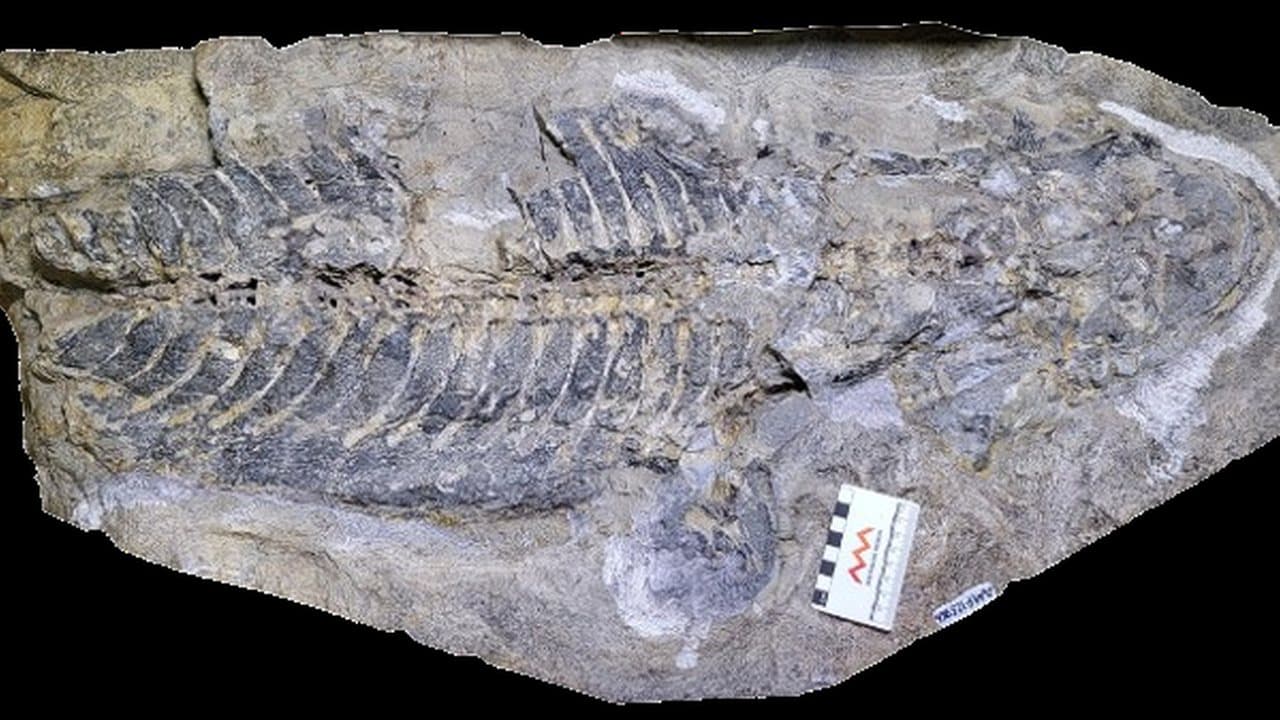
The remains belonged to an amphibian, rather than a dinosaur. They preserved much of the skeleton and traces of the outline of its skin, making the specimen especially valuable to researchers.

Photo: Dietmar Rabich. Source. CC BY-SA 4.0. Resized; JPEG conversion. Image adaptation shared under the same CC BY-SA 4.0 license.

A childhood interest became scientific work
Australian Geographic interviewed Hart about that connection. As a child interested in prehistoric life, he had no way to know that he would later study the object before him professionally.
Hart went on to work with the Australian Museum and UNSW Sydney. The research formed part of his doctoral work, with colleagues bringing their own expertise to the formal description.
The animal belonged to an extinct group called temnospondyls. Its estimated length was around 1.2 meters, and its jaws carried prominent teeth.

Photo: Dietmar Rabich. Source. CC BY-SA 4.0. Resized; JPEG conversion. Image adaptation shared under the same CC BY-SA 4.0 license.

A name after decades in the collection
ABC News reported on the identification in August 2023. The name Arenaerpeton supinatus refers to a sand creeper preserved on its back.
The description added a species to the scientific record and connected a familiar museum specimen with a fuller account of its place in prehistoric Australia.
For Hart, it also completed an unusual circle. The child who once stopped to look at the fossil had become one of the scientists able to explain what it was.
Featured image: Published scientific figure showing the Arenaerpeton supinatus holotype, AM F125866: skull and partial skeleton. Photo: Stephen F. Poropat, Phil R. Bell, Lachlan J. Hart, Steven W. Salisbury and Benjamin P. Kear. Source. CC BY 4.0. Cropped to 16:9 and resized.
