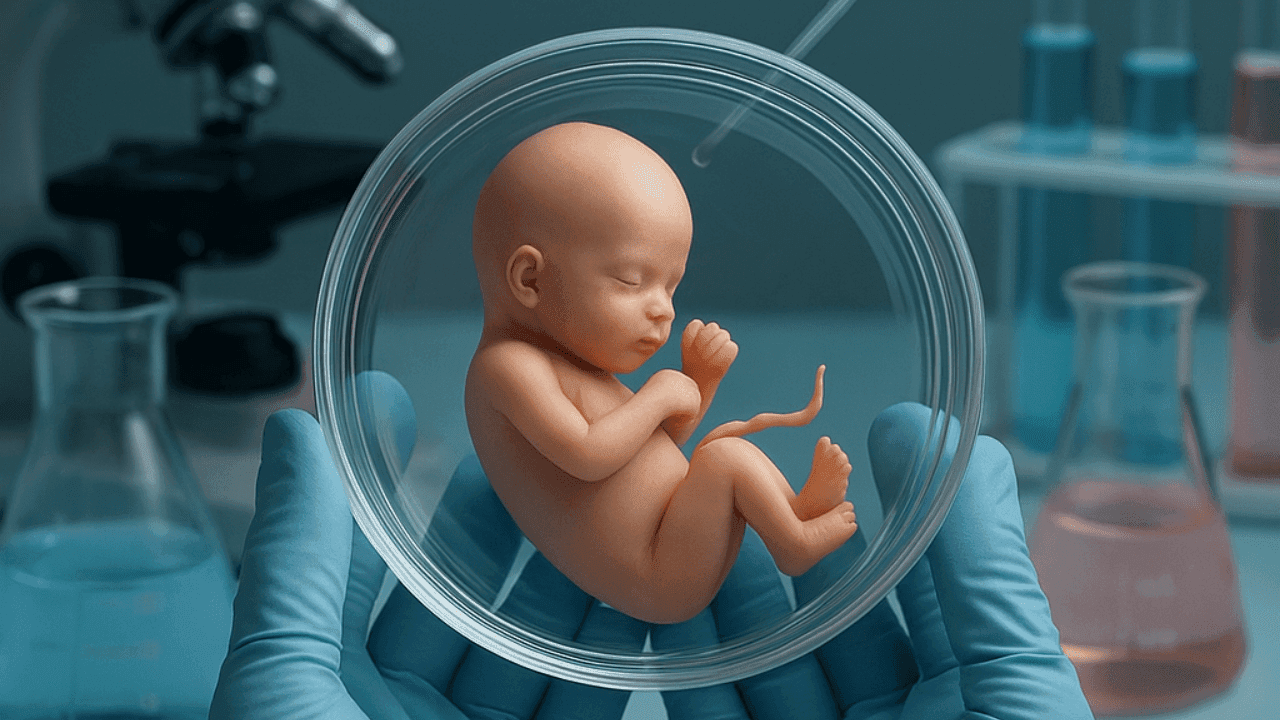
A groundbreaking leap in fertility science is bringing the idea of lab-grown children closer to reality. Scientists working on a technique known as in vitro gametogenesis (IVG) are developing ways to grow human sperm and eggs entirely in a lab — removing the need for traditional reproduction.
According to the UK’s Human Fertilisation and Embryology Authority (HFEA), research in this area has shown significant progress. The technique, already successful in mice, could be applied to humans within the next 10 years.
The implications are vast: same-sex couples, individuals facing infertility, and even multi-partner family structures could one day conceive genetically related children without donors. Some even predict that sex could become obsolete for reproduction.
However, with scientific promise comes ethical concern. The ability to produce embryos from lab-grown gametes opens the door to genetic screening and the possibility of selecting desired traits—raising fears about the creation of so-called “designer babies.” Critics warn of a future resembling the sci-fi film Gattaca, where genetic makeup defines societal worth.
Despite the controversy, supporters argue IVG could democratize fertility and reduce reliance on egg and sperm donors. But before any human applications are approved, questions of safety, regulation, and ethics must be addressed.