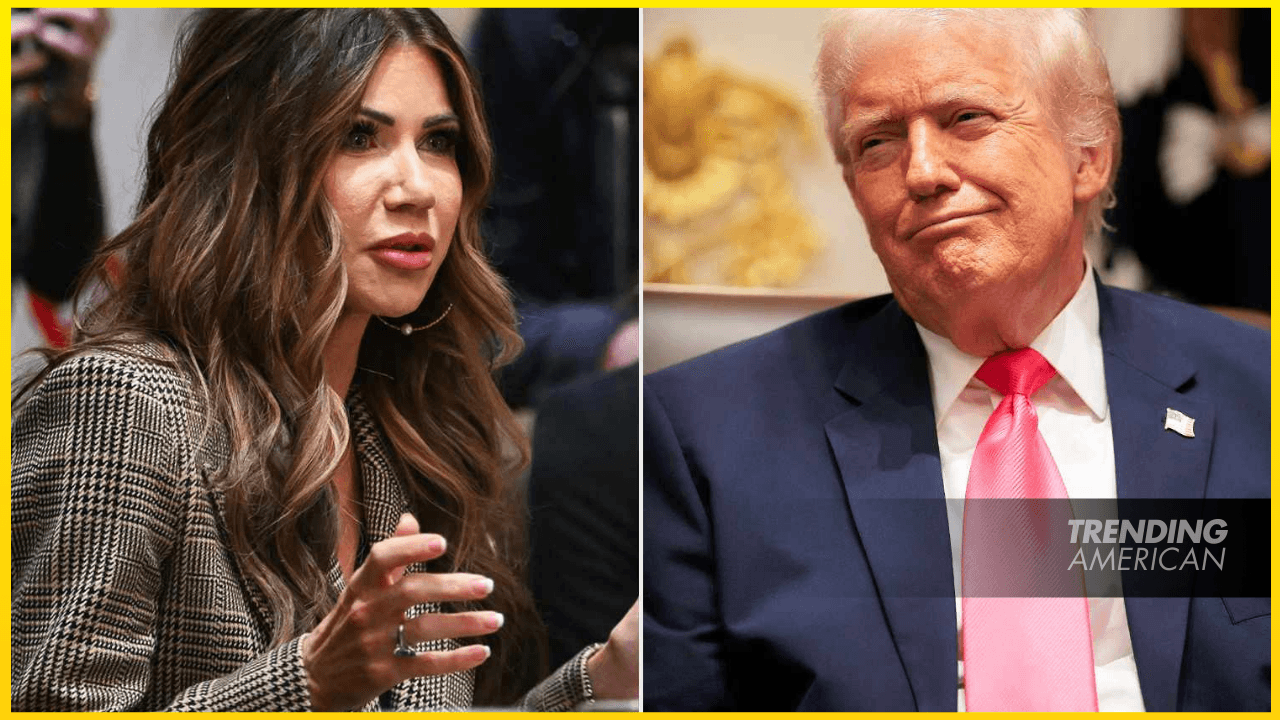
During the White House’s final cabinet meeting of 2025, Homeland Security Secretary Kristi Noem turned to President Donald Trump with a playful but pointed compliment. “Sir, you made it through hurricane season without a hurricane… even you kept the hurricanes away,” Noem said, drawing a round of laughter from members around the room. The moment, captured on video and widely circulated online, quickly became a talking point for commentators and outlets reviewing the year’s political theater.
The remark was delivered in the context of a year-end gathering with top federal officials, including Noem and other cabinet members; it was meant as a lighthearted toast or tribute to the president’s leadership. The humor landed in a moment when hurricane season that year was notably quiet in the continental United States, a fact some observers pointed to as a cause for the remark’s viral spread. Nonetheless, meteorologists quickly noted that hurricanes are not something a single person can “keep away.” The absence of landfall was attributed to atmospheric conditions, not presidential action.
Reaction to the moment ranged from amusement to mockery. Several outlets labeled the line bizarre or sycophantic, and social media quickly filled with clips and commentary dissecting whether such rhetoric serves public understanding of disaster preparedness. Some analysts argued that the quip showcased how leaders sometimes frame disaster-season outcomes as proof of effective governance, while others warned it risks trivializing the real uncertainty surrounding extreme weather events.
Context matters: at year-end meetings, officials often offer praise or playful barbs to signal unity and resolve. Noem’s compliment targeted the administration’s perceived competence under Trump and suggested a narrative in which leadership correlates with favorable weather outcomes. Critics, however, cautioned that linking meteorological trends to political leadership can muddy public perception, especially for communities that rely on federal disaster responses from agencies like FEMA and the National Weather Service.
The moment’s notoriety was amplified by coverage from outlets including People, The Independent, AL.com and others, which highlighted the exchange as a memorable, if unusual, example of political rhetoric in action during a crisis-influenced year. As the public discussion continues, the episode serves as a reminder of how a single line in a high-profile setting can become a viral prompt for broader debates about accountability, the messaging around disaster preparedness, and the public’s appetite for lighthearted politicking in times of real risk.
Disclosure: We may earn a commission when you make a purchase through the ads.