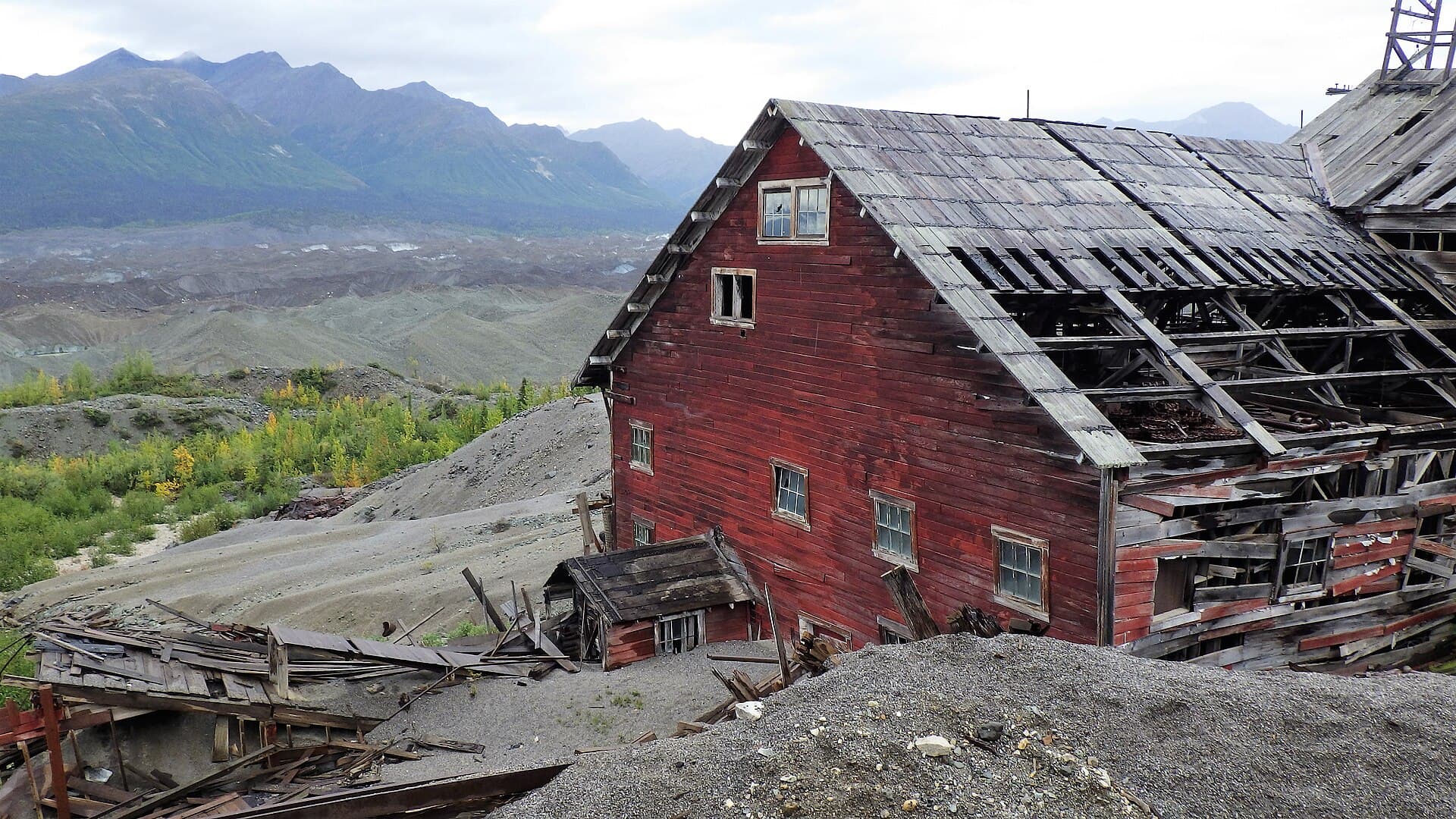
A towering red mill stands above a glacier landscape, far from the cities its copper helped power.
Kennecott Mines National Historic Landmark preserves a former copper operation within Alaska's Wrangell–St. Elias National Park and Preserve. Industrial production ran from 1911 to 1938. Visitors usually explore the mill town, while the actual mines sit higher in the mountains. Some historic interiors require guided access, and visitor services are seasonal.
The setting can make the complex seem impossibly misplaced. Its location was determined by unusually rich copper ore, and its survival now reveals the enormous effort required to turn that ore into a business.
Copper history began before the company town
The National Park Service's walking guide explains that Ahtna people used native copper from the region long before industrial prospectors arrived. Kennecott's company history is therefore one chapter in a much longer relationship with the material.
Prospectors identified the Bonanza deposit in 1900. Development demanded money, engineering, transportation, and a workforce capable of operating in a remote mountain environment.
A National Park Service cultural landscape study documents the creation of the industrial complex. Construction connected mountain workings with processing facilities below, creating a system spread across a dramatic landscape.
The distinction between mine and mill is essential. Miners extracted ore uphill; the large buildings near the glacier processed material and supported the people who worked there.
A railroad made the copper valuable
Rich ore is useful only if it can reach a market. The Copper River and Northwestern Railway provided the connection to the coast, and the first shipments left in 1911.
The National Park Service's historical bulletin describes the mining operation and the demanding lives behind it. Workers faced long hours, difficult conditions, and the limits of a remote company settlement.
That human history can be overshadowed by the buildings. Machinery needed operators and repairs. People needed food, shelter, warmth, and communication with the outside world. The visible town existed because extraction alone was not enough.
Think of Kennecott as a connected chain rather than a single landmark: mountain deposits, mine workings, transport lines, processing equipment, railway, and coastal shipping. A failure at one point could affect everything else.
Why the mill has such an unusual shape
The tall concentration mill used the slope and gravity to move material through processing stages. Crushing and sorting separated useful ore from waste before shipment. Later additions reflected changing techniques and the need to handle lower-grade material.
That helps explain its irregular roofline. The building grew around work, machinery, and practical problems rather than around a single decorative design.
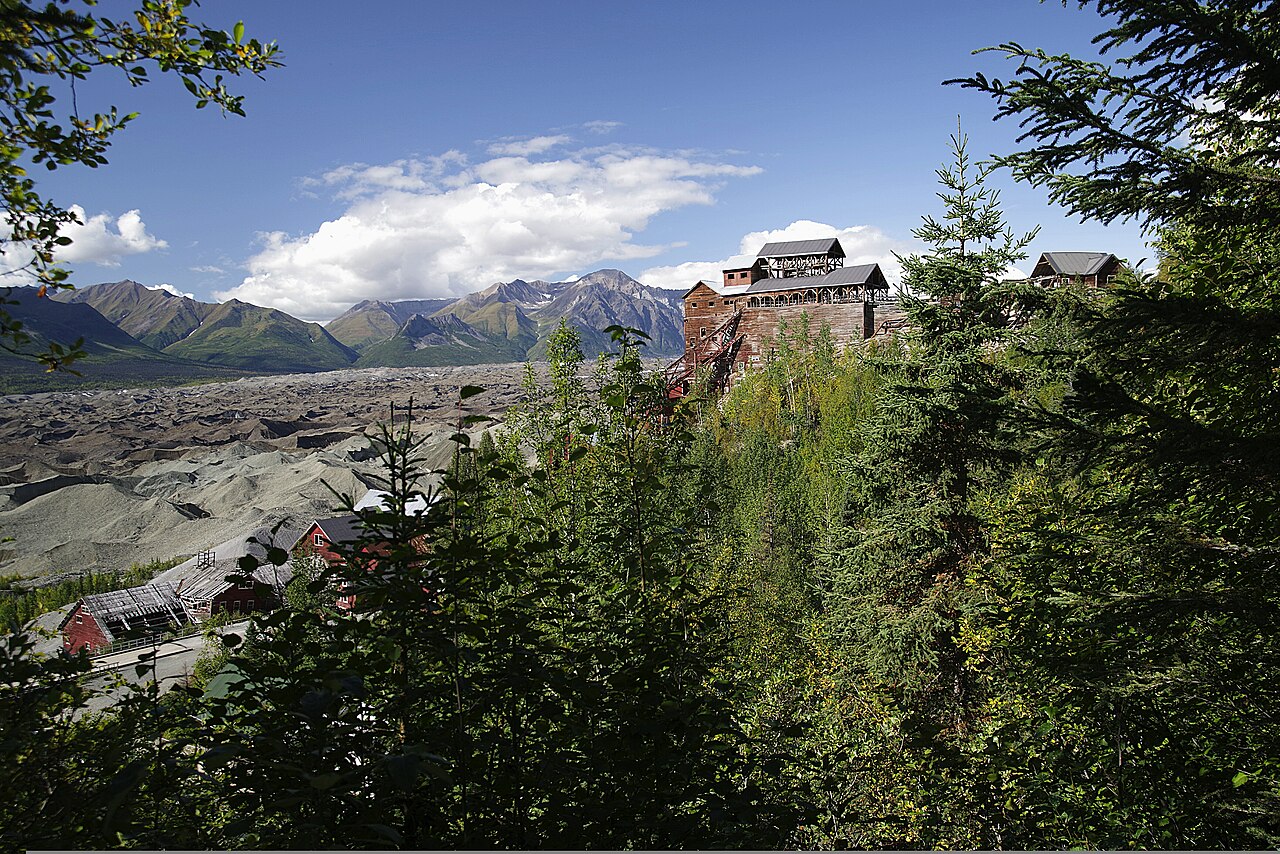
The photograph shows why it dominates the town's image. A broad industrial structure seems to climb the hillside, while smaller buildings establish a human scale below it. The glacier landscape provides an even larger scale beyond both.
Photographs can suggest that every red structure is part of the same building. Walking the permitted public routes, with a site map, helps separate the different functions.
Why Kennecott closed in 1938
The National Park Service's landmark history explains that the richest deposits were becoming depleted and the economics of continuing were worsening. Operations ended in 1938.
This was not a mystery evacuation. A remote industrial system needed enough valuable ore to justify its costs. When that balance changed, the company had reasons to move its attention elsewhere.
The buildings then passed through decades of different ownership and use. Kennecott received National Historic Landmark recognition in 1986, and the National Park Service acquired important portions of the site in 1998.
Preservation continues, but the district also contains private property. Historic designation does not make every house, structure, or route publicly accessible.
The industrial legacy needs ongoing attention
Kennecott's appeal comes partly from the survival of machinery and buildings in their original setting. The same industrial history also left environmental issues requiring study.
The National Park Service's environmental investigation examines historic contamination and waste associated with the mine and mill town. Follow site-specific notices and closures, remain on approved routes, and leave artifacts and material undisturbed.
Preserving the place means protecting people as well as historic structures. A dramatic ruin does not become safe simply because it is inside a national park.
Planning a seasonal visit
Start with the Kennecott Visitor Center information. The center occupies the historic Blackburn School and normally serves visitors during the warmer season. Winter conditions and reduced services make an off-season trip a different undertaking.
Plan transportation, lodging, food, and tour arrangements before traveling to the McCarthy–Kennecott area. Do not assume that a road trip automatically delivers you to every historic building or that summer shuttles operate in winter.
St. Elias Alpine Guides offers the authorized concentration-mill tour. Check its current season, booking requirements, and physical demands. Interior stairs and industrial spaces make this different from a simple level walk through town.
Kennecott's lasting power lies in the relationship between ambition and landscape. The town shows how far people went to reach valuable copper, and how much remained when the business no longer made sense.
Frequently asked questions
Are the mines and the mill town the same place?
No. The mines are higher in the mountains; the mill town processed ore and housed workers and services.
When did Kennecott stop producing copper?
The operation closed in 1938 after producing and shipping ore from 1911 onward.
Can visitors enter the concentration mill independently?
Interior access requires an authorized guided tour. Follow current park and operator instructions.
Is Kennecott open like a normal town in winter?
No. Visitor services are seasonal, and winter travel requires different planning. Check current conditions before attempting the trip.
Image credits
Featured image: Kimberly Hack, CC BY-SA 4.0.

Body image: Michael F. Wacht, CC BY-SA 4.0.
