Wichita lost Joyland’s midway, but its carousel found another place to make memories.
Joyland Amusement Park on South Hillside in Wichita, Kansas, operated from 1949 until its troubled final years in the 2000s, ending permanently in 2006. Much of the abandoned property later deteriorated or burned. Its most accessible surviving attraction is the restored carousel at Botanica.
This is the Kansas Joyland, a separate park from the former attraction of the same name in Lubbock, Texas.
Joyland grew with postwar Wichita
The South Hillside park opened in 1949 under Lester Ottaway and his family. Its arrival coincided with a growing city and an expanding aircraft industry.
The Wichita Eagle’s historical reporting connects the park’s success with that postwar growth. Families had a local place for an evening out, company picnic or special occasion.
Joyland was not built around a movie franchise or a distant fantasy world. Its strongest identity was its place in Wichita.
The name also had roots before the South Hillside opening. A dedicated Joyland history distinguishes earlier Ottaway family ventures and an East Central location from the larger park remembered by later generations.
A wooden coaster above the midway
Joyland’s wooden roller coaster became a landmark. The park’s historical ride inventory identifies designer Herbert Paul Schmeck and the Philadelphia Toboggan Coaster Company.
The coaster’s timber structure was visible above a collection of smaller rides and attractions. The park also offered a miniature train, a carousel, water rides and the Whacky Shack.
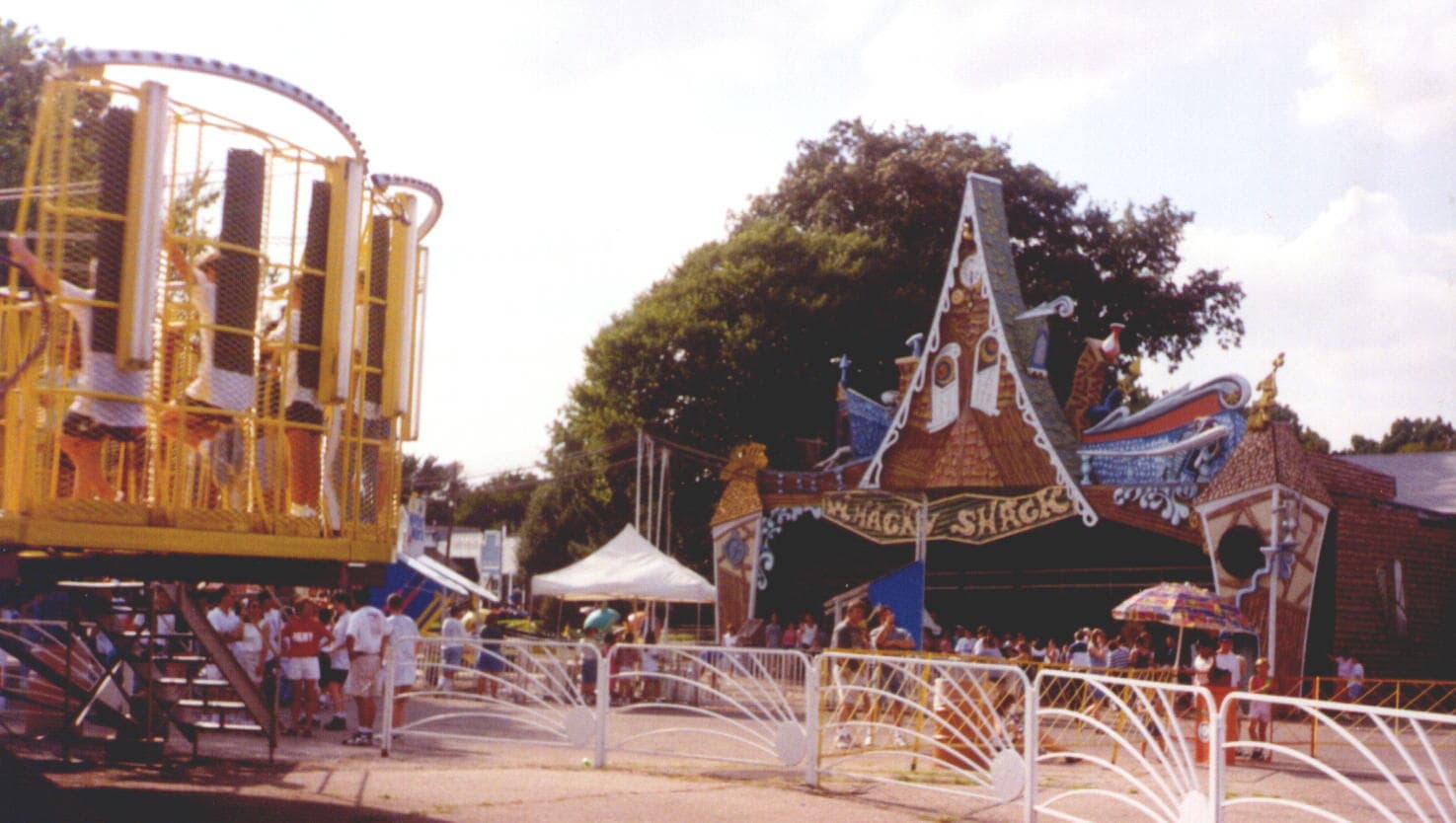
The featured photograph shows the Whacky Shack in 1997, with visitors gathered along the midway. It is a view of the park in use, not a photograph of abandonment.
That matters because Joyland’s later ruins can dominate its story. Empty buildings tell us what stopped. A photograph full of people helps explain what was lost.
The Nelson years and a hometown role
Stanley and Margaret Nelson took over the park in the 1970s after working with the Ottaway family.
A 2026 KWCH retrospective gathers recollections of summer jobs, family outings and company picnics. It also describes the efforts of historians and collectors to preserve that record.
Those uses gave Joyland a rhythm beyond its rides. Teenagers worked there, families returned, and a familiar route through the grounds became part of the season.
The difficult final years
Joyland’s ending involved more than one closure date. Regular operations stopped in 2004, and a later operating attempt brought visitors back in 2006.
The Wichita Eagle’s reporting describes financial disputes and difficulties under successive operators. The 2006 return did not last.
It is therefore misleading to say that the park simply closed once and was immediately forgotten. There were attempts to continue its life, followed by years of proposals, deterioration and loss.
The Eagle’s 2019 site reporting documents vandalism, theft and fires after the final closure. A major 2018 fire destroyed much of what remained.
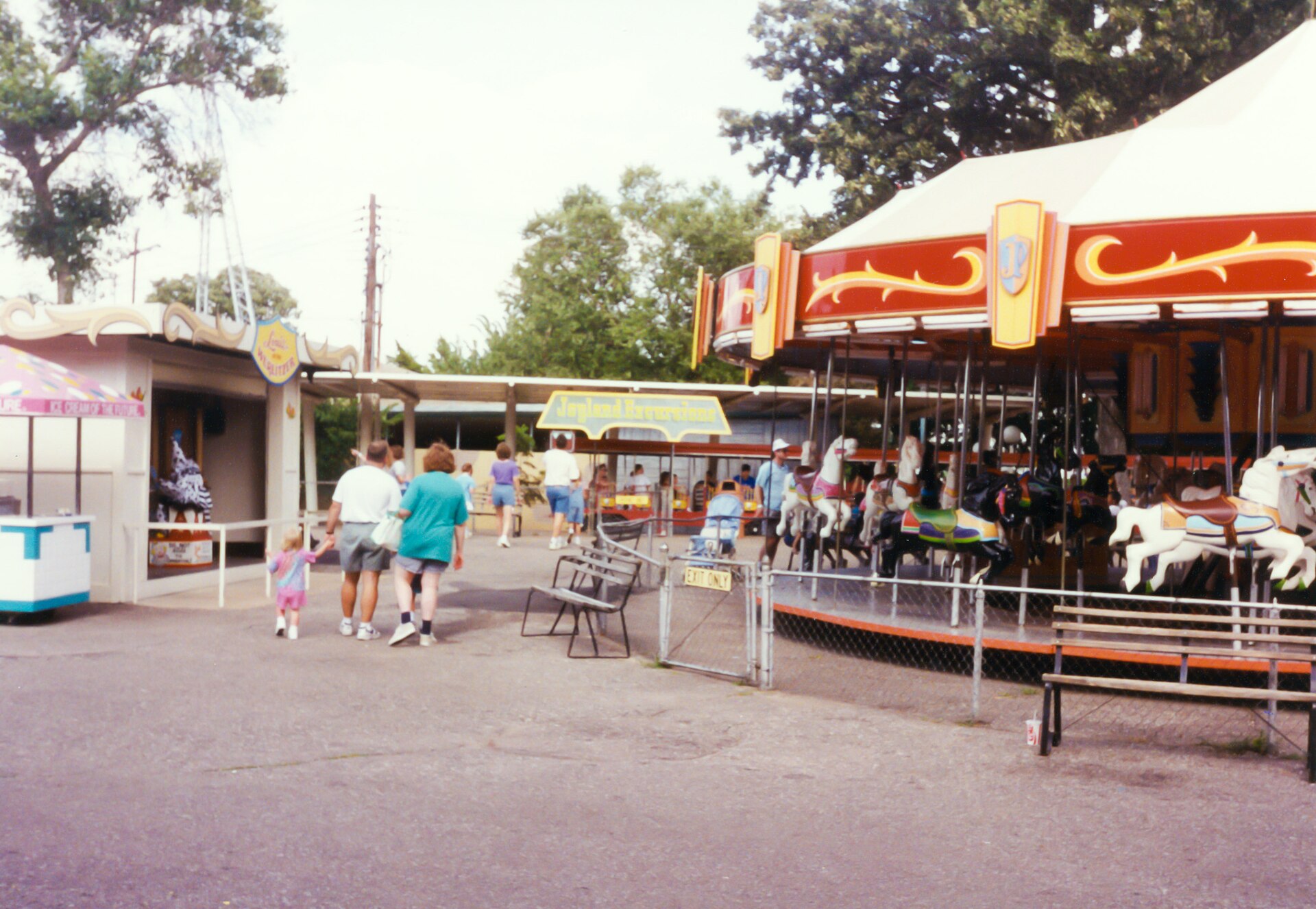
The featured and body photographs predate all of that. They should not be used to predict which structures remain at the old address.
A carousel leaves before it is too late
Margaret Nelson Spear donated Joyland’s carousel to Botanica in 2014. That decision gave a major piece of the park a future outside the abandoned grounds.
WDM Architects’ account of the project describes the challenge of restoring the ride and creating a new home for it.
Preservation involved more than repainting horses. The carousel needed a protected setting and the work required to operate safely for a new audience.
The design also connected the ride to its new garden surroundings. Saving it did not mean pretending it had never moved.
It meant keeping enough of the original experience alive that children could still choose a horse, wait for the music and feel the platform begin to turn.
The ride returns at Botanica
The restored carousel opened to the public in late 2019. Contemporary coverage in The Wichita Eagle describes the long-awaited return of the 1949 attraction.
Its 36 horses and two chariots received extensive attention during restoration. KWCH’s restoration report also discusses changes intended to improve access for riders with limited mobility.
Today, consult Botanica’s Koch Carousel Gardens information for current visiting arrangements.
Check garden admission, carousel availability and any separate ride charges before traveling. Special events can affect normal schedules.
Botanica is a different location from the former Joyland property. Use its current directions rather than an old amusement-park map.
A better way to revisit Joyland
The former grounds are not a public amusement-history attraction. Do not enter restricted property to search for remnants.
Instead, combine a carousel visit with historical photographs and family stories. If you have old pictures, preserve their dates and names while someone still remembers them.
Joyland’s survival is scattered across objects, archives and memories. The carousel offers the rare part that still moves.
A child riding it now does not need to remember South Hillside to enjoy it. That is what makes the rescue meaningful: the old park contributes to a new memory rather than becoming only a story about loss.
Frequently asked questions
When did Wichita’s Joyland close?
Its final operating season was in 2006, after an earlier closure in 2004.
Where is the old carousel?
It is restored at Botanica in Wichita.
Is this the same Joyland as Lubbock’s?
No. They were separate amusement parks in different states.
Can you visit the former park as a tourist attraction?
No public attraction operates under the old Joyland park described here. Visit preserved pieces through their authorized locations.
Image credits
Featured image: Patrick Pelletier (CC BY-SA 3.0), via Wikimedia Commons. The Whacky Shack at Joyland in Wichita, Kansas, during summer 1997.

Body image: Patrick Pelletier (CC BY-SA 4.0), via Wikimedia Commons.
