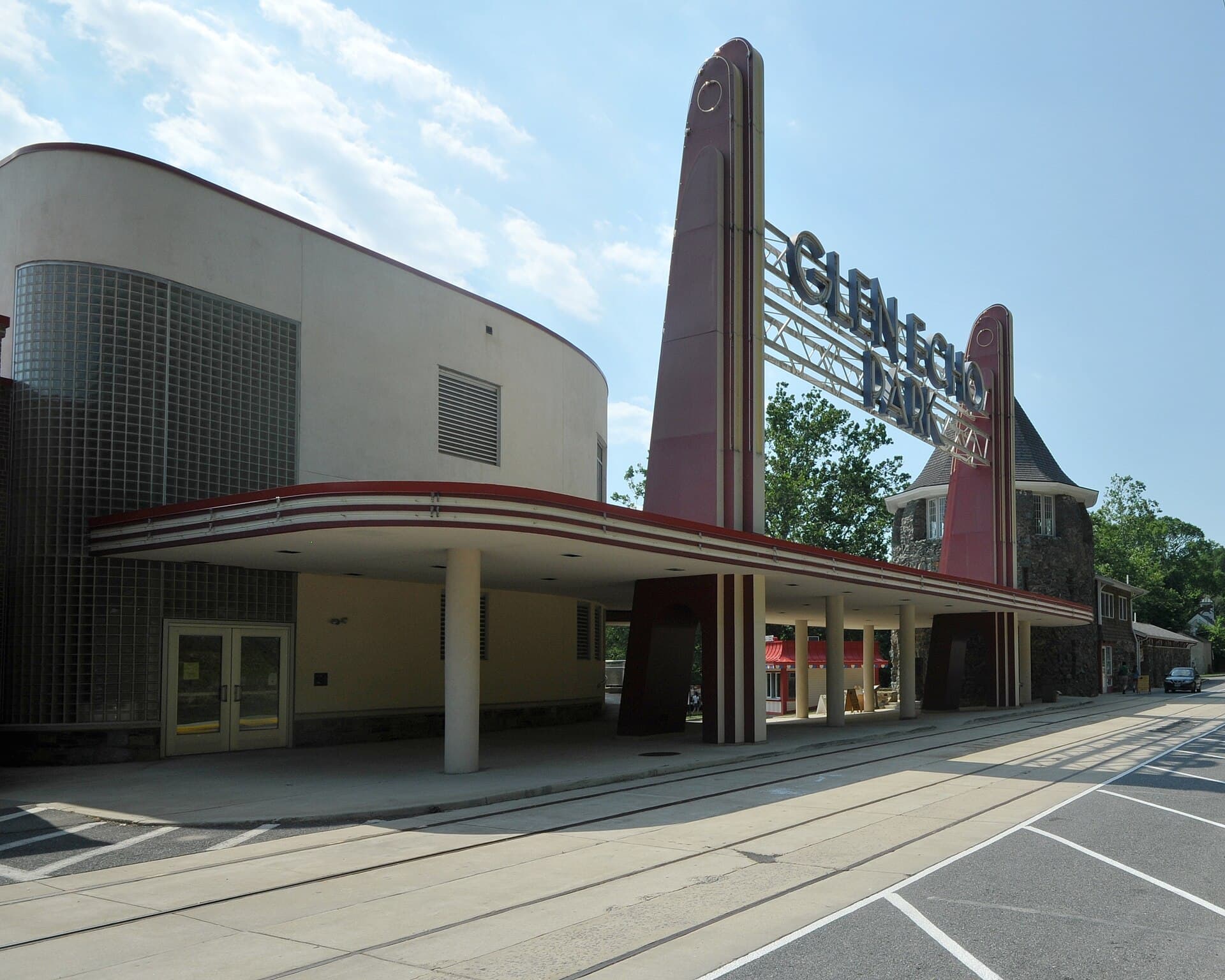
At Glen Echo, the bumper-car pavilion fills with dancers instead of dust.
Glen Echo Park, in Maryland near Washington, D.C., is an active arts and cultural center on the grounds of a former amusement park. The rides largely disappeared after the park closed in 1968, but its carousel, historic buildings and public spaces gained a new life.
Glen Echo Park began as an educational experiment
The site opened in 1891 as a National Chautauqua Assembly, a place for learning through lectures, classes and cultural activities.
The park partnership’s history describes subjects ranging from science and languages to literature and the arts. The original Chautauqua lasted only one season.
That short beginning nevertheless left an idea that would return much later: recreation and education could share the same setting.
By the early twentieth century, the grounds were becoming an amusement destination. The National Park Service identifies 1911 as a key point in that transformation.
The new park offered a different promise from the lecture hall. People came for rides, music, dancing and an escape from the routine of the city.
An entrance that still looks ready for a night out
The illuminated entrance remains one of Glen Echo’s strongest visual signatures. Its tall forms and lettering evoke the period when a gateway could announce a whole evening of entertainment.
The present entrance is a reconstruction of the 1940 design, completed in 2003, according to the National Park Service’s entrance history.
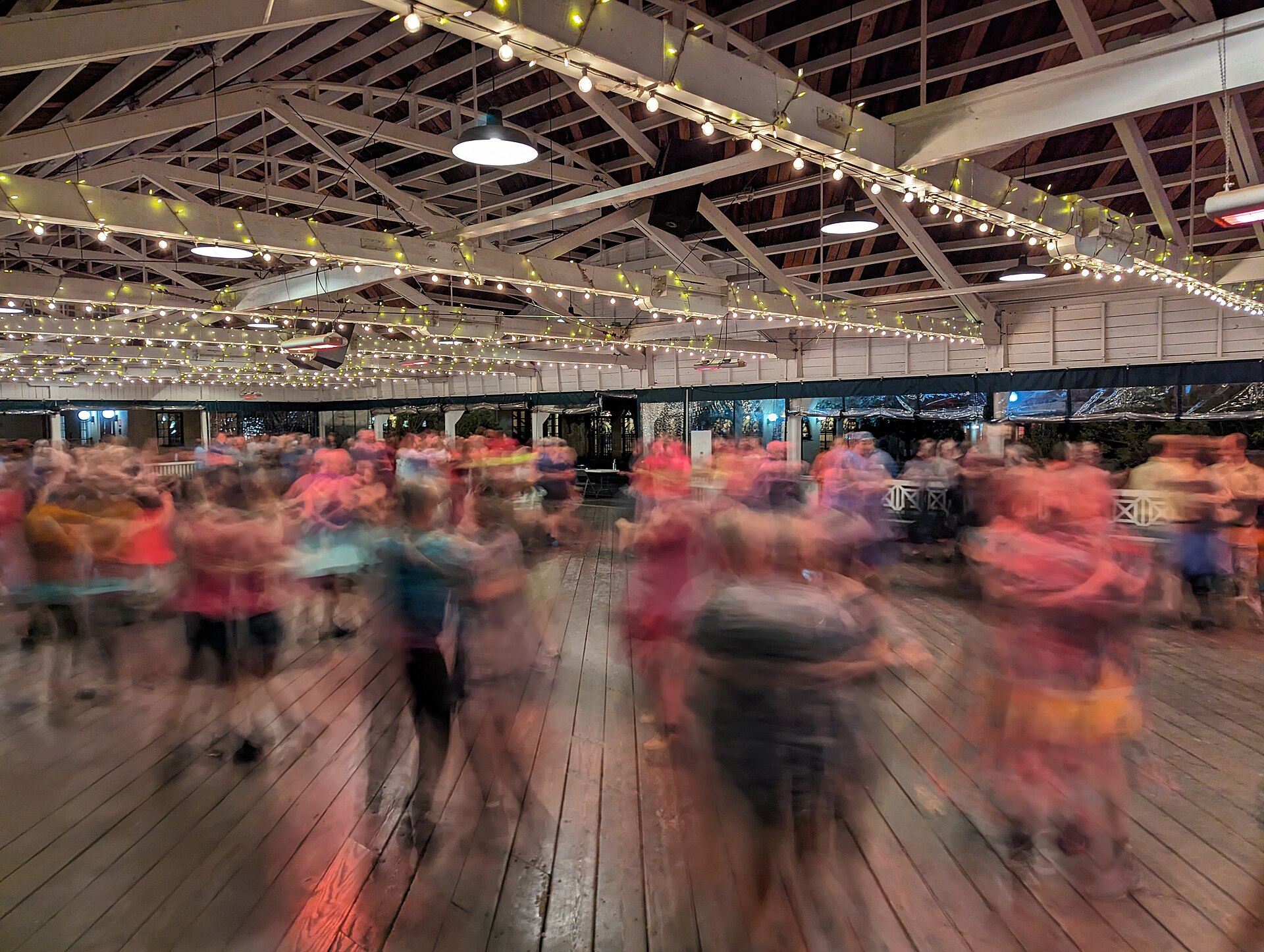
Inside, buildings have taken on uses that keep them busy. The 2023 photograph below shows a contra dance in the Bumper Car Pavilion.
The blurred figures are the result of a long exposure. They are also a lively answer to the idea of an empty amusement park.
Who was allowed to enjoy the park?
Glen Echo’s amusement history includes exclusion as well as pleasure. For much of its operation, the park barred Black visitors.
In the summer of 1960, activists challenged that policy. Students, including members of Howard University’s Nonviolent Action Group, joined local residents in protests.
The National Park Service’s civil rights account describes sustained picketing and the role of allies from the nearby Bannockburn community.
The campaign continued despite intimidation. In 1961, the park announced that it would admit visitors regardless of race.
That history changes how the carousel and entrance should be seen. They were not only cheerful scenery. They were places where people confronted a rule that denied others the same enjoyment.
Remembering the park honestly means holding both stories together.
The carousel as a place of protest
A sit-in on the carousel became a central moment in the campaign. Five Black protesters were arrested in June 1960.
Their case, Griffin v. Maryland, later reached the U.S. Supreme Court. The arrests were overturned in 1964, as explained in the National Park Service’s historical interpretation.
The National Archives’ account of the movement places Glen Echo’s campaign within the broader struggle for equal access.
A carousel may seem like an unlikely civil rights landmark. Yet its ordinary purpose made the demand clear: the right to sit down, take a ride and enjoy a public-facing business without racial exclusion.
Today, historical programs help connect that national story with the physical place where it unfolded.
Closure did not end public life here
The amusement park closed in 1968. The federal government acquired the property, and the National Park Service began managing it in 1971.
Artists and arts organizations helped create a new program of activities. In that sense, the site returned to part of its original educational purpose.
The transition did not preserve every ride. It preserved a place that could keep serving people.
Studios, exhibitions, theater and social dancing give the buildings a reason to remain useful. Visitors encounter history while attending something happening now.
A century-old carousel still in motion
The Dentzel carousel was installed in 1921. Its carved figures and decorative canopy show the craft behind early twentieth-century amusement rides.
A long restoration effort, running from 1983 through 2003, helped protect the attraction. It remains a seasonal ride, not a year-round promise.
The posted 2026 riding season ran from May into September. Other park programs continue outside those dates, so check the current calendar rather than assuming a winter visit includes a ride.
The carousel’s value is both artistic and historical. Its animals can delight a child while its story gives an adult something more difficult to consider.
Planning a visit
Start with the park’s visitor page and event calendar. Different activities have separate schedules, registration requirements and ticket arrangements.
The address is 7300 MacArthur Boulevard in Glen Echo. Check current parking and accessibility information for the activity you choose.
A dance evening, exhibition visit and family theater trip can feel very different, even on the same grounds. Leave time to read the historical interpretation between them.
Glen Echo offers a hopeful version of a former amusement park: history remains visible, and the buildings still have people inside. Its past is not hidden by that activity. It becomes easier to understand because the place continues to matter.
Frequently asked questions
Is Glen Echo Park abandoned?
No. It is an active arts and cultural center.
When did the amusement park close?
The amusement operation ended in 1968.
Can you ride the carousel?
Yes, during its seasonal operating schedule. Check the official calendar.
Why is it a civil rights landmark?
A 1960 protest campaign challenged segregation and helped secure integrated admission in 1961.
Image credits
Featured image: EnLorax G. Edward Johnson (CC BY 3.0), via Wikimedia Commons. Glen Echo Park’s reconstructed entrance in June 2012, with former trolley rails in front.

Body image: Sdkb (CC BY-SA 4.0), via Wikimedia Commons.
