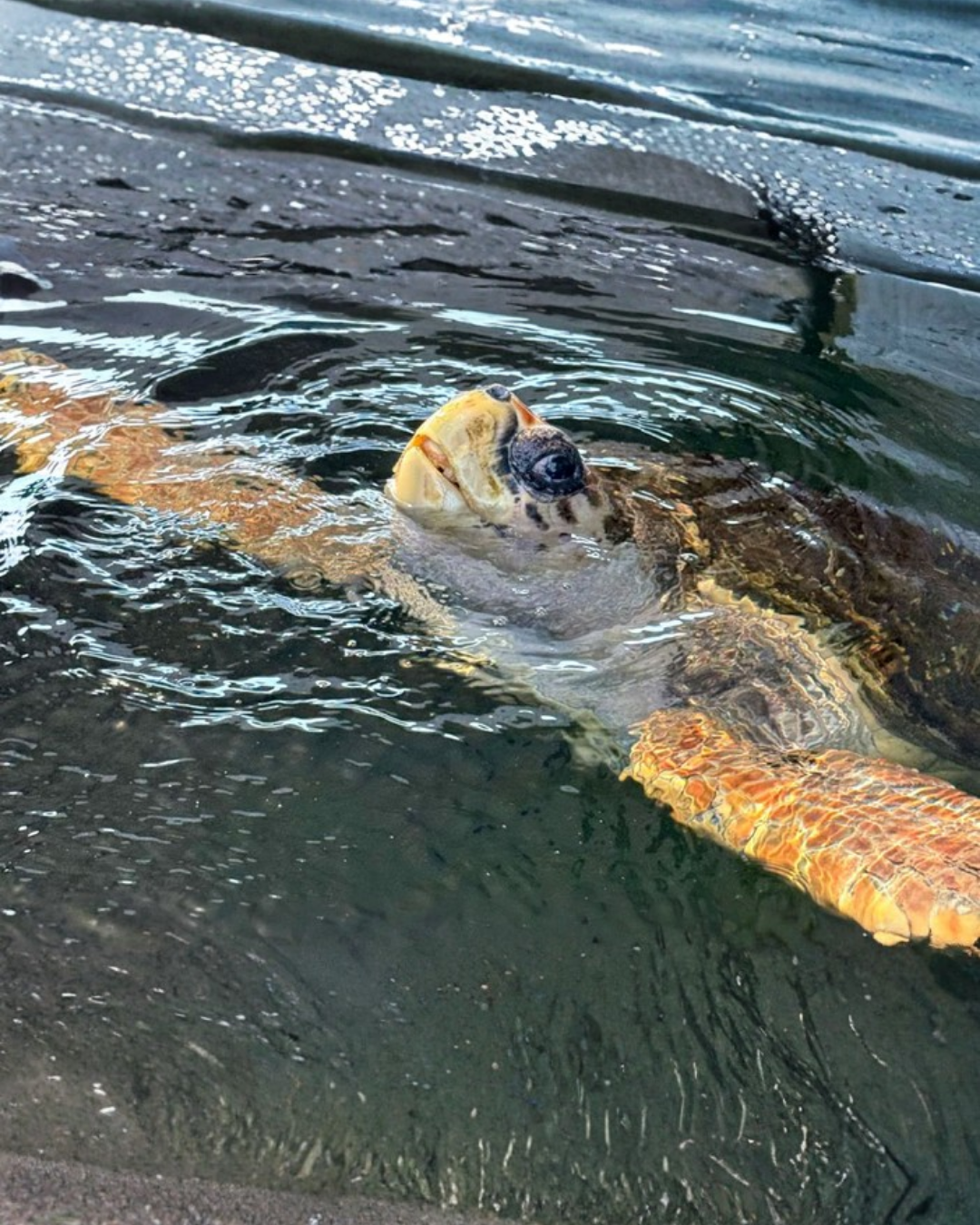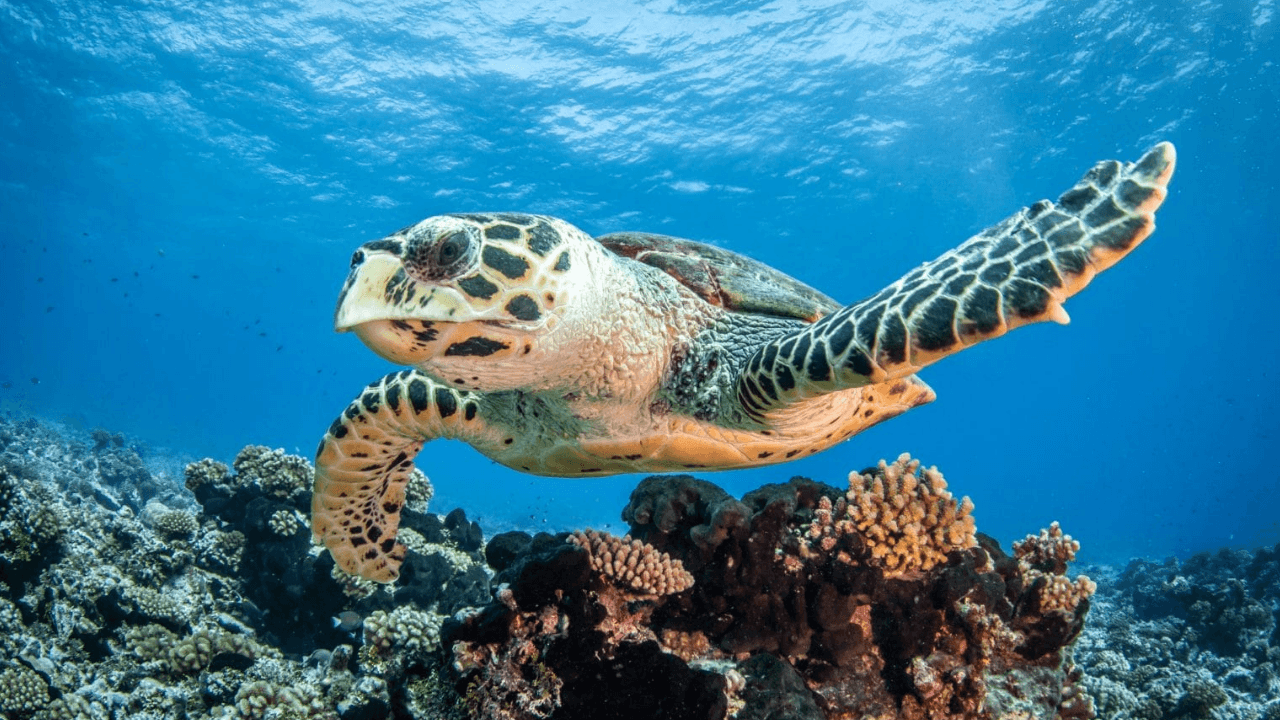
He took his first breath of open ocean in 40 years and didn’t look back.
Jorge, a loggerhead turtle who had spent most of his life in captivity, was finally free.
For four decades, Jorge lived in a concrete tank at a marine park in Argentina. He learned to swim in circles, eat from a bucket, and watch people through glass. To him, the tank was the world. The ocean existed only as sound and light beyond the walls. But that changed on April 11, 2025, when a small research boat carried him 15 nautical miles off the coast of Mar del Plata.
As the waves lifted and sunlight bounced across the surface, the team opened the metal gate. Hands steadied his heavy shell one last time. Then Jorge pushed forward, slipped beneath the water, and disappeared into the Atlantic. For a few seconds, the rescuers stared at the empty spot where he’d been. Then his tracking signal blinked Jorge was swimming again.
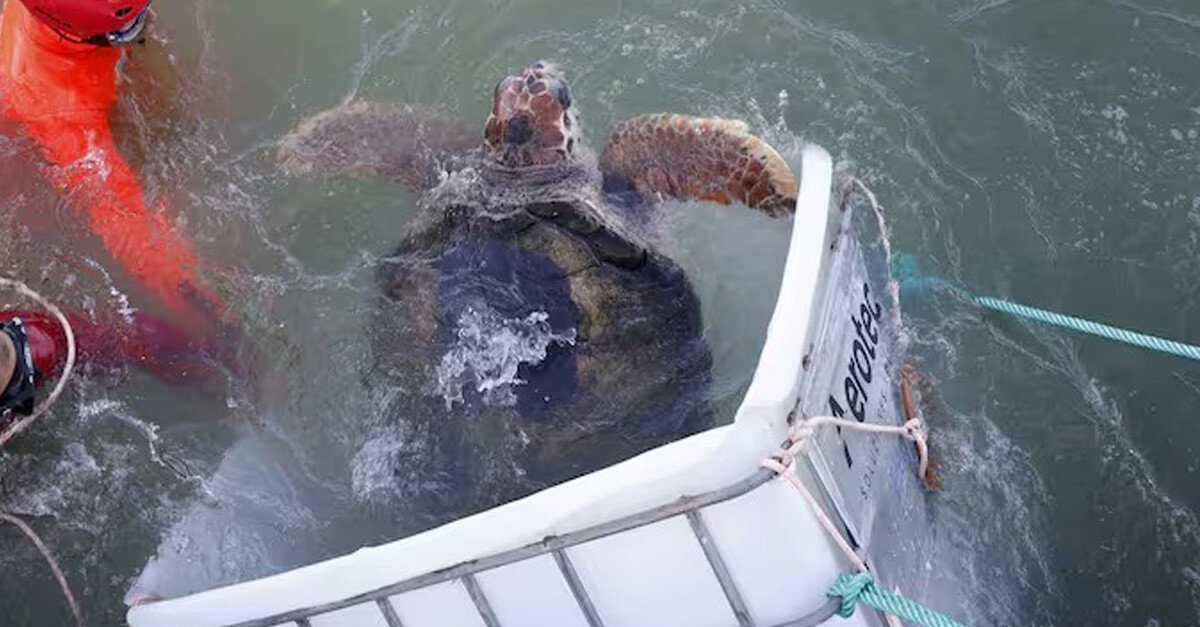
What happened next amazed even the scientists who had prepared him for this moment. In his first 70 days of freedom, Jorge traveled more than 1,700 miles. His tracker showed a clear path: north along Argentina’s coast, past Uruguay, and toward the warmer waters of Brazil. He hugged the shoreline, rested in shallows, and dove deep through strong currents all behaviors of a healthy, wild turtle.
For a creature that had forgotten the sea, it was as if his instincts had never left.
Jorge’s release was no simple act of opening a gate. It took three years of patient work by veterinarians and marine biologists from Argentina’s Mundo Marino Foundation. They knew that a turtle raised in still water couldn’t survive the open ocean. So they began to retrain him, step by step, to remember what nature had once taught him.
They increased the salt in his pool slowly to match seawater levels. They replaced the easy meals of eggs and beef with live crabs and snails food that would make him hunt again. They even built artificial currents in the pool, forcing him to push through the resistance and rebuild his strength. Every change was designed to reawaken something buried deep inside him: the instinct to live wild.
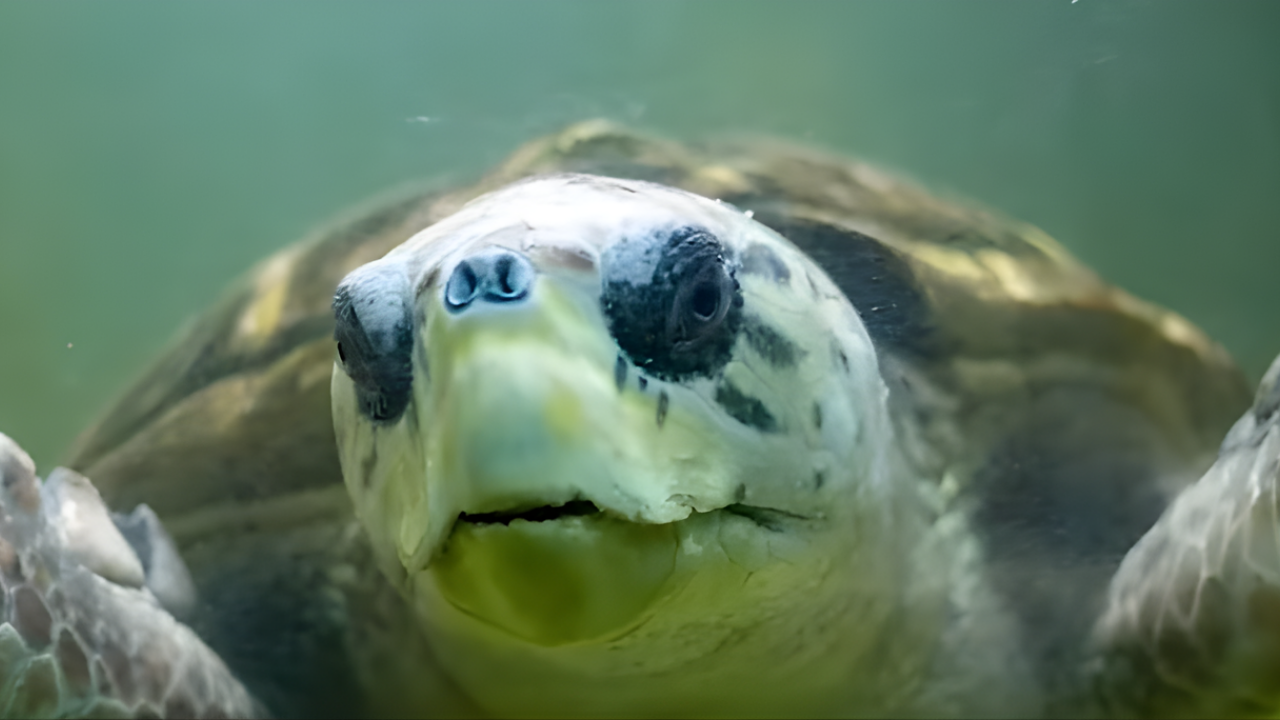
By the time Jorge was ready for release, he was about 60 years old an age when many loggerheads begin to slow down. But his recovery proved that life in the wild can restart at any time. Scientists used a GPS tag fixed to his shell to track his movements in real time. The data confirmed that he was not drifting helplessly; he was choosing routes, following warm currents, and diving for food.
In the first week, Jorge crossed 200 miles. By day 40, he had passed Uruguay’s coast. By day 70, he was near southern Brazil. Each signal from his tracker told the same story the turtle who had spent his life behind glass was now a strong, capable traveler of the Atlantic.

His journey became a symbol of hope for conservationists worldwide. Loggerhead turtles are a threatened species, often harmed by fishing nets, pollution, and habitat loss. Jorge’s success showed that long-term captive turtles could still learn to survive in the wild if given time and care. It also highlighted the growing importance of rehabilitation centers that focus not just on saving animals, but preparing them to return to nature.
For the team that raised him, watching his progress was emotional. One researcher said it felt like “watching a child leave home, but knowing he’s finally where he belongs.” They still receive updates from his tracker small digital proof that somewhere in the ocean, Jorge is swimming, feeding, and living freely for the first time in decades.
Jorge’s story reminds us that instinct, once learned, never fully disappears. Even after 40 years of confinement, he remembered how to read the currents, how to chase food, and how to find home again. It is more than just an animal’s comeback it’s a story about endurance, memory, and the simple, powerful pull of freedom.
After four decades of still water, Jorge finally found the ocean waiting for him. And this time, he kept going.