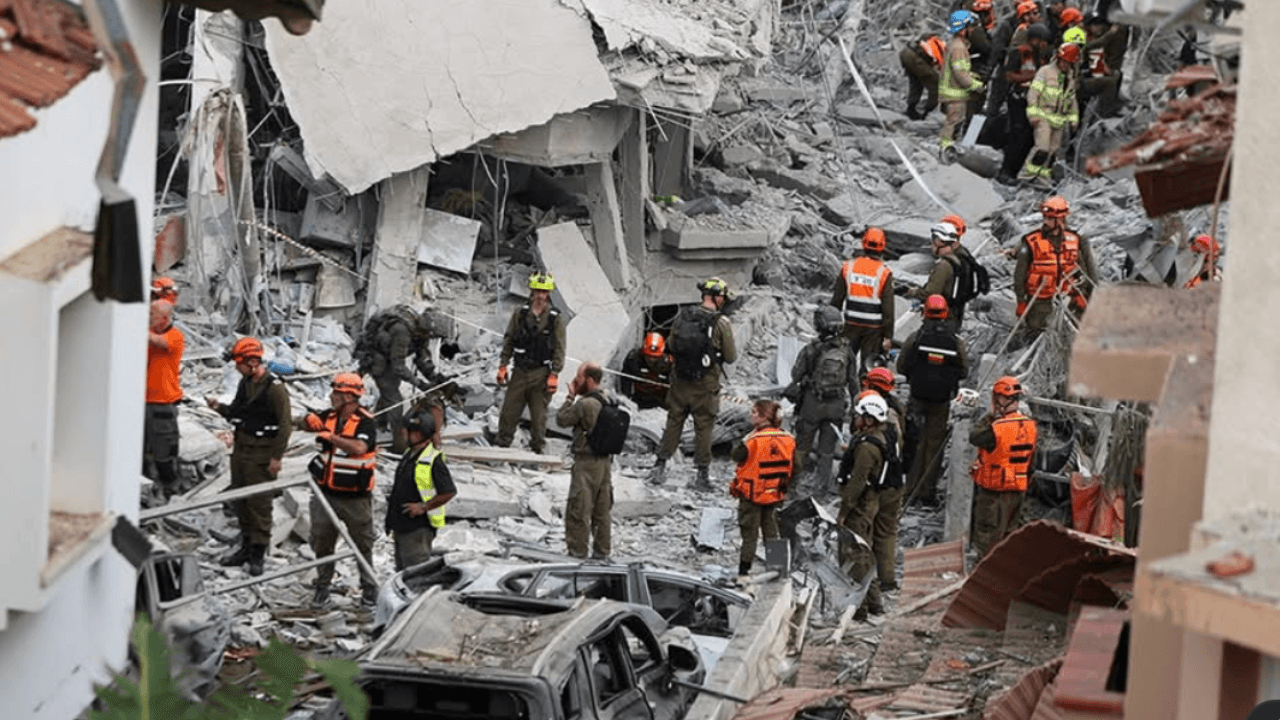
In a chilling escalation, Iranian ballistic missiles struck multiple Israeli cities early Thursday, with devastating consequences for civilians and infrastructure. Among the most shocking attacks was a direct hit on Be’er Sheva’s Soroka Medical Center, wounding at least six people, including staff and patients.
“They Hit a Pediatric Ward”
Israeli Prime Minister Benjamin Netanyahu, after visiting the damaged hospital, condemned the strike:
“We are hitting nuclear targets and missile targets precisely, and they are hitting the pediatric ward of the hospital. That says it all.”
The bombardment stretched across several cities — including Tel Aviv, Ramat Gan, and Holon — leaving residents terrified and scrambling for safety as missile alerts echoed through the night.
A Family’s Nightmare in Rishon LeZion
One of the most harrowing accounts came from Ariel Levin-Waldman, whose family was staying with in-laws in Rishon LeZion when a missile hit their residential building.
“There was a flash of light, and everything went dark. We were choking, struggling to breathe,” Levin-Waldman told Fox News Digital.
The blast killed two people instantly and injured dozens. A third victim reportedly died in a previous wave of Iranian strikes.
Inside the shelter, chaos unfolded as a book cabinet was hurled by the force of the blast, striking Levin-Waldman’s mother-in-law.
“She was bleeding heavily… I managed to lift the cabinet and saw a way out,” he said.
He passed his seven-week-old daughter, Ayala, to a paramedic before crawling through the debris himself — only to find her missing outside.
“Here I was, covered in dust and blood, almost naked, wandering the street screaming, ‘Where is my child?’”
It took 30 agonizing minutes to reunite with her.
Widespread Damage and Rising Tensions
Homes reduced to rubble, glass-strewn streets, and the scent of burning lingered long after the missiles stopped. Many families have been left homeless, and rescue efforts are still underway.
With civilians and hospitals now directly in the line of fire, fears of a broader conflict and regional escalation are growing rapidly. Analysts warn this could be a turning point — or the start of something far worse.