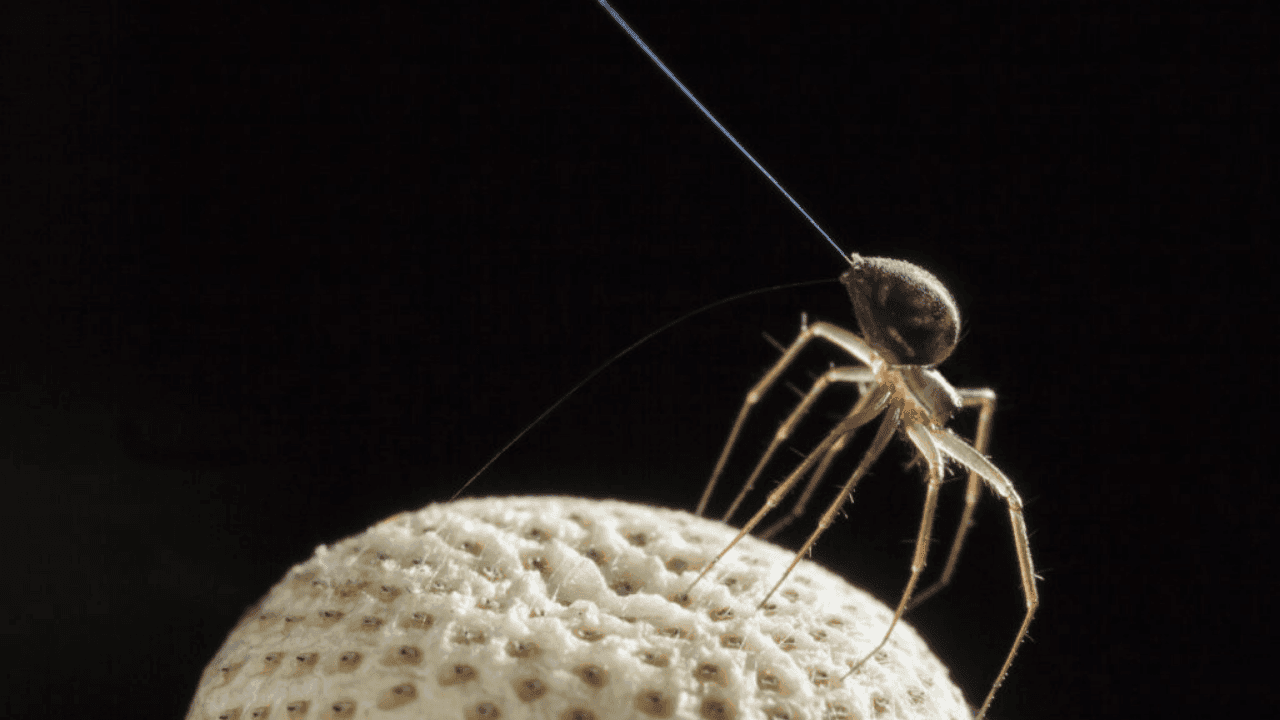
In the vast, unseen theater of nature, spiders perform a remarkable act that has puzzled scientists for years: they balloon. This peculiar mode of travel involves the release of fine silk strands that catch the wind. But it’s not just the wind lifting them; it’s the Earth’s electric field doing most of the work.
Since ancient times, people have marveled at the prospect of ballooning spiders — tiny arachnids floating gracefully through the air, sometimes for hundreds of miles. This phenomenon, known as ballooning, has long been attributed solely to wind currents. However, groundbreaking research has unveiled a shocking truth: these spiders expertly utilize the electric field that permeates our atmosphere to aid their ascent.
Most notable studies on the subject, including a landmark piece in Current Biology, concluded that electric currents can elicit ballooning behavior by stimulating the spiders’ silk. Spiders possess sensitive hairs, called trichobothria, on their legs that detect electric fields. When the conditions are right, a spider can sense an electric field and knows it’s the perfect time to take off.
This incredible adaptation has a practical purpose. Spiders ballooning away are often young spiders, seeking new environments in which to grow and thrive. A common misconception holds that wind drafts alone drive this dispersal. Yet, scientists now affirm that Earth’s natural electric fields are responsible for the gentle lift-off of countless young spiders each year.
Imagine sailing on invisible currents. Navigating through the air, the spiders can travel up to 1,000 miles from their original location — a feat comparable to that of large birds! What’s more, ballooning can happen in calm weather, showing that electric fields can trigger takeoffs independent of air movement.
One researcher, Dr. F. Habchi, who has dedicated years to studying spider ballooning, explains,
‘We think that at least for small spiders, the electric field can induce ballooning on its own, providing a lift without turbulence.’
As if by magic, these spiders release silk threads that interact with the atmospheric electric field. This phenomenon allows them not only to ascend but to drift, reposition, and explore distant territories — all while remaining suspended in the air. They become living parachutes, floating serenely over landscapes unseen, their only hope for a suitable landing point.
The implications of this discovery reach further into ecological understanding. By learning how these spiders navigate vast distances, we may gain insights into other insects and creatures that use similar techniques to disperse. Other studies suggest that even a single thunderstorm can rejuvenate the local spider population by unleashing an airborne cavalcade of spiders, drifting on electric currents.
Years ago, if you had asked scientists how spiders traveled, they would have pointed to the wind. Now the answer encompasses an entire gravitational dance directed by electric fields. For a creature that appears diminutive and often dismissed, spiders exhibit masterful control over their journeys, an incredible testament to the wonders of evolution and adaptation.
As scientists continue to unlock the secrets behind spider ballooning, one question stands at the forefront: what will we discover next about these tiny pioneers soaring through the skies?
Disclosure: We may earn a commission when you make a purchase through the ads.