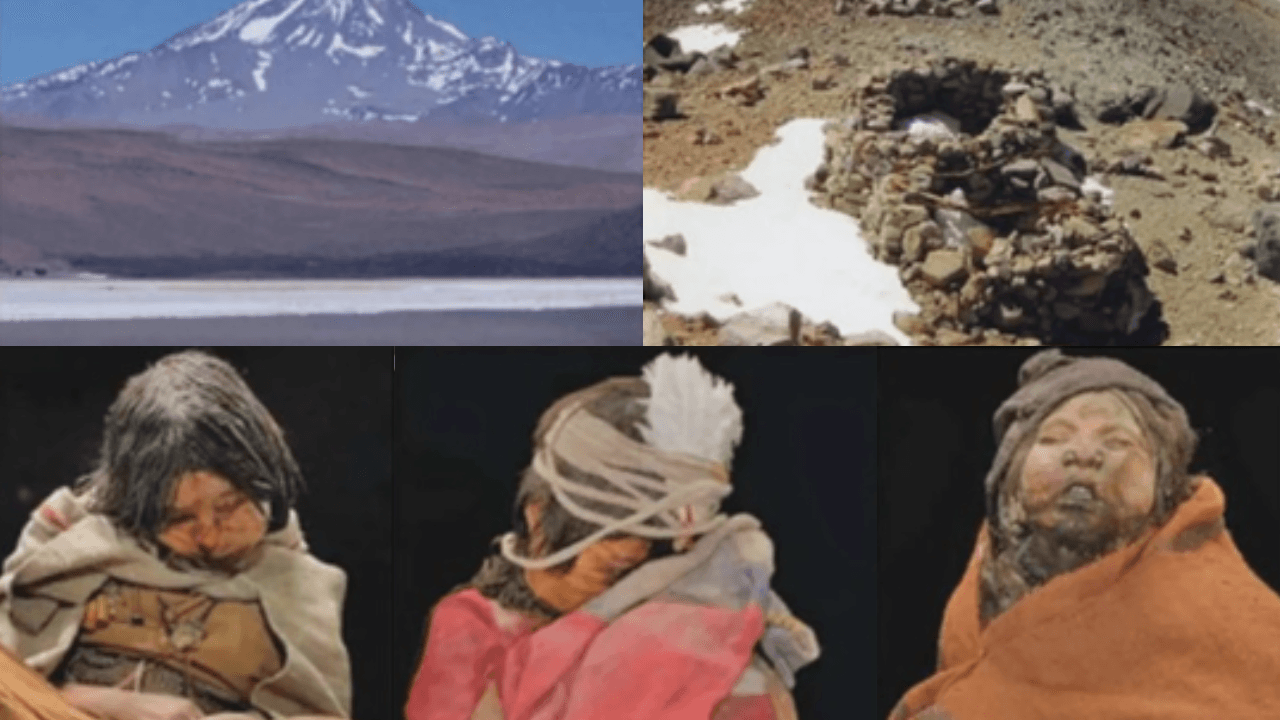
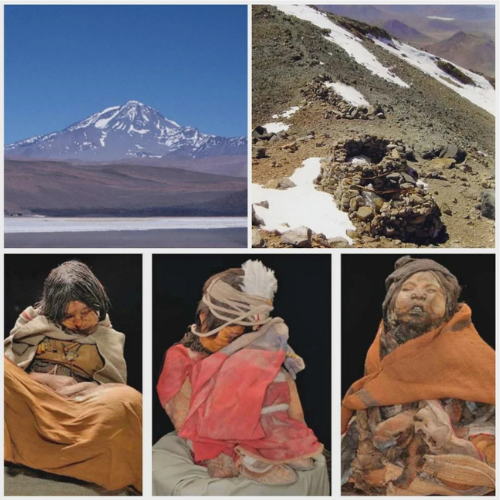
In 1999, high on the summit of Llullaillaco volcano in Argentina, archaeologists uncovered three small bodies, preserved for more than 500 years by the icy, arid air. These were no ordinary remains. They belonged to three Inca children, a girl of about 13, a boy of 7, and a girl of 6 whose final journey was bound to one of the most solemn rituals of their time.
In the early 1500s, the Inca Empire carried out capacocha, or qhapaq hucha, a ritual of child sacrifice reserved for extraordinary events. Far from an act of cruelty, it was seen as a sacred honor. The children chosen were believed to become messengers to the gods, their lives woven into the divine fabric that connected earth and sky.
These three young ones, taken from their communities, were prepared for months in advance. Their hair, clothing, and belongings suggest they were treated with reverence, well-fed, and adorned with fine textiles and ornaments. Their final ascent to the mountain was not framed as punishment, but as a passage into immortality.
Modern science has revealed details that the Incas themselves never recorded. Analysis of the children’s hair showed clear traces of coca leaves and alcohol. These substances were consumed regularly, with levels increasing dramatically in the months before their deaths. Researchers believe the drugs sedated the children, dulling fear and pain, or perhaps preparing them spiritually for what lay ahead.
On Llullaillaco’s summit, the thin air and brutal cold awaited them. Once placed in their small stone tombs, they likely slipped quietly into unconsciousness, their bodies surrendering to hypothermia. There was no evidence of physical violence only the slow, inevitable silence of the mountain.
Of the three, the oldest now called the Llullaillaco Maiden, remains the most haunting. Just 13 years old, she sits cross-legged, her braided hair and serene face frozen in time. Studies show she had eaten well and lived in relative care during her last year, suggesting she may have been one of the aclla chosen women dedicated to religious service.
Her preservation is extraordinary: intact lungs, stomach, and even traces of her last meal provide a window into Inca life. She is joined in the icy chamber by the boy and the youngest, known as the “Lightning Girl,” whose body was later scorched by a strike that struck the burial site centuries after her death.
The Children of Llullaillaco are not only a breathtaking archaeological discovery but also a sobering reminder of the lengths to which societies go in pursuit of devotion and power. To the Incas, these children embodied purity and sacrifice, bridging the mortal and divine. To us, they reveal both the beauty and the darkness of human ritual.
Since 2007, their remains have been displayed in the Museum of High Altitude Archaeology in Salta, Argentina, under careful preservation. Yet even this raises ethical debates. Should children who never chose their fate be displayed for the world to see? Or should their tomb remain sealed, their story told without exposing their bodies?
The icy tomb of Llullaillaco whispers across centuries. It tells us of a people’s faith, their reverence for the mountains, and their willingness to surrender their most vulnerable to please unseen gods. But it also asks us unsettling questions.
What sacrifices do we demand today, hidden in traditions we no longer question? How often do the young and powerless bear the burden of choices made by those in power?
The Children of Llullaillaco, frozen at the edge of the sky, remind us not only of what was lost five centuries ago but of the responsibility we carry now—to protect the innocence that remains in our world.
Disclosure: We may earn a commission when you make a purchase through the ads.