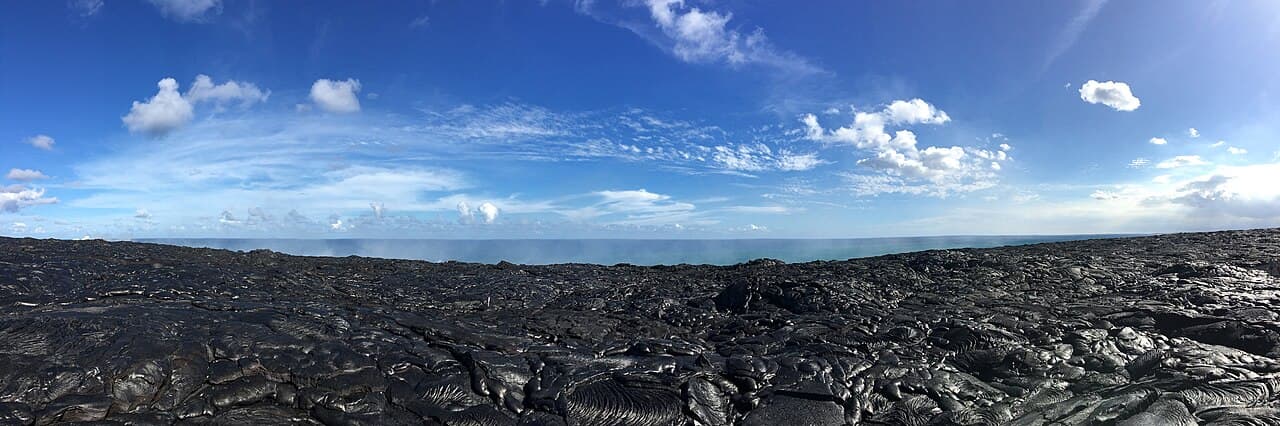
At Hawaiʻi Volcanoes National Park, rock records the creation and reshaping of land. Older lava flows, crater landscapes, steam, and vegetation reveal different stages of a volcanic environment.
The park is also a place of profound Hawaiian cultural meaning. A visit becomes richer when geology and cultural learning receive equal attention.
Look beyond the possibility of an eruption
Visible lava is never guaranteed. Plan around the landscape and interpretation available during your dates, rather than treating an active display as the only reason to visit.
The official park website provides current activity, viewing guidance, closures, and visiting information. Conditions can change quickly.
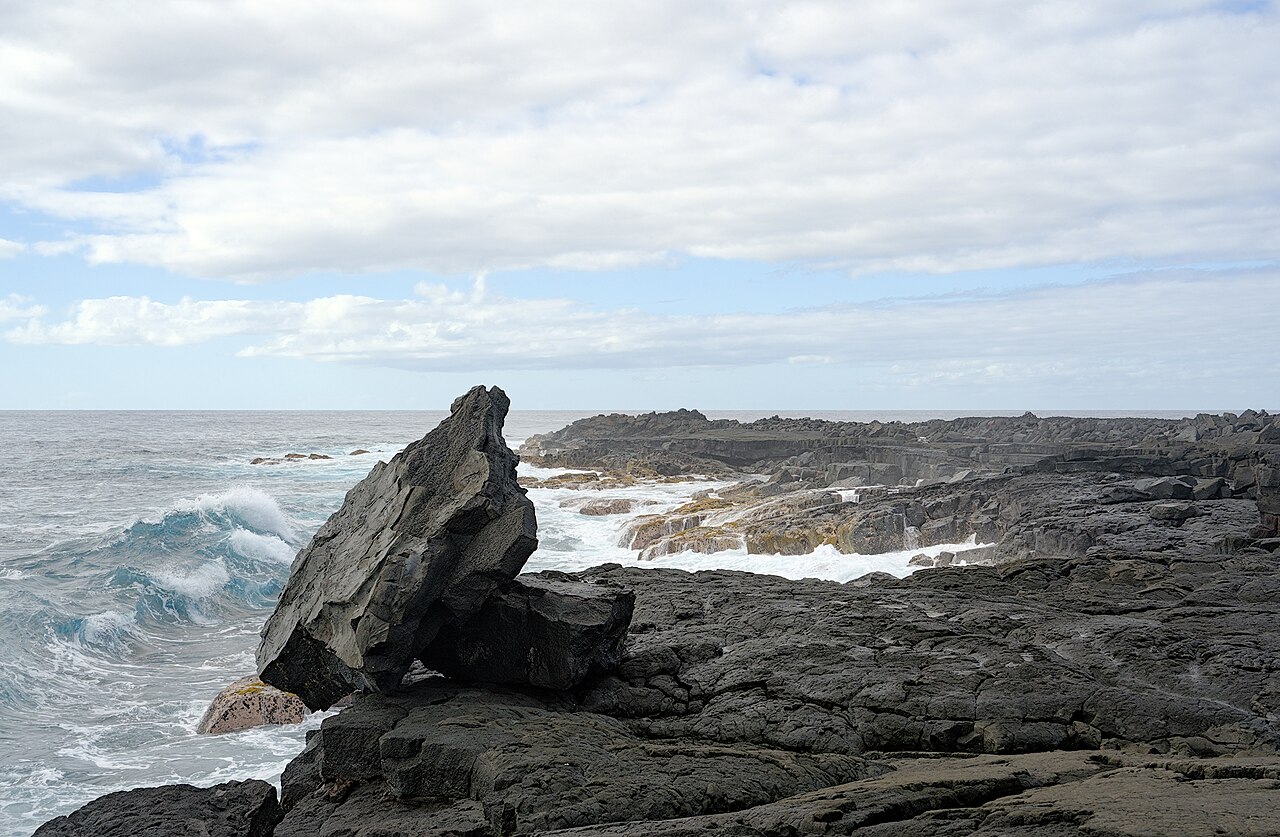
Understand the connection between lava and coast
Older flows along the Pacific show how volcanic land meets waves and weather. Established viewpoints and routes help reveal the relationship without entering restricted or unstable areas.
Follow all barriers. Fresh-looking rock, steam, and ocean edges require more caution than a photograph may suggest.
Notice life returning to the landscape
Plants and habitats offer clues to how life responds to volcanic conditions. Different parts of the park can look very different, depending on age, elevation, and other factors.
Stay on designated trails and avoid disturbing vegetation. Even a seemingly bare surface can be part of a developing habitat.
Visit a culturally important place with respect
Seek Hawaiian perspectives through park interpretation and appropriate cultural resources. Follow guidance on photography, sacred places, and leaving natural objects untouched.
Check air quality and official health and safety advice before an outing. Choose activities suited to your group and keep alternatives available.
Hawaiʻi Volcanoes is most meaningful when it is understood as more than a dramatic event. It is a living landscape, a cultural place, and an opportunity to watch how land and life connect.
Part of Visit America’s 100 places to visit in the USA.
Photo credits
Featured image: Volcanic landscape in Hawaii Volcanoes National Park in August 2016. Photo: Dennin. Original photograph; CC BY-SA 4.0. Resized for web display.

Body image 1: Pacific Ocean beside an older lava flow near Apua Point. Photo: Trougnouf (Benoit Brummer). Original photograph; CC BY 4.0. Resized for web display.

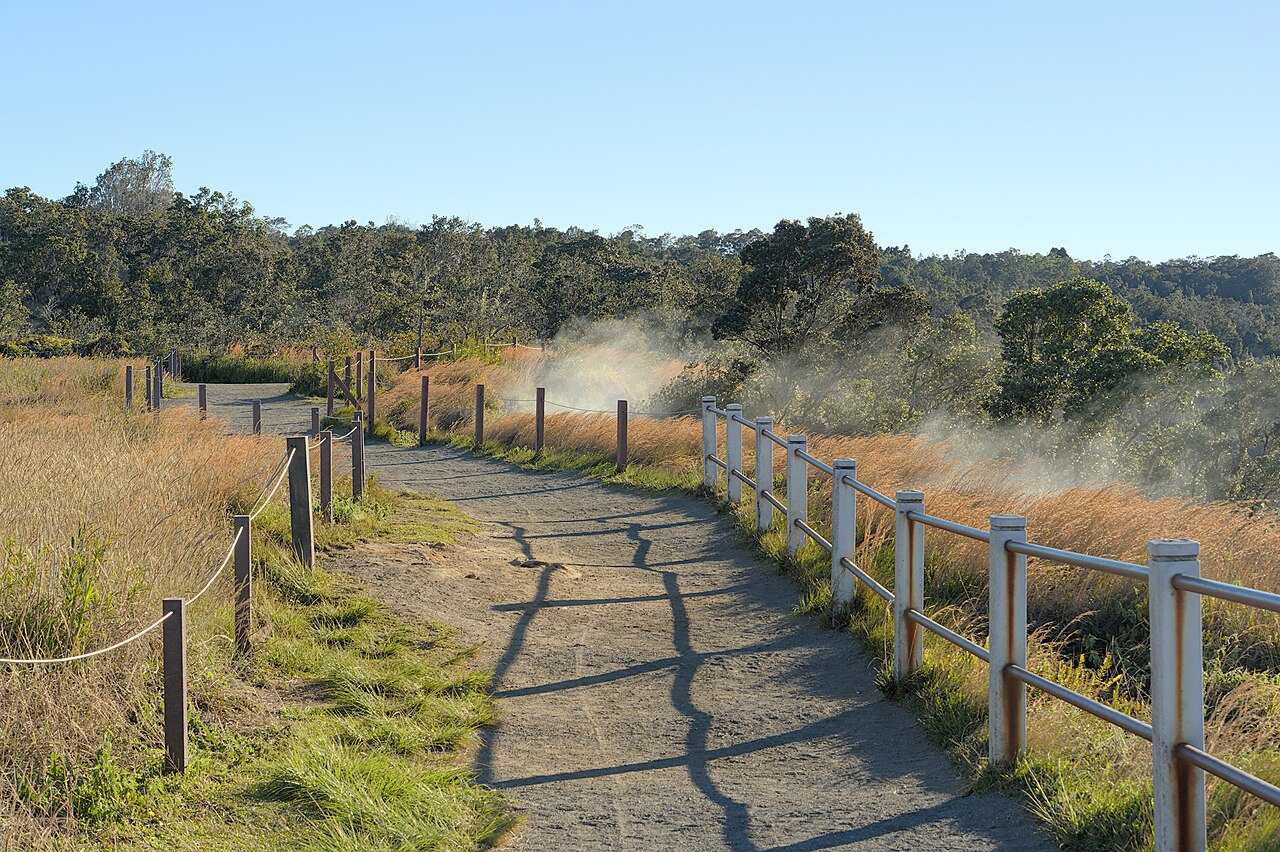
Body image 2: Steaming Bluff beside the Crater Rim Trail in Hawaii Volcanoes National Park. Photo: Trougnouf (Benoit Brummer). Original photograph; CC BY 4.0. Resized for web display.
