In 1845, Sir John Franklin and 129 men embarked on a mission that was both ambitious and perilous. They navigated the Northwest Passage, a sea route connecting the Atlantic and Pacific Oceans through the Arctic. Tragically, this voyage became one of the most infamous in history. Franklin and his entire crew vanished, leaving behind a trail of mystery and speculation.
More than 175 years later, explorer Mark Synnott and his team have retraced Franklin’s doomed path. They hoped to uncover the truth behind his final resting place. This modern expedition combines the thrill of discovery with a deeper understanding of the harsh Arctic environment. In 2023, National Geographic documented and featured their expedition as “Lost In The Arctic.”
Sir John Franklin’s Doomed Expedition
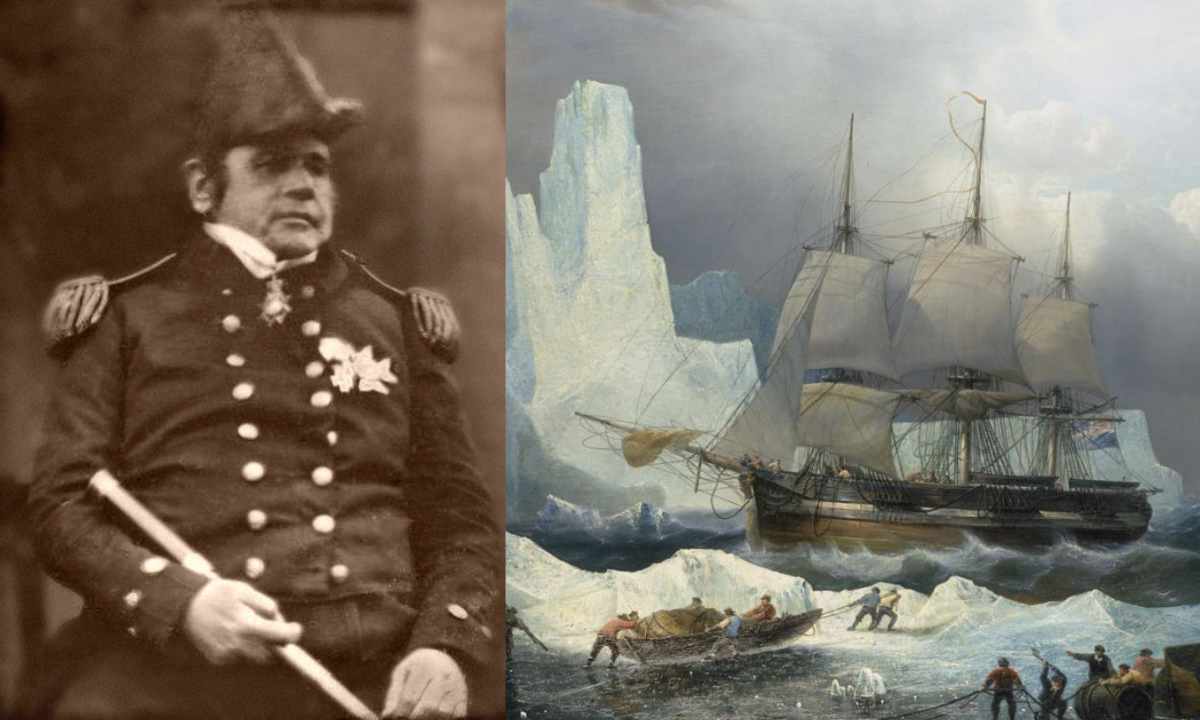
Franklin’s expedition set out with two ships, HMS Erebus and HMS Terror, on May 19, 1845, from Greenhithe, England. The mission was groundbreaking: to chart the final sections of the Northwest Passage and record magnetic data that could aid future navigation. After stopping briefly in Greenland to restock fresh meat and supplies, the final crew was reduced to 129 men due to illness. This was the last time Europeans would see the ships.
The Disaster Unfolds
By September 1846, both ships became icebound near King William Island. The crew spent the next two winters trapped in the Arctic ice, battling starvation, scurvy, lead poisoning, and exposure to the brutal environment. Franklin died on June 11, 1847, leaving second-in-command Francis Crozier and James Fitzjames to lead the survivors.
In April 1848, the remaining crew of 105 abandoned the ships and attempted a grueling 400-kilometer march toward mainland Canada. Archaeological finds and Inuit oral accounts reveal that most perished along the way. Some evidence even pointed to cannibalism as a desperate measure for survival. Inuit reports suggest that 35–40 men reached the northern coast of the mainland before succumbing to the elements.
The Victory Point Note and Artifacts
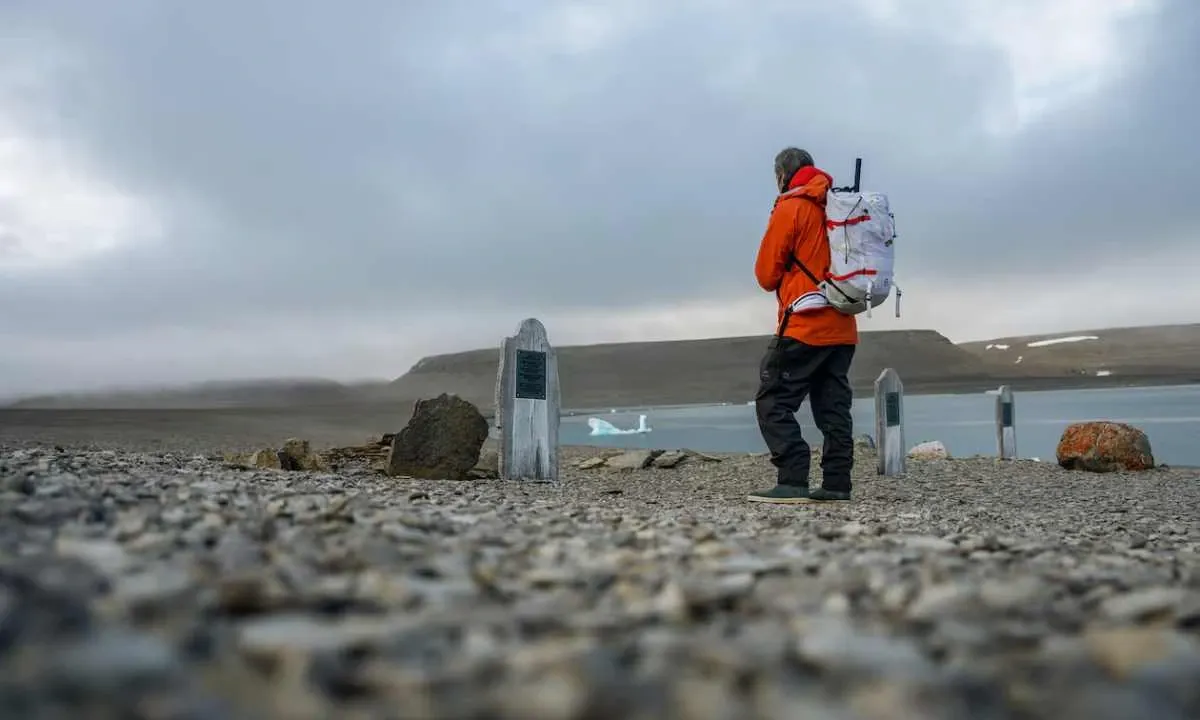
The only first-hand account from the doomed crew is the Victory Point Note, discovered in 1859 by searchers. It detailed the crew’s struggles, Franklin’s death, and the abandonment of the ships. Despite early search efforts and Inuit stories, Franklin’s body was never found.
The mystery deepened until the wrecks of the Erebus and Terror were discovered in 2014 and 2016, respectively. These wrecks, now National Historic Sites, provide valuable insights into the expedition and continue to be studied by researchers.
Mark Synnott’s Journey to Retrace Franklin’s Path
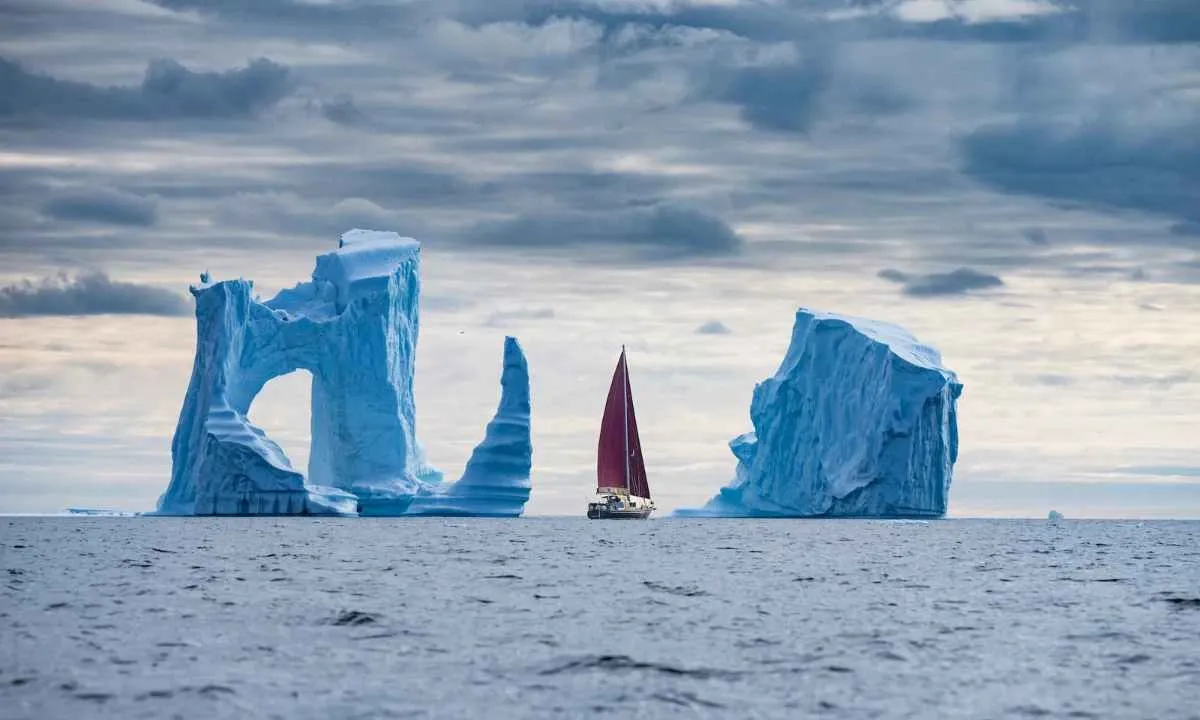
In 2022, National Geographic explorer Mark Synnott set out to retrace Franklin’s route. His team included filmmaker Renan Ozturk and Inuit guide Jacob Keanik. Their mission was to recreate Franklin’s journey, face the same challenges, and uncover untold stories about the lost expedition.
The Challenges Faced
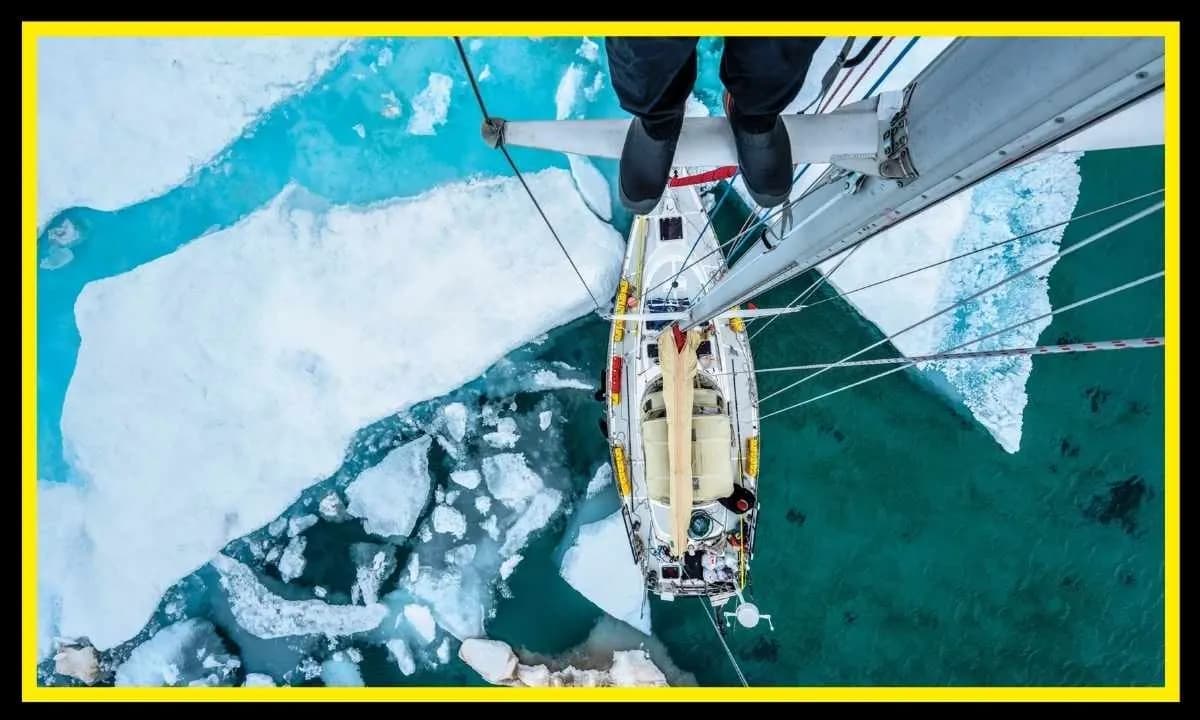
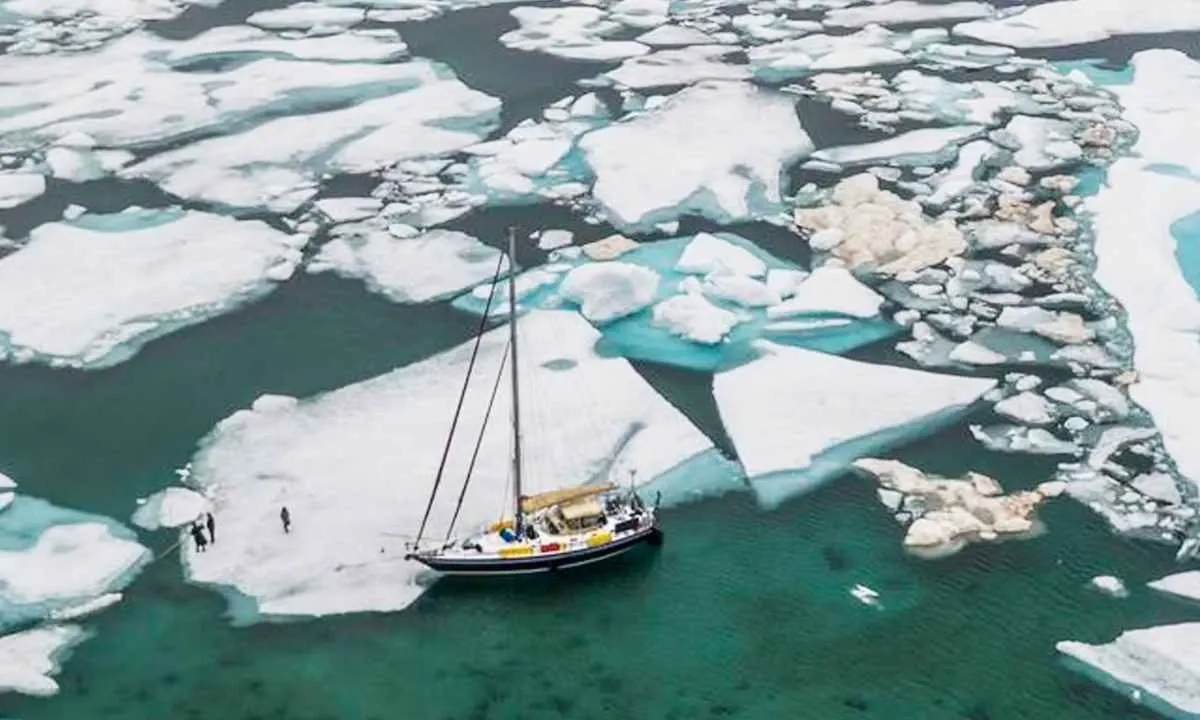
Navigating the Arctic’s treacherous sea ice proved no less daunting in modern times. The crew encountered a “complicated maze of ice,” according to Ozturk, and was trapped for over 10 days. “We almost suffered the same fate,” Ozturk recalled. Balancing survival with storytelling was another hurdle, as the crew often had to prioritize their safety over capturing footage.
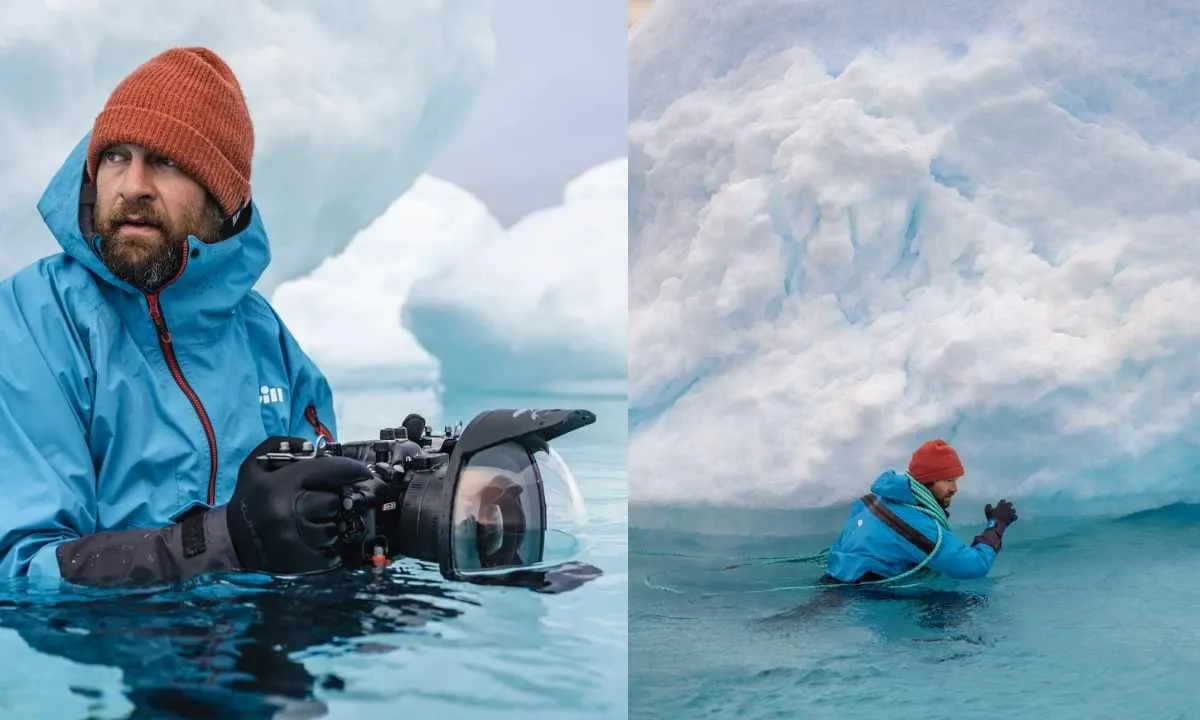
“Every time you get into the water with a dry suit in the Arctic, it’s a dangerous situation. You’re putting yourself in danger because you’re out there with polar bears and other wildlife. You can also get hypothermia and nobody can really go and help you. So just by doing it you’re kind of adding to an already dangerous situation, which isn’t necessarily appreciated by a captain. “
Renan Ozturk
One particularly dangerous moment came when the boat became stuck in ice, requiring Ozturk to swim in sub-zero waters to secure a rope around an ice boulder. This act of bravery was crucial for the crew’s survival.
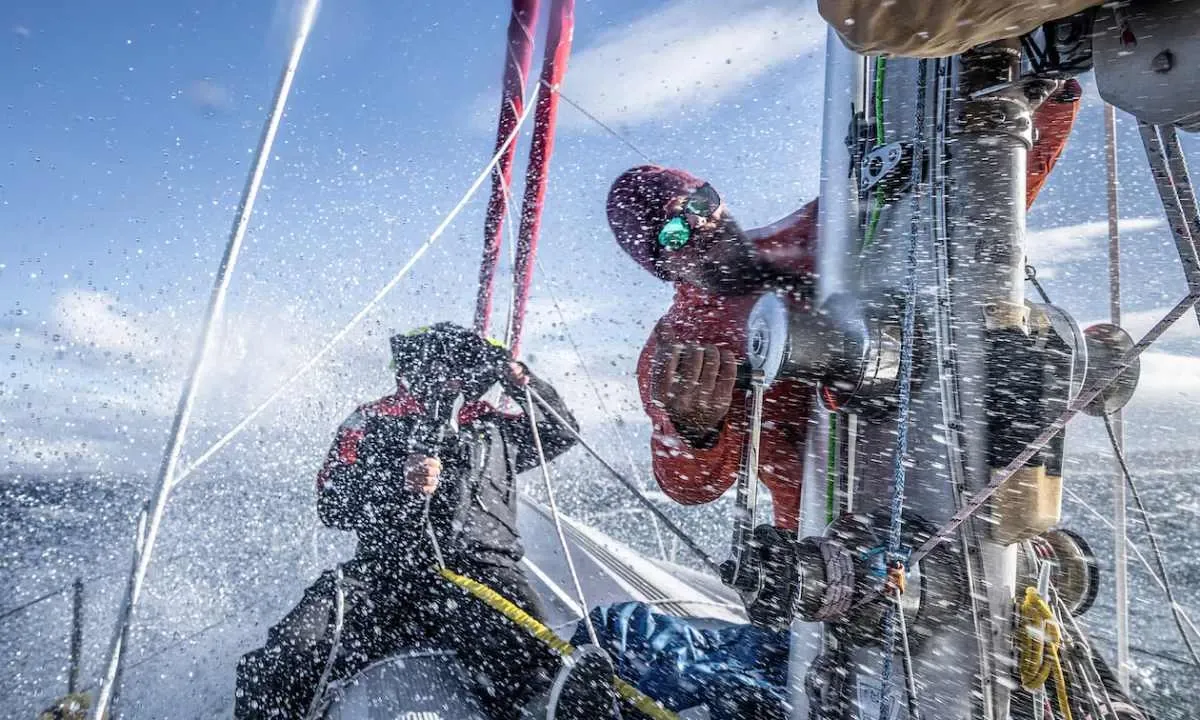
“Normally any single one of those things can be a full-time job. Crews for shows can be from five to upwards of 100 people. But there were just two of us for a lot of it. It’s like we couldn’t have had more things stacked against us.”
Renan Ozturk
Gear and Technology
To document the expedition, Ozturk relied on a Sony Alpha 1 camera, praised for its ability to seamlessly switch between photo and video modes. He also used specific lenses, such as the 35mm f/1.4 G Master for journalistic shots and the 200–600mm lens for capturing Arctic wildlife.
Collaborating with Inuit Communities
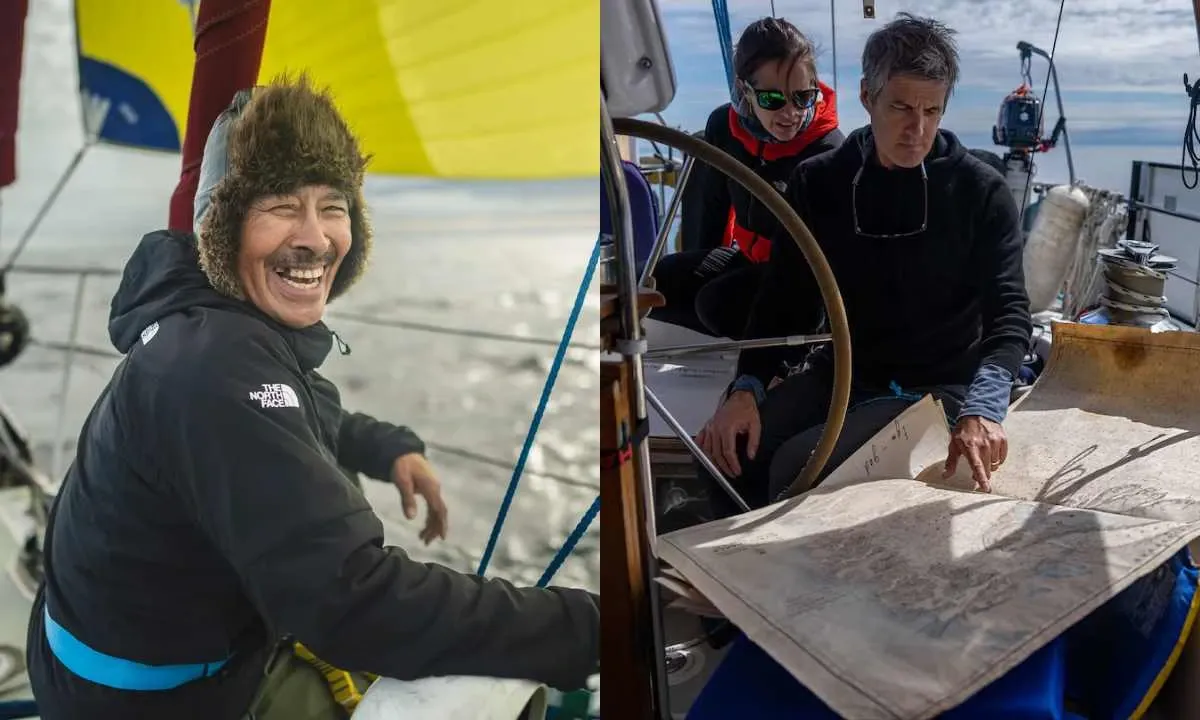
Inuit guide Jacob Keanik, a master hunter and storyteller from Gjoa Haven, brought invaluable expertise to the team. His deep connection to the Arctic landscape and cultural knowledge added a rich layer to the expedition. Keanik described the journey as “the adventure of a lifetime.”
“Jacob lives in Gjoa Haven, above the Arctic Circle. He’s a master hunter, and one of the only guys who still hunts and provides food for his family. He’s one of the few who can translate between the elders and youth in his community. He’s an absolute master of the land, but nobody from his community has ever done a trip through the Northwest Passage the way we were. He was always home with this family and just didn’t have those opportunities.
They asked Keanik to join them on the journey, but not without plenty of disclaimers. We told him we didn’t really know what was going to happen. You could not get back to your family for months. If we get stuck in the ice, we might get rescued. Things could go horribly wrong. And he said, ‘Yes, I’m down. This is the adventure of a lifetime.’ So he came with us and provided a whole other dimension to the entire adventure, especially when we got stuck in the ice and barely made it out. That was probably the most meaningful part of it because you move so quickly, you can’t really spend time and embed in those communities. You’re just there for a day refueling and getting food and then cruising on. So spending this time with him was really the only way to really get that intimate perspective from a local.”
Renan Ozturk said about the Inuit guide Jacob Keanik on board
The Haunting Legacy of Franklin’s Expedition
Impact on Arctic Exploration
Though Franklin’s mission ended in tragedy, it paved the way for future Arctic navigation. Subsequent explorers, inspired by Franklin’s ambition, eventually mapped the Northwest Passage. Roald Amundsen successfully navigated it by boat in 1906.
The wrecks of Erebus and Terror remain key archaeological sites, offering insights into the challenges of Arctic exploration. Protected as National Historic Sites, these wrecks symbolize both the triumphs and perils of human curiosity.
“We had to anchor to a moving piece of ice with ice screws, and then there eventually was nowhere we could anchor. We had to get a rope around this giant ice boulder, and because I was already in the water filming in my dry suit, I was able to swim it around the boulder. At that time I was able to contribute as a crew member so it was lucky.”
Renan Ozturk
Unanswered Questions
Why Franklin’s body remains undiscovered is one of the enduring mysteries. The Victory Point Note provides only fragments of the crew’s struggles, leaving much to speculation. Franklin’s story continues to captivate historians, explorers, and adventurers.
Conclusion
Sir John Franklin’s ill-fated voyage is more than a story of loss; it’s a testament to human resilience and the enduring quest for discovery. Mark Synnott’s expedition breathes new life into this haunting mystery, blending modern technology with historical storytelling to shed light on the Arctic’s secrets.
Also read,