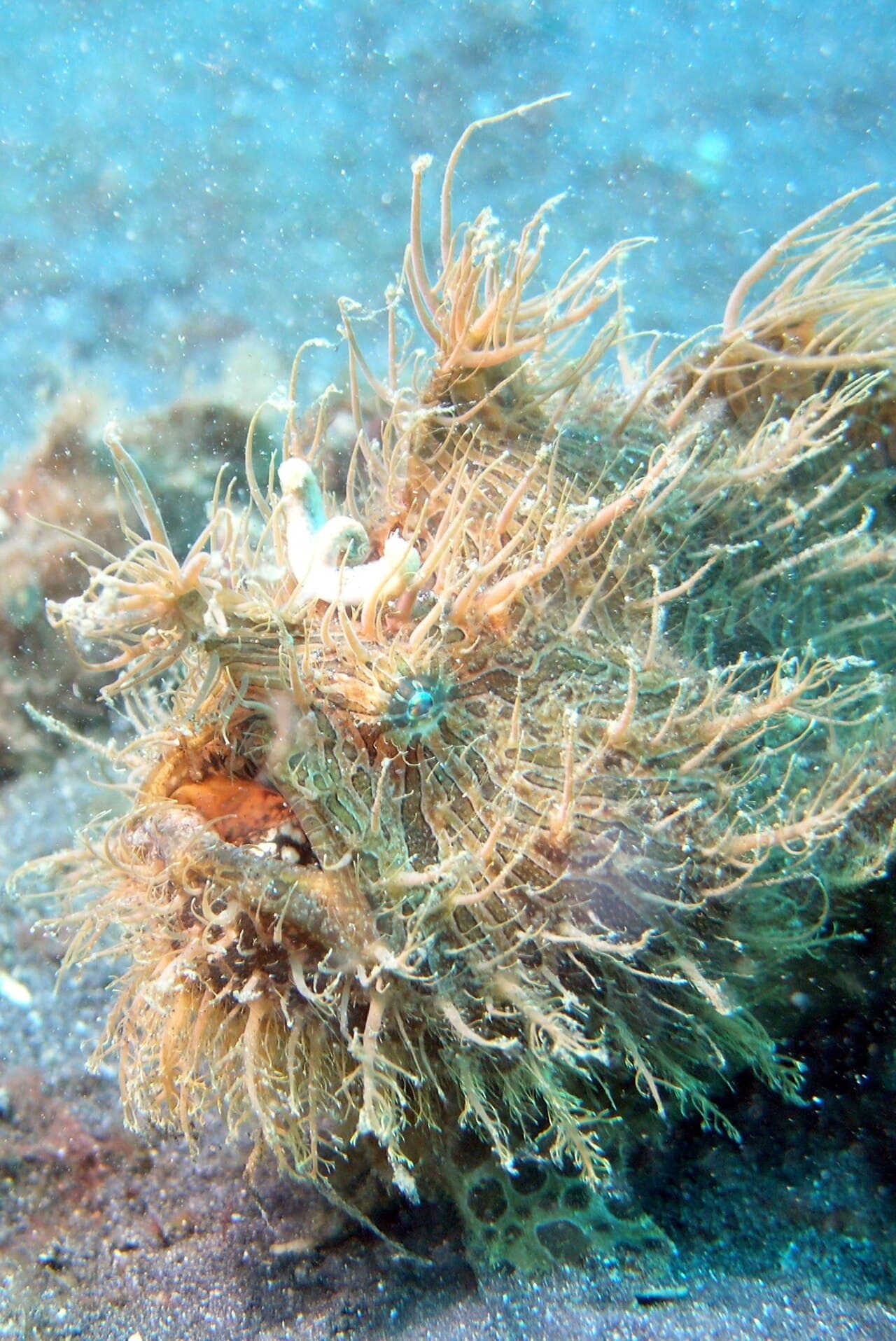
What looks like a shaggy clump on the seabed may be a hairy frogfish waiting for lunch. Its long skin filaments resemble loose strands of surrounding growth.
In front of its mouth, a worm-like lure adds movement to the disguise.
Hair that is not hair
The hairy frogfish is a form of Antennarius striatus, also called the striate or striped anglerfish. The hair-like structures are skin appendages, not mammalian hair.
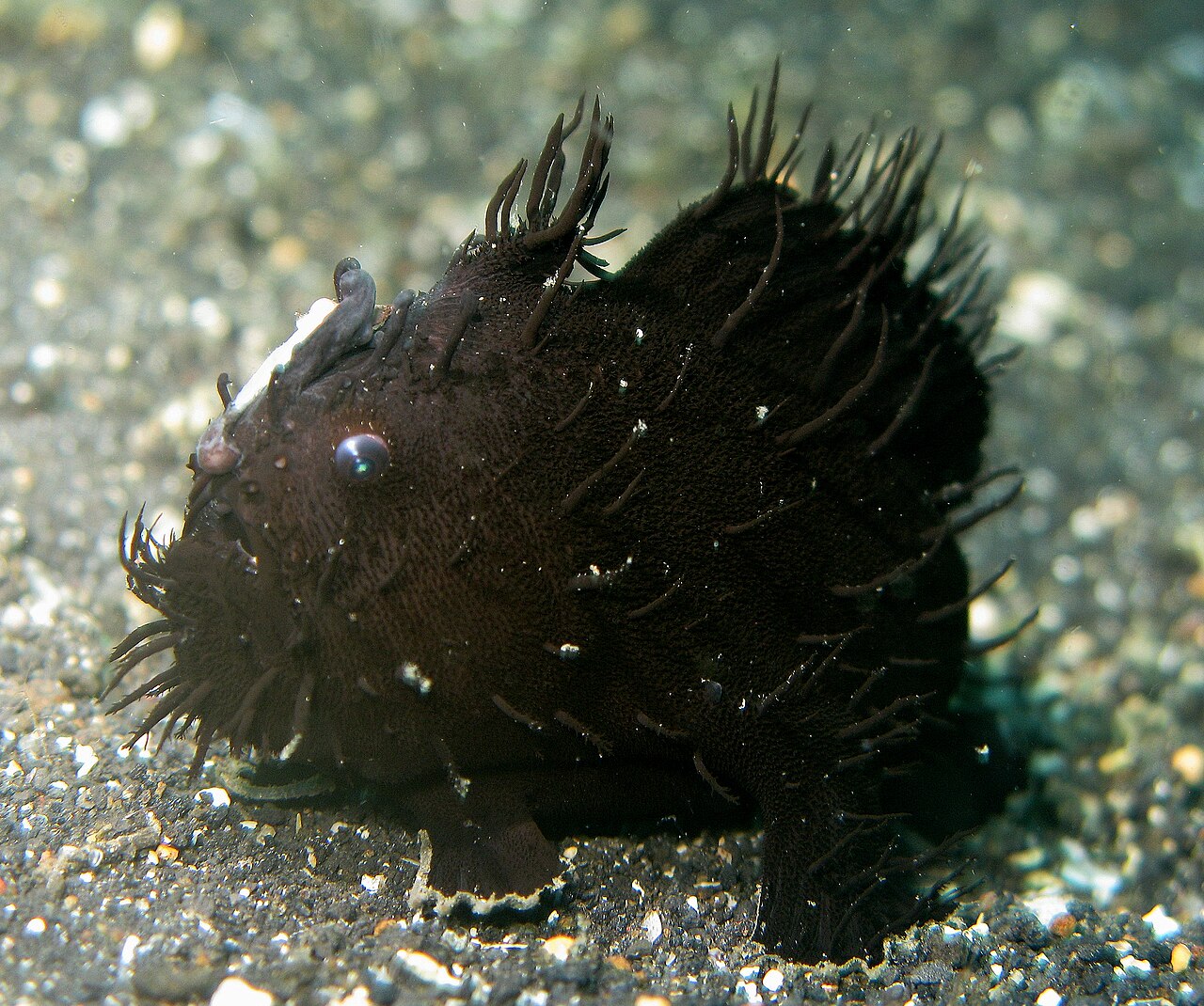
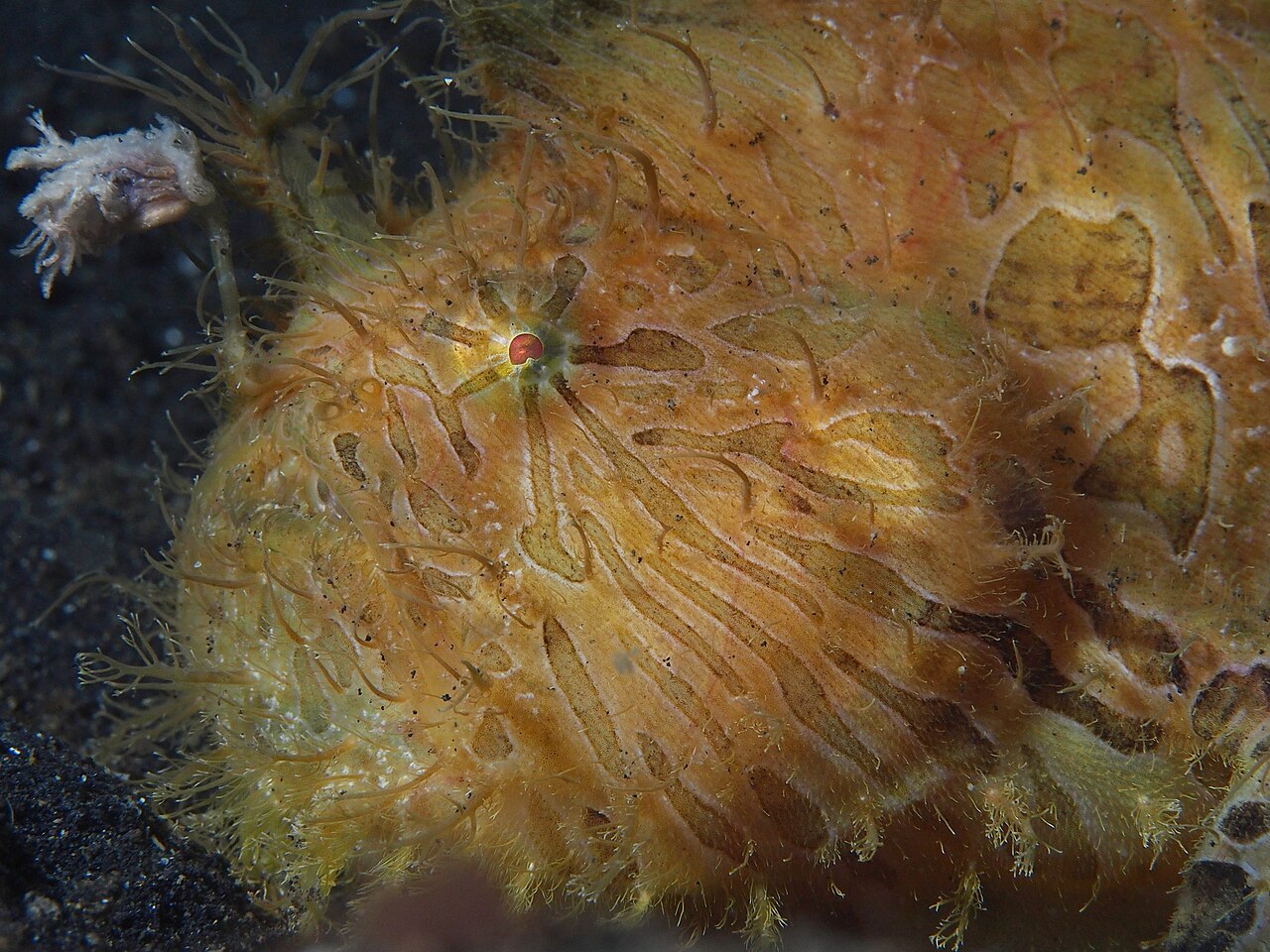
Some individuals are much shaggier than others. Colors and markings also vary, so the name does not describe every member of the species equally well.
Fishes of Australia describes the variation, the worm-like lure, and the animal's habitat.
A meal comes to the hunter
Rather than constantly chasing prey, the frogfish can wait almost still. It moves the lure near its mouth, attracting a curious fish into striking range.
A rapid expansion of the mouth engulfs the prey. What appeared to be a harmless piece of seafloor growth becomes an active predator in an instant.
Jointed, gripping pectoral fins also help it move over the bottom.
Camouflage beyond a coral reef
This species occurs in a range of environments, including sandy, rocky, and muddy areas. Sponges and other bottom growth can provide useful cover.
Such habitats deserve careful observation too. A seemingly plain patch of seabed may contain an animal whose outline is hidden in its texture.
The hairy frogfish is a wonderful reminder that nature's most dramatic moments can begin with a creature doing almost nothing at all.
Photo credits
Featured image: Antennarius striatus2.JPG — Jens Petersen; CC BY 2.5.

Body image 1: Antennarius striatus C.jpg — Steve Childs; CC BY 2.0.

Body image 2: Hairy frogfish (Antennarius striatus) (16059517767).jpg — Rickard Zerpe; CC BY-SA 2.0.

Photographs resized for web display where available.