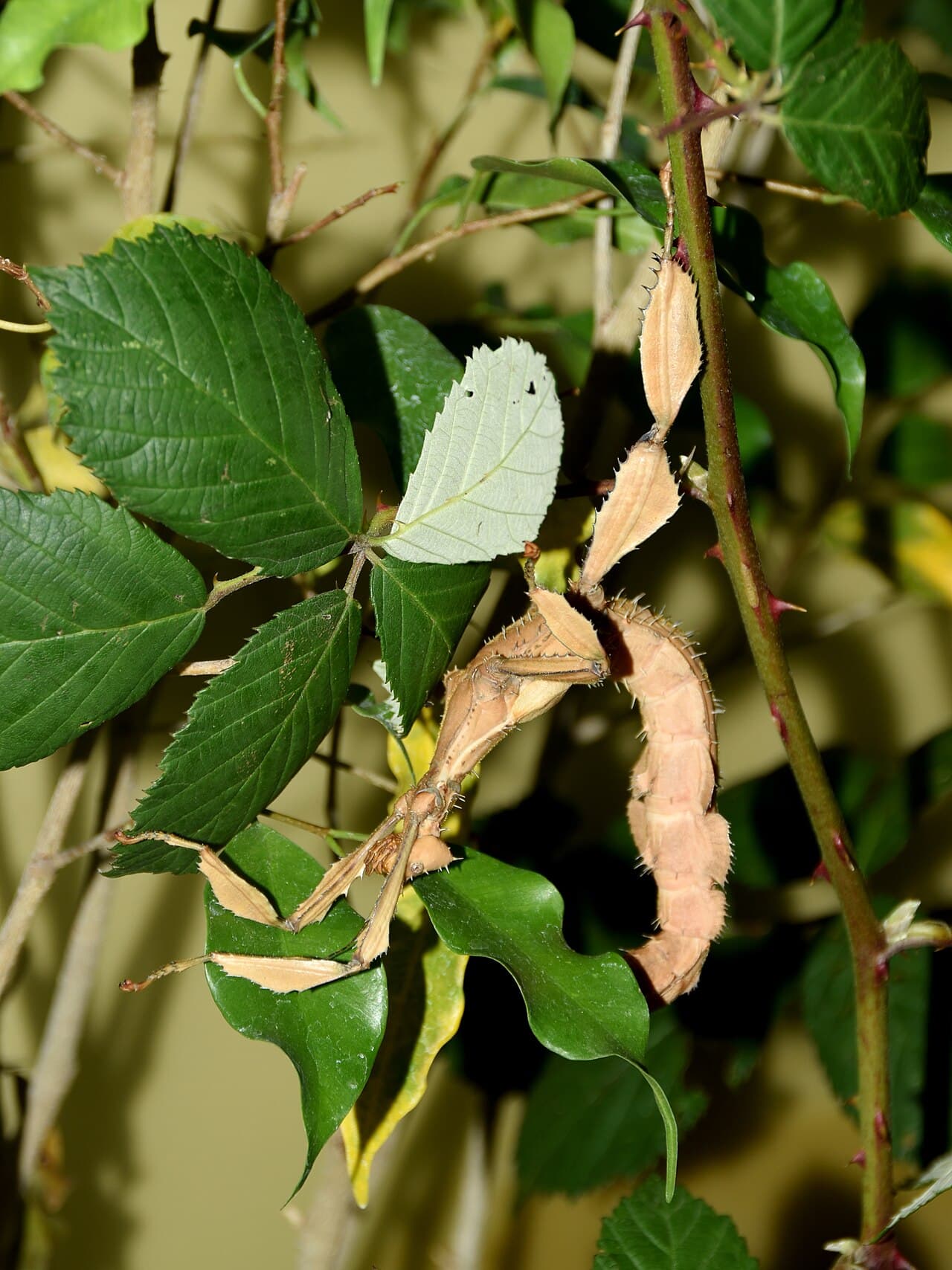
A giant prickly stick insect can resemble curled foliage so well that its legs become difficult to separate from the leaves around it. Its life begins with an equally unusual disguise: an egg that looks like a seed.
Extatosoma tiaratum is also called the spiny leaf insect and Macleay's spectre. Despite one of those names, it is a stick insect rather than a true leaf insect.
A body that belongs among foliage
Perth Zoo's species guide places it in Queensland and New South Wales, Australia.
Females are heavily built and bear thorn-like projections. Males are slimmer, have longer wings, and can fly.
The irregular edges help break up the animal's outline among vegetation. The effect is easier to appreciate when you stop looking for a familiar insect shape.
A leaf-eater with a defensive pose
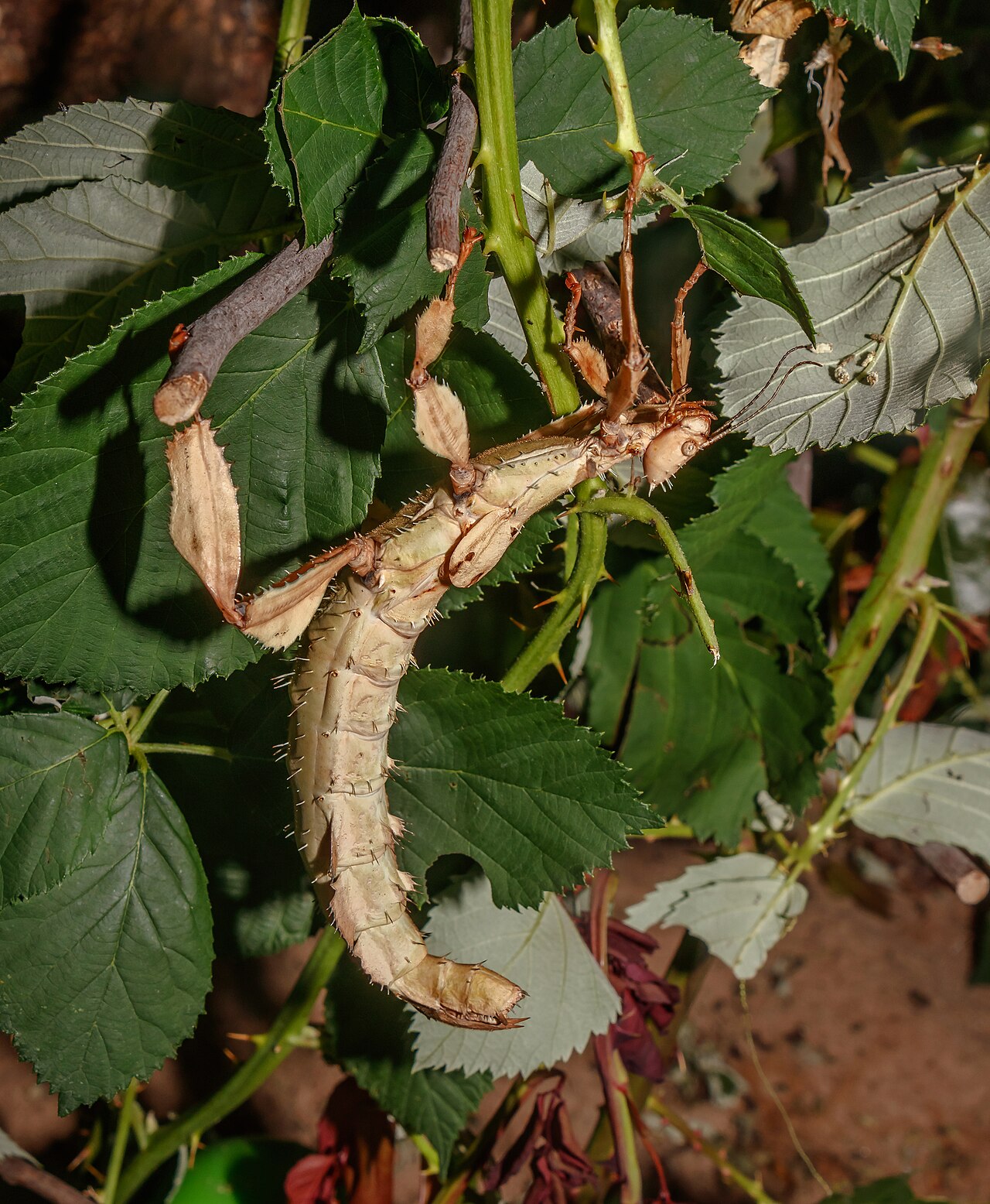
These insects eat leaves, including eucalyptus. Their camouflage helps them avoid being noticed while living among food plants.
When threatened, they can curl the abdomen upward. The scorpion-like outline does not turn a plant-eating insect into a scorpion.
How ants enter the story
Taronga Zoo's keeper account describes eggs with a small attractive cap. Ants may carry the eggs into their nests to take the reward.
A newly hatched insect has an ant-like appearance. As it grows, its appearance shifts toward the leaf-like form.
More than one way to begin
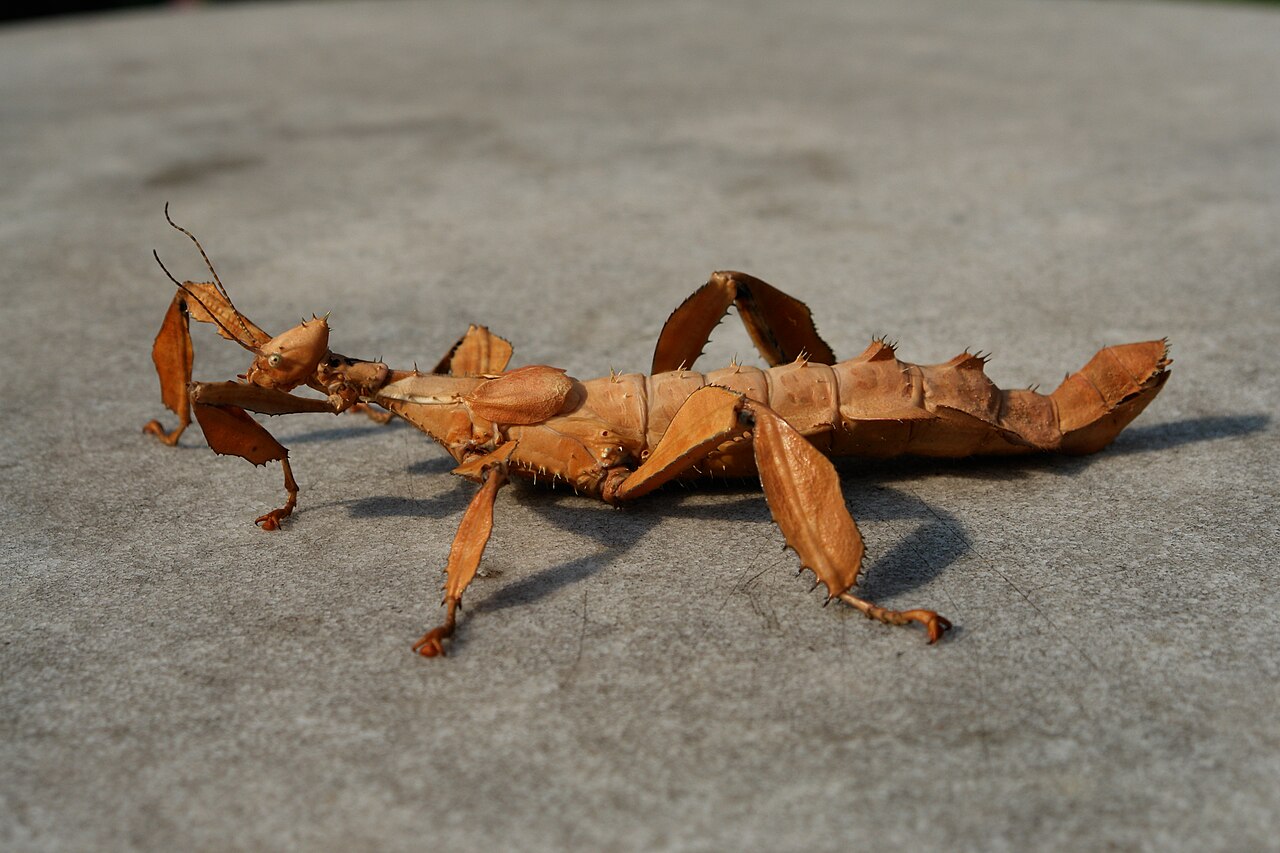
Females can also produce offspring without mating, through a process called parthenogenesis. Those offspring are female.
It is another reminder that the animal's unusual shape is only the start of its story.
A prickly outline, a seed-like egg, and a tiny ant-like youngster connect very different stages of one life. Nature's best disguises can change as their wearer grows.
Photo credits
Featured image: Phasmatidae Extatosoma tiaratum 3.1.jpg — NasserHalaweh; CC BY-SA 4.0.

Body image 1: Extatosoma tiaratum - Karlsruhe Zoo 01.jpg — H. Zell; CC BY-SA 3.0.

Body image 2: Extatosoma tiaratum 119.JPG — Stephan M. Höhne; CC BY-SA 3.0.

Photographs resized for web display where available.