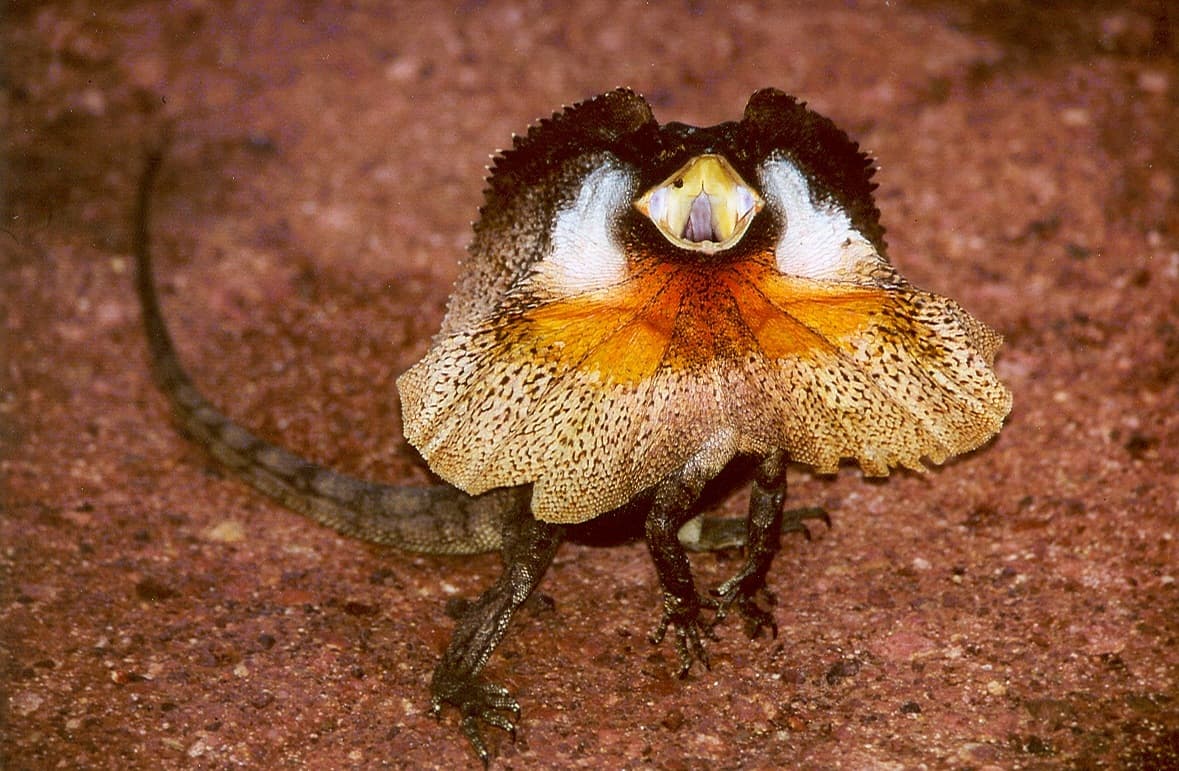
A frilled-neck lizard can change its appearance in a moment. A fold of skin opens into a broad collar around the head, turning a slim reptile into something much larger-looking.
The display is dramatic because most of the time the frill stays folded.
An Australian dragon with a flexible collar
The species is Chlamydosaurus kingii. It belongs to the dragon lizard family and occurs in northern Australia and New Guinea.
The Northern Territory Government describes its identity and appearance.
The frill is a supported fold of skin, not a separate bony shield. Its color and size vary, so different animals need not match the same vivid portrait.
A warning before contact
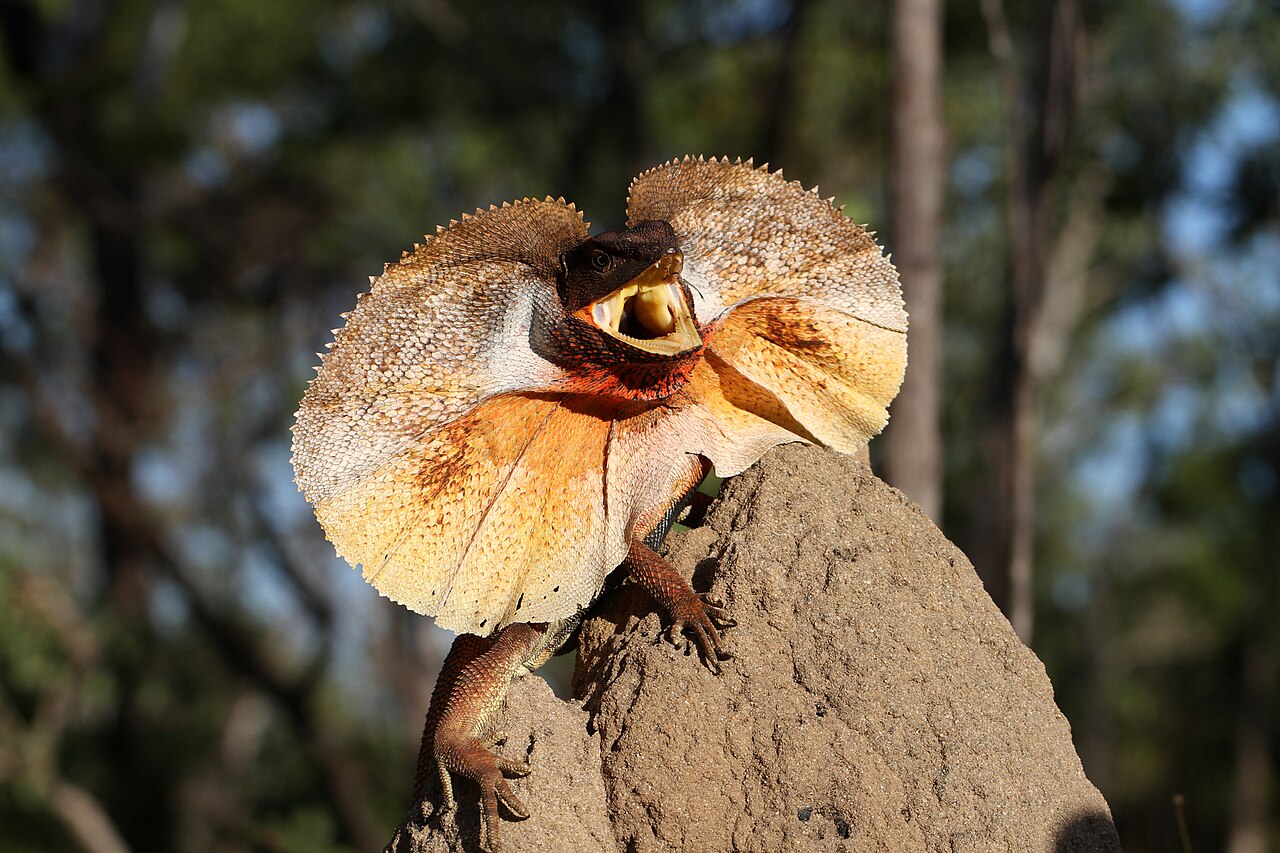
An Australian Museum account describes the open-mouth display and expanded collar.
Increasing the visible outline can discourage a potential attacker. The bright mouth and body posture add to the signal.
The animal may also retreat. It should not be described as opening its frill mainly to attack people, nor should a lizard be provoked to produce a photograph.
More than the famous pose
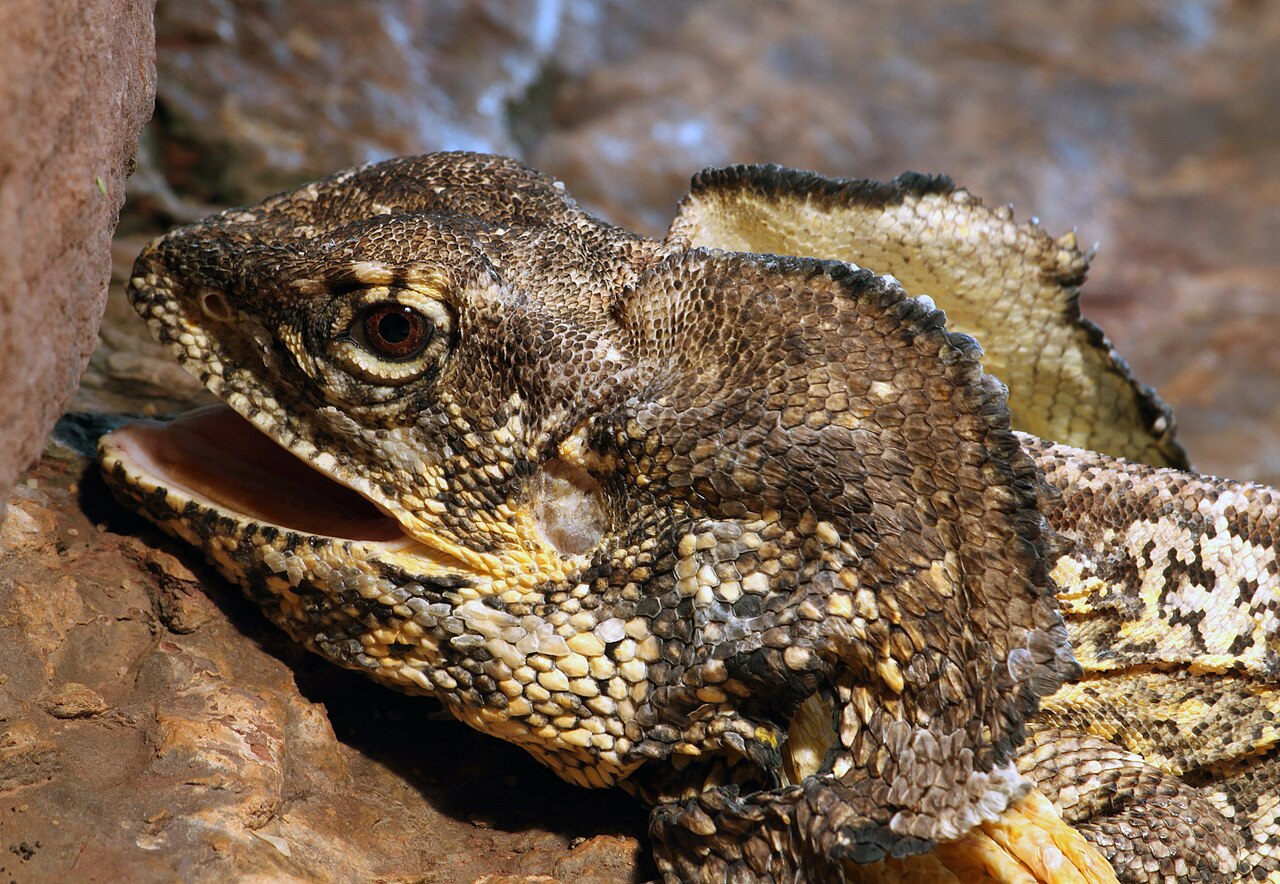
When relaxed, the lizard often looks much less spectacular. It spends time on trees and searches for food, including insects and other small animals.
Running, climbing, feeding, and avoiding danger occupy more of its life than the brief full-frill moment.
Seeing the animal without the display is therefore a normal observation, not a disappointing failure to find the “real” lizard.
Keep the warning meaningful
A defensive signal is useful because another animal may respond to it. Repeated unnecessary disturbance imposes a cost on the lizard.
Its great surprise is how much visual change can come from a folded surface. Nature has given this reptile a warning that appears only when the moment calls for it.
Photo credits
Featured image: Miklos Schiberna; Source; Public domain. Resized for web display.

Body image 1: Matt from Melbourne, Australia; Source; CC BY 2.0. Resized for web display.

Body image 2: Holger Krisp; Source; CC BY 3.0. Resized for web display.
