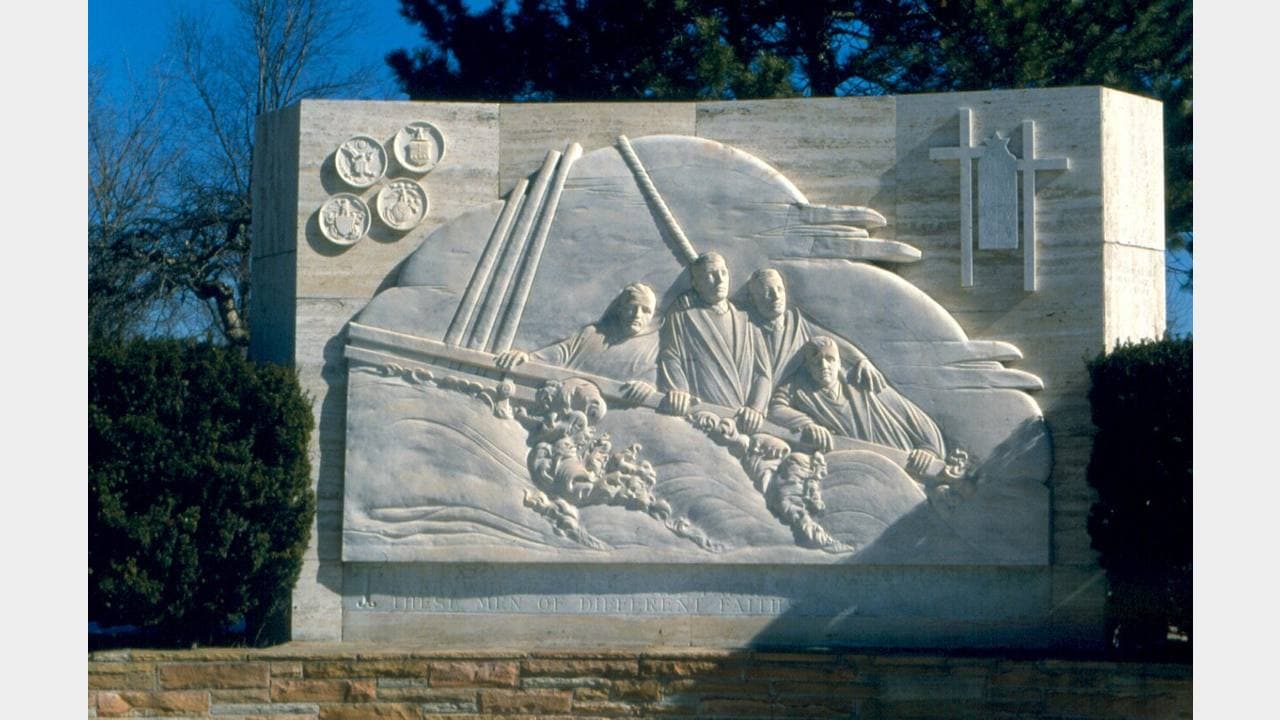
Four US Army chaplains were helping frightened passengers find their way to safety when the supply of life jackets ran out. Each gave his own jacket to someone who did not have one.
The Dorchester was sinking in the North Atlantic on February 3, 1943. None of the four chaplains survived.
A torpedo struck during the crossing
The Army transport was carrying 902 people toward Greenland when a German submarine torpedoed it. The explosion damaged essential systems and left people trying to escape in darkness.
The US Department of Defense's history of the sinking describes the chaplains moving among passengers, assisting the wounded and helping people obtain flotation equipment.
They were George L. Fox, a Methodist minister; Alexander D. Goode, a rabbi; Clark V. Poling, a Dutch Reformed minister; and John P. Washington, a Catholic priest.
Their different faiths were part of the group the passengers saw working together during the emergency.
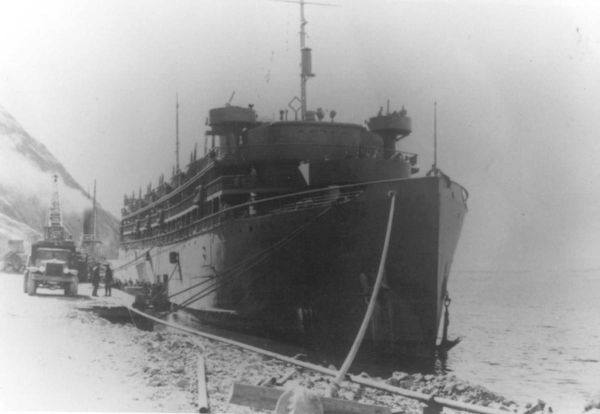
Archival photograph of USAT Dorchester, the troop transport sunk in February 1943. Photo: US Coast Guard archive; photographer unidentified, Public domain. Resized; JPEG conversion.

They gave the equipment they needed themselves
The Army Chaplain Corps' account records the decision to remove their own life jackets after the available supply was exhausted.
Survivors described seeing the chaplains together on the ship as it went down. The account of their linked arms and prayers became central to the way they were remembered.
Their actions were practical before they became symbolic. They guided disoriented people, provided reassurance and passed lifesaving equipment to those who needed it.
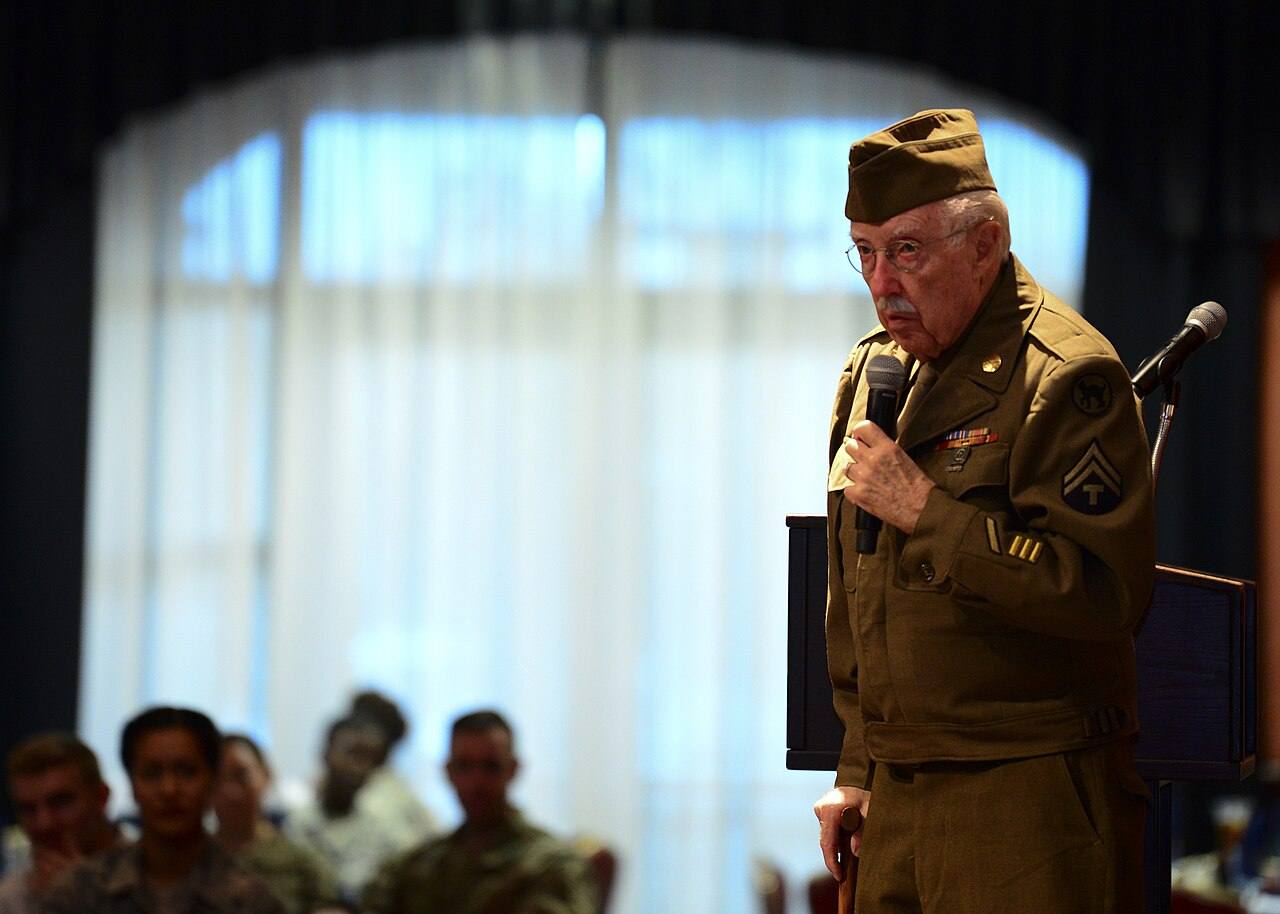
Archival Four Chaplains commemoration. This modern event is not a photograph of the 1943 sinking. Photo: U.S. Air Force photo by Airman 1st Class Caleb House, Public domain. Resized; JPEG conversion.

A shared legacy across faiths
The National Museum of the US Air Force's historical account records the posthumous awards of the Distinguished Service Cross and Purple Heart in December 1944.
Memorials and annual observances have kept the four men's names together. They recall a shared response to danger rather than a division over the beliefs each man held.
It is not possible to reconstruct every exchange on the darkened transport. What the military histories preserve is the consistent core of the survivors' account: when other people lacked protection from the freezing water, the chaplains gave up the protection they were wearing.
Featured image: Four Chaplains monument in Ann Arbor, Michigan, by Carlton W. Angell. Photo: User Carptrash on en.wikipedia, Public domain. Resized and fitted to a 16:9 canvas.
