A cow exploring falling snow can invite an immediate human interpretation: curiosity, pleasure or play. A photograph alone cannot tell us exactly what an individual animal is experiencing.
A broader scientific question remains important, however. In April 2024, researchers signed a declaration stating that there is strong scientific support for attributing conscious experience to other mammals and birds.
A statement about experience, not human speech
The New York Declaration on Animal Consciousness was announced at New York University on April 19, 2024.
Its subject is whether animals can have experiences of their own. The question does not require an animal to reason, speak or describe its life in the same way a human would.
The declaration distinguishes between stronger support for mammals and birds and a realistic possibility of experience in a wider range of animals. Those include other vertebrates and several groups of invertebrates.
That is a qualified scientific statement. It does not claim that every uncertainty about every species has been resolved.

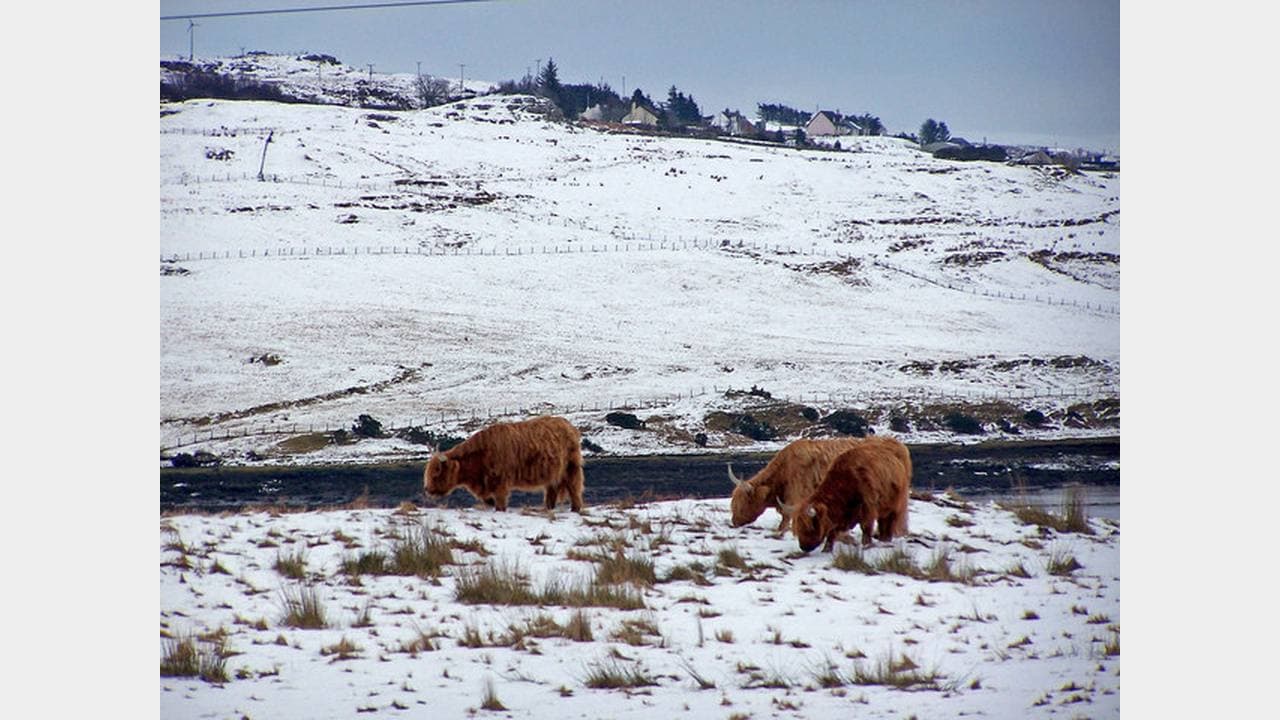
Highland cattle photographed in snow in Gherdeina. This is not the unverified viral cow photograph. Photo: This Photo was taken by Wolfgang Moroder. Feel free to use my photos, but please mention me as the author and send me a message. This image is not in the public domain. Please respect the copyright protection. It may only be used according to the rules mentioned here. This specifically excludes use in social media, if applicable terms of the licenses listed here are not appropriate. Please do not upload an updated image here without consultation with the Author. The author would like to make corrections only at his own source. This ensures that the changes are preserved.Please if you think that any changes should be required, please inform the author.Otherwise you can upload a new image with a new name. Please use one of the templates derivative or extract., CC BY-SA 3.0. Resized; JPEG conversion. Image adaptation shared under the same CC BY-SA 3.0 license.

Evidence comes from several fields
The launch event's program brought together work from neuroscience, psychology, evolutionary biology, philosophy and animal-welfare research.
Participants discussed ways of studying animals that cannot describe sensations in human language. Different kinds of observations and experiments can contribute evidence, while disagreements remain about how much confidence particular results justify.
York University's account of organizer Kristin Andrews's work explains the declaration's attention to consciousness-related behavior across species.
The signatories signed in their personal capacities. Their signatures should not be described as an official endorsement by every university or organization where they work.
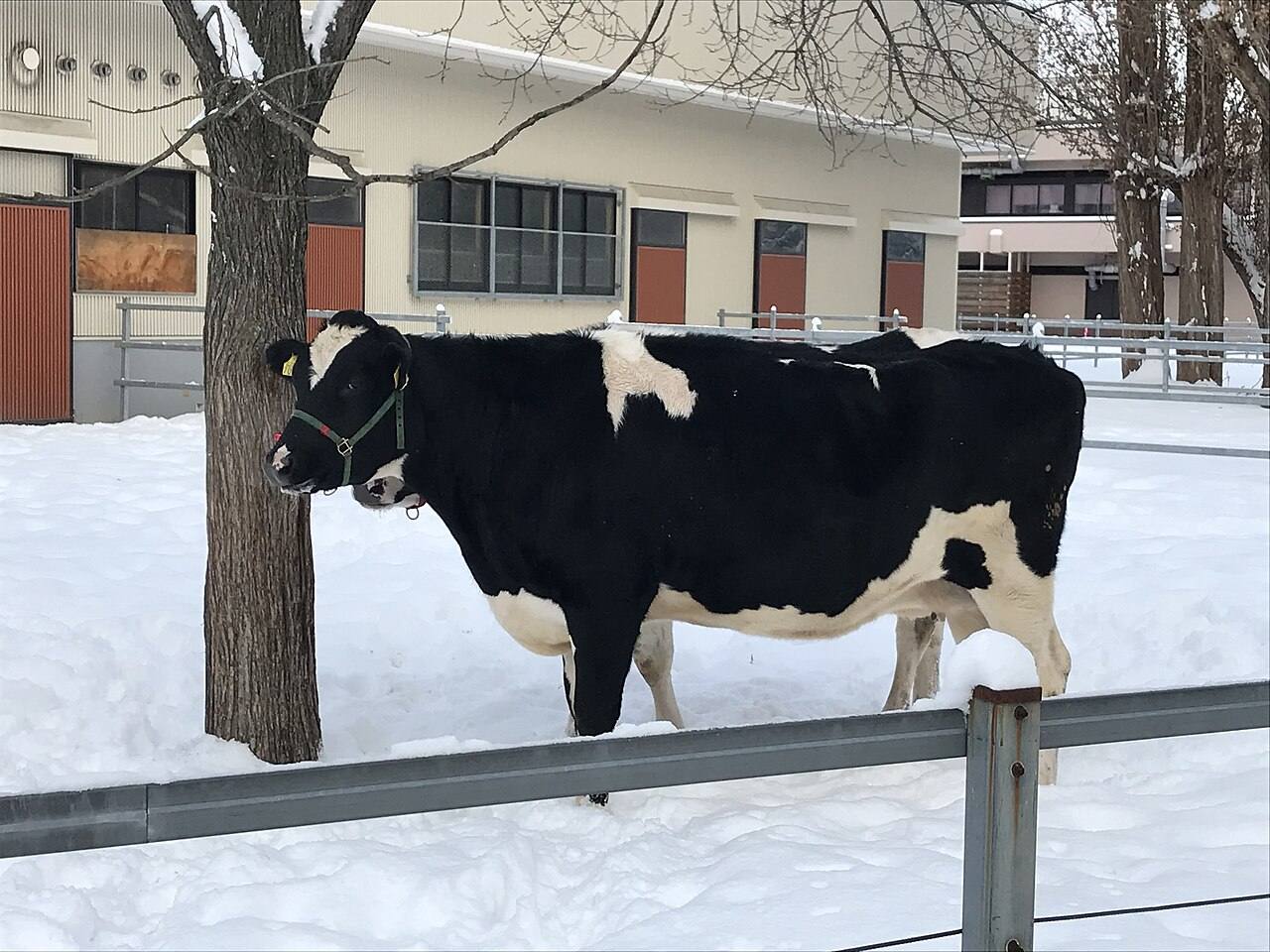
Illustrative Holstein-Friesian cattle in snow. A photograph alone cannot establish an animal’s conscious experience. Photo: ノボホショコロトソ, CC BY-SA 3.0. Resized; JPEG conversion. Image adaptation shared under the same CC BY-SA 3.0 license.

Why uncertainty can still matter for welfare
The declaration's practical point is that a realistic possibility of experience should be considered when decisions affect an animal's welfare.
That reasoning leaves space for both caution and care. Not knowing precisely what an animal feels does not establish that it feels nothing, just as a compelling photograph does not establish a precise emotion.
An ordinary scene of an animal investigating its surroundings can prompt the question. Research provides the more demanding work of examining it, and of considering what the evidence means for the way animals are treated.
Featured image: Illustrative cattle-in-snow photograph. It does not establish what any individual animal is feeling. Photo: Richard Dorrell, CC BY-SA 2.0. Resized and fitted to a 16:9 canvas. Image adaptation shared under the same CC BY-SA 2.0 license.
