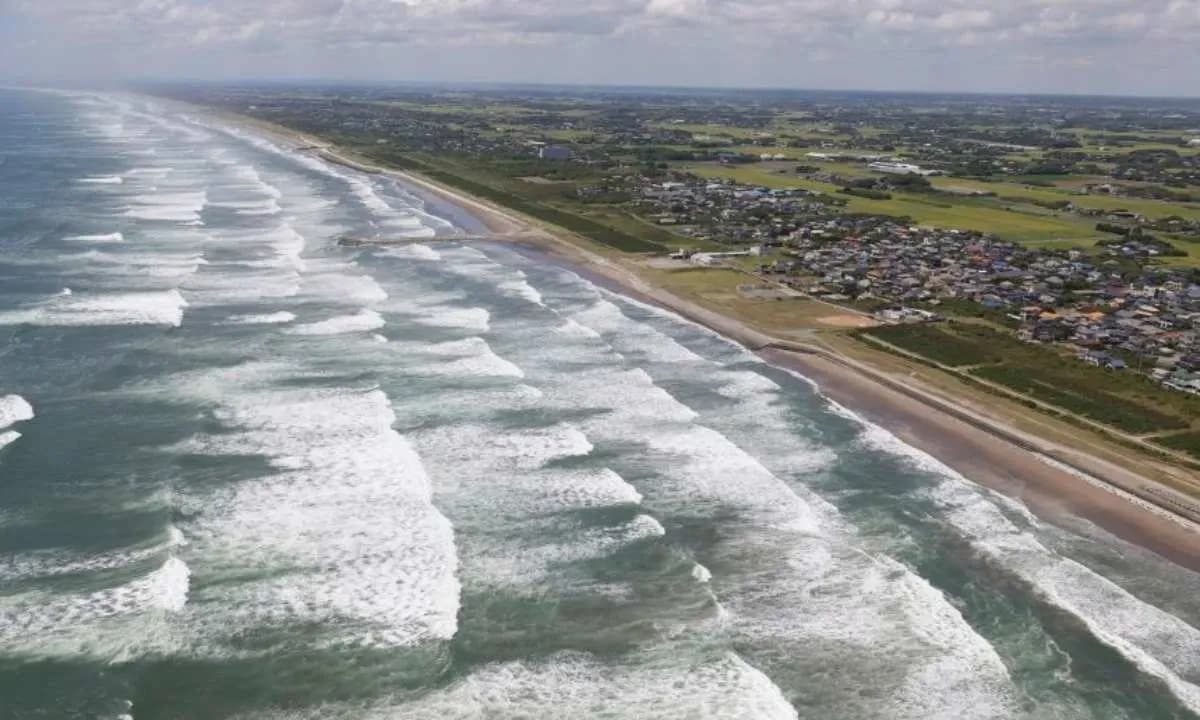
On a quiet morning, the residents of Crescent City, California, were suddenly thrust into a reality many hoped they’d never face. Tsunami waves, triggered by an 8.8 magnitude earthquake off Russia’s far eastern coast, began hitting the California coast on the morning of July 30, 2025. The first wave was not the towering, Hollywood-style wave that many feared, but it was a clear reminder of nature’s raw power.
The National Weather Service (NWS) had already issued a tsunami warning for the coastal areas from Cape Mendocino down to the Oregon-California border. Tsunamis, although often imagined as a single giant wave, are actually a series of waves, and the first one is not always the largest. In fact, the warning for California mentioned that the first wave might not even be the highest, with a danger of additional waves expected over the next 24 hours.
As the morning unfolded, the tsunami waves began to appear along the California coast. In Arena Cove, for instance, the waves were recorded at 1.6 feet (0.5 meters) above tide level. While this height may sound manageable, it is important to understand that tsunami waves are dangerous precisely because they come in waves. They build up quickly and then recede, but they often return, causing repeated surges that can overwhelm the coast.
At the same time, Hawaii was experiencing similar waves. Authorities across the U.S. West Coast were on high alert, urging coastal residents to evacuate immediately. Evacuation orders were issued for many areas, and people were advised to move inland to higher ground. This quick action was not just precautionary; the danger is real.
Tsunamis are caused by underwater earthquakes that shift the seafloor, displacing large amounts of water, which creates waves. The energy released from this displacement pushes the water in a series of fast-moving waves that can reach far inland. And as the NWS stated, “waters will recede, but could return multiple times.”
In Port San Luis, located along the California coastline, the situation was even more alarming. The surge was moving rapidly, shifting from low to high tide in just a few minutes. The National Weather Service warned that the waves might come back several times, each wave having the potential to be just as dangerous as the last.
It wasn’t just California and Hawaii that were affected. The tsunami waves had been triggered by an earthquake that occurred off Russia’s Kuril Islands, in the Pacific Ocean. In these areas, waves as high as five meters were recorded, creating significant concerns for those living in and around the islands.
Meanwhile, Japan also experienced smaller tsunami waves, with heights recorded at around 40 centimeters in 16 locations near the coast of Hokkaido. Despite being smaller than the waves seen in the Kurils, these waves still represented a major threat to coastal communities, leading authorities to issue their own set of warnings.
@abc7newsbayarea Beaches are closed on this Tuesday night in San Francisco amid a Tsunami Advisory. Conditions could change but in San Francisco, they are still expecting waves of a foot or less, and it could stay that way for between 24 and 36 hours. #tsunami #tsunamiadvisory #sanfrancisco #beach #waves #abc7news ♬ original sound – ABC7 News
For many, tsunamis are something they read about in textbooks or see in the movies, but on July 30, 2025, reality hit hard. As the waves reached California’s coastline, the enormity of the natural disaster started to sink in. Evacuations, though expected, were still deeply unsettling. Families and tourists in the area scrambled to pack and leave, some unsure of where to go as they watched the ocean’s deadly potential unfold before them.
What made this particular tsunami even more alarming is that it was not just a one-off event. Tsunamis are notoriously unpredictable, and they can continue for hours or even days after the initial shock. In this case, the warning remained in place for the West Coast of the United States for several hours after the first waves hit, with the NWS stressing that the threat was ongoing and that more waves could follow. In fact, the authorities urged everyone not to return to affected areas until they received the all-clear, even if the waters appeared to have receded.
Crescent City, a small coastal town nestled between the Pacific Ocean and towering forests, is a prime example of a location vulnerable to tsunamis. The region’s unique underwater topography, which is shaped by deep underwater canyons and ridges, amplifies the energy of the waves, making the area more susceptible to significant wave surges. While the earthquake off Russia was the trigger, Crescent City’s geographic features made the impact even more dangerous.
As the day went on, the waves continued to batter the coast. However, authorities were able to track the movements of the tsunami, and emergency response teams were in place to help with evacuations and ensure that people were safely moved to higher ground. Yet, despite the intense response, the event was still a stark reminder of the power of nature and how quickly things can change. For many in Crescent City, this was the first real encounter with a tsunami, but it certainly won’t be the last.
WATCH: Video shows flooding in Hilo as tsunami waves hit Hawaii.
— AZ Intel (@AZ_Intel_) July 30, 2025
pic.twitter.com/nwiU5dZUmu
Throughout the day, the waves seemed to ebb and flow, leaving behind a surreal sense of uncertainty. Was this the end, or was it just the beginning? That was the question on everyone’s mind, as the coast of California continued to be on edge. In fact, some of the more affected areas, like Port San Luis, could continue to experience surges for hours. Residents and visitors alike were left with a stark reminder of the vulnerability that coastal cities face when it comes to the unpredictable nature of tsunamis.
Tsunamis are dangerous because they are deceptive. They don’t come in a single, massive wave, as most people imagine, but rather in a series of waves that can be just as dangerous, if not more so, than the initial wave. As people moved to safety, the real fear was the uncertainty of what was to come.
For those who have lived in coastal areas like Crescent City, tsunamis may have always seemed like a far-off possibility, something that happens in places far from home. But on July 30, 2025, that illusion was shattered. The first tsunami waves hit California, and the shockwaves were felt far beyond the shores of the Pacific Ocean.
In the wake of the event, residents of California, Oregon, and Hawaii will surely reflect on the vulnerability of their coastlines and the unpredictable power of nature. Whether this was the beginning of something larger or merely a warning, one thing was clear—nature is a force that cannot be ignored.