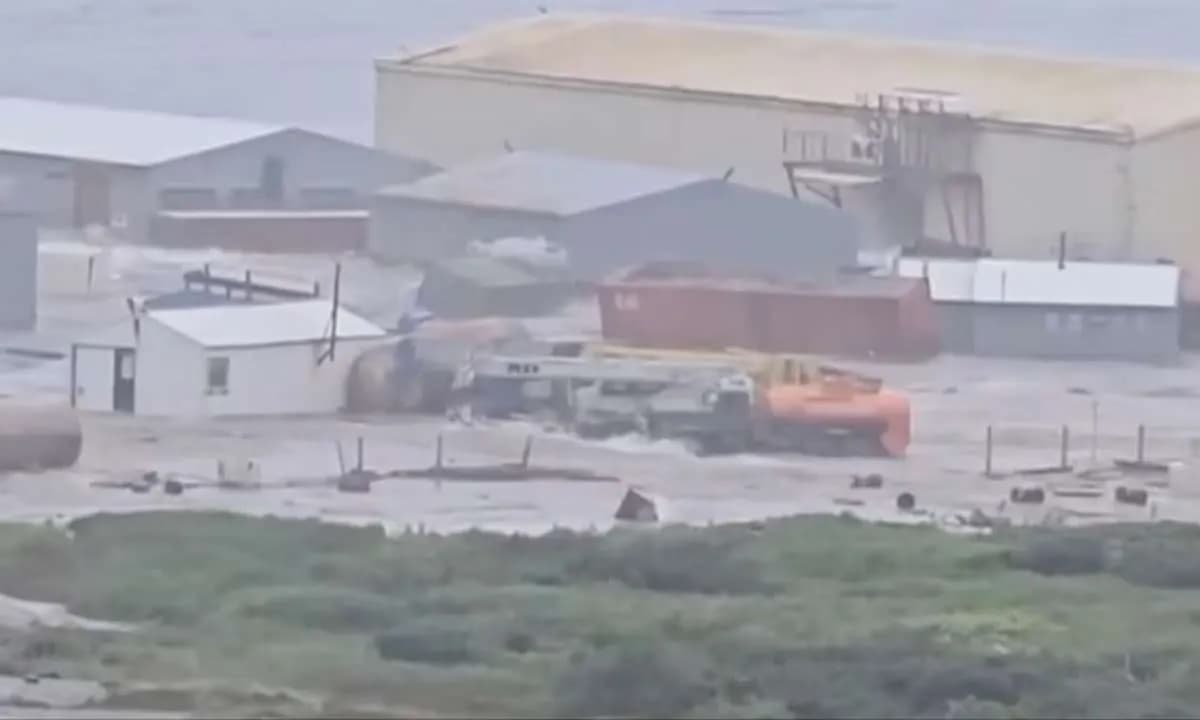
On Wednesday, July 30th, the world watched in disbelief as eyewitness footage captured the dramatic moment a tsunami hit the Russian town of Severo-Kurilsk, following a massive earthquake off Russia’s Far Eastern Kamchatka Peninsula. This earthquake, with a staggering magnitude of 8.8, was one of the most powerful to strike the region in decades, creating a devastating tsunami that sent waves rushing inland, destroying buildings, and leaving the small town in chaos.
The first signs of disaster came early in the day, when the earthquake struck the Kamchatka Peninsula, located in Russia’s far east. The earthquake’s tremors were so powerful that they were felt across the region. Kamchatka Governor Vladimir Solodov described the earthquake as “the strongest in decades” in a video posted on the Telegram messaging app. The destruction was immediate, with reports confirming that several buildings were damaged, including a kindergarten, as the ground shook violently.
Severo-Kurilsk, the main settlement on the Kuril Islands, was the first to feel the tsunami’s impact. Waves reached up to 3-4 meters (10-13 feet) in height, crashing along the coastline and washing debris and buildings inland. The footage, which quickly went viral, showed the massive destruction caused by the waves, with residents scrambling to find safety. Many were left in shock, unable to fully comprehend the scale of the disaster unfolding in front of them.
The earthquake was shallow, with a depth of only 19.3 kilometers (12 miles), which made it even more powerful. Located 119 kilometers (74 miles) from Petropavlovsk-Kamchatsky, a city of about 180,000 people, the quake triggered a series of warning signals and evacuations. Despite the immediate evacuation measures, there were still injuries reported in the remote Russian region, highlighting the vulnerabilities of the population in such a natural disaster.
The tsunami didn’t stop at Russia’s shores. The waves continued to spread across the Pacific Ocean, reaching Japan, where evacuation orders were issued across much of the eastern coastline. This evacuation is especially significant, considering the memory of the catastrophic 2011 earthquake and tsunami, which devastated the region. A tsunami wave of about 30 centimeters (about 1 foot) was recorded in Nemuro, on the eastern coast of Japan’s Hokkaido Island. As the tsunami warning stretched across the Pacific, coastal areas in Alaska, Hawaii, and even as far as New Zealand were advised to prepare for the possibility of large waves.
In the aftermath of the earthquake, the U.S. Geological Survey (USGS) confirmed the severity of the tremor, revising its initial magnitude assessment from 8.0 to 8.8, making it one of the strongest earthquakes in recent memory. Following the main shock, a strong aftershock of magnitude 6.9 occurred, adding to the destruction and uncertainty in the region. With waves of over 3 meters predicted along the coasts of several Pacific nations, the world watched with bated breath as authorities scrambled to assess the situation and prepare for further shocks.
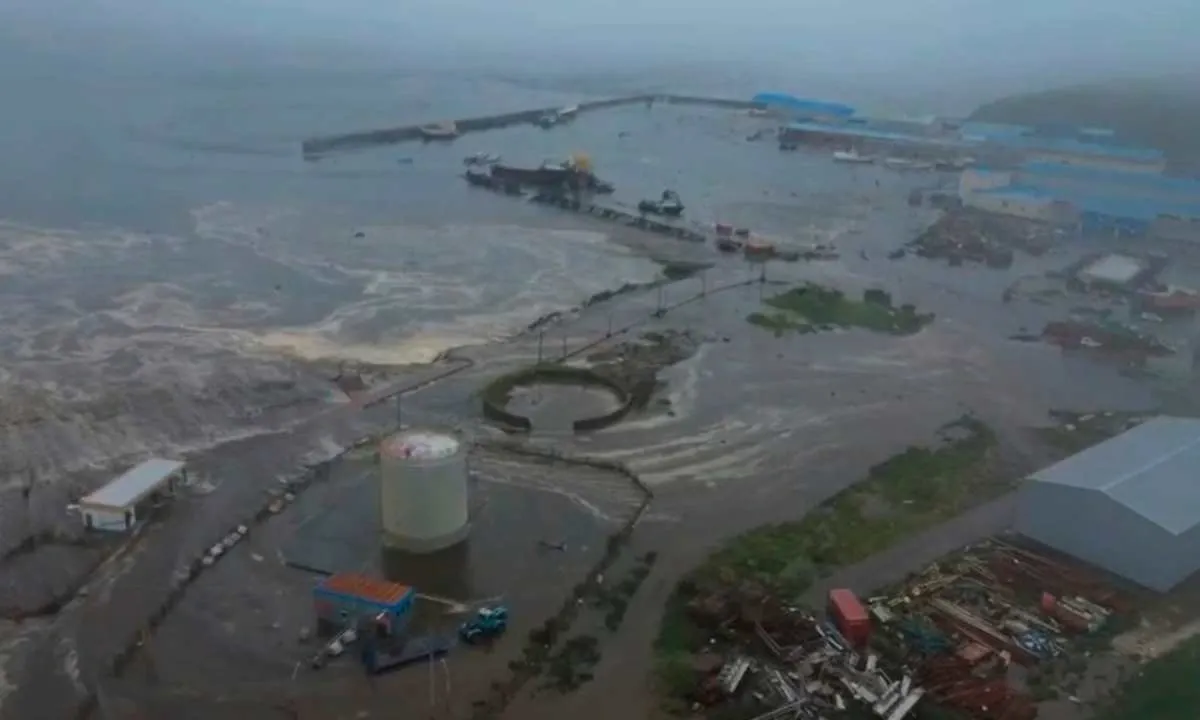
The shocking scenes captured in the footage showed not only the raw power of nature but also the resilience of the affected communities. Despite the magnitude of the disaster, there was a strong sense of solidarity as local authorities and residents worked together to evacuate and assess the damage. Videos and satellite images corroborated the reports from the ground, confirming the scale of the damage and the validity of the warnings issued in the wake of the tsunami.
The global implications of the event were immense. The widespread evacuation warnings across the Pacific, including in Japan, highlighted the interconnectedness of these nations, especially in the face of such natural disasters. Many were reminded of the devastating 2011 earthquake and tsunami that struck Japan and led to widespread loss and destruction. The footage of the tsunami hitting Severo-Kurilsk evoked strong emotions in people around the world, particularly those who remembered the toll of similar events in the past.
For those in the Pacific, the tsunami served as a reminder of the precariousness of coastal living in a world where natural disasters continue to pose a significant threat. The earthquake’s shallow depth, combined with the strength of the tremor, made it one of the most powerful earthquakes in recent history. The footage of the tsunami’s impact on Severo-Kurilsk and other parts of Kamchatka was a stark reminder of nature’s unrelenting power and the unpredictable forces that can shape our world at any moment.
The devastation in Severo-Kurilsk and the surrounding areas serves as a sobering reminder of the need for preparedness in the face of natural disasters. With the Pacific Ocean remaining one of the most earthquake-prone areas in the world, the events of July 30th, 2025, will likely be remembered as a powerful wake-up call for the global community. The ongoing efforts to assess the damage and support the affected populations will continue to be a priority, as countries around the Pacific brace for potential aftershocks and further waves of destruction.
In the end, the footage of the tsunami hitting Severo-Kurilsk is not just a reminder of the devastation caused by nature’s forces but also a testament to the bravery of those who faced it. Despite the shock and fear, communities came together to support each other in the aftermath, showing that even in the face of disaster, humanity’s resilience shines through. The event will undoubtedly become a key moment in the ongoing battle against natural disasters, and the lessons learned from it will hopefully make us more prepared for the challenges to come.