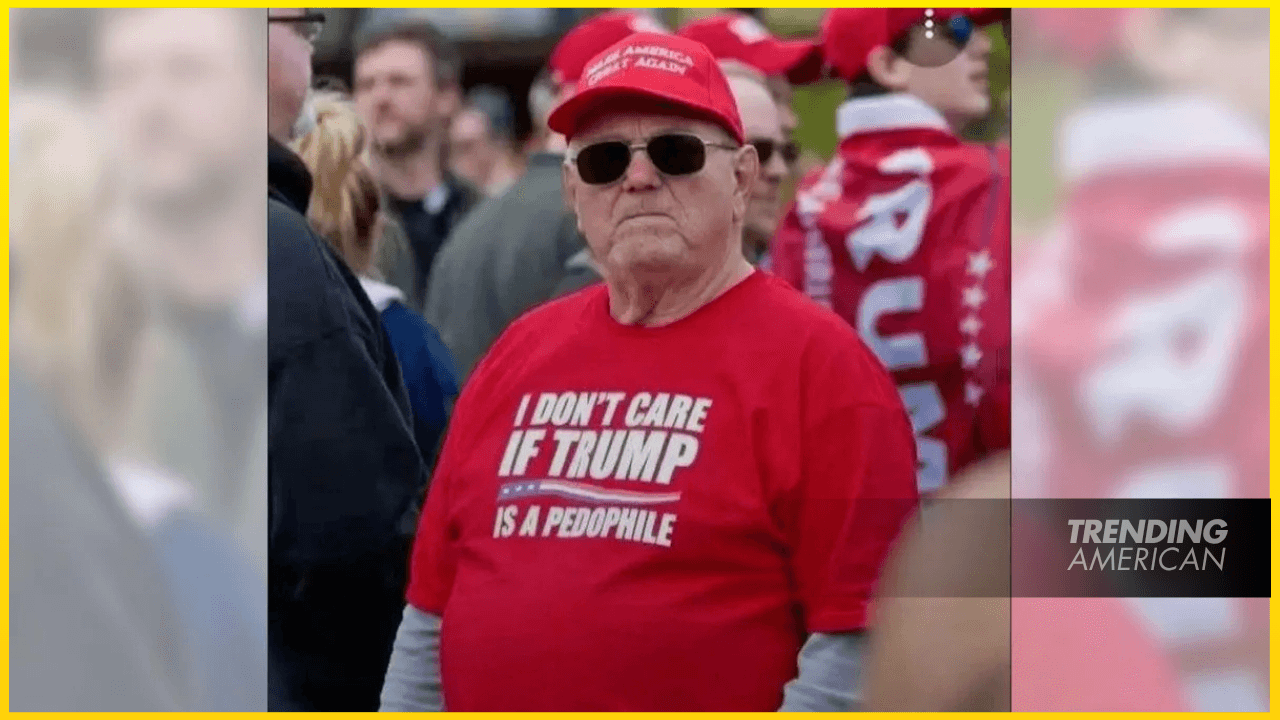
In November 2025, a photo emerged online showing a man in a T-shirt reading ‘I don’t care if Trump is a pedophile.’ However, this striking image of a supposed Trump supporter was quickly debunked as fake. The original image from a 2018 rally showed the man in Rochester, Minnesota, proudly wearing a ‘Trump Pence 2020’ and ‘Keep America Great!’ attire.
The timing of this doctored photo’s surge in popularity wasn’t coincidental. It followed the explosive release of over 20,000 documents by the U.S. House Committee on Oversight concerning Jeffrey Epstein, the infamous sex offender whose connections to high-profile individuals, including Donald Trump, have long been a topic of interest.
Emails suggesting Trump’s knowledge of Epstein’s activities hit headlines, offering a ripe environment for misinformation and manipulation. White House Press Secretary Karoline Leavitt, in response, accused Democrats of a targeted smear campaign, leveraging selective leaks to tarnish former President Trump.
This incident underscores the volatile mix of politics and digital manipulation. As the image spread across platforms like Facebook and Twitter, it stoked debates about the veracity of what we see online and the ethical boundaries of political warfare.
The photo’s creation and distribution highlight the persistent challenges in discerning truth in a digital age, where fake news often blurs lines between fact and fiction.
Disclosure: We may earn a commission when you make a purchase through the ads.