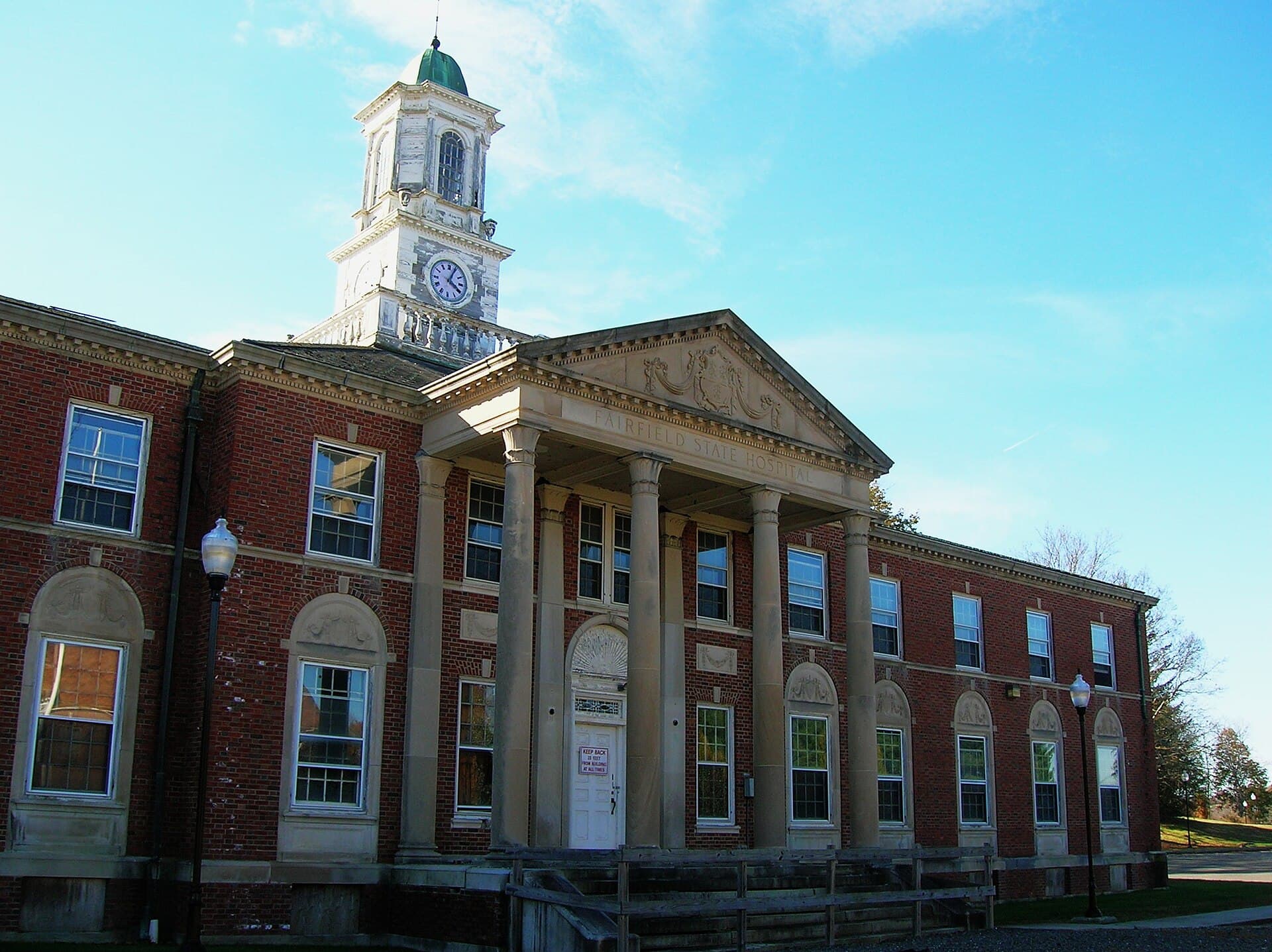
At Fairfield Hills, a walk past old hospital buildings can lead to a meadow full of new life.
Fairfield Hills Hospital in Newtown, Connecticut, admitted its first patients in 1933 and closed in December 1995. Today, parts of its former campus serve public, recreational and commercial uses. Visitors can enjoy authorized trails and open businesses, but vacant hospital buildings are not open for exploration.
The contrast is the appeal. Formal brick facades recall a large state institution, while nearby paths and reused spaces belong to everyday Newtown.
Why Connecticut built Fairfield Hills Hospital
The state authorized a new hospital in 1929 as it expanded its mental health system. Architect Walter P. Crabtree designed the campus.
The Newtown Bee’s historical account distinguishes the 1931 cornerstone ceremony from the arrival of patients in 1933. Those are different milestones, a useful detail when sources give different opening dates.
The hospital was intended to function as a substantial institution, with services and support facilities spread across its grounds.
Its orderly architecture expressed an official vision of care. Repeated windows, brick walls and carefully arranged buildings gave the campus a sense of permanence.
That appearance is worth studying, but it cannot tell the whole story. Attractive grounds do not establish what life was like inside a ward, and the experiences of patients and staff cannot be reduced to a single architectural impression.
A campus with its own daily rhythm
Fairfield Hills operated with extensive farming and support services. The place needed food, power, maintenance and workers as well as medical staff.
The state’s historic-district nomination provides a formal framework for understanding the buildings as a connected campus rather than isolated ruins.
A useful way to imagine the setting is through movement. Supplies had to reach buildings. Staff traveled between workplaces. Patients followed routines shaped by the institution.
The Newtown Bee describes Plymouth Hall, added in 1958, with spaces for recreation and creative activities. Such details give the history more depth than a list of medical procedures alone.
They also invite questions that the buildings cannot answer by themselves. Who could choose their activities? How did daily life change over decades? Personal accounts and records are essential to understanding those differences.
Closure did not end the story
Fairfield Hills closed in December 1995 during changes to Connecticut’s psychiatric care system. Its former patients’ lives continued elsewhere, even as the old campus became a planning challenge.
Newtown acquired a substantial portion of the property in 2004. The Conservation Commission records the July 30 transfer associated with the High Meadow.
Ownership created choices about preservation, demolition, maintenance and public use. A former hospital can be too large and costly to restore all at once.
That helps explain the mixture visible today. Reused buildings, vacant structures, new facilities and open land can all belong to the same campus.
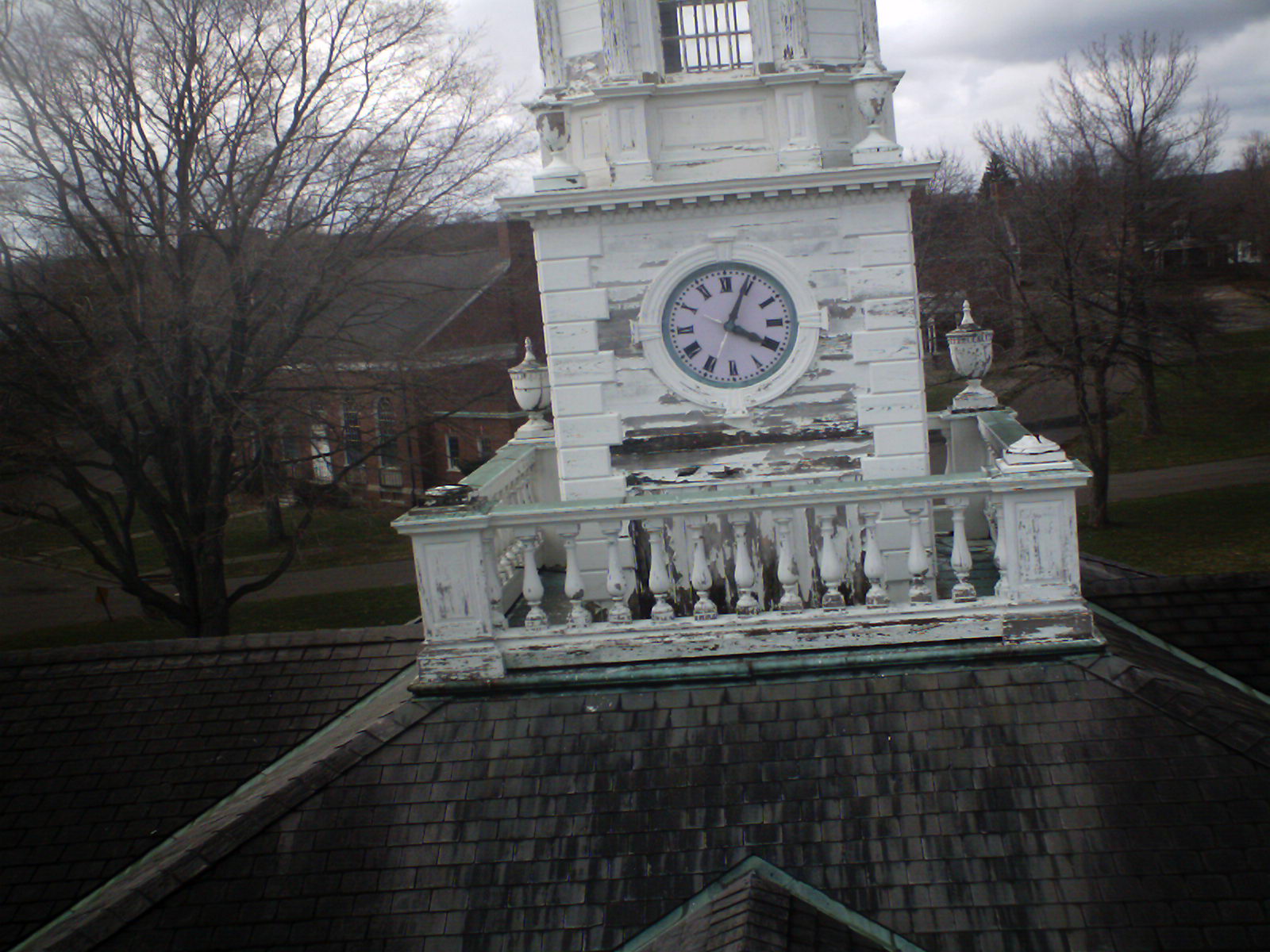
The clock-tower photograph dates from 2006, while the featured campus photograph was taken in 2017. They document particular moments and should not be treated as a complete inventory of present conditions.
New uses within old walls
One example of reuse is NewSylum Brewing Company. Its building history identifies its home as the former Stratford Hall, once a staff dining room and later a staff library.
Renovation began in 2019, and the brewery made its first beer in March 2020. The same account identifies the former Bridgeport Hall as the renovated Newtown Municipal Center.
These changes help explain why calling the whole property abandoned is misleading. Parts of the campus have returned to regular use.
A restored room also creates an opportunity to notice older details: the scale of windows, the thickness of walls or the relationship between a building and its lawn.
Check the business’s current hours if you plan to stop. An open establishment grants access to its own visitor areas, not to neighboring vacant buildings.
The meadow is part of the history
High Meadow offers another way to experience the former hospital landscape. The Conservation Commission describes a 19-acre area with grassland habitat and views across the surrounding area.
Paved routes connect with other paths, gardens and campus areas. Walking, running and cycling are permitted on the designated trails, and dogs must remain leashed.
This open land deserves attention beyond its usefulness as a backdrop. Conservation work aims to support plants and wildlife that depend on grassland habitats.
Stay on suitable routes and avoid disturbing planting or habitat work. A quieter visit allows the landscape’s present purpose to become as visible as its institutional past.
Plan a legal, thoughtful visit
Choose public trails, open facilities and designated parking. Follow posted restrictions around unused buildings and work areas.
Do not enter tunnels or vacant wards. Their appearance in old photographs does not establish present access or safe conditions.
Fairfield Hills is most interesting when viewed as a changing community landscape. Its history includes state care and closure, but also the practical work of deciding what an enormous inherited property should become.
Frequently asked questions
When did Fairfield Hills Hospital open and close?
It admitted patients in 1933 and closed in December 1995. The 1931 cornerstone ceremony was an earlier construction milestone.
Can you walk around Fairfield Hills?
Yes, authorized campus trails and public areas are available. Follow current signs and restrictions.
Can visitors enter abandoned buildings or tunnels?
No. Public access to paths and operating facilities does not include vacant hospital interiors or tunnels.
Is the entire campus abandoned?
No. Municipal, recreational and commercial uses coexist with unused historic buildings and preserved open space.
Image credits
Featured: Marty Aligata, CC BY-SA 4.0. Body: G F, CC BY 2.0.

