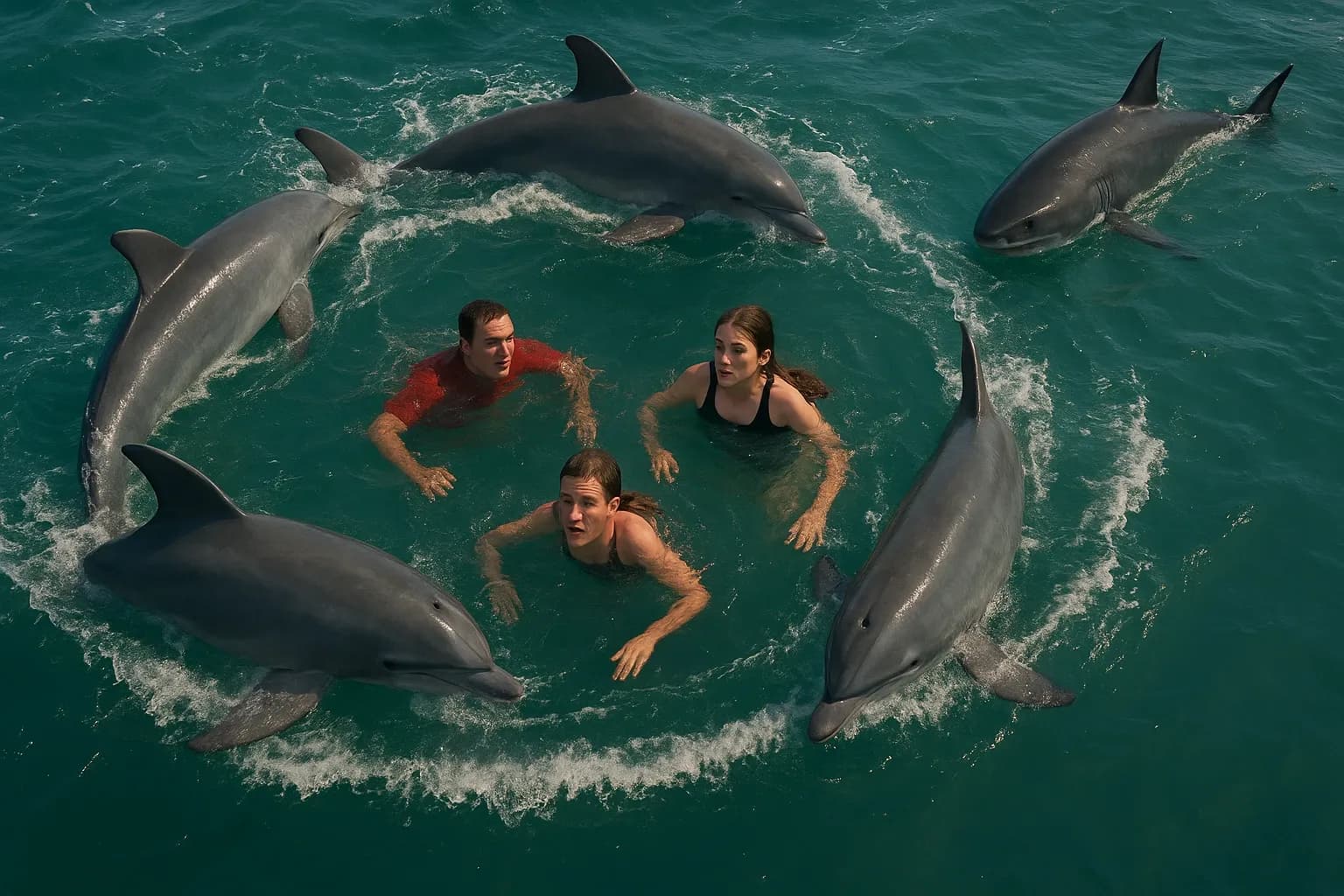
In November 2004, off the coast of Whangārei, New Zealand, a scene unfolded that would sound unbelievable if it weren’t captured by multiple witnesses. A group of four people was swimming, including a father named Rob Howes, his fifteen-year-old daughter Niccy, and two of her friends, when they suddenly found themselves in grave danger—encircled by a three-meter great white shark.
But as panic set in, something remarkable happened. A pod of bottlenose dolphins appeared seemingly out of nowhere, encircling the swimmers in a protective screen.
‘They started to herd us up,’ Rob Howes said, ‘they pushed all four of us together by doing tight circles around us.’ With their tails slapping the water, the dolphins stayed close, refusing to let the shark attack.
For about 40 long minutes, the dolphins maintained their circle, creating a barrier between humans and the predator lurking below. Rob recalled feeling unnerved as the shark approached, yet there was a strange comfort knowing these dolphins were with them. ‘They were clearly protecting us,’ he remarked.
‘These dolphins didn’t know us. They didn’t owe us anything. Yet they risked everything to save us.’
Rob recalled.

The lifeguards stayed calm, focusing on the dolphins’ behavior rather than the looming threat. Experts theorize this rare show of altruism among dolphins might stem from their highly developed social structures, where they display an incredible level of empathy and intelligence.
‘I would suggest they were creating a confusion screen around the girls,’
Rob speculated, referring to his daughter and her friends.
When the threat finally faded, the dolphins allowed the swimmers to return to shore. After some time, the shark swam away, and the pod followed suit, leaving the lifeguards to ponder the surreal experience they had just witnessed. Niccy, still shaken, said, ‘I’ll never forget that day. I feel like they saved my life.’
This incident caught international attention, sparking discussions about dolphin intelligence and behavior. Coverage from major outlets, including BBC and Wired, has hailed dolphins as unlikely heroes in close human encounters.
As lifeguards, Rob and his team often trained to protect others, but what they didn’t anticipate was that the real protectors would come from the animal kingdom. Over the years, the story of the dolphins has lingered, inspiring both awe and curiosity. Marine biologists suggested the dolphins’ actions were not entirely unusual, as there are documented instances of dolphins engaging in protective behavior around humans.
Despite their instincts for self-preservation, this event showcased incredible empathy. It prompts a deeper conversation about the bonds humans share with animals. What drives these intelligent marine mammals to act in such heroic ways? Is it instinct, empathy, or something beyond our comprehension?
This breathtaking episode remains a reminder that the ocean holds mysteries beyond our understanding. The dolphins’ actions blur the lines we often draw between species, showing us that compassion can manifest in the most unexpected forms and that sometimes, a friend appears beneath the waves.
In a world often overshadowed by fear, the courage shown by that pod of dolphins not only saved lives but also ignited hope and wonder in our hearts.
As we reflect on this incredible encounter, we must ask ourselves: How often do we overlook the bond we share with other living beings? And in what ways do we overlook the extraordinary capacities animals have for empathy and protection?