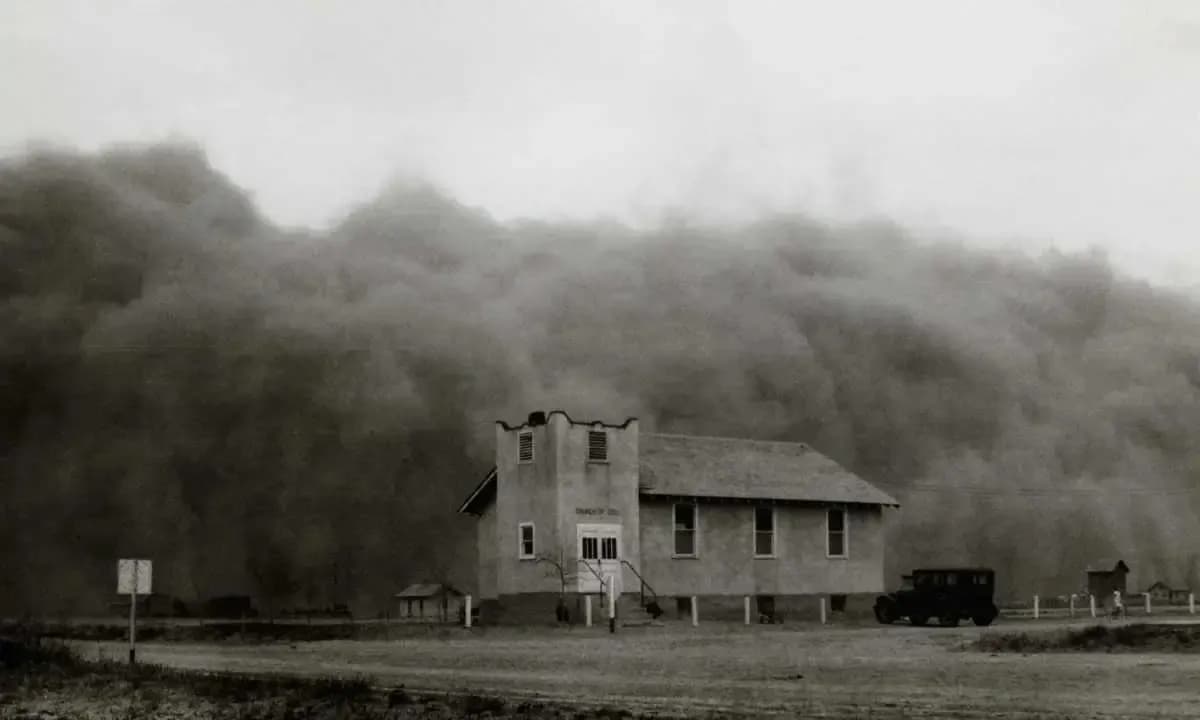
The Dust Bowl of the 1930s was the most disastrous drought in American history. Dust storms blackened the skies, farms became wastelands, and families fled their homes in search of a better life. This disastrous decade saw a combination of severe drought and poorly thought-through farming devastate the Great Plains. The drought came in three waves in the years 1934, 1936, and 1939–1940. However, some regions of the High Plains experienced drought conditions for a period of eight years. The nation was already battling the Great Depression, but the Dust Bowl raised the stakes in the struggle. Let’s explore the details of the disaster, its causes, its impact, and what it has left behind.
What Caused the Dust Bowl?
Farmers in the Great Plains over-plowed the land and removed the native grasses of the land that kept the soil in place. They kept growing the same crops without crop rotation to put nutrients back into the soil. This greatly made the land susceptible to erosion. In fact, as Hugh Hammond Bennett, a soil scientist, said, “Of all the ways soil can be ruined, the most potent is through the loss of its protective cover of vegetation.”
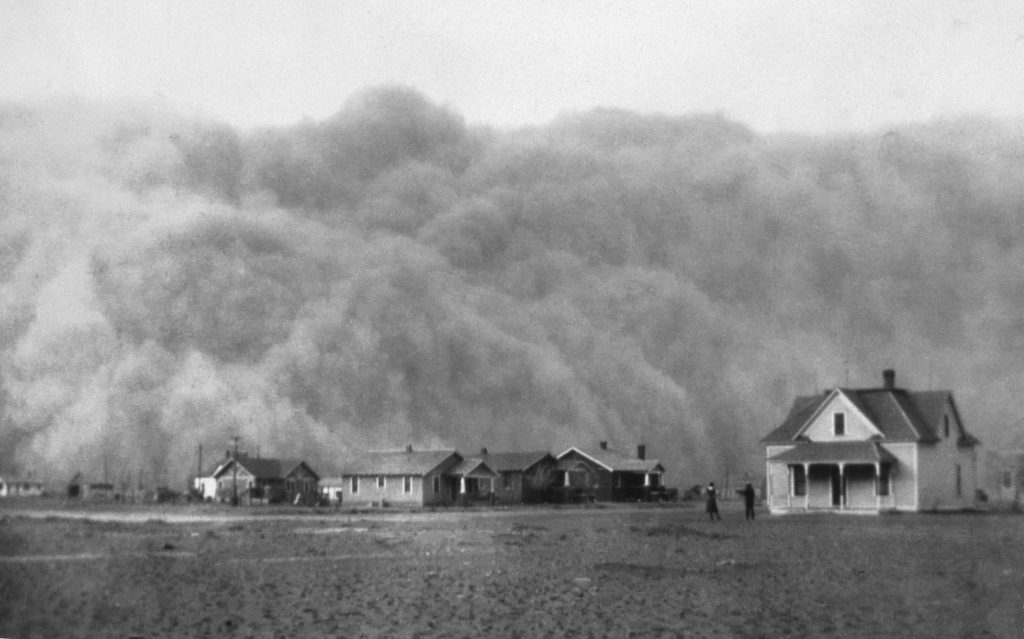
Beginning in the early 1930s, the region experienced an unprecedented drought. Rainfall was scarcer than ever, and temperatures increased. The once-rich topsoil became dry and turned to dust. Winds whipped across the plain and lifted the dust into storm-sized squalls referred to as “Black Blizzards.” It was to become known as the Dust Bowl.
World War I increased the demand for wheat and other crops, and in order to meet this demand, farmers plowed up more land. When the prices of those crops fell in the 1920s, farmers tried to make up for lost income by increasing their production numbers, further stressing the land. Economic pressure compelled many farmers to abandon sustainable farming practices that left croplands vulnerable to the coming storm.
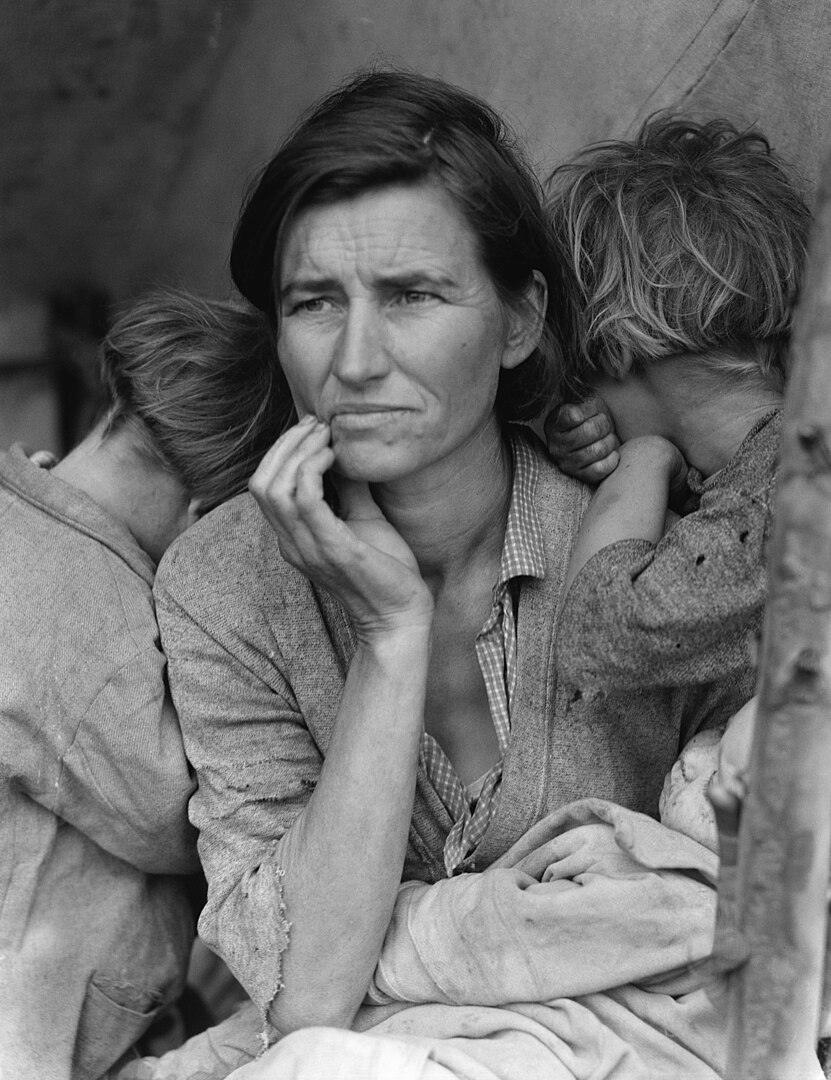 Florence Owens Thompson seen in the photo Migrant Mother by Dorothea Lange | Image source: Wikipedia
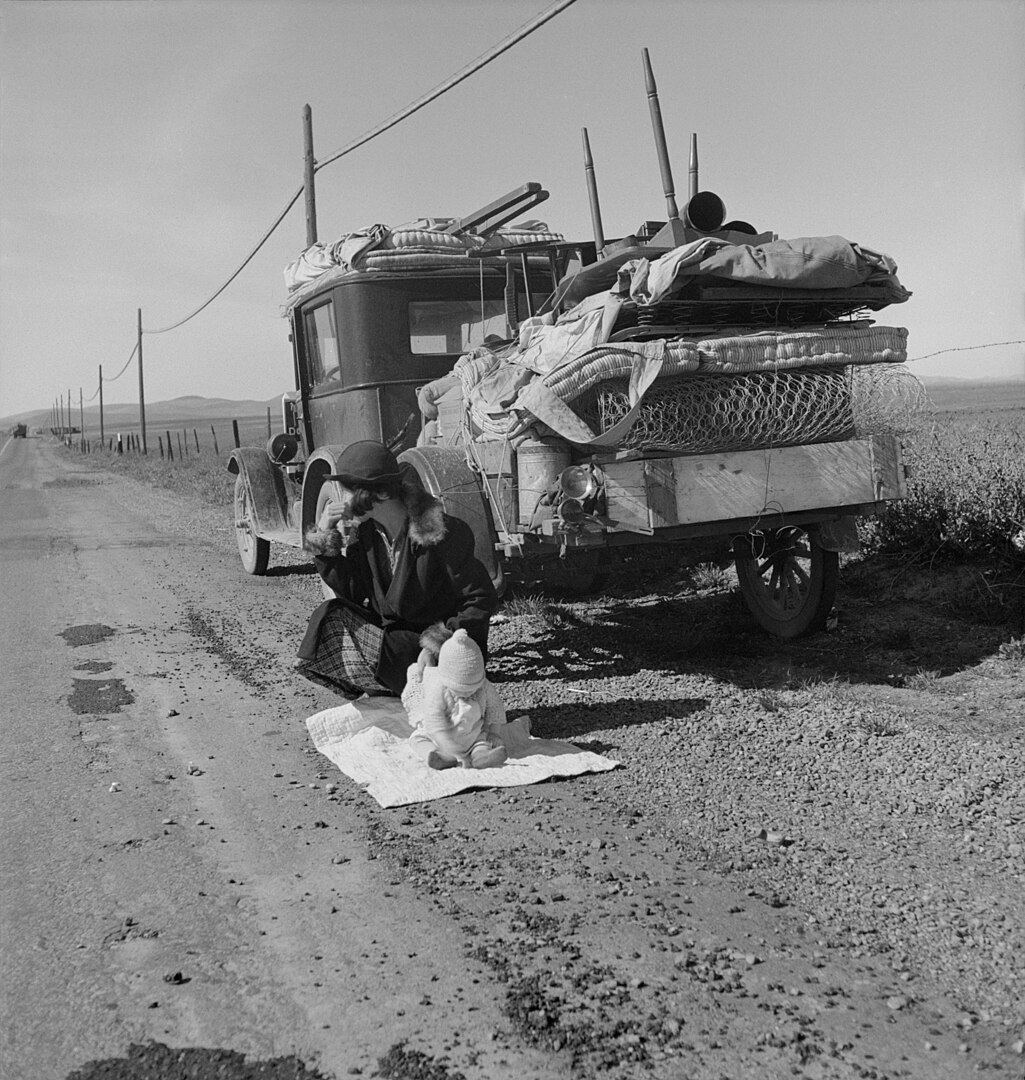 “Broke, baby sick, and car trouble!” – Dorothea Lange’s 1937 photo of a Missouri migrant family’s jalopy stuck near Tracy, California | Image source: Wikipedia
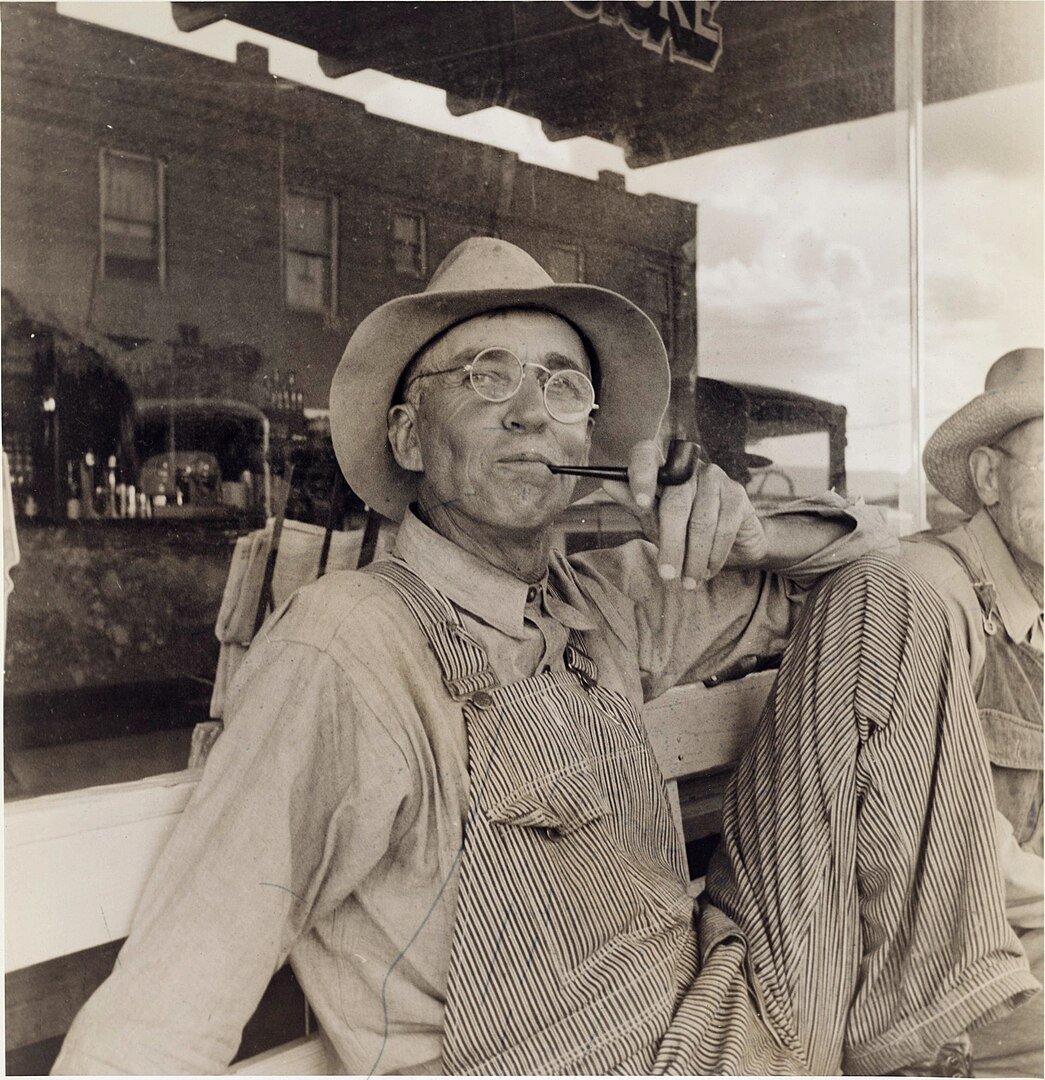 “Dust bowl farmers of west Texas in town”, photograph taken by Dorothea Lange, June 1937, in Anton, Texas | Image source: Wikipedia
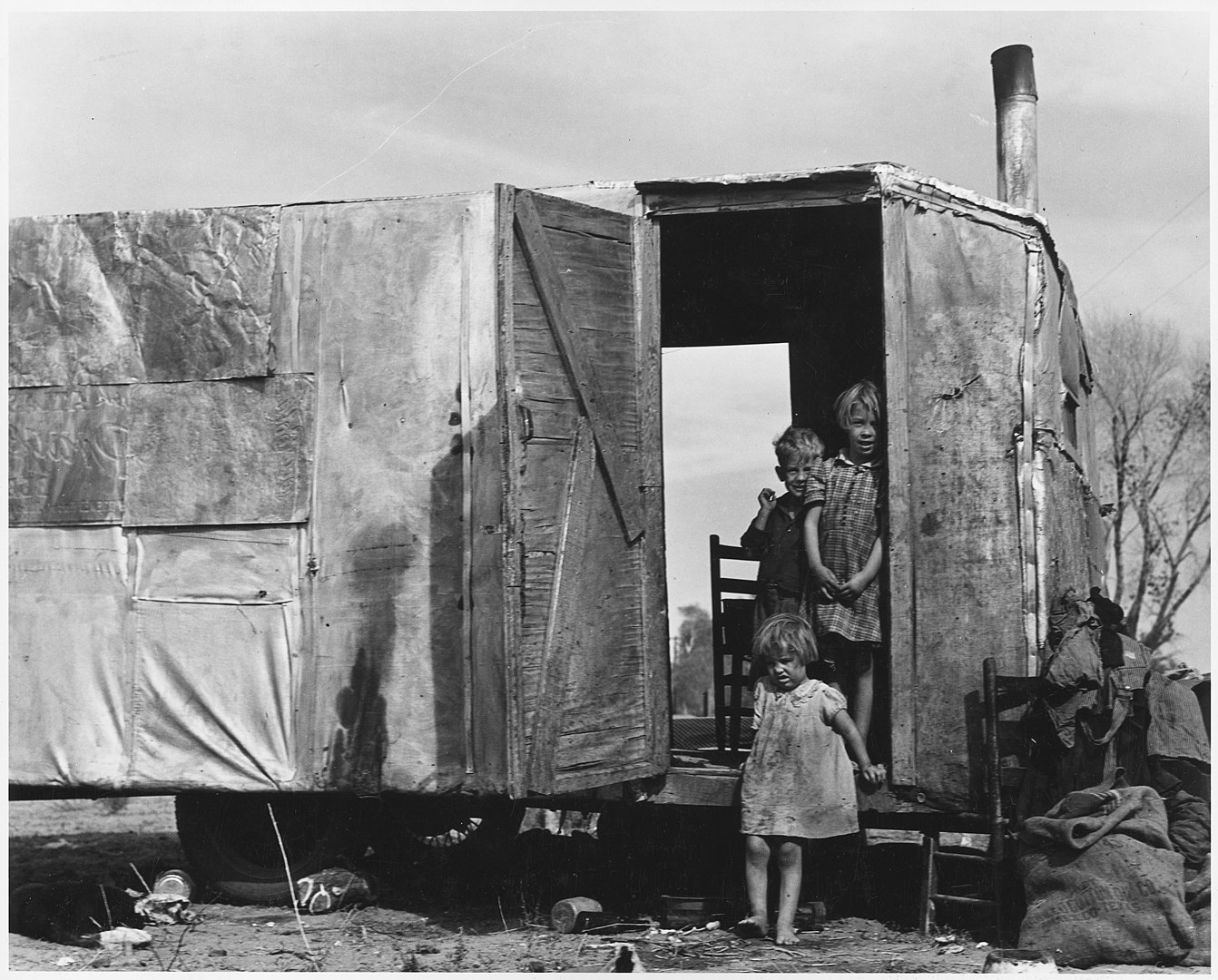 A migratory family from Texas living in a trailer in an Arizona cotton field | Image source: Wikipedia
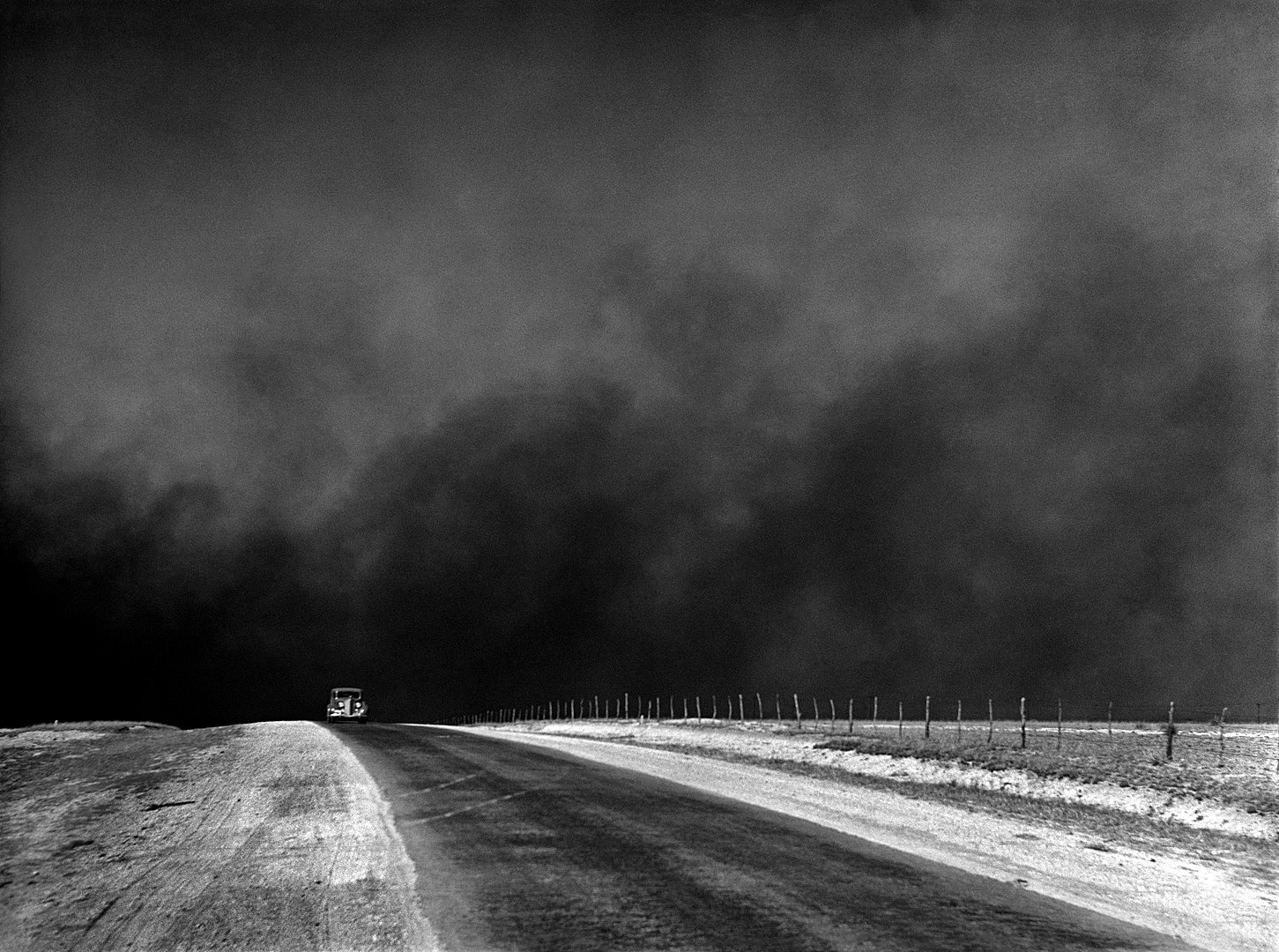 Heavy black clouds of dust rising over the Texas Panhandle, Texas, c. 1936 | Image source: Wikipedia
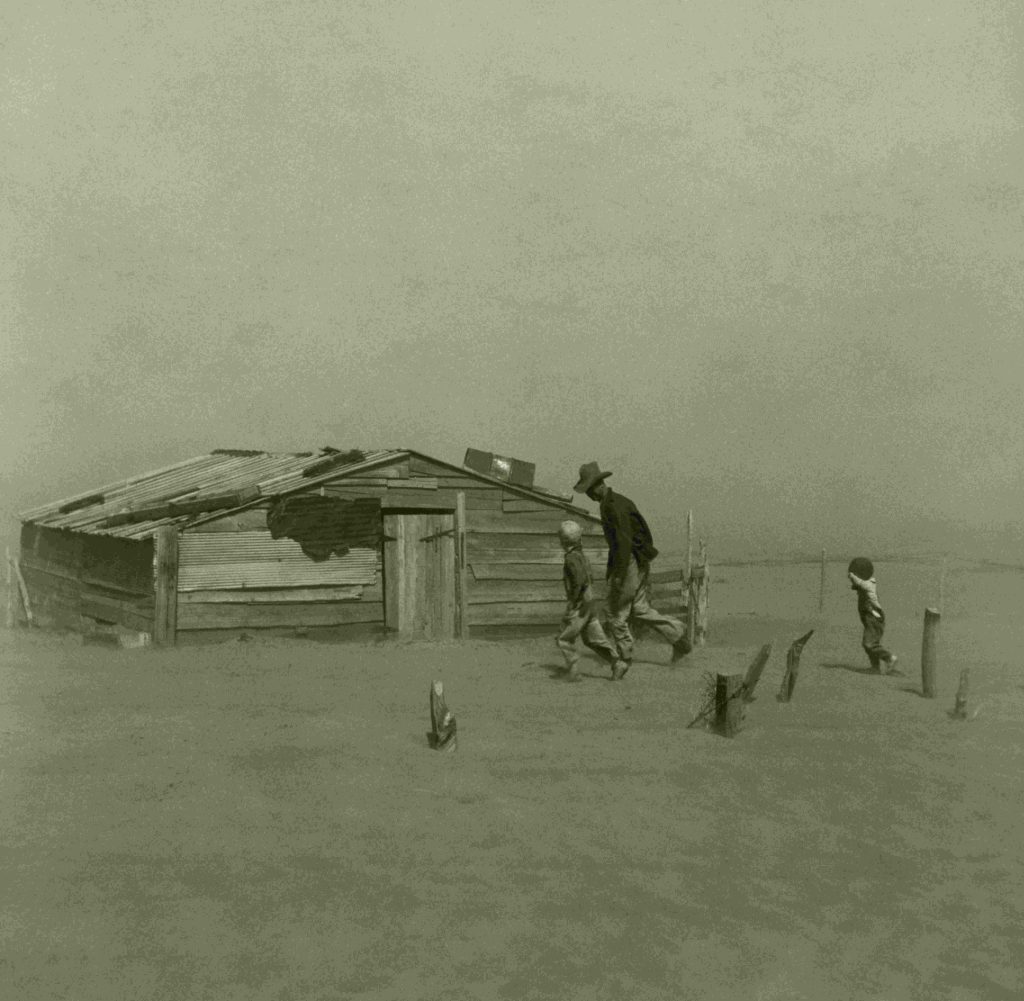 A farmer and his two sons during a dust storm in Cimarron County, Oklahoma, April 1936. Iconic photo entitled “Dust Bowl Cimarron County, Oklahoma” taken by Arthur Rothstein | Image source: Wikipedia
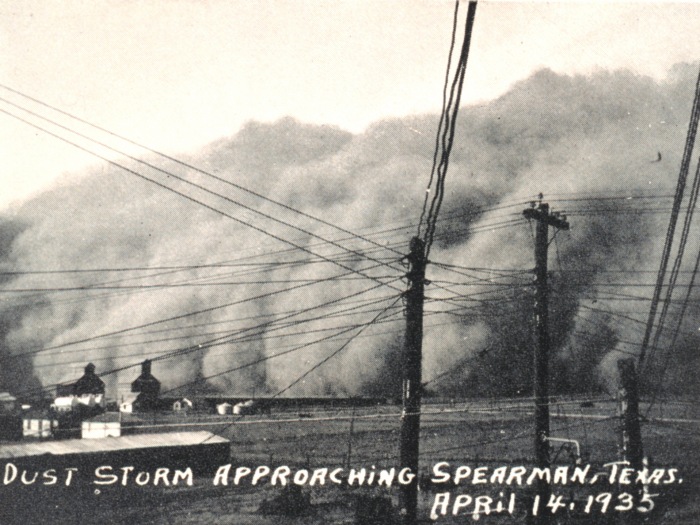 A dust storm; Spearman, Texas, April 14, 1935 | Image source: Wikipedia
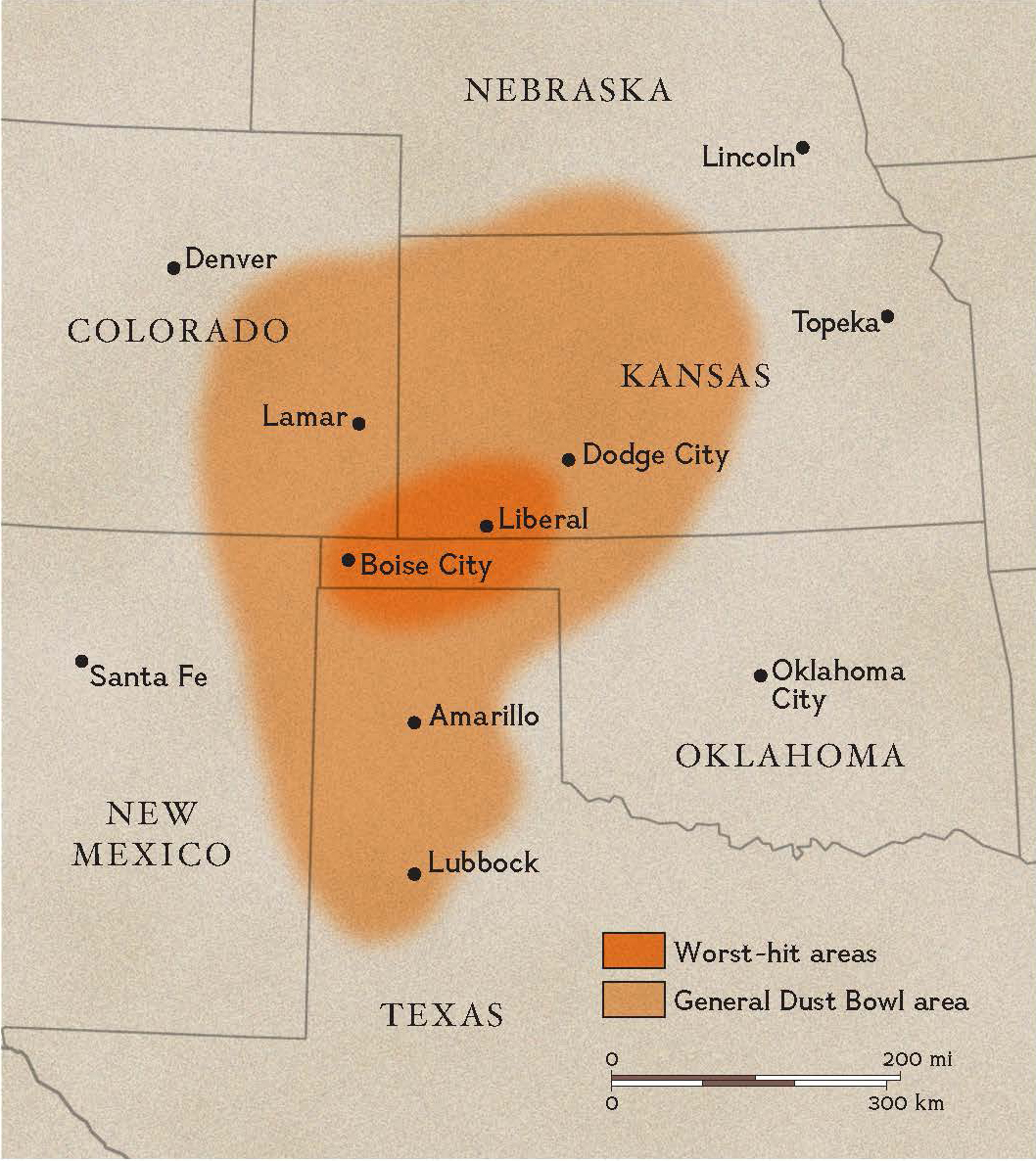
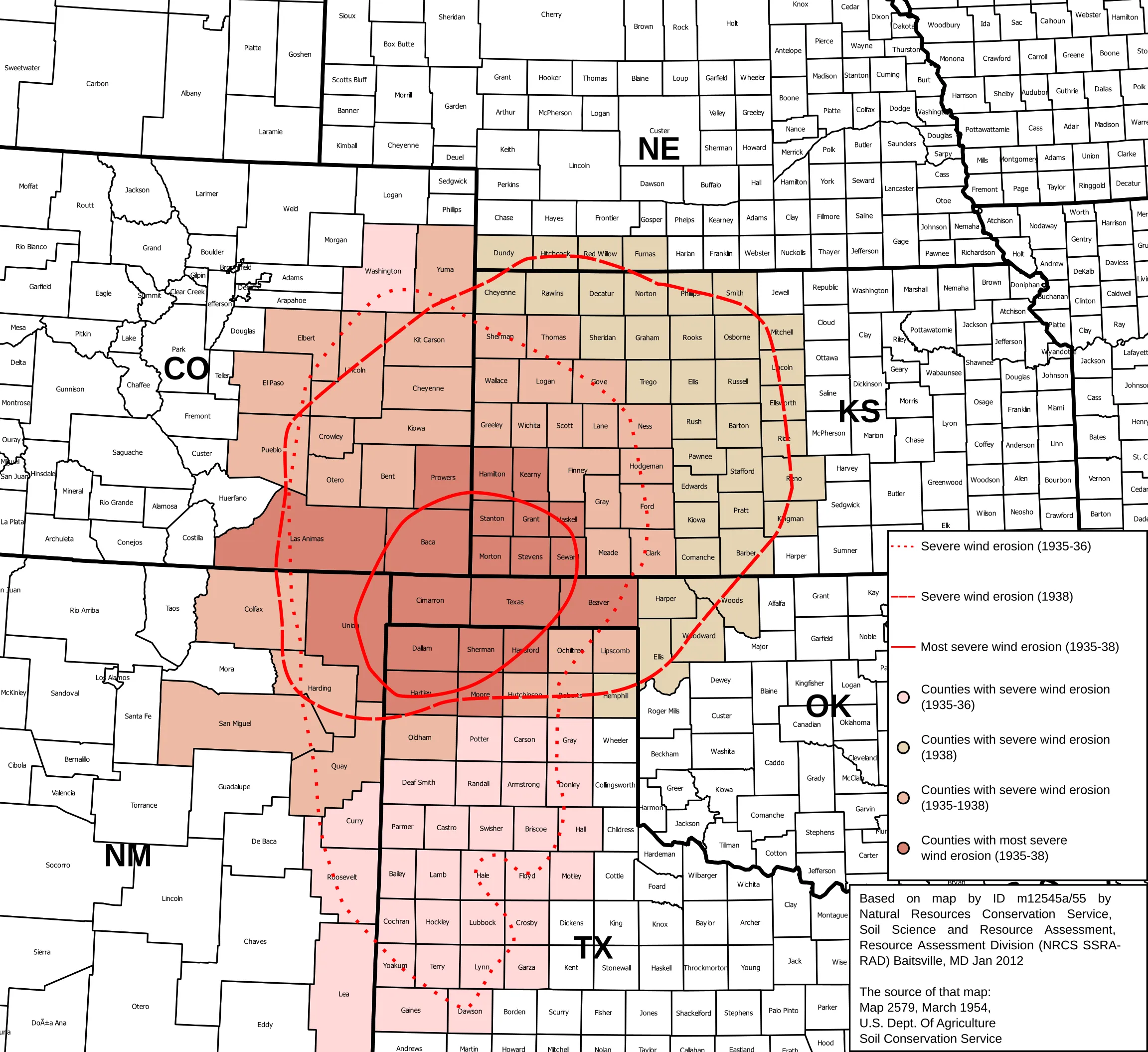 Map of states and counties affected by the Dust Bowl between 1935 and 1938, originally prepared by the Soil Conservation Service. The most severely affected counties during this period are colored | Image source: Wikipedia
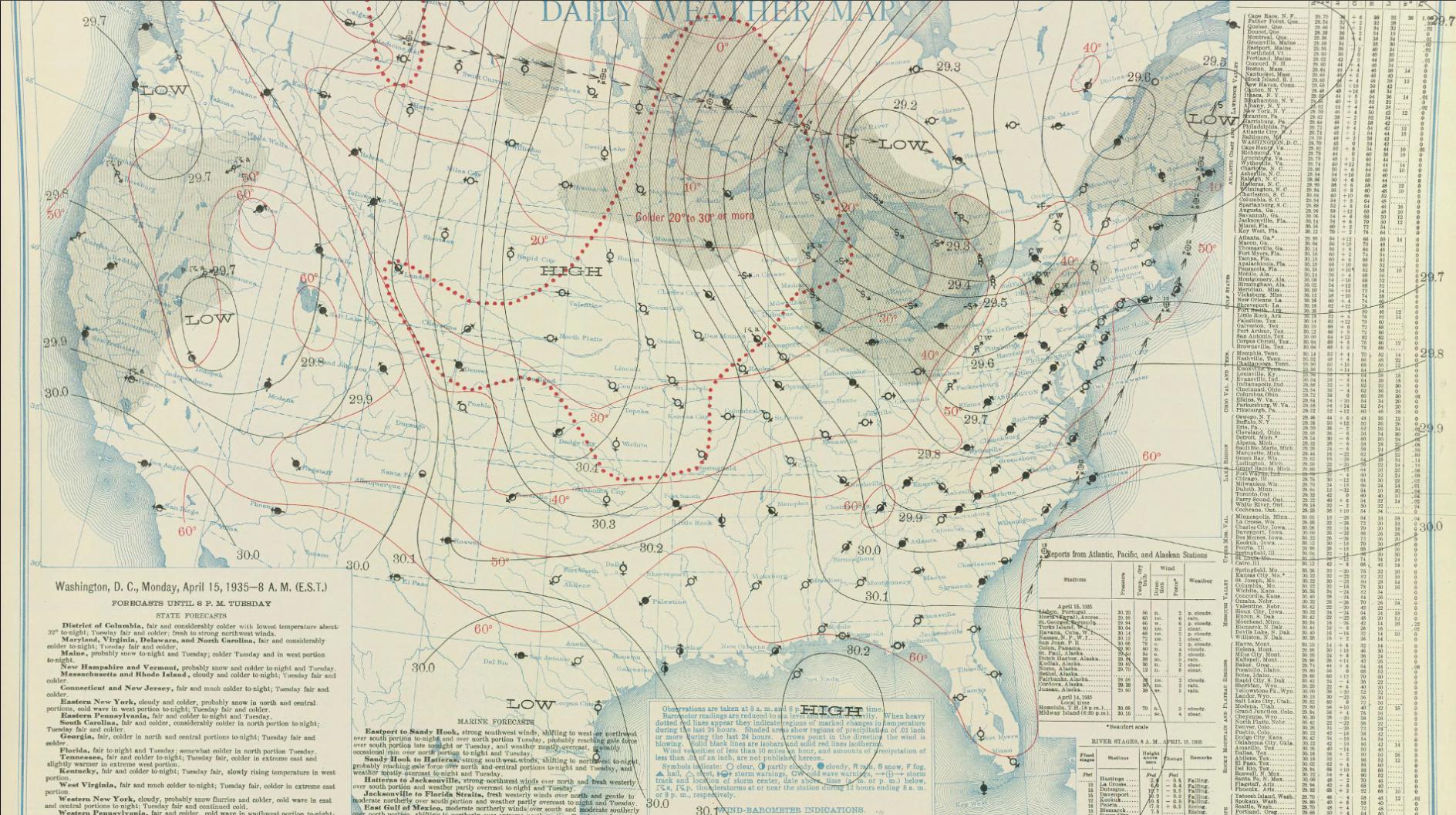 U.S. Weather Bureau Surface Analysis at 7:00 am CST on April 15, 1935, just after one of the most severe dust storms | Image source: Wikipedia
Living Through the Disaster
The Dust Bowl was not just an environmental disaster. It was a human tragedy. Human beings struggled daily so that they could survive in this unkind landscape.
Dust storms unendingly invaded homes and lungs as families fought for survival. Children went to school in masks, and more than once a layer of dust joined every meal. “Dust pneumonia” was one of the common ailments causing much illness and death.
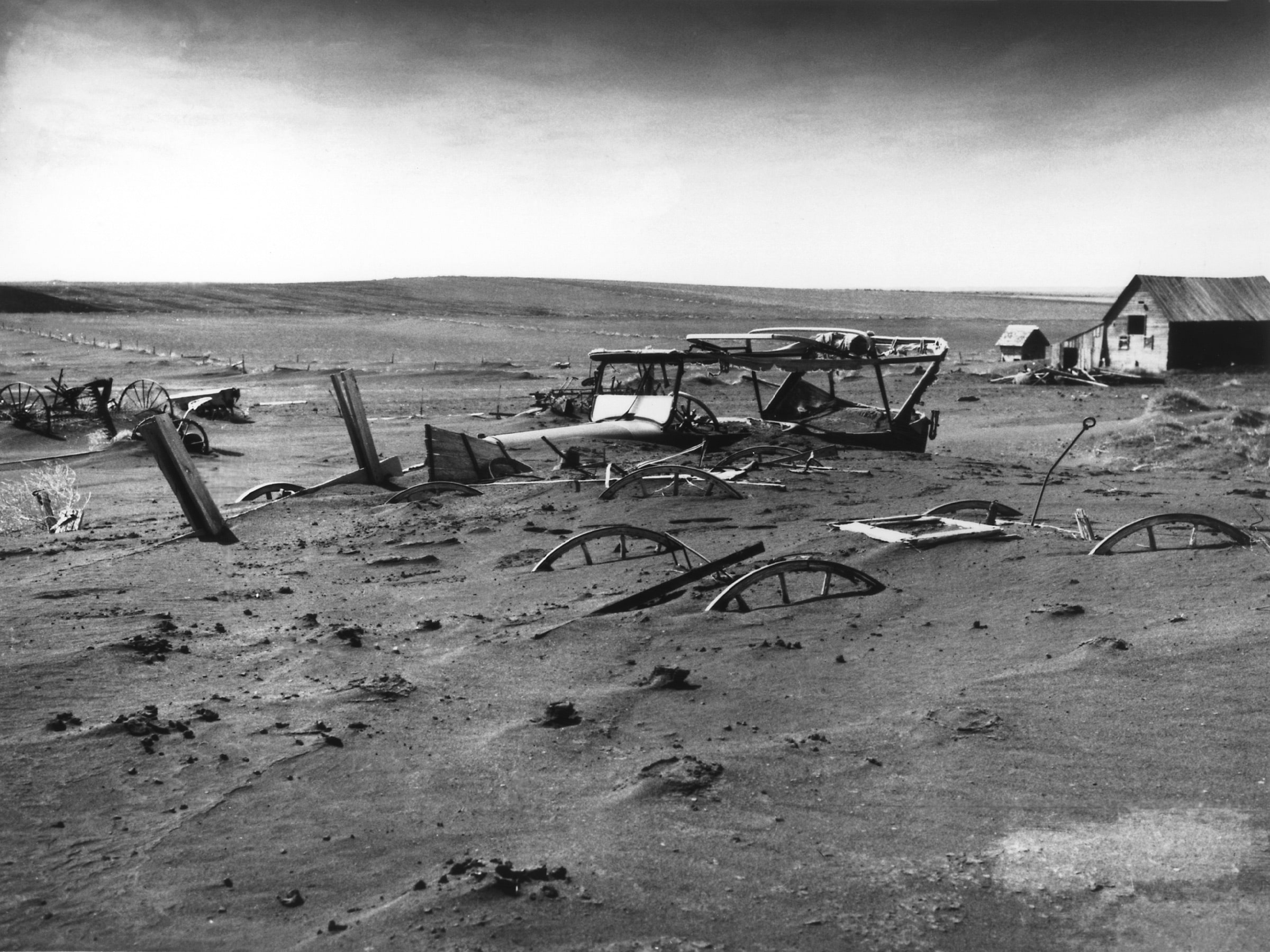
Crops failed and the banks foreclosed on farms. People that had no livelihood remained on the Great Plains; some estimated 2.5 million people packed meager belongings and headed west in search of a new beginning. It was one of the largest mass migrations in American history. The struggles of these “Okies,” in search of their new life in California, are poignantly framed in the novel The Grapes of Wrath by John Steinbeck.
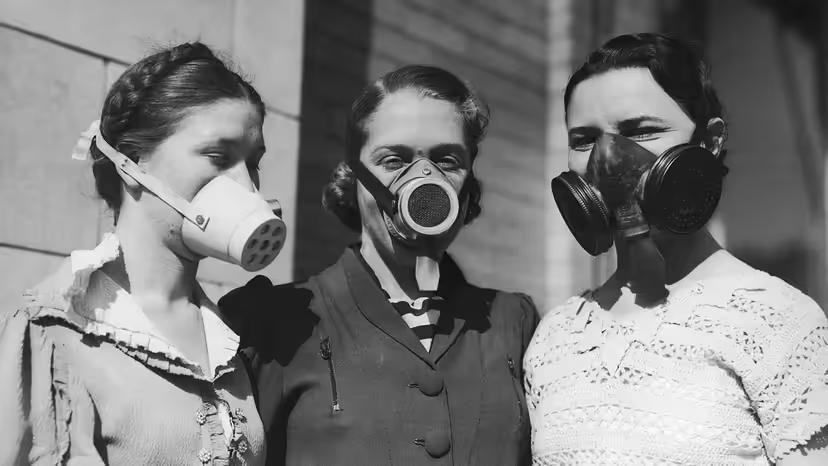
The Dust Bowl went deep into American culture. Musicians like Woody Guthrie sang about the hardship; through some of his songs, like “So Long, It’s Been Good to Know Yuh,” he tried to raise awareness about the disaster.
People evidenced outstanding resilience against such calamity. They remained optimistic and struggled with unthinking difficulties
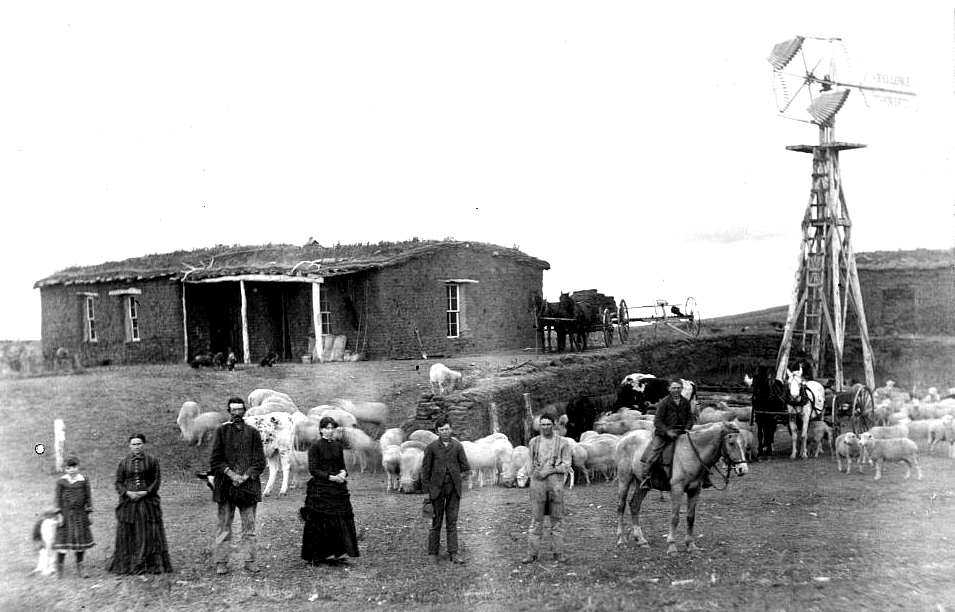 Farm family, Sargent, Nebraska, 1886. Photograph by Solomon D. Butcher. (Image: Prints and Photographs Division, Library of Congress LC-USZ62-16083) | Image source: | Image source: ©2024 – National Drought Mitigation Center
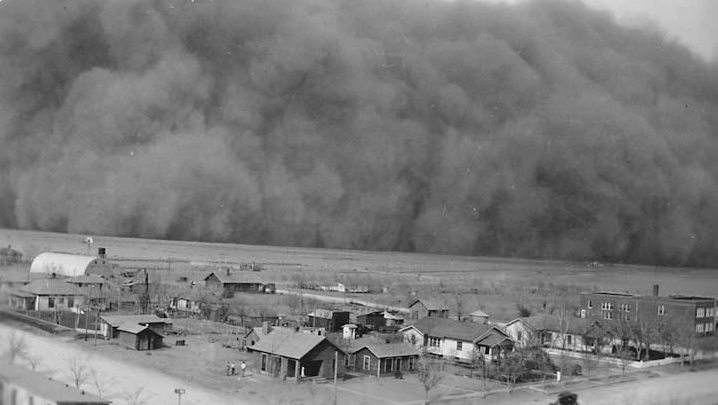 A dust storm approaching Rolla, Kansas, May 6, 1935. (Image: Franklin D. Roosevelt Library Digital Archives) | Image source: ©2024 – National Drought Mitigation Center
Government Intervention and Conservation for Overcoming the Dust Bowl
The Dust Bowl elicited decisive action, whether it came to alleviating human suffering or ensuring that such a disaster would not reoccur.
Because of this the government intervened. President Franklin D. Roosevelt instigated the New Deal. Programs were instituted to help alleviate those communities suffering from the event. The Soil Conservation Service established in 1935 suggested new farming practices that would help protect the soil. Other programs developed under the New Deal program included the planting of trees as windbreaks by the Civilian Conservation Corps to prevent further erosion.
Farmers learned to take care of the land using new techniques. They initiated contour plowing, rotation of crops and terracing. Thus, erosion was reduced to a minimum with much restoration to the soil. Stories of success began to emerge as the land slowly healed.
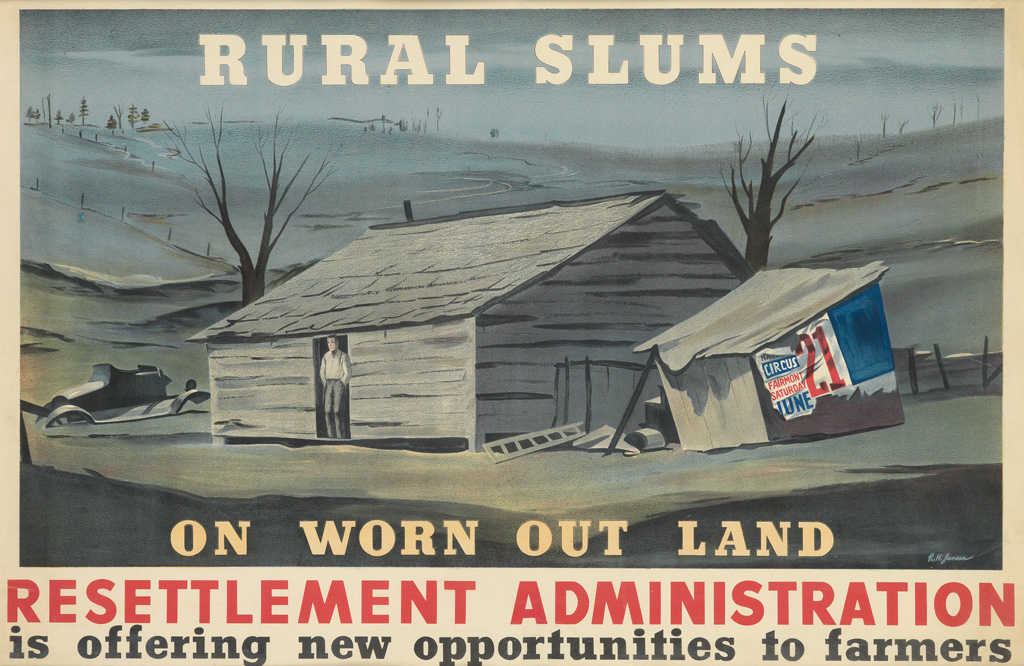
The Dust Bowl informed a better understanding of environmental care. For the very first time in history, conservation occured in the national agenda. The Dust Bowl taught valuable lessons for future policies on how land should be managed with concern for sustainability.
Lessons from the Dust Bowl’s Legacy
The Dust Bowl is a dramatic example of how sensitive is the interrelationship between man and the environment. Its legacy has much to teach people of today and tomorrow.
The Dust Bowl facilitates environmental literacy. By living through a history of errors, many took better steps to avoid those mistakes occurring again. The Dust Bowl is one of the standard topics in the curriculum of environmental sciences where the results of bad performance in sustainable use are elaborated.
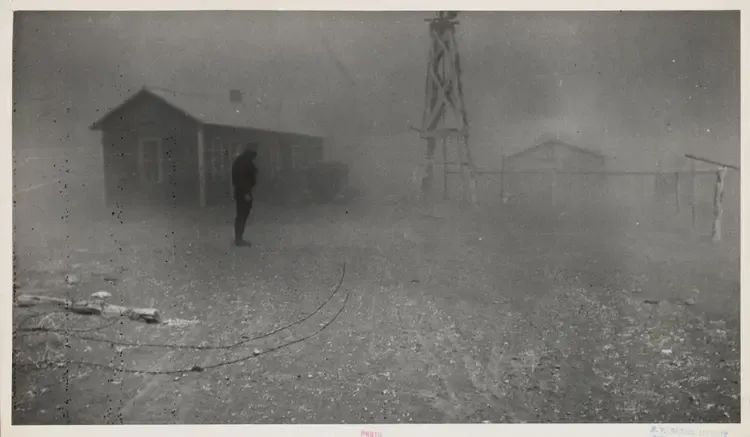 In the mid-1930s, the Farm Security Administration’s Resettlement Administration hired photographers to document the work done by the agency. Some of the most powerful images were captured by photographer Dorothea Lange. Lange took this photo in New Mexico in 1935, noting, “It was conditions of this sort which forced many farmers to abandon the area.” | Image source: history.com
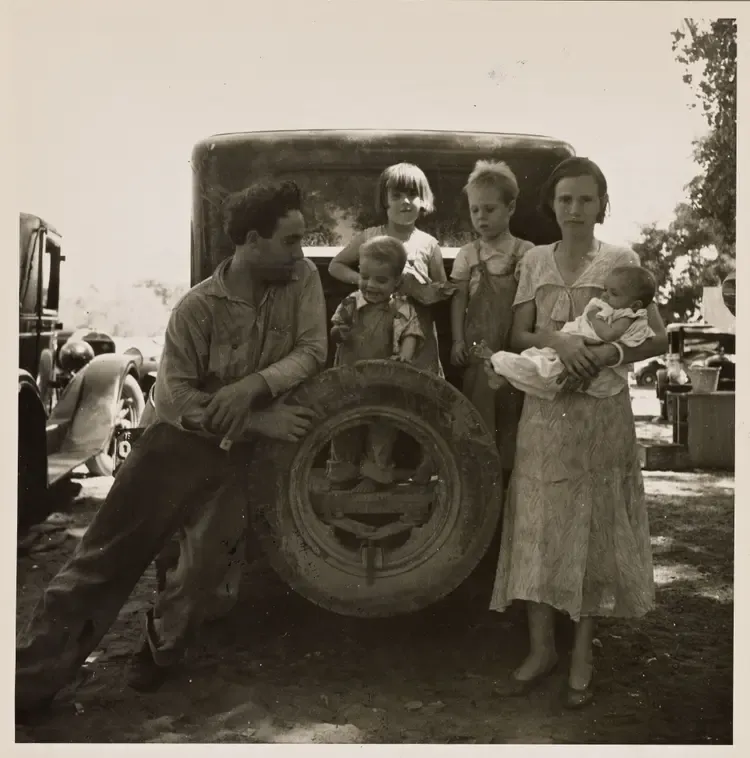 This Texas tenant farmer brought his family to Marysville, California in 1935. He shared his story with photographer Lange, saying, “1927 made $7000 in cotton. 1928 broke even. 1929 went in the hole. 1930 went in still deeper. 1931 lost everything. 1932 hit the road.” | Image source: history.com
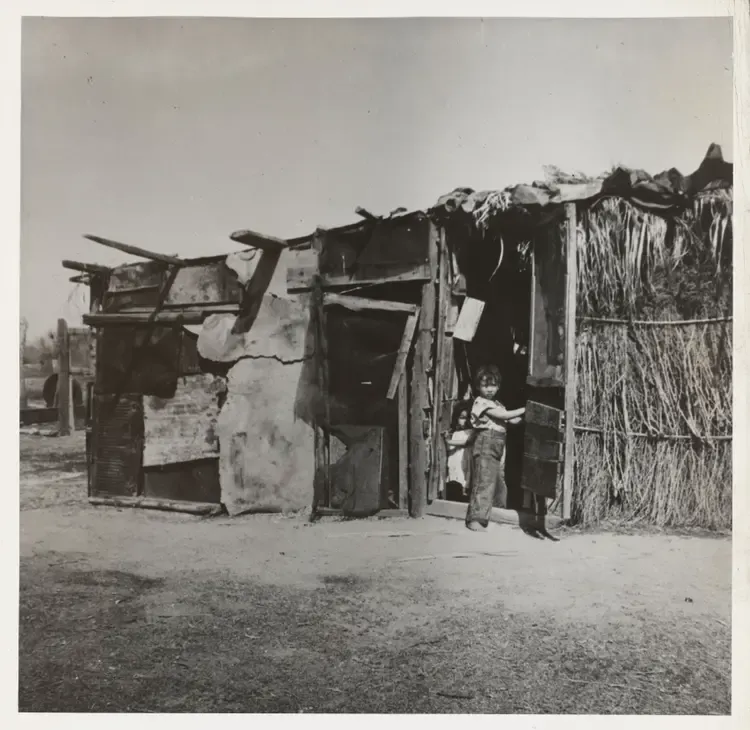 The family who lived in this make-shift home, photographed in Coachella Valley, California in 1935, picked dates on a farm | Image source: history.com
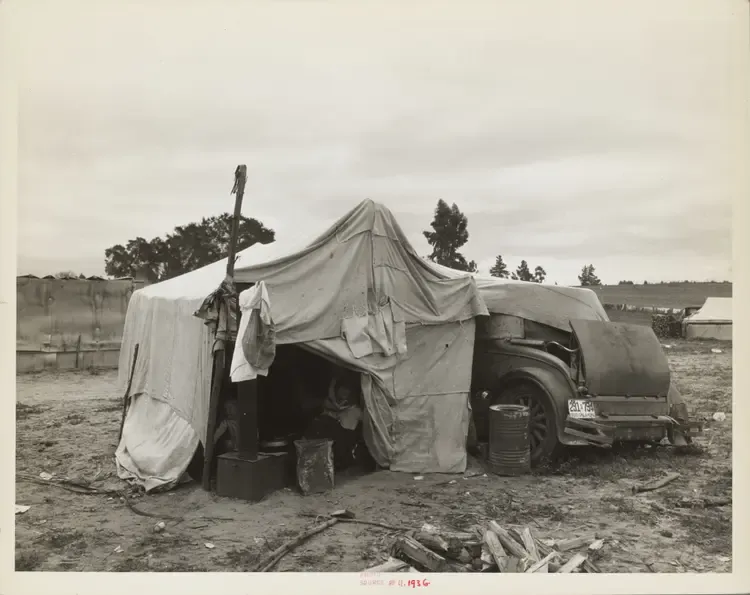 A pea picker’s makeshift home in Nipomo, California, 1936. Lange noted on the back of this photograph, “The condition of these people warrant resettlement camps for migrant agricultural workers.” | Image source: history.com
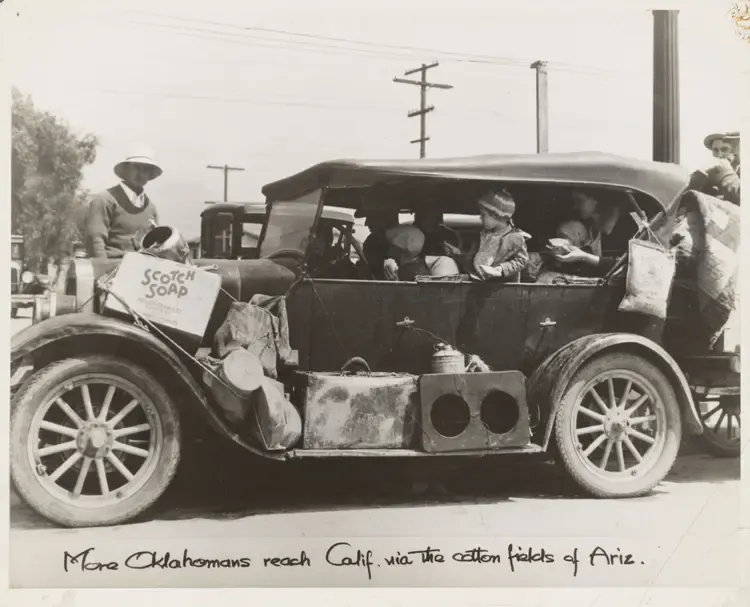 Oklahoma dust bowl refugees reach San Fernando, California in their overloaded vehicle in this 1935 FSA photo by Lange | Image source: history.com
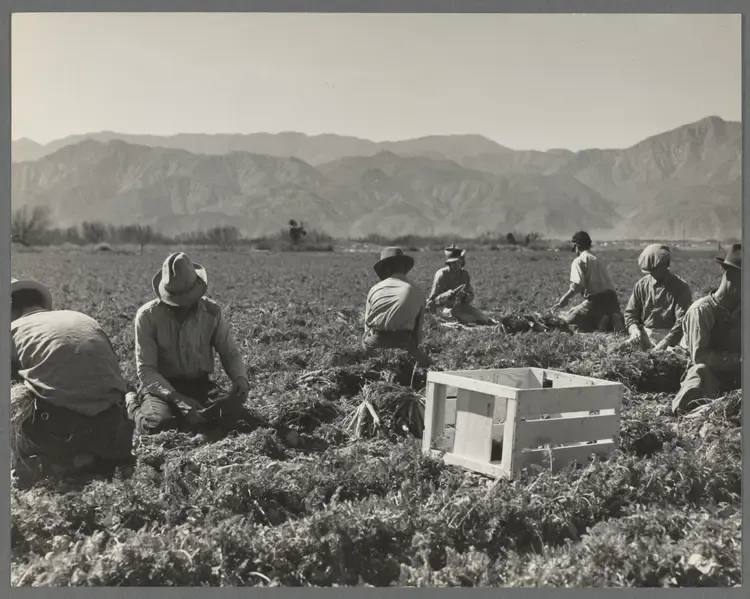 Migrants from Texas, Oklahoma, Missouri, Arkansas and Mexico pick carrots on a California farm in 1937. A caption with Lange’s image reads, “We come from all states and we can’t make a dollar in this field noways. Working from seven in the morning until twelve noon, we earn an average of thirty-five cents.” | Image source: history.com
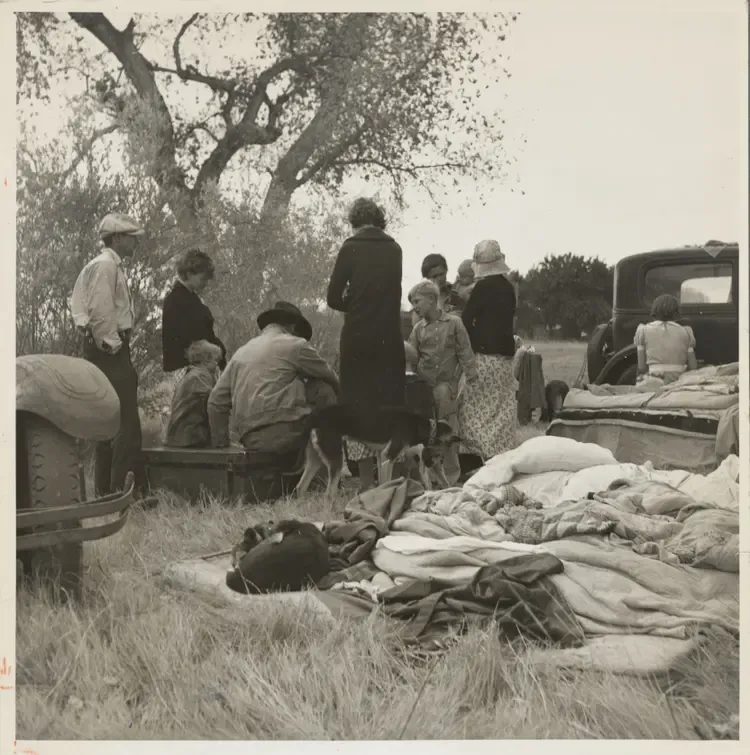 A family of 22 set up camp alongside the highway in Bakersfield, California in 1935. The family told Lange they were without shelter, without water and were looking for work on cotton farms | Image source: history.com
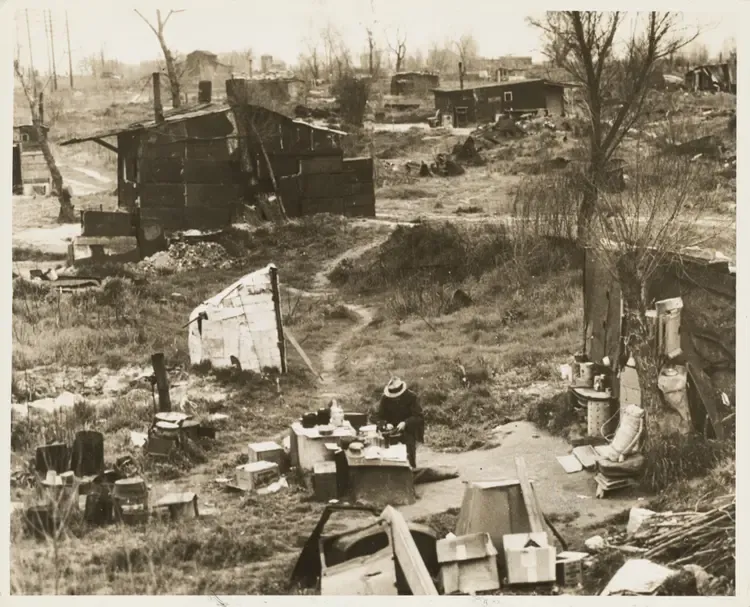 Californians derided the newcomers as “hillbillies,” “fruit tramps” and other names, but “Okie”—a term applied to migrants regardless of what state they came from—was the one that seemed to stick. The beginning of World War II would finally turn migrants’ fortunes as many headed to cities to work in factories as part of the war effort | Image source: history.com
With the changing climate and desertification, today presents some of the challenges we face. History from the Dust Bowl, therefore, reminds us of the essence of timely intervention over such issues. In fact, we can only prevent similar catastrophes through sustainable agriculture and environmental conservation.
Conservationists have continued to adapt to new methods of conservation. With the advances in technology, there are other ways of conserving the soil and the environment. In fact, we apply sustainable practices as a way of living from what we learnt from the Dust Bowl and striving towards a healthy planet.
Conclusion
The Dust Bowl is the most disastrous drought to have ever hit the United States. It was due to severe drought combined with unsustainable farming. The ecological tragedy resulted in widespread human misery, economic depression, and mass migration.
It is important that we learn from this experience. It should also remind us of possible consequences for certain activities as far as the natural environment is concerned. Similarly, appreciating conservation and practicing sustainable agriculture will avert such tragedies in the future. The Dust Bowl legacy hence reminds us to cultivate a sustainable future for coming generations.
Also read,