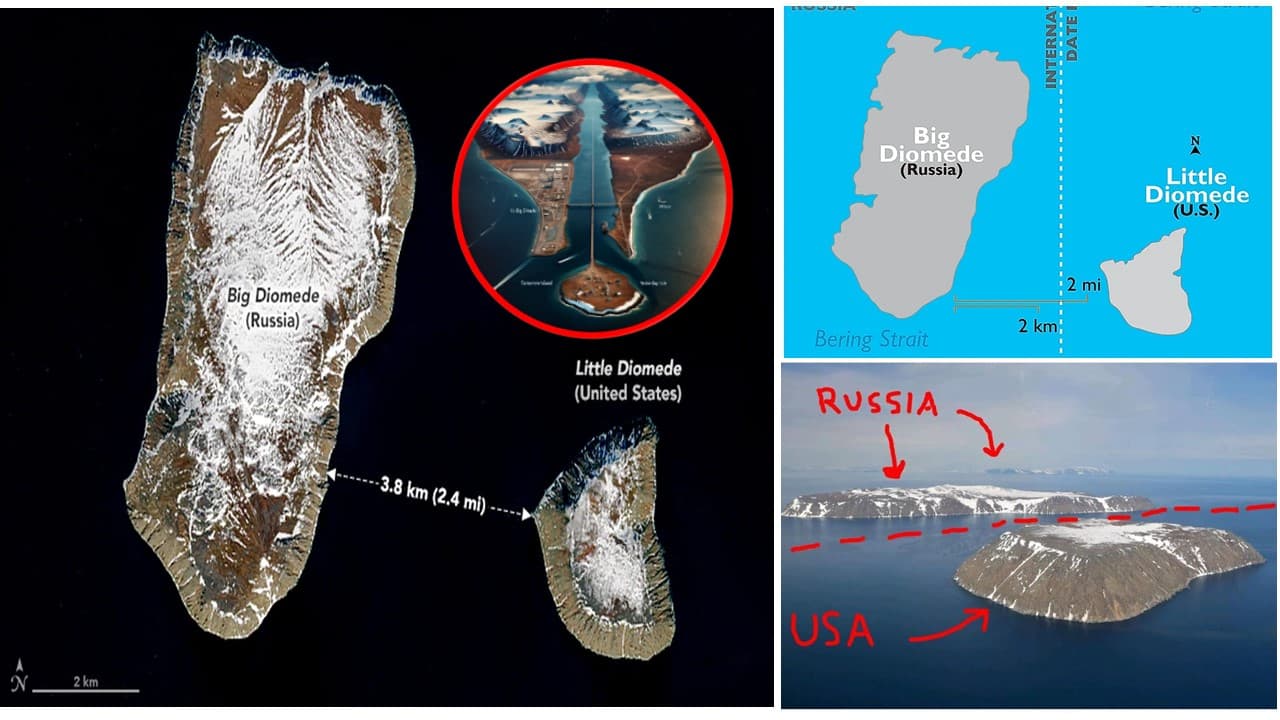
Just imagine that on one island, you are seeing tomorrow. Then on the other side, there is another island that was seen yesterday. The Tomorrow and Yesterday Islands also known as Diomede Islands are facing each other across 2.4 miles of sea in the Bering Strait. It is about 2.4 miles apart from each other in the Bering Strait. These two islands, Big Diomede in Russia and Little Diomede in the USA offer a virtual time-travel-like situation. It is because they straddle near the International Date Line.
Let us dive into the mystery of the two islands. We will dive into their geographic significance, and how these islands came to be a symbol of time and history.
The Unique Time Divide Between Tomorrow and Yesterday Islands
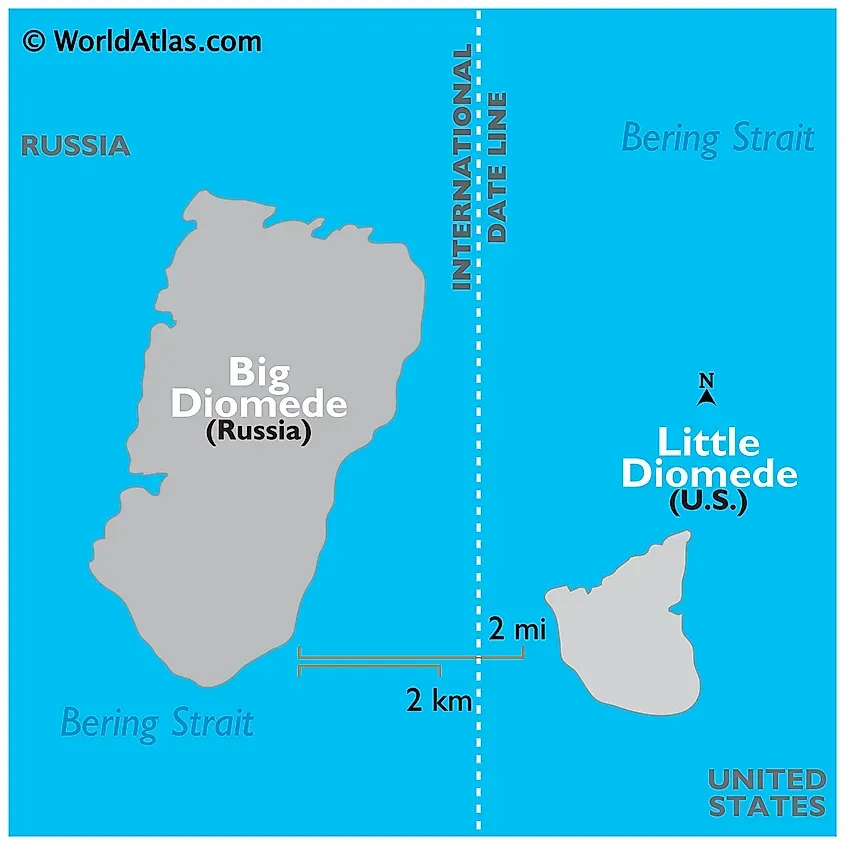
The Diomede Islands’ proximity belies their significant temporal separation. The Diomede Islands are located in the middle of the Bering Strait which is between mainland Alaska and Siberia and they are positioned uniquely in respect to the International Date Line. Big Diomede, or Tomorrow Island, belongs to Russia and it is 21 hours ahead of Little Diomede (20 in summer). The Little Diomede, or Yesterday Island, belongs to the USA. This time difference exists even when the islands are apart by only 2.4 miles of ocean.
The International Date Line’s placement means that when it’s Monday on Little Diomede, it’s already Tuesday on Big Diomede. This phenomenon allows observers on Little Diomede to view “tomorrow” by simply gazing across the water. The islands represent not only a time divide but also the closest physical point between the U.S. and Russia, symbolizing both geographical and political boundaries.
Standing on Little Diomede, one can see across the water to Big Diomede in a different day. It might be Monday over there and Sunday here. The International Date Line splits the two worlds, providing the dividing line where time shifts. This sets up the rare situation in which you could see tomorrow and yesterday at the exact same time.
“When you look at the Big Diomede Island, you’re looking into the future!”
Earth Observatory reader Jim Andersen
Big Diomede and Little Diomede: A Tale of Two Nations
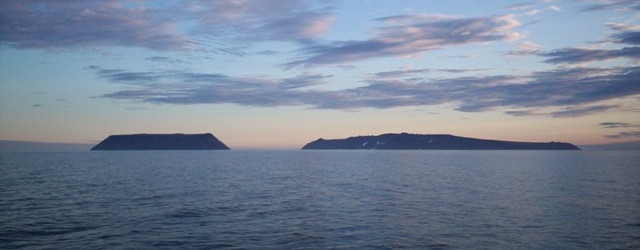
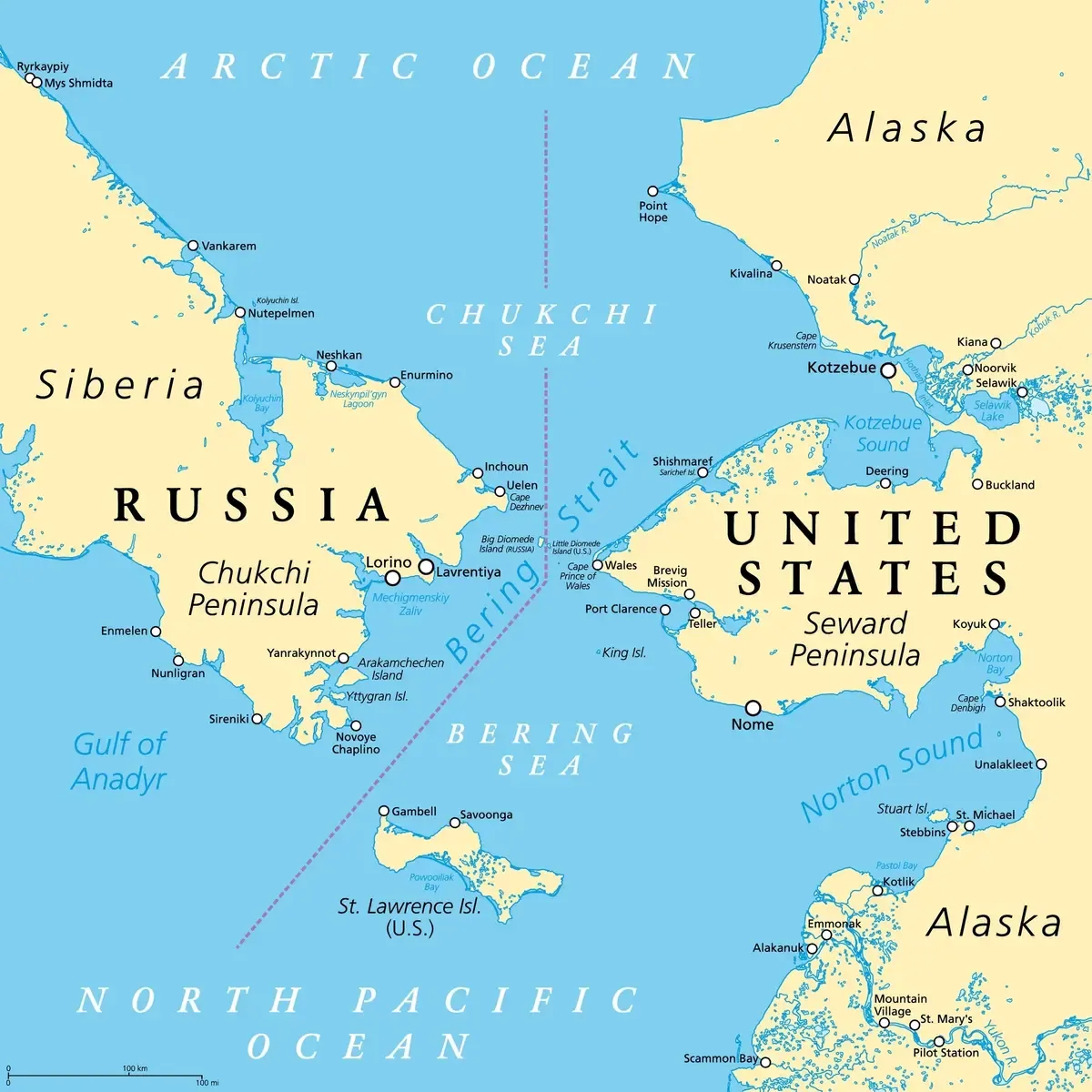
The Diomede Islands are not fascinating concerning time alone. However, they also constitute the closest physical point between the United States and Russia. Big Diomede belongs to Russia and is uninhabitable today. During the Cold War, it existed as a military outpost. On the contrary, Little Diomede belongs to the USA. It hosts about 80 aborigines who live in a rather isolated but culturally rich environment.
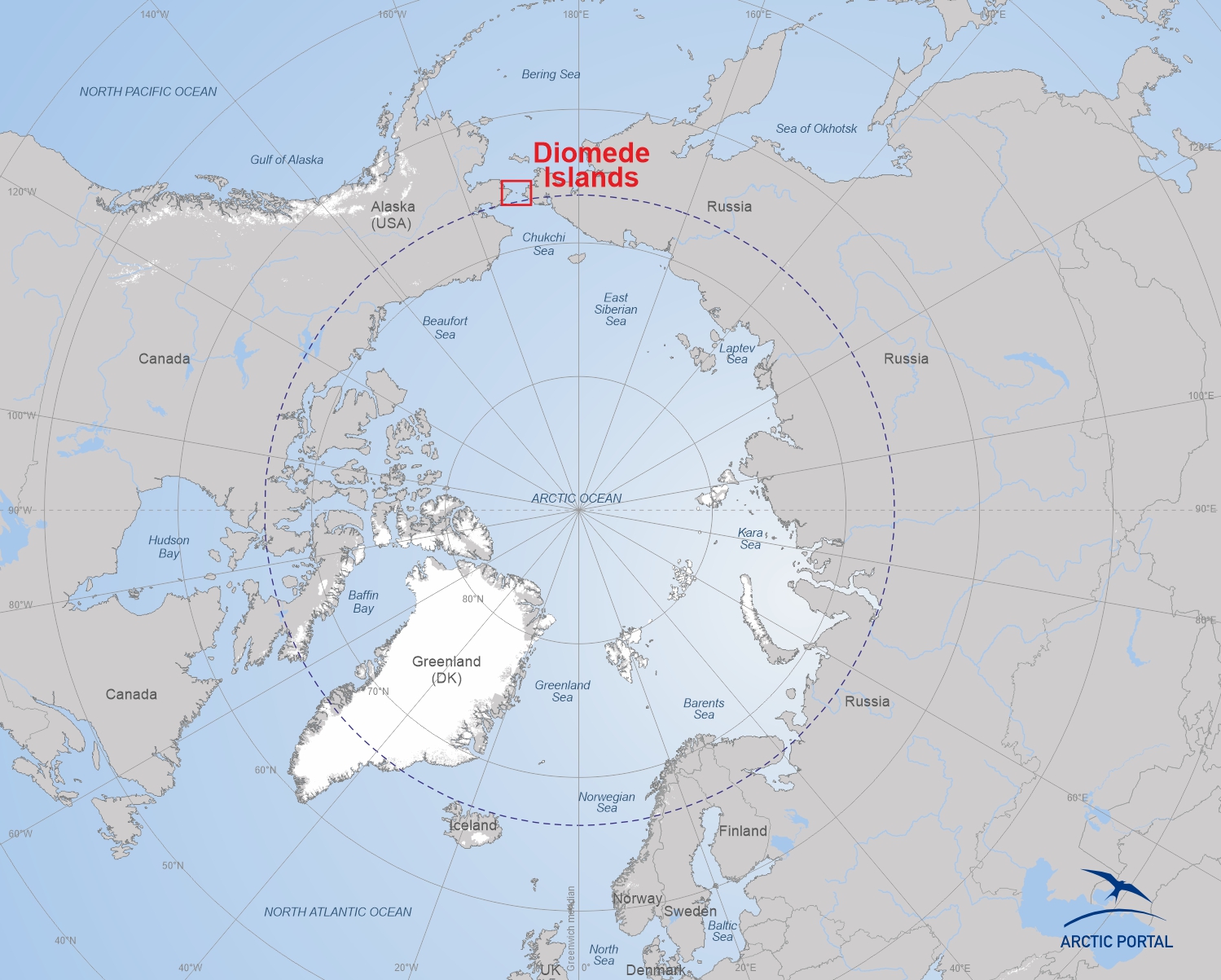 Image source: Arctic Portal.org
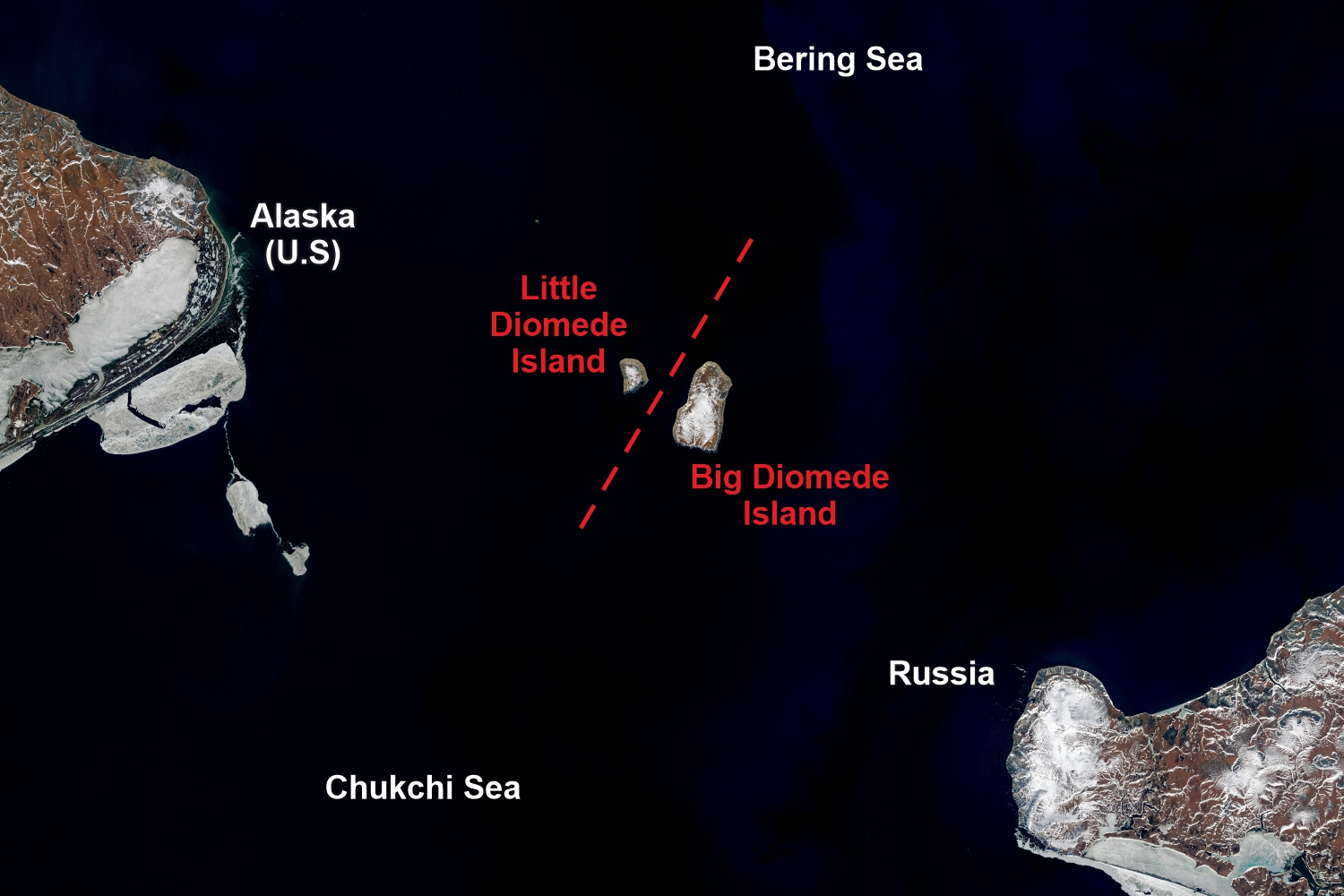 Nestled in the Bering Strait between Alaska, United States, and Chukotka, Russia, lie two remote islands that not only mark the divide between two nations but also straddle the enigmatic International Date Line | Image source: Arctic Portal.org
A stunning contrast, both these islands represent a time, political, and historical divide. The Bering Strait separating the islands was variously called the “Ice Curtain” during the Cold War. That is a symbol of tension between the two superpowers. Although only a few miles apart, people on these islands lived literally in two different worlds. Nowadays, the islands are still divided not only by time but also by geography and politics.
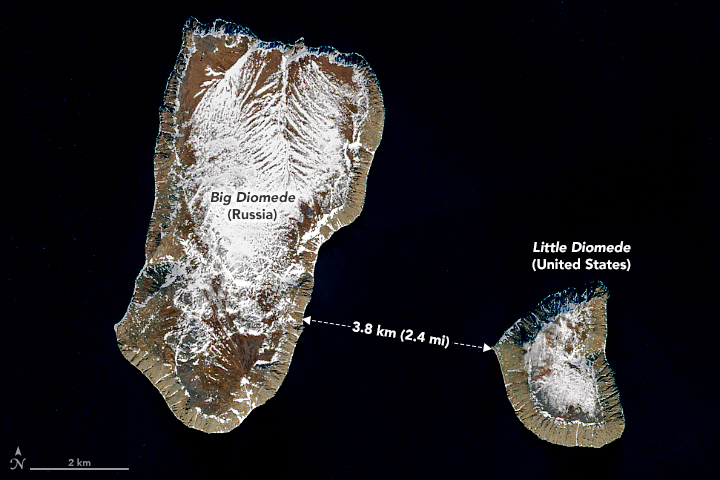 Image source: The Earth Observatory
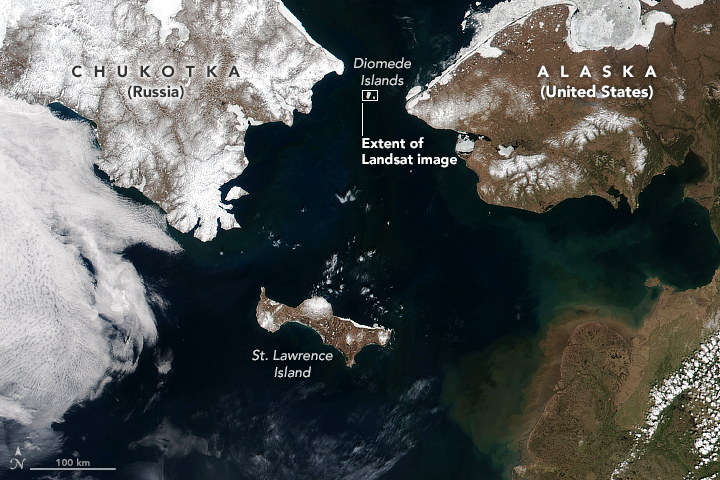 Image source: The Earth Observatory
Life on Little Diomede: A World Apart
Little Diomede, home to the village of Diomede, hosts a small population primarily composed of indigenous Inupiat people. As of 2025, the population was recorded at 77 individuals. Little Diomede is better known as Yesterday Island and is one of the most isolated places on Earth.
A few residents, mainly indigenous Inupiat people, inhabit a closely bonded community with traditional hunting and fishing for survival. There are no roads on the island, no modern infrastructure to speak of, and very limited access to the outside world.
The islanders use ice for traveling during the winter months when the sea freezes over, while all supplies come in by helicopter.
Summer temperatures on the islands are around 40 to 50 degrees Fahrenheit. However, the wintertime is even colder. Temperature in the winter is roughly between 6 and 10°F.
The water between the two islands is separated into 2 by the maritime border of the two countries. This passage was reportedly given the nickname the “ice curtain.” The term had more influence from Cold War tensions than climate. According to the 2010 U.S Census statistics, the Little Diomede has a small community of around 115 people.
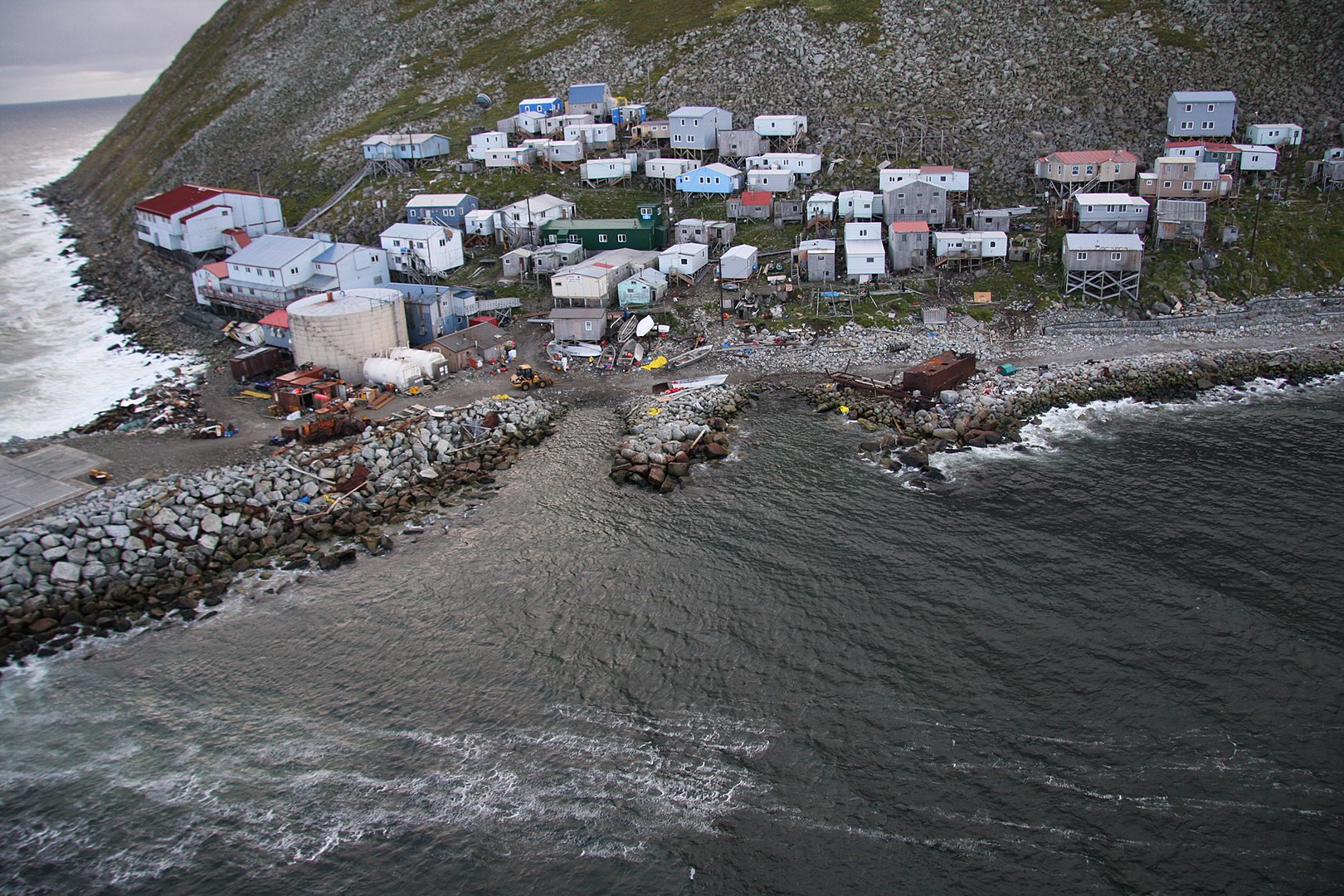
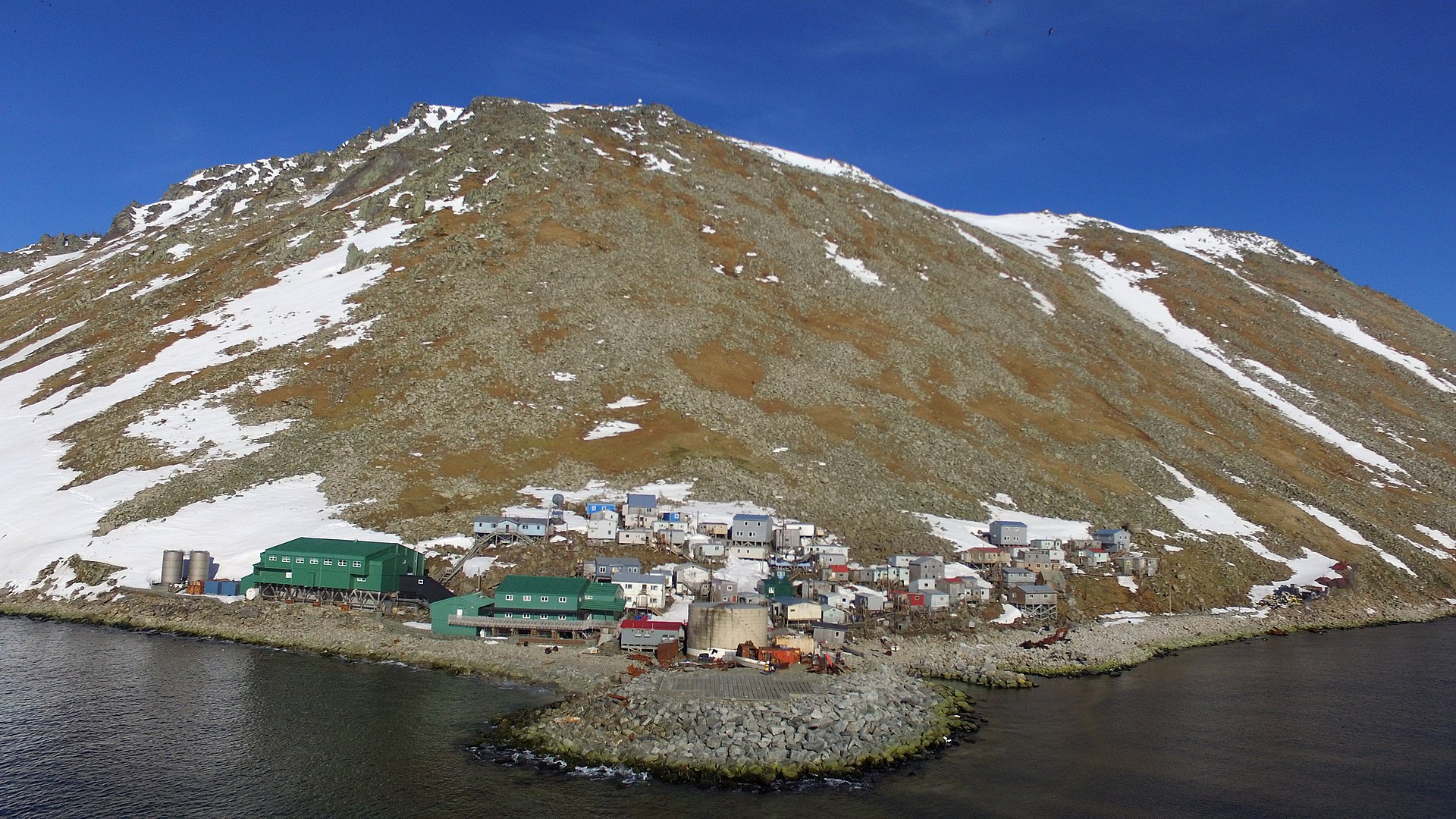
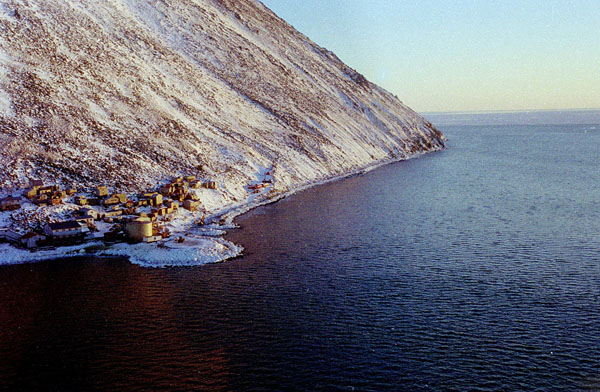
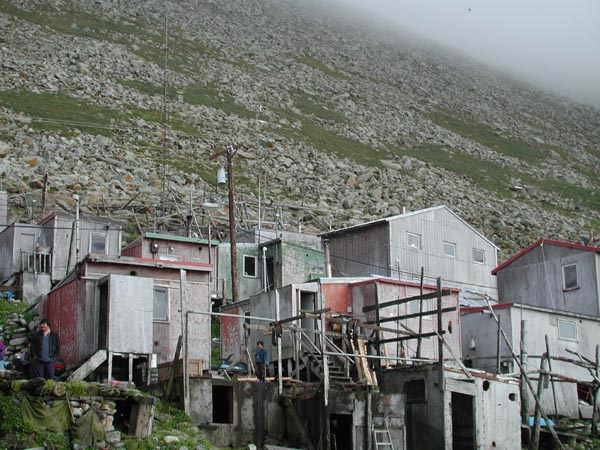
Living on Little Diomede means being at the very edge of geography and time. And with that kind of topography, one must be hardy; similarly, the people indigenously from this island have learned to get used to loneliness and all the oddities of a life apart from civilization. These problems notwithstanding, the Inupiat are a culturally rich people whose traditions are those passed down generation to generation. A way of life for them provides a window to another world rarely seen-a world that is both ancient and deeply tied in with nature.
Visiting Tomorrow and Yesterday Islands: Is It Possible?
Yet to the intrepid traveler, being able to stand on both “tomorrow” and “yesterday” in one day is an opportunity that is simply too good to pass up. In point of fact, visiting the islands is anything but easy. Big Diomede belongs to Russia and is closed to civilians; it has limited functions other than as a military base. Little Diomede, while more accessible, is nonetheless a very challenging destination for travelers. Its very remoteness implies there are no flights or ferries, and visitors must take the route of helicopters or boats to get there.
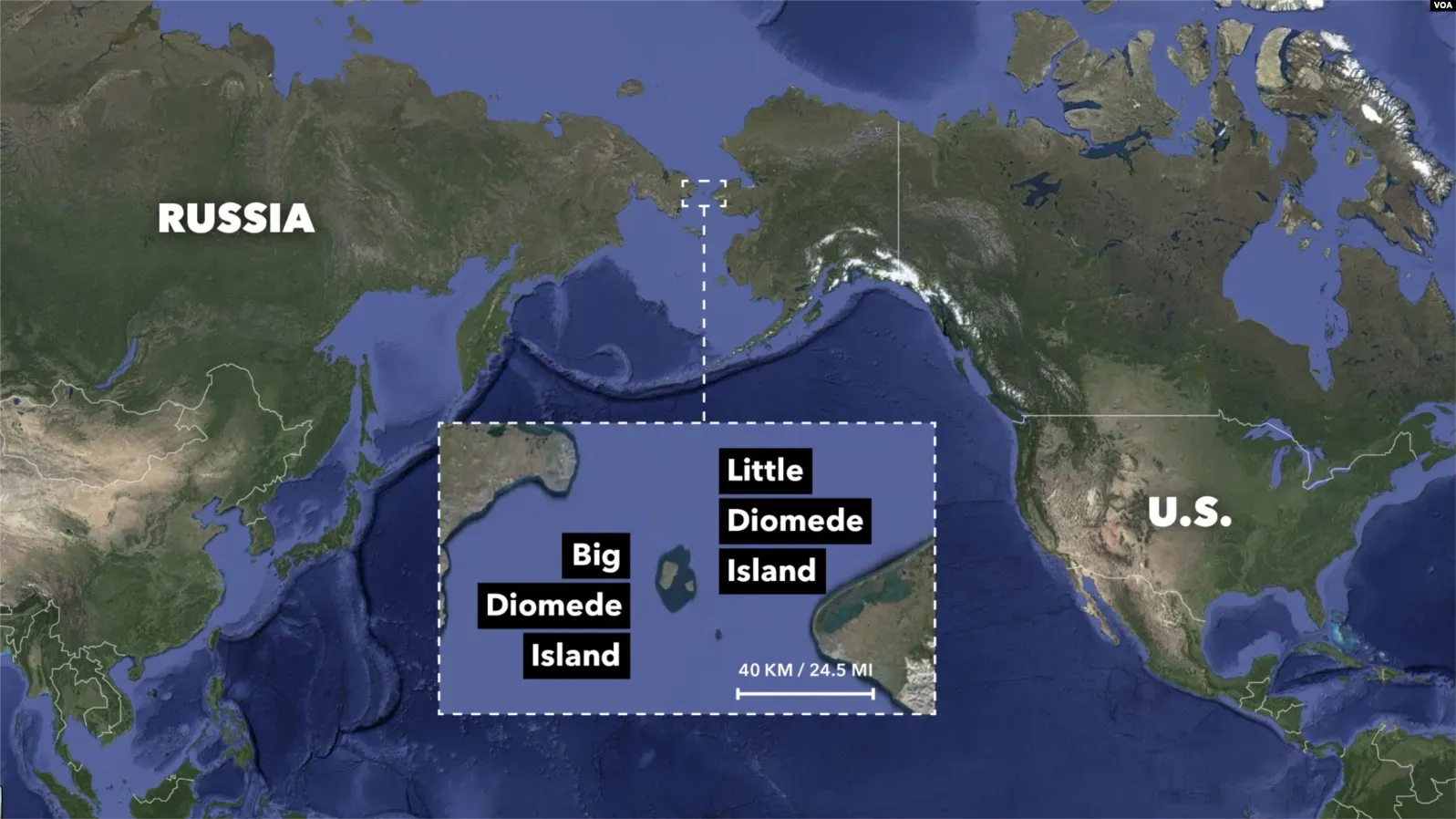 Big Diomede Island (Russia) and Little Diomede Islands sit in the northern Bering Strait, separated by the international date line | Image source: voanews.com
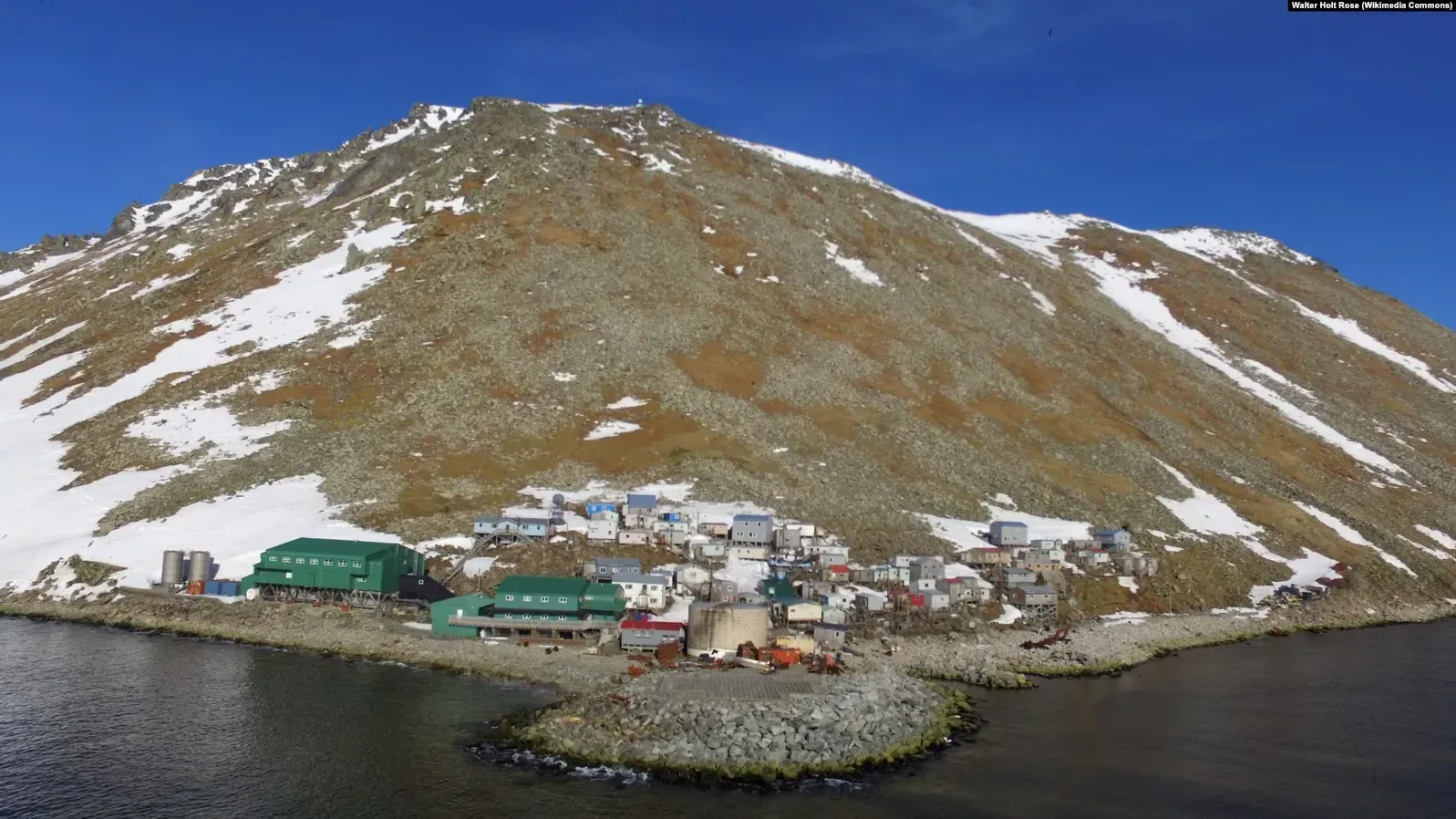 Drone photo of the city of Diomede, located on the west coast of Little Diomede Island in the Behring Strait, is the most remote community in the U.S. | Image source: voanews.com
To the few who make it to Little Diomede, the scene is entirely different. You can stand on the shores of the USA, look across the water, and see Russia a day ahead. A place where time and geography meet, perhaps at their most incredible intersection. Tourism might not be widespread. Either way this set of islands has continuously made a capture into the imagination of explorers and geographers alike.
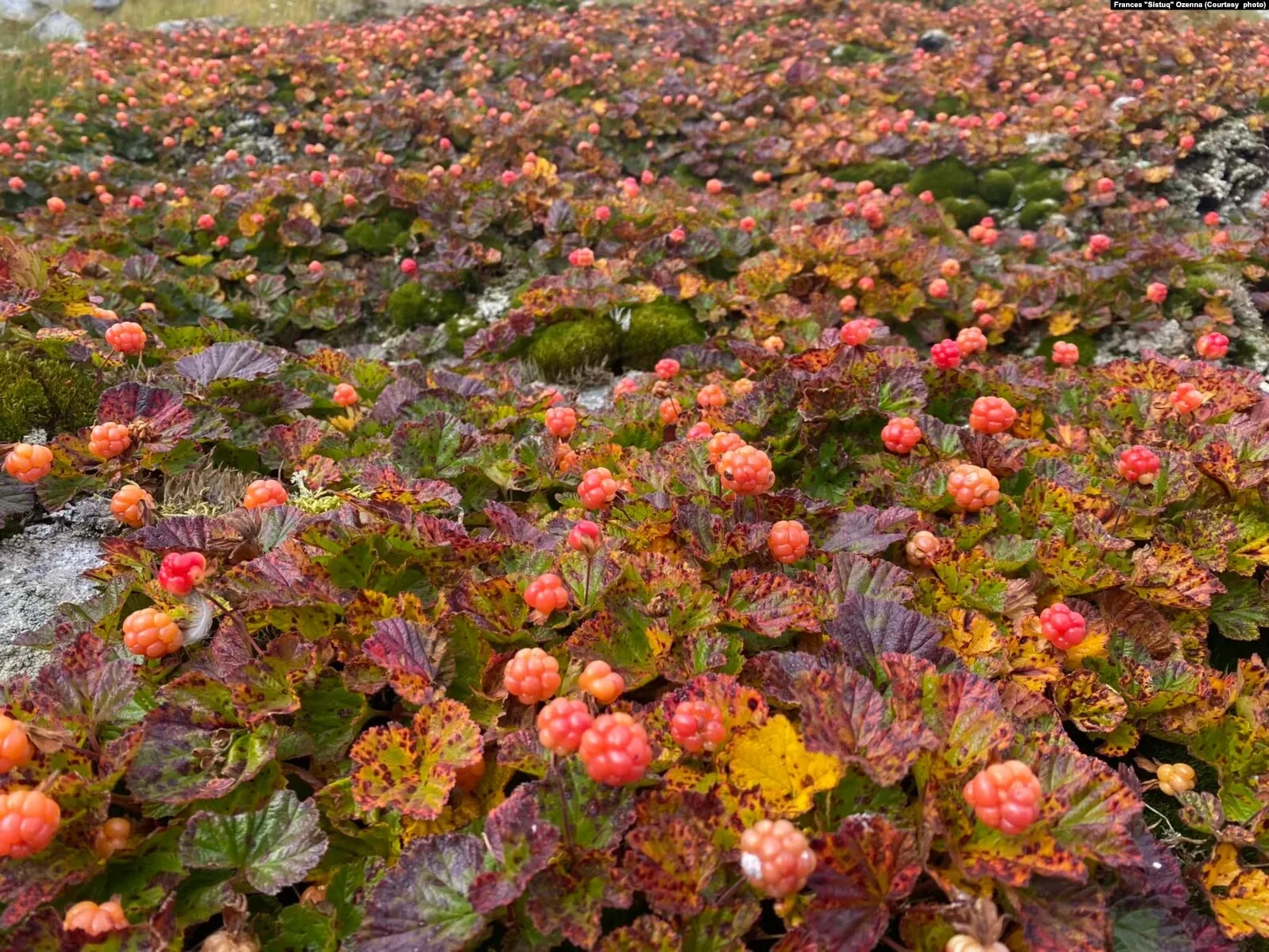 During the brief summer on Little Diomede Island, salmonberries grow in great profusion, along with the so-called “Alaska potato” and a variety of edible greens. potato | Image source: voanews.com
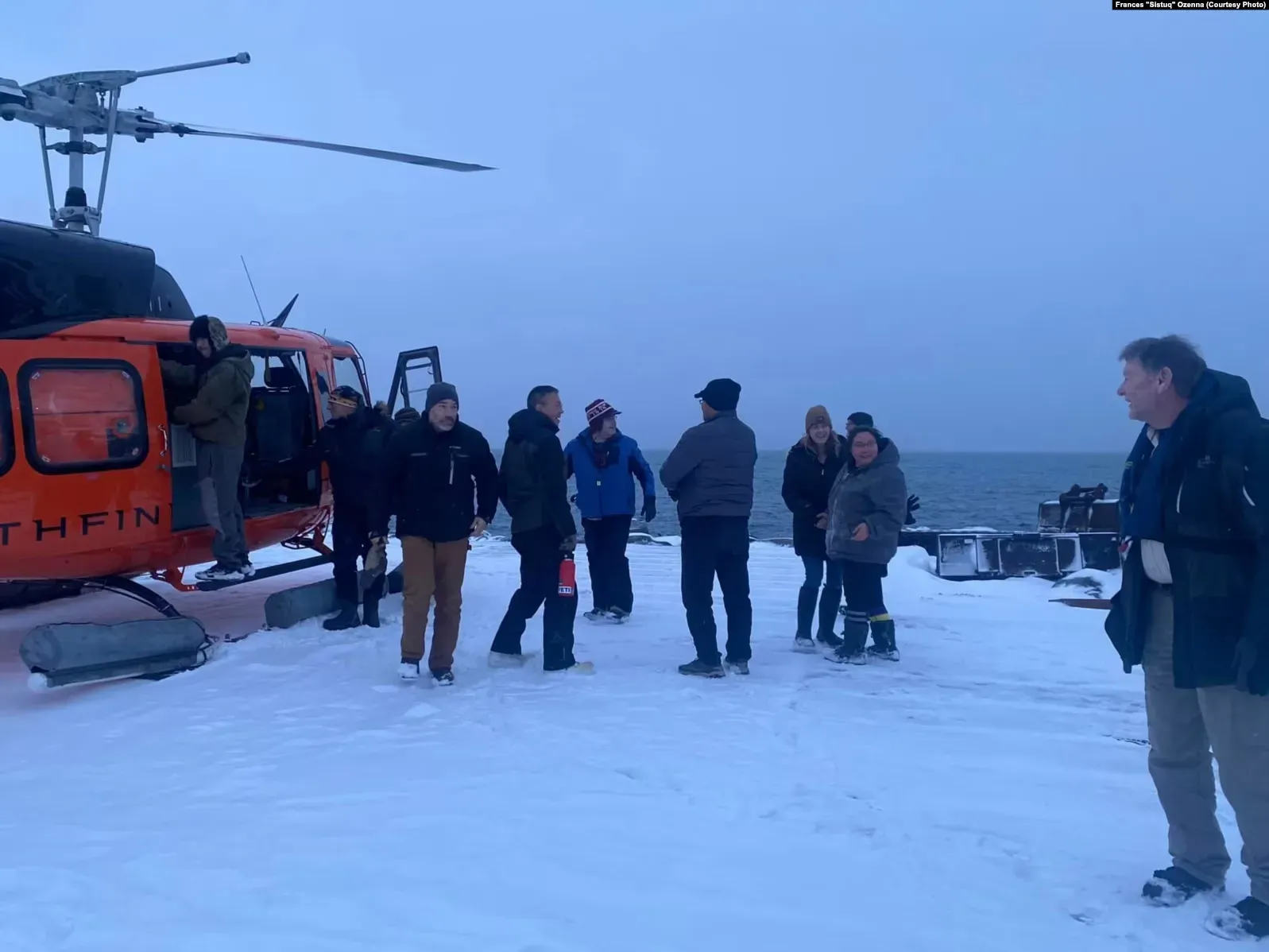 Photo shows an emergency response team from Nome arriving in Diomede, Sunday, December 6, 2023, a week after the Diomede city office building collapsed | Image source: voanews.com
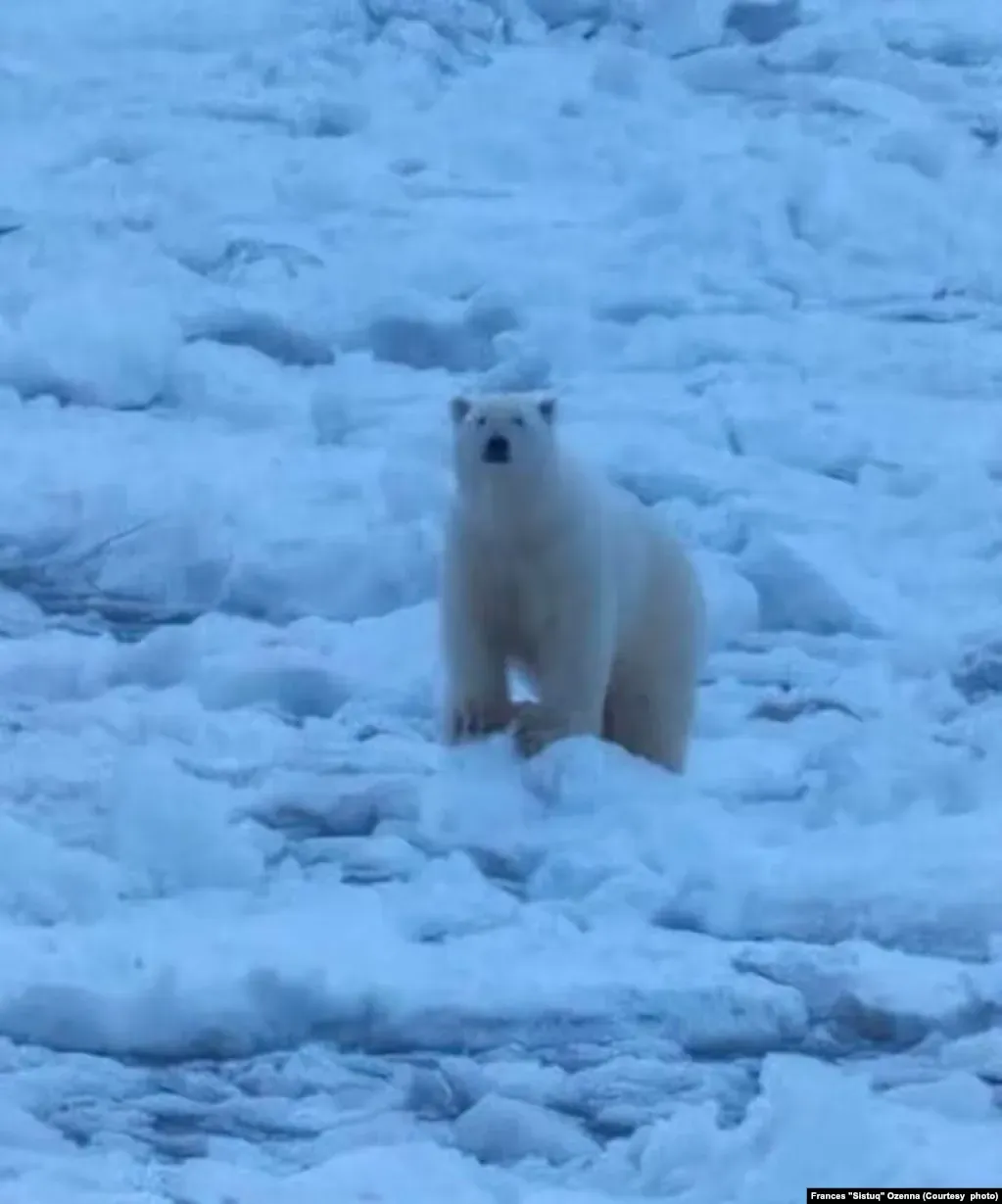 This December 10, 2023, photo by Diomede city coordinator Frances “Sistuq” Ozenna shows a polar bear, one of three that have been spotted in town in recent weeks | Image source: voanews.com
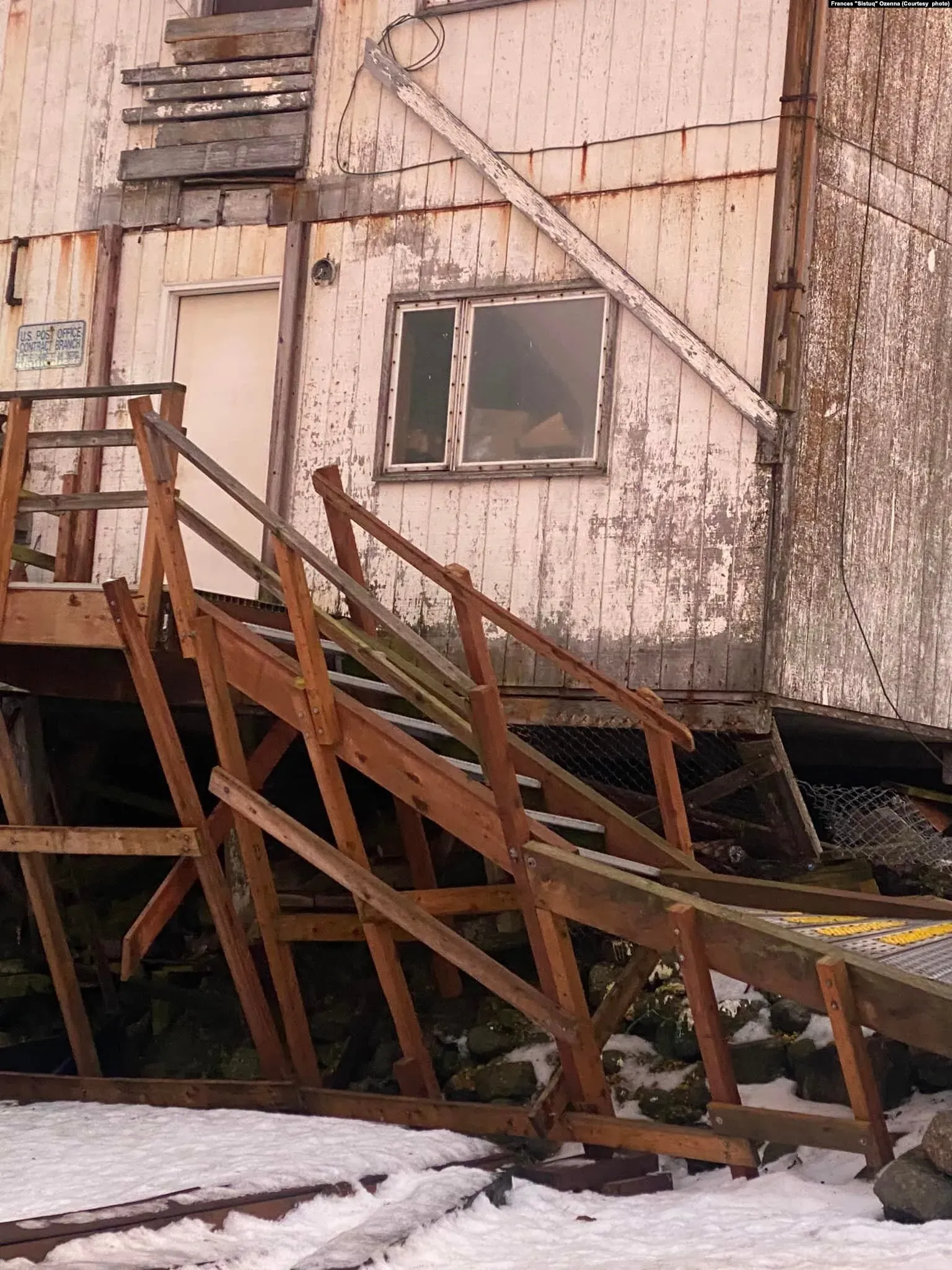 This photo shows the Diomede city office building just after its collapse on November 26, 2023 | Image source: voanews.com
Conclusion
The Islands of Tomorrow and Yesterday are among those odd and interesting wonders. The 2.4 miles of ocean separating both islands show the world what it looks and feels like when time literally stands still. Big Diomede and Little Diomede might be separable by politics, geography, and time. However, together they signify one moment in history and nature.
The Diomede Islands offer the ultimate adventure for those dreaming of exploring time and space. These islands bring into perspective just how little the size of the world is in comparison with just how big and wide the concept of time really can be.
The Diomede Islands stand as a testament to the complexities of time, geography, and human resilience. Their unique position offers a tangible glimpse into the interplay between natural boundaries and human-imposed divisions.
While the islands remain largely inaccessible and inhospitable, they continue to captivate the imagination of those intrigued by the world’s most extraordinary places.
Also read,