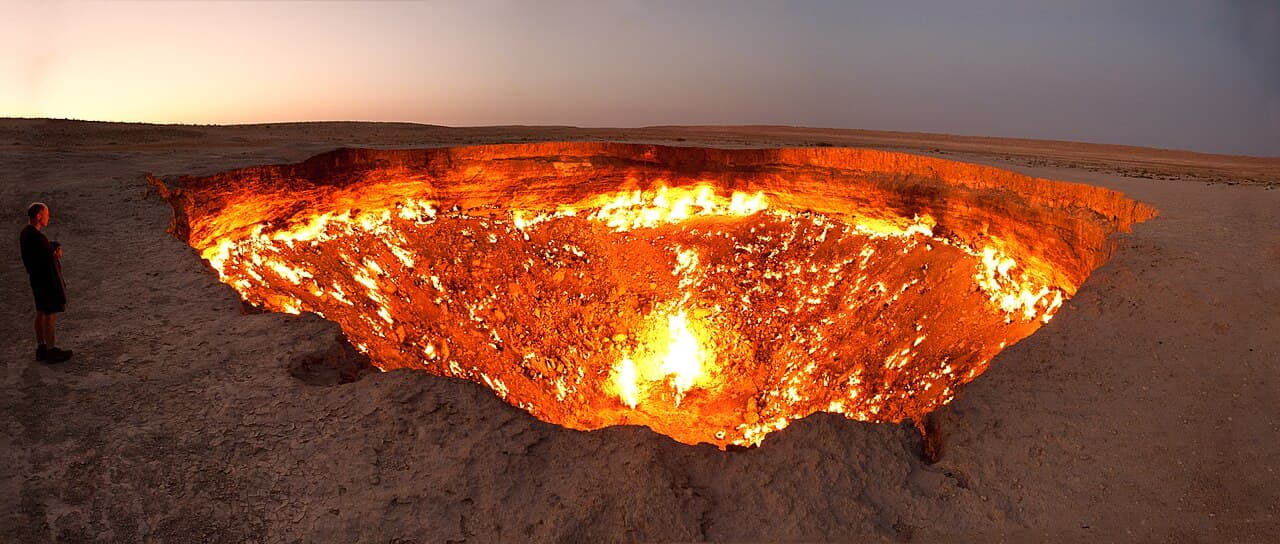
Darvaza's burning crater is famous for an often-repeated origin story. But satellite research published in 2026 places the start of sustained burning decades later than the familiar 1971 account.
The fiery landmark in Turkmenistan is still surprising—now for what scientists can learn by looking back from space.
Separate the crater from the fire
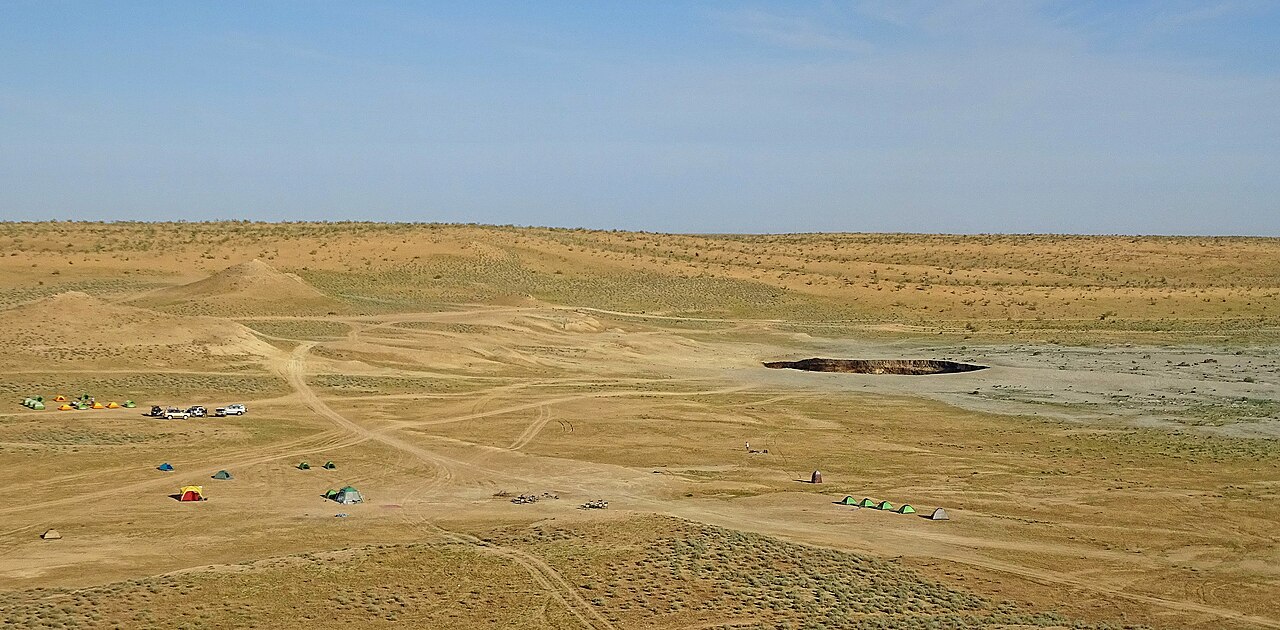
The Darvaza gas crater lies in the Karakum Desert. It is connected to gas-bearing ground and human industrial activity, rather than being an ordinary erupting volcano.
Exactly when the crater formed remains uncertain. That question is different from when burning began.
A 2026 study in Geophysical Research Letters used historical Landsat images to identify the onset of combustion between September 1987 and February 1988.
Why the new timeline matters
The work challenges the simple story that a pit formed in 1971 and was immediately set alight.
The research team's university account explains how archived images helped reconstruct events that had long been uncertain.
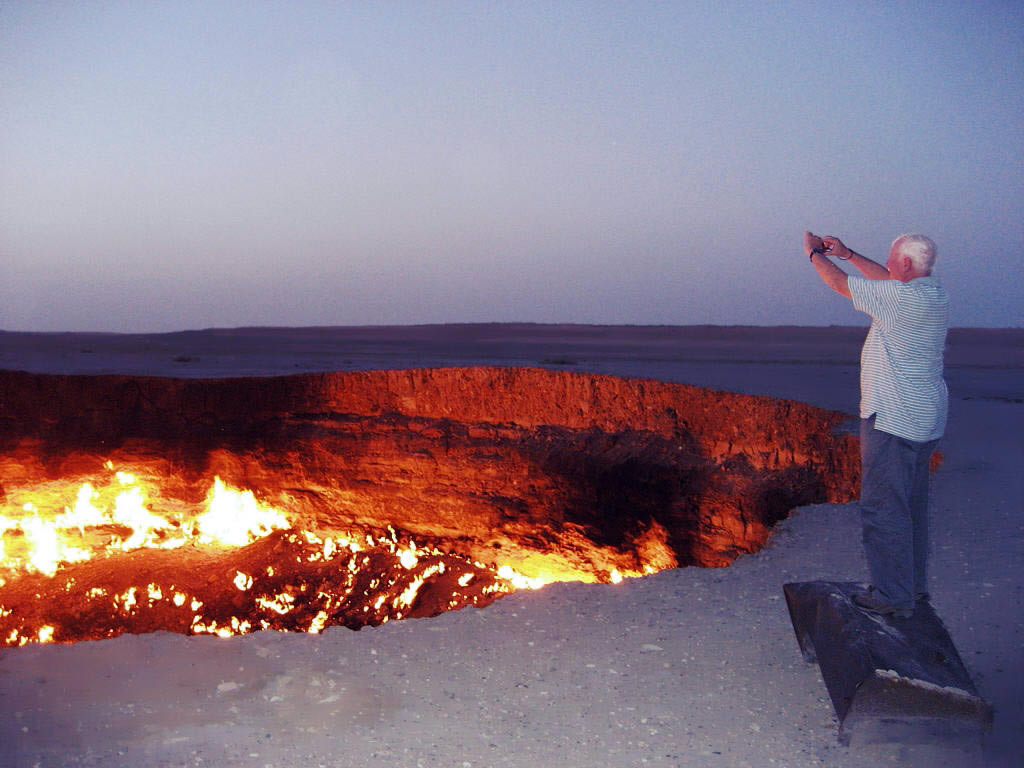
The photographs here are historical views. Their bright flames should not be taken as evidence of today's exact appearance.
Less fire is not the whole answer
The study also examined methane observations from 2020 to 2025. Researchers detected gas plumes and found that reduced flaring did not show a clear, consistent relationship with methane release.
That distinction matters because unburned methane is a greenhouse gas. Watching the visible flames is not enough to measure the environmental outcome.
A landmark with a larger lesson
Older pictures made Darvaza a symbol of endless fire. The newer evidence reveals something more useful: a changing industrial and geological system that needs measurement.
Its story reminds us that familiar explanations can improve when better evidence appears. The real curiosity gap is no longer simply “Why does it burn?” It is what the escaping gas is doing beyond the glow.
Photo credits
Featured image: Tormod Sandtorv; Wikimedia Commons source; CC BY-SA 2.0. Resized for web display.

Body image 1: David Stanley from Nanaimo, Canada; Wikimedia Commons source; CC BY 2.0. Resized for web display.

Body image 2: Bjørn Christian Tørrissen; Wikimedia Commons source; CC BY 4.0. Resized for web display.
