In 1983, Dana Kunze took part in a high-diving challenge at SeaWorld in San Diego from a platform 172 feet above the water.
The height was about 52.4 meters. Footage of the dive still attracts attention decades later, both for the height and for the control required to complete it.
Kunze’s achievement belongs to a particular chapter in high-diving history. Calling it simply the highest dive ever, with no qualification, leaves out later records recognized under different rules.
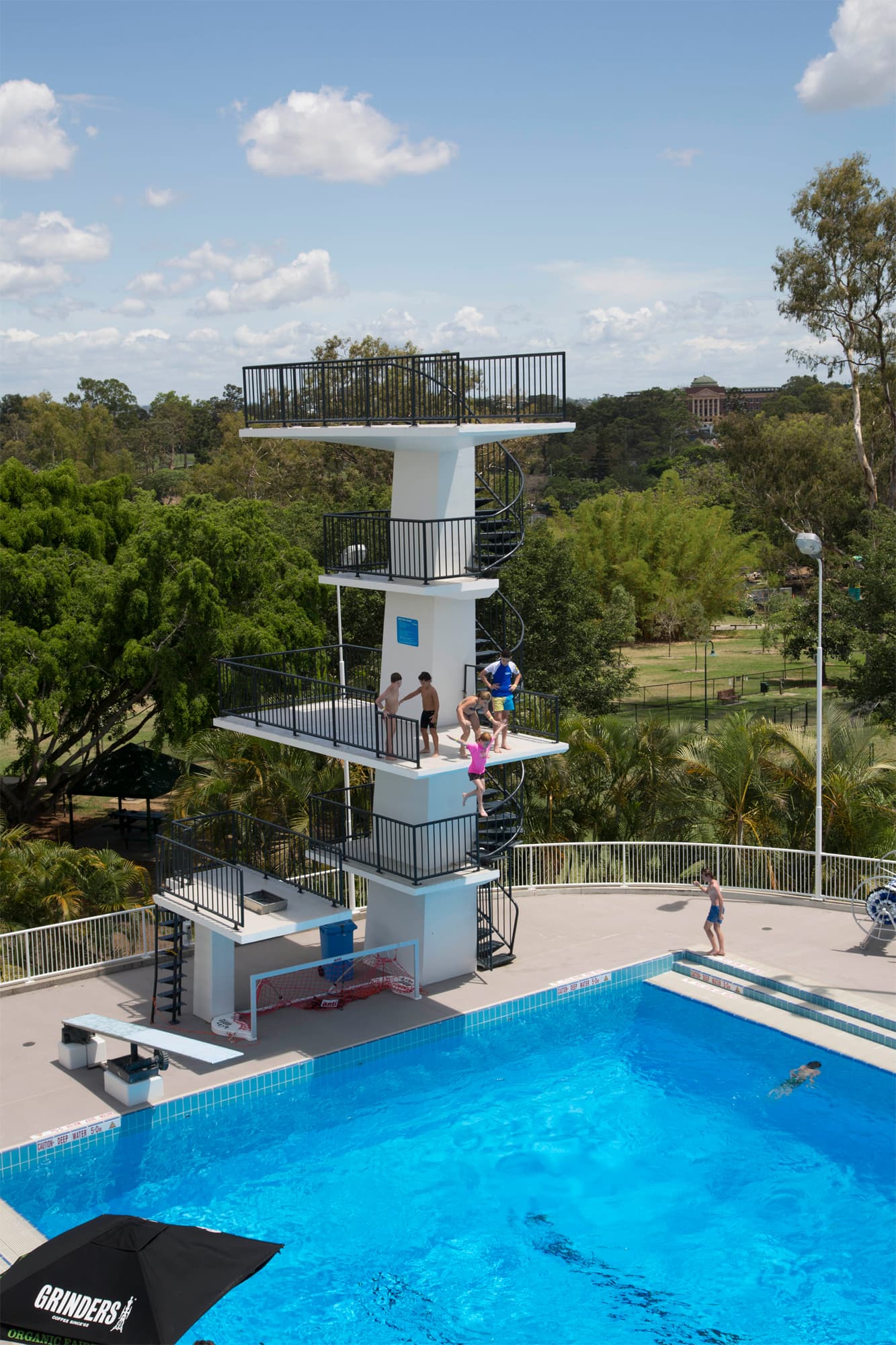
Featured photograph: Diving platforms at Centenary Pool, Brisbane, in 2014. This is not the 1983 SeaWorld tower. Photo: Brisbane City Council, via Wikimedia Commons, CC BY 2.0. Original photograph used without editorial alteration.

The 172-foot challenge
Kunze’s Water Show Productions biography lists him as the 1983 World Champion in the 172-foot World Record High Dive Challenge shown by ABC Sports.
His record attempt was part of a longer career. The same biography describes his start in professional high diving as a teenager and his appearances on televised diving programs.
California Sun’s historical account explains the standards behind the 1983 event: a valid dive had to include a somersault, and the diver had to leave the water without assistance.
Under those conditions, a successful attempt required more than reaching the water from a great height. The movement in the air, the entry and the ability to get out afterward all mattered.
Why the record needs context
The California Sun account says five divers completed valid dives that day. A sixth, Pat Picard, was injured and did not qualify.
Later attempts reached greater heights but did not satisfy the same conditions. That difference helps explain why Kunze and others continued to defend the importance of the SeaWorld achievement.
It does not mean that every other record is illegitimate. Record titles depend on what is being measured and the criteria used by the organization recognizing them.
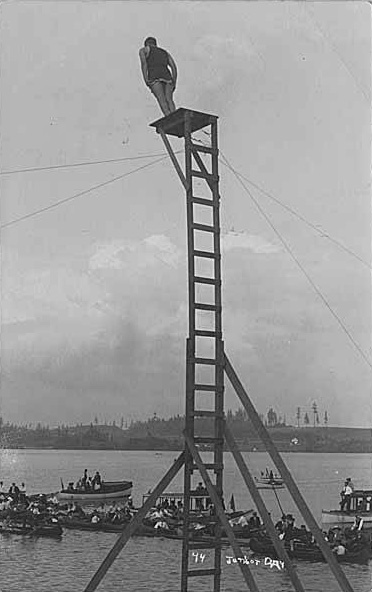
Photo: UW Digital Collections, via Wikimedia Commons, No restrictions. Original photograph used without editorial alteration.

Guinness recognizes a later, higher jump
Guinness World Records documented Lazaro “Laso” Schaller’s 58.8-meter jump in Maggia, Switzerland, on August 4, 2015.
Guinness recognized it as both the highest dive from a diving board and the highest cliff jump. Schaller entered feet first after months of preparation involving a specially built platform and an examined landing area.
That height, about 192 feet 10 inches, exceeded the 1983 platform height. The movement and recognition criteria were different from the somersault-based challenge associated with Kunze.
The accurate comparison preserves both achievements instead of pretending there is one universally accepted definition.
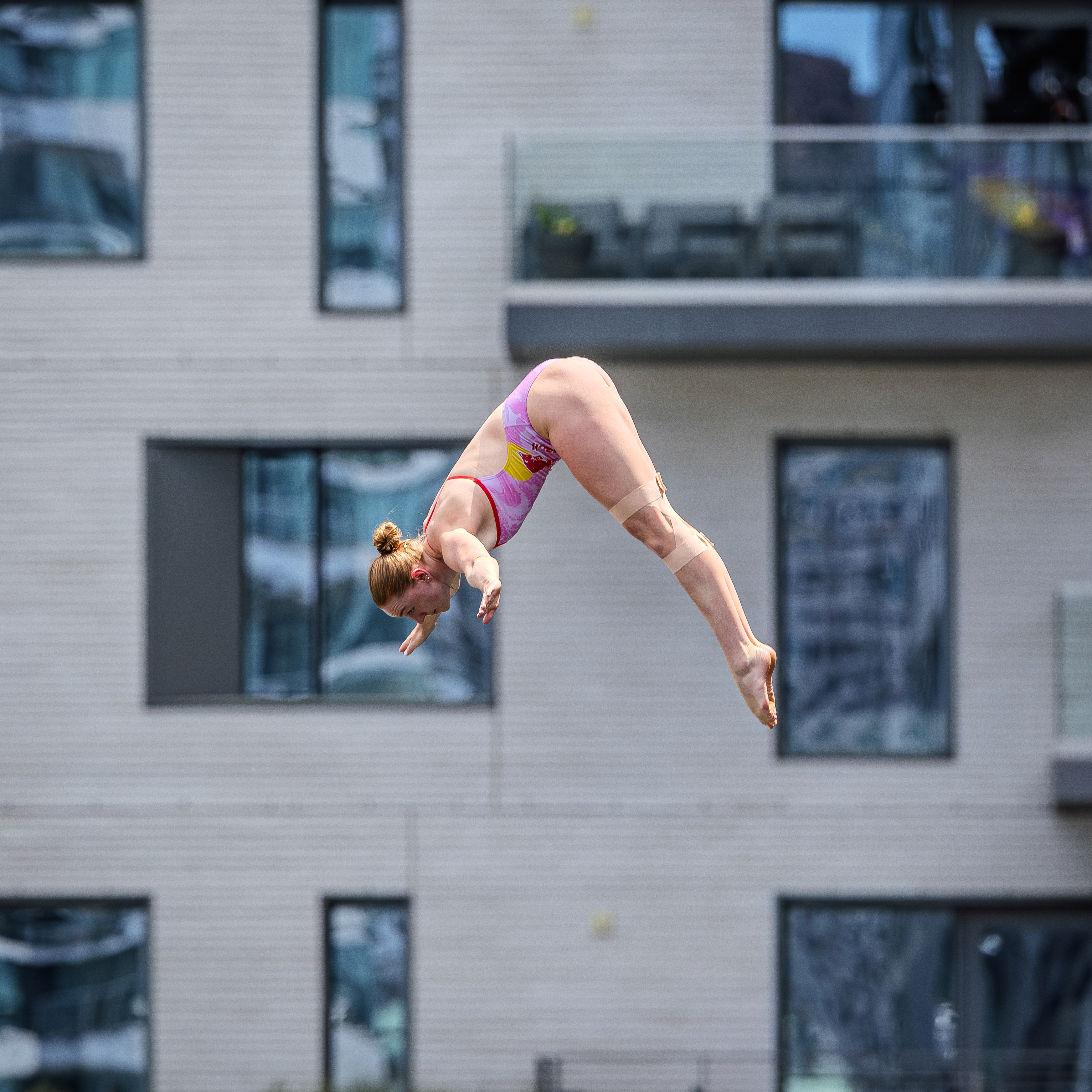
Photo: Stephen LaBonte, via Wikimedia Commons, CC BY-SA 4.0. Original photograph used without editorial alteration.

Modern competition values more than height
Today’s organized high-diving competitions do not require athletes to keep increasing the height of the platform.
World Aquatics explains that men compete from 27 meters and women from 20 meters. Athletes perform multiple dives, and combined scores determine the winner.
Those events test skill and consistency within established competition formats. A one-off height record asks a different question.
Kunze’s 1983 dive remains a remarkable historical performance. It can be appreciated for its height, technique and place in televised sport without dismissing later athletes or confusing separate records.
The story is strongest when the numbers come with their context.