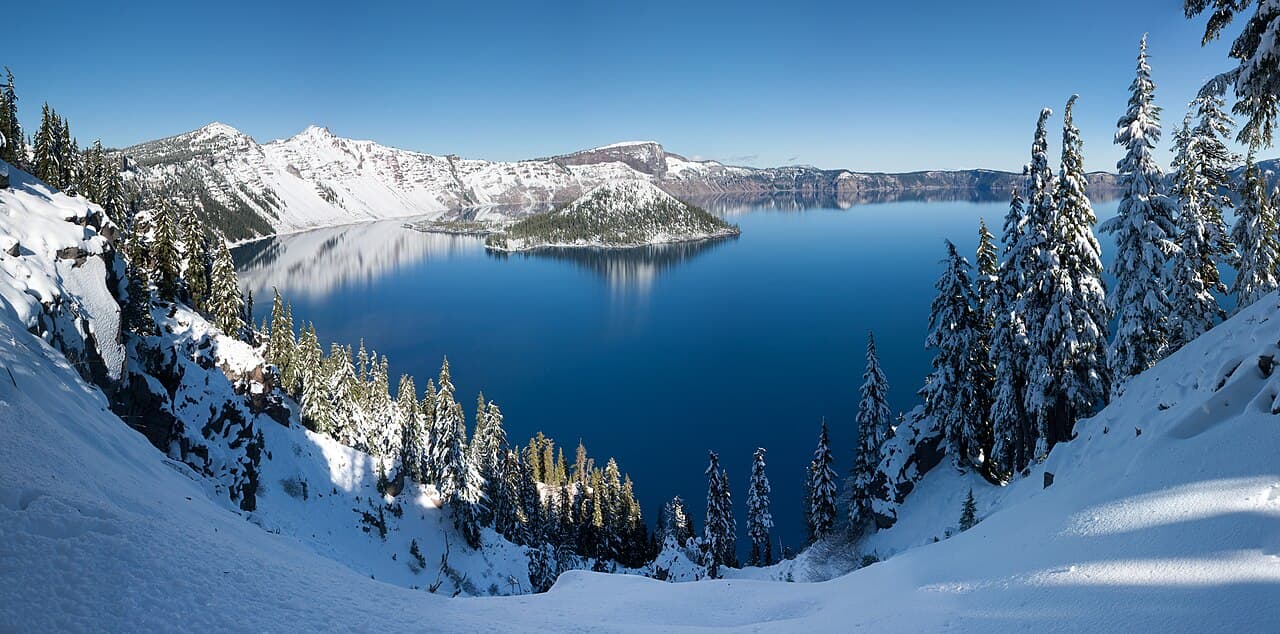
Crater Lake fills a caldera created when a volcanic eruption led to the collapse of a mountain. Rain and snow feed its water, and the lake is the deepest in the United States.
That origin makes the famous blue view more than a beautiful scene. It is a visible connection between a dramatic geological event and the landscape visitors see today.
Understand what formed the basin
The National Park Service explains the eruption and collapse associated with Mount Mazama. The lake’s surroundings preserve evidence of a landscape changed on an enormous scale.
Take time with geological interpretation before a viewpoint walk. It helps distinguish the lake’s basin from a simple crater made by an impact or a small eruption.
Begin at an accessible rim viewpoint
The rim provides a broad introduction to the lake and its setting. Choose a suitable route and check the surface and weather before leaving a developed area.
Views can disappear into cloud. Check the park’s current conditions and webcams, and keep realistic expectations for the day.
Plan for snow and seasonal roads
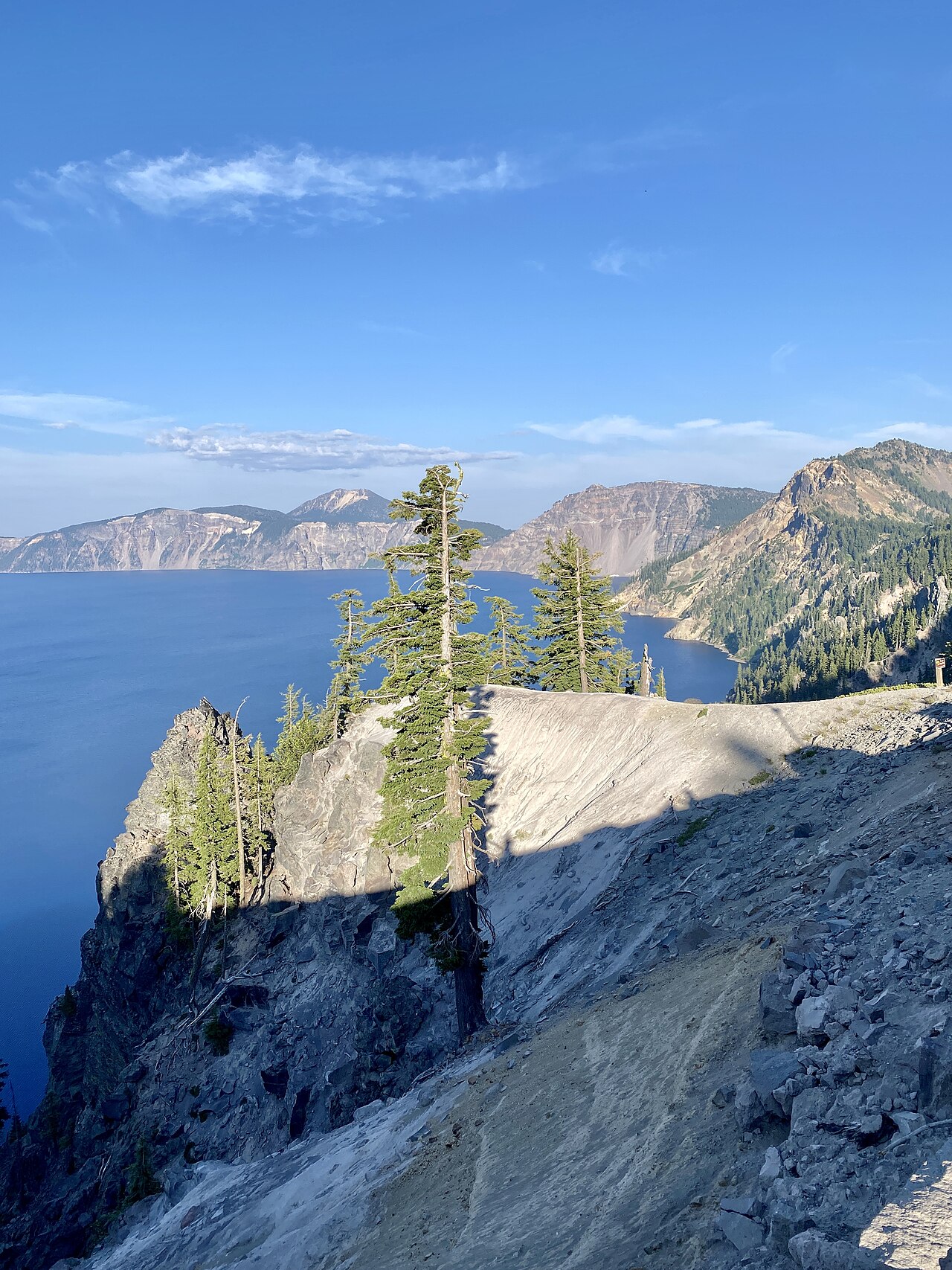
Crater Lake’s high setting affects access. Roads and facilities may operate seasonally, and a planned driving loop is not always available.
Verify official road and trail information before departure. Activities near or on the water have their own access arrangements and should never be assumed from a general park photograph.
Keep the lake and surrounding habitat healthy
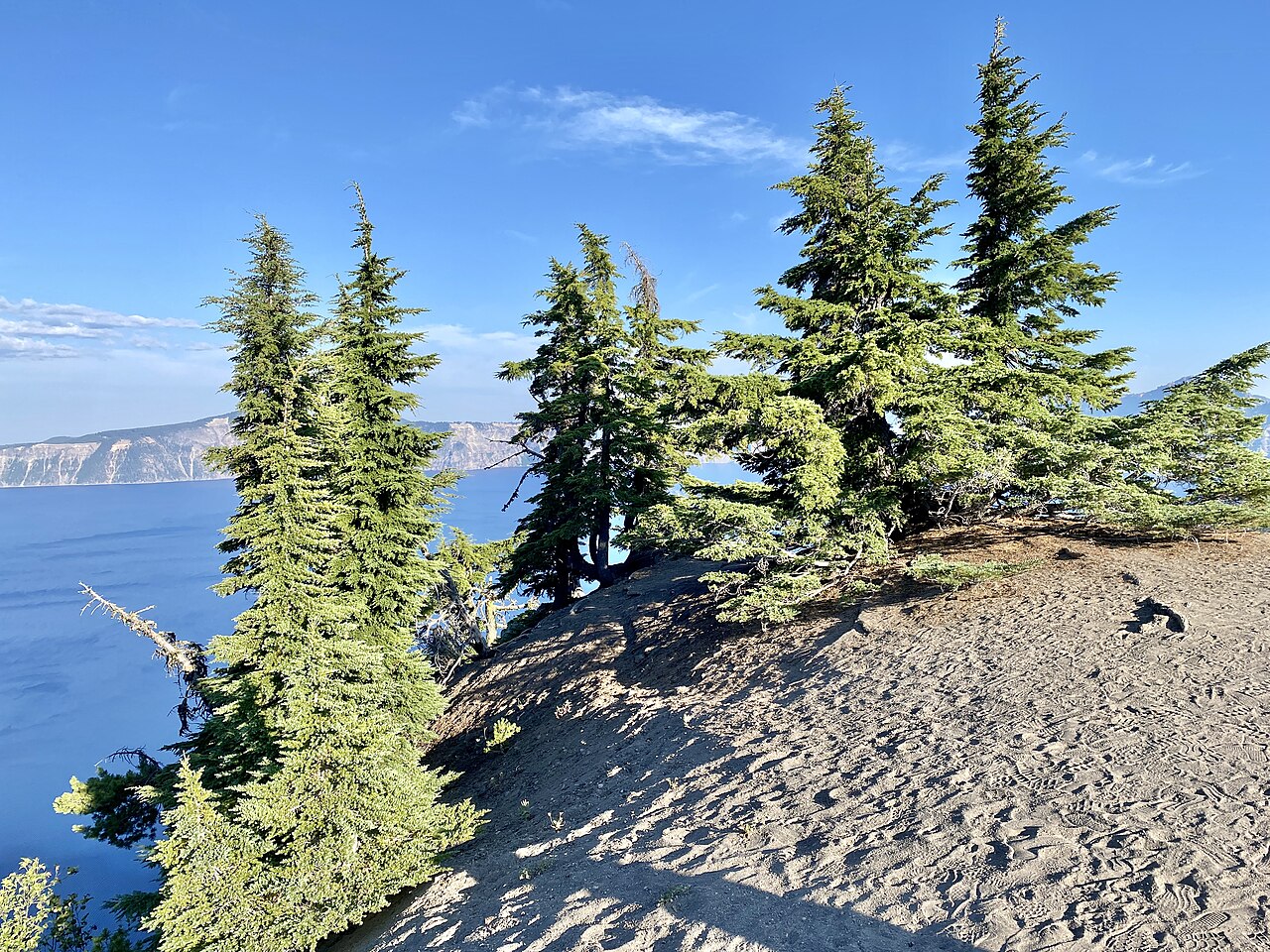
Stay on designated routes, observe shoreline restrictions, and follow guidance on protecting water quality. Leave rocks, plants, and other natural objects in place.
Learn about Indigenous connections and accounts of the landscape alongside the scientific explanation. They add human depth to the geological story.
Crater Lake rewards patience with weather and attention to origin. Once you understand what created the basin, the view across its blue water becomes even more extraordinary.
Part of Visit America’s 100 places to visit in the USA.
Photo credits
Featured image: Snow-covered rim around Crater Lake in winter. Photo: WolfmanSF. Original photograph; CC BY-SA 3.0. Resized for web display.

Body image 1: Blue water of Crater Lake in Oregon. Photo: w_lemay. Original photograph; CC BY-SA 2.0. Resized for web display.

Body image 2: Trees near Crater Lake National Park. Photo: w_lemay. Original photograph; CC BY-SA 2.0. Resized for web display.
