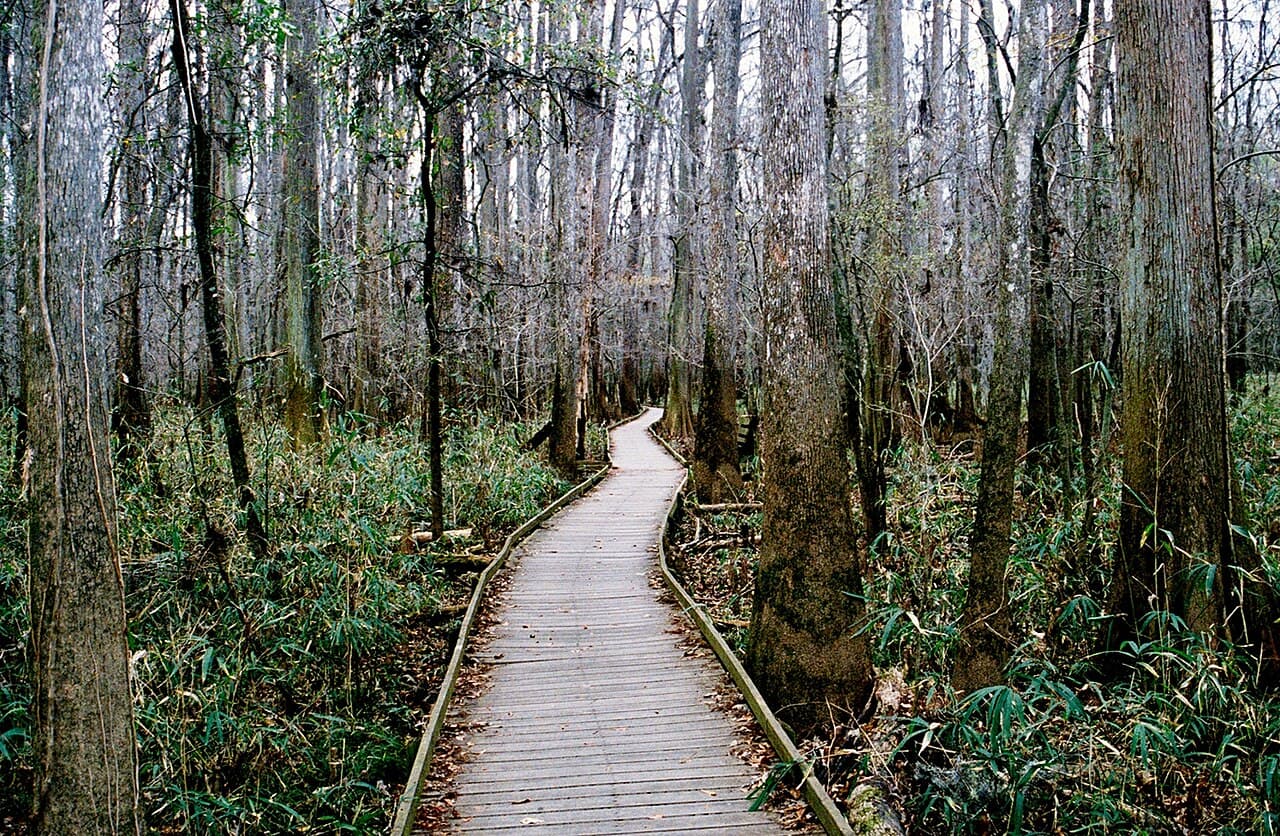
Congaree’s forest is shaped by flooding. Water is not simply an obstacle to a visit; it is part of the process that supports this old-growth bottomland environment.
That makes the park a place to look carefully at relationships between trees, soil, water, and wildlife.
Begin on a suitable boardwalk route
An established boardwalk provides a way to experience the forest while reducing disturbance to the ground below. Notice the different tree forms and how vegetation changes across the landscape.
The official Congaree website provides current water levels, trail information, and alerts. Check it before departure, because flooding can affect access.
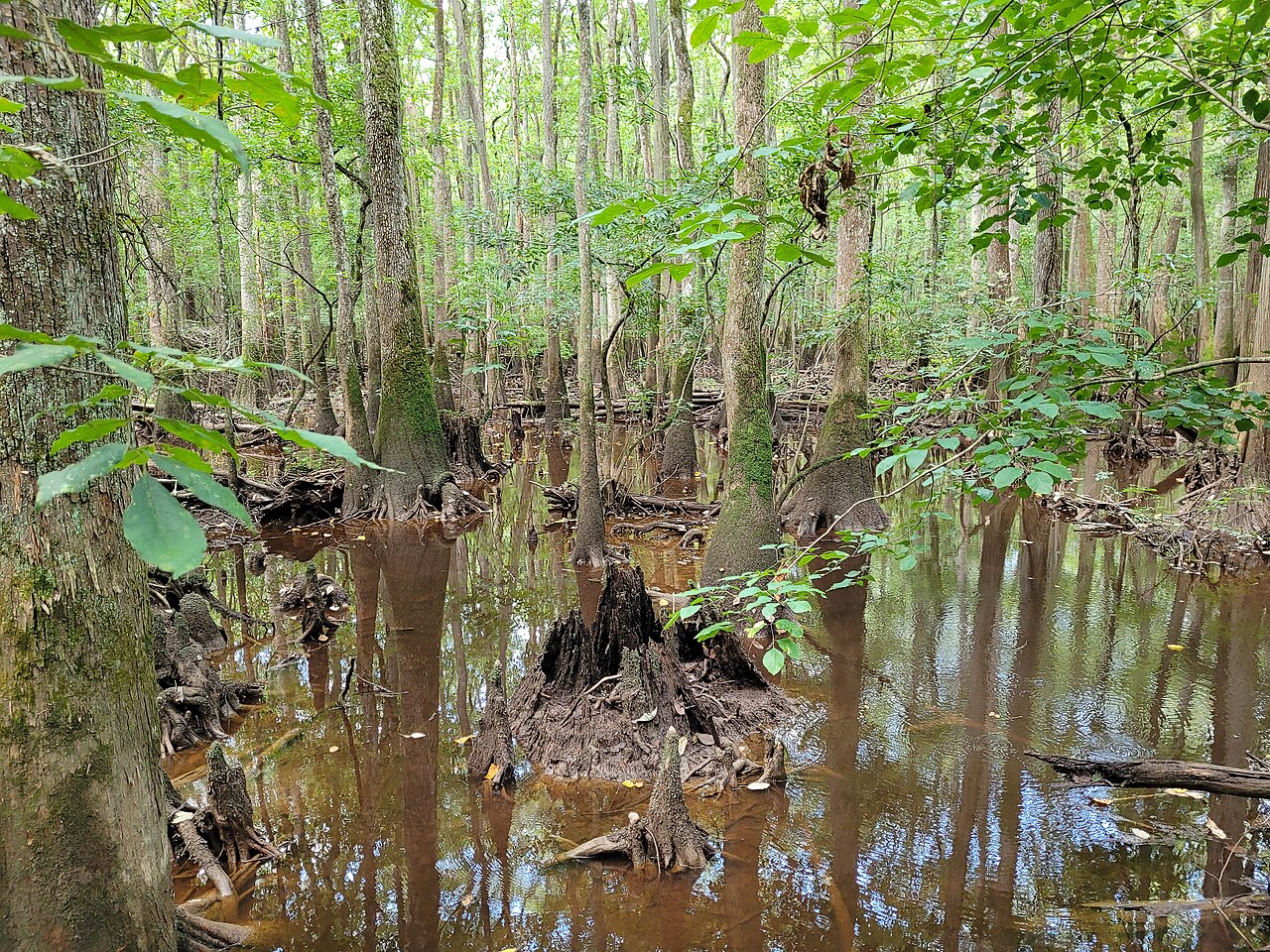
Understand why the forest matters
The USGS overview explains the importance of Congaree’s old-growth bottomland hardwood habitat.
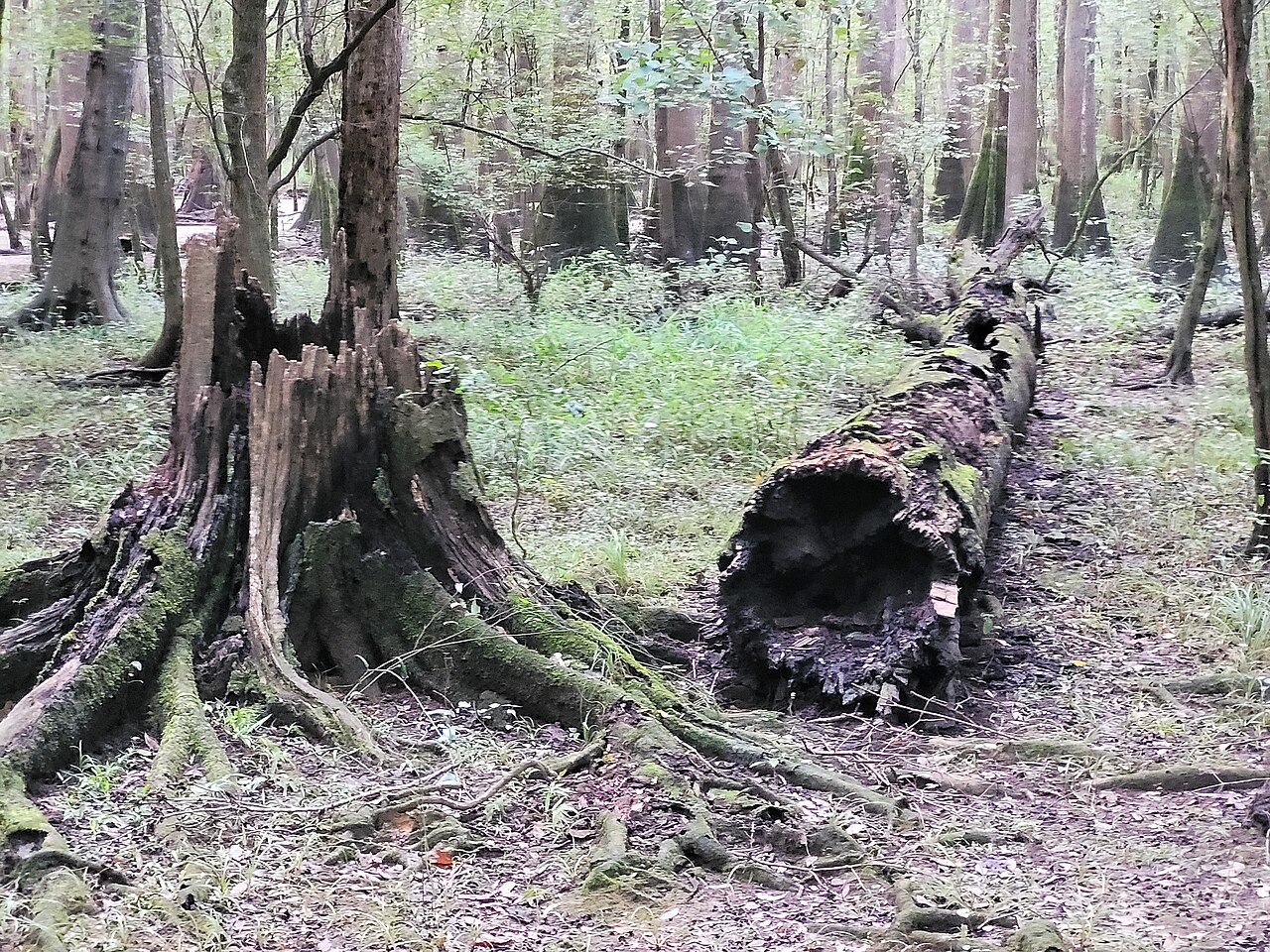
Large trees are impressive, but fallen wood, smaller plants, and periodic water are also part of the system. Spend time noticing the forest at more than one height.
Consider a water-based visit carefully
Canoeing or kayaking can offer another perspective where conditions and regulations allow. It requires route knowledge, suitable equipment, and a realistic assessment of your ability.
Do not assume a waterway will be easy to navigate because the surrounding forest appears calm. Confirm current conditions and any tour arrangements.
Prepare for a living floodplain
Weather, insects, and wet conditions can shape the experience. Bring appropriate clothing and supplies and select a route that remains comfortable for your group.
Stay on permitted paths, observe wildlife without approaching it, and leave plants and natural objects untouched.
Congaree’s wonder often arrives quietly. A reflection, a tall trunk, or a patch of sunlight can become more meaningful when you understand that water helps connect the whole forest.
Part of Visit America’s 100 places to visit in the USA.
Photo credits
Featured image: Boardwalk through a green floodplain forest in Congaree. Photo: NPS. Original photograph; Public domain. Resized for web display.

Body image 1: Forest landscape in Congaree National Park. Photo: Direwolf73. Original photograph; CC BY-SA 2.0. Resized for web display.

Body image 2: Trees and vegetation in Congaree National Park. Photo: Direwolf73. Original photograph; CC BY-SA 2.0. Resized for web display.
