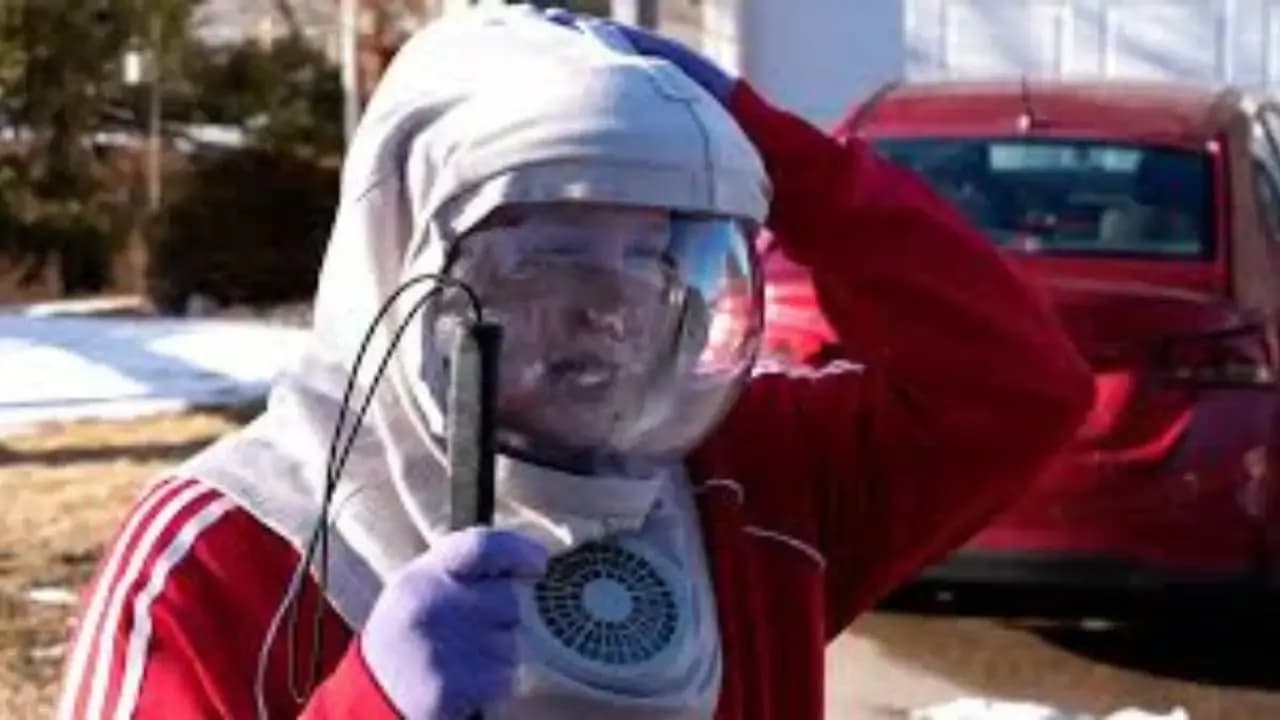
For one local Colorado Springs woman, stepping outside into the sun is far from a leisurely activity, it’s a daunting challenge. Izabella Phillips lives with a rare skin condition known as Polymorphic Light Eruption (PMLE), which essentially makes her allergic to the sun. To the casual observer, donned in her protective space-looking helmet, she might appear to be preparing for a visit to outer space rather than a walk to the grocery store. Yet, behind this distinctive appearance is a story of resilience and a mission for understanding.
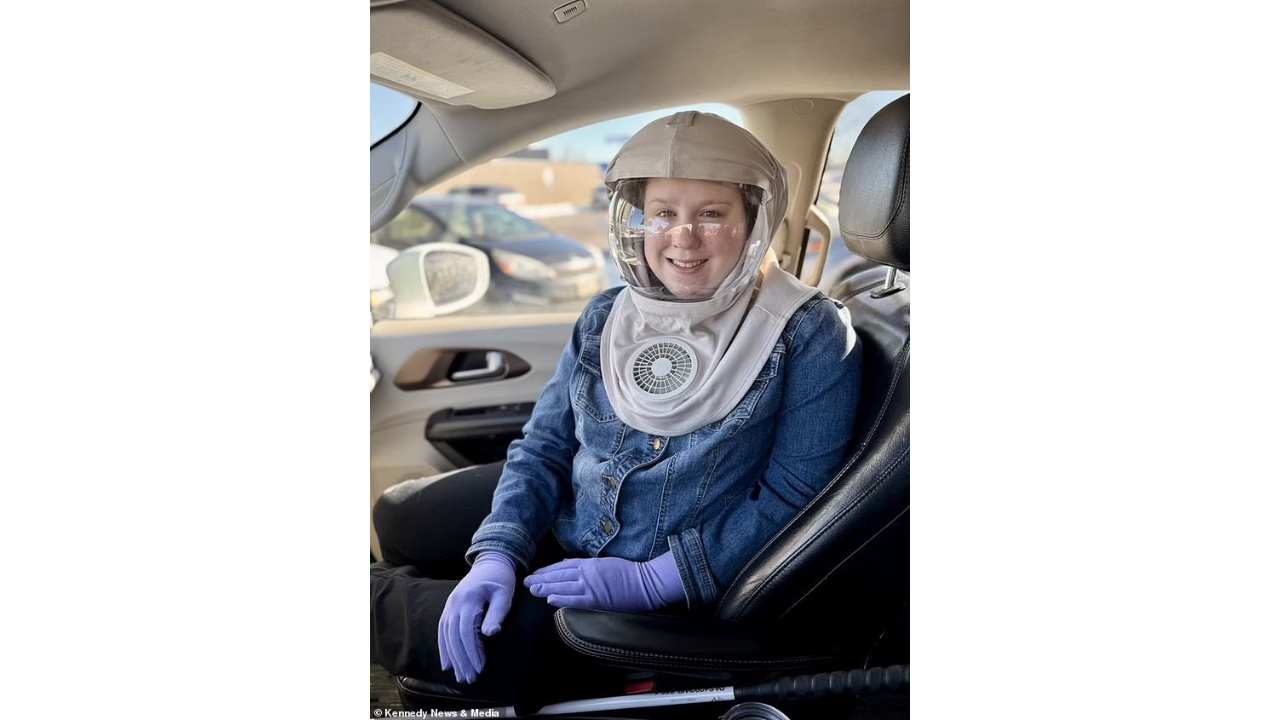
When Izabella ventures outside, curious questions from children likening her to an astronaut are a common occurrence. The helmet she wears is more than a protective barrier; it symbolizes her freedom amid a world filled with harsh sunlight. However, it also subjects her to misunderstanding and judgment from those unacquainted with her plight. ‘I don’t want people to make nasty comments or just assume that I’m in a costume or just being a fool, ‘ Phillips remarked. Her desire is that society recognizes the necessity of her attire, which allows her to partake in everyday activities many take for granted.
PMLE is a skin condition that triggers red, itchy rashes in response to ultraviolet radiation exposure. It affects an approximate 15% of the global population, predominantly women aged between 20 to 40 years. Izabella’s situation is particularly unique because her affliction is not seasonally confined; she battles it year-round. Her mother’s heartfelt commentary conveys the persistent limitations imposed by this condition: ‘It was really frustrating, because we’d be invited maybe to an outdoor party, and we always had to be the first to leave, regardless of the circumstances.’ Despite such challenges, Izabella refuses to let her condition define her.
An arduous journey of trial and error led her to a transformative solution—a specialized helmet imported from France. This helmet, which features a UV-blocking visor and ventilation, bought freedom at the steep cost of $1300, not covered by insurance. The acquisition was marked by anxious anticipation, ‘It took two or three months, and Bella was sitting at the door waiting for it, ‘ explained her mother. This innovative device is instrumental in granting Izabella some semblance of normalcy when she ventures outdoors.
Izabella’s narrative is one not only of personal challenge but of advocacy. Her aim is to raise awareness of PMLE to foster greater empathy and kindness among the uninformed. Taylor Dunn, her caregiver, and a staunch ally in promoting knowledge about her condition, emphasizes, ‘It’s always better to ask than to assume. We’re always open to educate people and say this is what it’s for, and to just be kind.’ Their cooperative efforts extend towards exploring fundraising options to alleviate the financial burden for others in similar predicaments.
Teresa Phillips, Izabella’s mother, echoes the importance of persistence in seeking solutions and community understanding. Her advice to others echoes resilience and hope: ‘All it takes is one person to be compassionate to your cause, and then you could get what you need.’ As Izabella bravely faces her challenges, her story increases visibility for those with sun-related conditions, expanding public awareness and urging the society to look beyond appearances to understand the person behind the sun hat or protective shield.