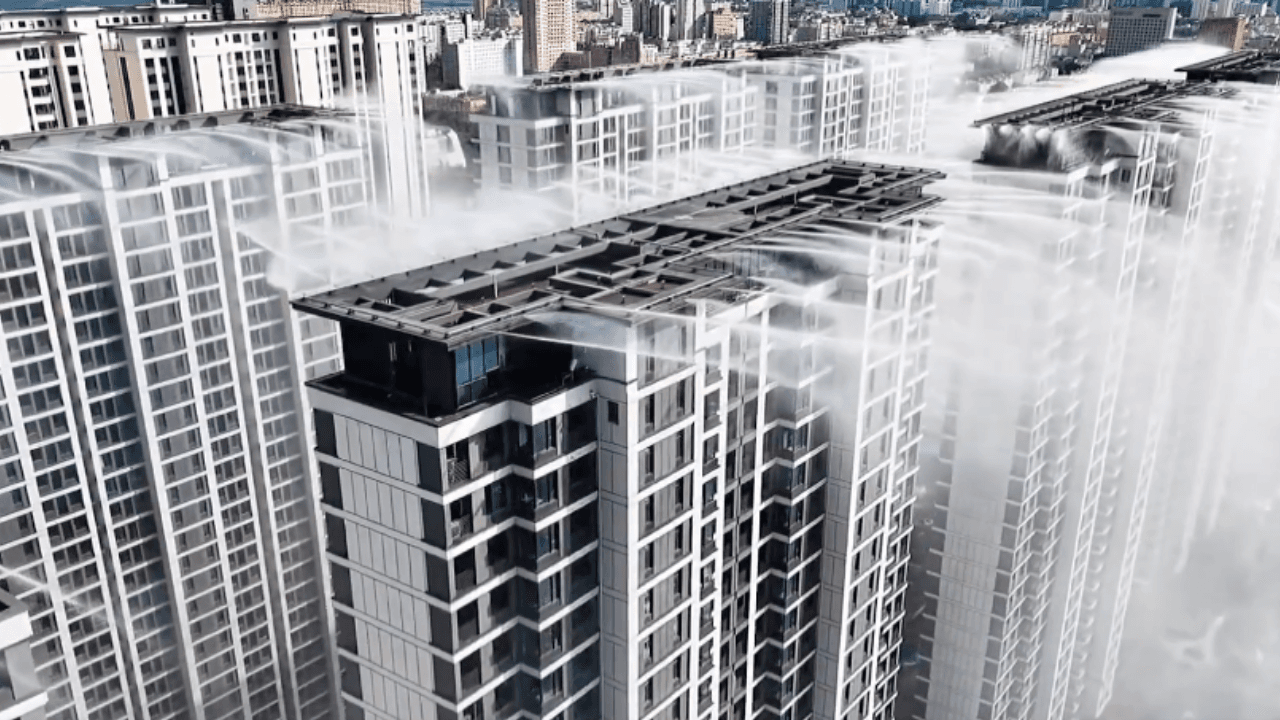
Videos said to show mist cooling systems on high-rise terraces in China have gone viral as heatwaves push cities to look for new ways to cool outdoor spaces.
The systems have been described online as “outdoor AC,” but they are not traditional air conditioners. They do not use compressors or refrigerants to chill sealed rooms.
Instead, they spray a fine mist of water into the air to cool nearby spaces through evaporation.
A mist cooling system uses a pump and small nozzles to push water into the air as tiny droplets.
As the droplets evaporate, they pull heat from the surrounding air. That process can lower the temperature in the immediate area without soaking people or furniture when the mist is fine enough.
The U.S. Department of Energy says evaporating water into air is a natural and energy-efficient way to cool in low-humidity areas.
Reports say the viral systems may reduce nearby temperatures by 3C to 6C, and some claims online suggest even larger drops.
Those numbers depend on humidity, airflow, water pressure, nozzle quality and the size of the area being cooled.
The Economic Times noted that the video claims circulating online had not been independently verified.
Mist cooling systems are already common in cafes, restaurants, gardens, terraces, warehouses and outdoor event venues.
They are useful in open or semi-open spaces where regular air conditioning would waste energy because the cooled air cannot be contained.
They can make patios, public plazas, bus stops and outdoor markets more comfortable during peak heat.
The viral interest comes as many cities face hotter summers and stronger urban heat island effects.
The U.S. Environmental Protection Agency says buildings, roads and other infrastructure absorb and re-emit more heat than natural landscapes.
That means dense urban areas can stay hotter than nearby rural areas, especially at night when concrete and asphalt release stored heat.
Mist cooling works best when the air is dry enough for water to evaporate quickly.
In very humid weather, the system may feel less effective because the air is already holding more moisture. Poorly maintained systems can also waste water or leave surfaces damp.
Outdoor misting also cannot replace safe indoor cooling during dangerous heatwaves, especially for older adults, children and people with health problems.
The World Health Organization says heat stress can worsen heart disease, diabetes, asthma and other health conditions.
WHO also warns that heatwaves are becoming more frequent, longer and more intense because of climate change.
That is why the viral “outdoor AC” has caught so much attention. It is a simple idea, but it points to a bigger problem: cities are looking for fast, low-energy ways to make extreme heat more survivable.