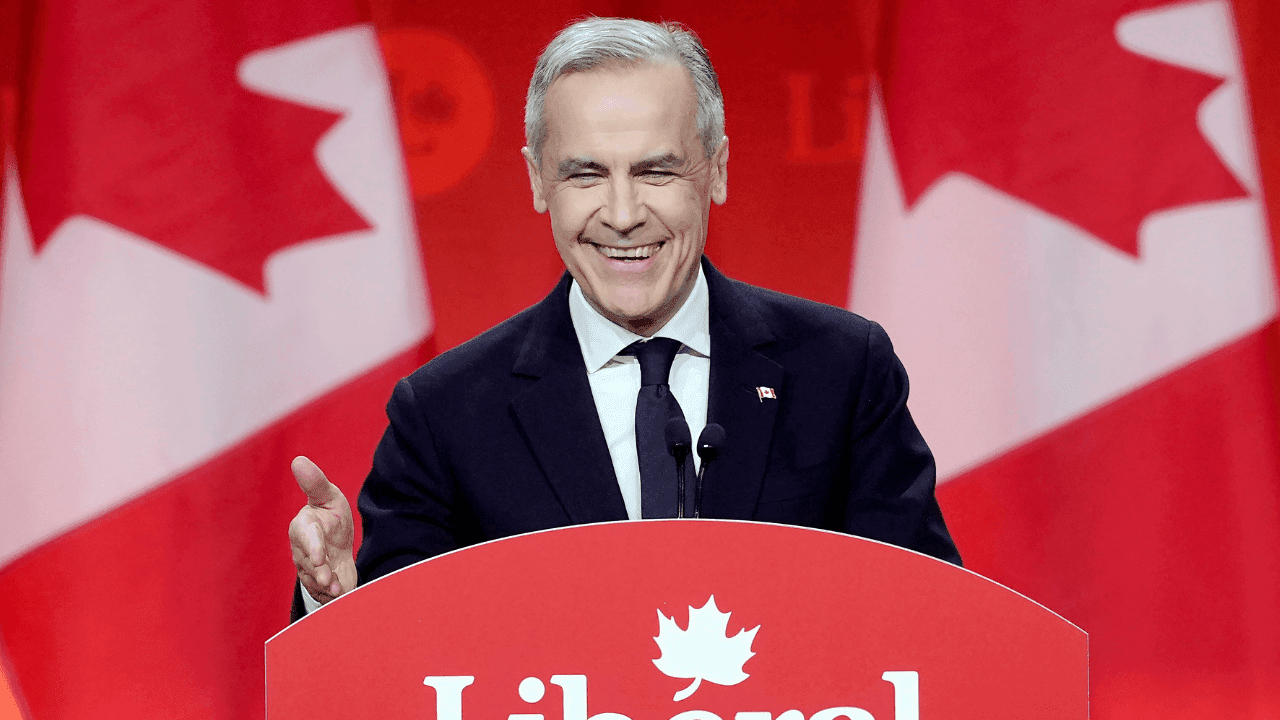
Defying all odds, Prime Minister Mark Carney’s Liberal party has made a stunning political comeback, winning Canada’s federal election as projected by the CBC. This remarkable reversal was propelled by U.S. President Donald Trump’s aggressive tariff policies and his provocative stance on Canada, which significantly swayed public opinion.
Just a few months ago, the Liberals seemed destined for a historic defeat. Analysts were taken aback as Carney’s party, which was trailing the Conservatives significantly, managed to flip the narrative in their favor. As the votes continue to be tallied, it remains uncertain whether the Liberals will form a majority or remain a minority government. This victory marks the fourth consecutive Liberal government since 2015.
Key to this electoral success was the background of Mark Carney himself, a political newcomer albeit a seasoned economist, well-known for his previous roles as the Governor of the Bank of Canada and the Bank of England during pivotal financial crises. He positioned himself as a stable and reliable leader amidst the uncertainties bred by Trump’s ongoing trade wars and menacing threats towards Canada’s sovereignty.
The Canadian election had global attention, described as one of the most crucial elections witnessed by many voters. The election was overshadowed by Trump’s discourse that included threats to annex Canada and wishes of ‘good luck’ that carried underlying menaces.
Back when Justin Trudeau resigned in January, the Liberals were lagging behind the Conservative Party, led by Pierre Poilievre, by a considerable margin. Poilievre, known for his sharp populist rhetoric, was projected to command one of the largest Conservative majorities in Canadian history.
However, Trudeau’s exit and Carney’s subsequent rise as the new Liberal leader, coupled with Trump’s controversial rhetoric, had Canadian nationalism surging. By the time Carney strategically called for a snap election in March, Poilievre’s extensive lead had vanished, transforming what seemed to be an assured Conservative majority into a Liberal rebound.
The shift caught analysts by surprise, prompting discussions on how sentiment had significantly shifted. Analysts highlighted this as not just a victory but a testament to the strategic realignment and resilience of the Liberals under Carney’s novice leadership.
In a dramatic narrative fit for the history books, Mark Carney’s first election became a powerful case study in political strategy and public perception. The future of Canadian politics remains to be seen, as questions emerge regarding Conservative leadership under Poilievre, who faces internal party divisions and public critiques after successive electoral defeats.
The astounding nature of this turnaround, fueled by both internal strategic shifts and external political events, painted Carney not just as a leader for times of economic crisis but as a formidable political force. This election outcome has not only solidified Carney’s place in Canadian politics but asserted Canada’s response to international provocations with a bold electoral statement.