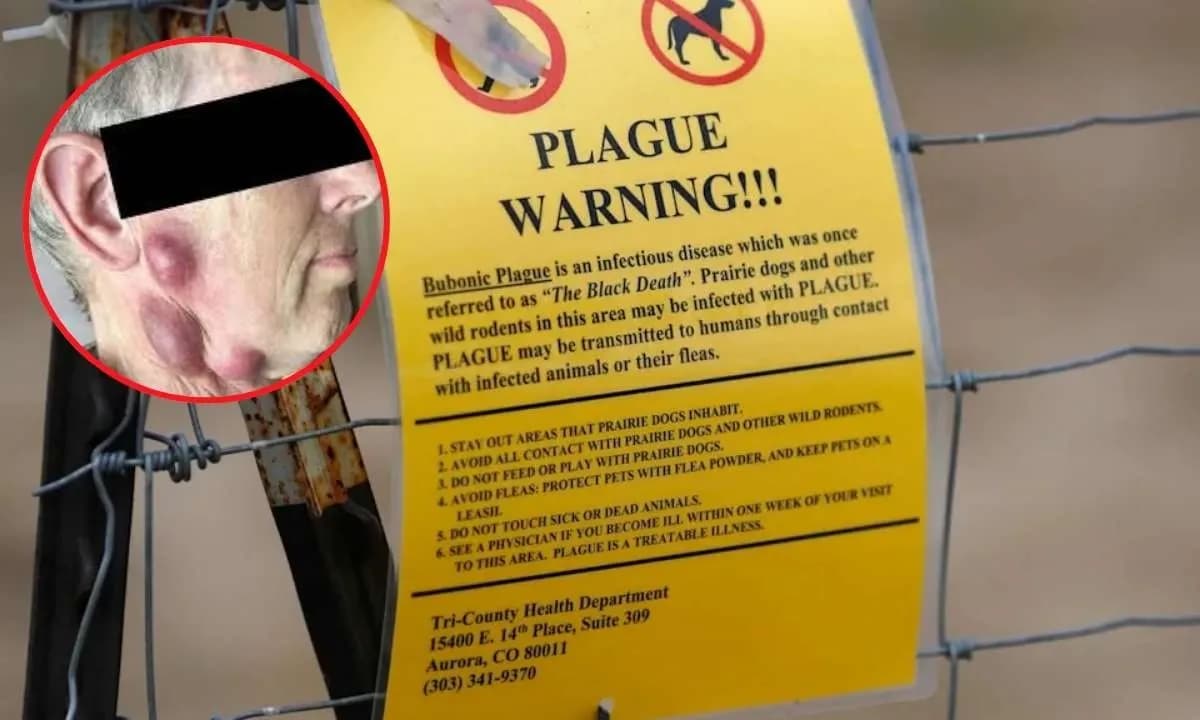
A camper in South Lake Tahoe, California, has tested positive for the plague, a disease many people think belongs to the Middle Ages. Health officials believe the individual was bitten by an infected flea while camping in the popular mountain destination. The person is now recovering at home under medical care, and investigators are working to confirm how the exposure happened.
El Dorado County’s public health division announced the case this week, reminding the public that plague is not gone—it still exists in parts of California, especially in higher elevation areas.
“It’s important that individuals take precautions for themselves and their pets when outdoors, especially while walking, hiking and camping in areas where wild rodents are present,”
said Kyle Fliflet, the county’s acting director of public health.
Plague is caused by the bacterium Yersinia pestis. It is most often transmitted by fleas that carry the bacteria after biting infected rodents like squirrels, chipmunks, prairie dogs, or rats. Dogs and cats can also bring infected fleas into homes, creating further risk. Officials warn that avoiding wild rodents, not touching sick or dead animals, and keeping pets away from burrows are some of the best ways to stay safe.
Symptoms of plague usually appear within two weeks of exposure. They include fever, nausea, weakness, and swollen lymph nodes. If caught early, the disease can be treated effectively with antibiotics. There are three forms of plague:
- Bubonic plague, the most common, attacks the lymph nodes.
- Septicemic plague spreads into the blood.
- Pneumonic plague infects the lungs, making it the most dangerous and contagious form.
While pneumonic plague can spread from person to person through coughing or sneezing, the other forms do not. Doctors stress that early treatment is critical, since untreated cases can become fatal.
Though it sounds shocking, plague cases in the U.S. are rare. The Centers for Disease Control and Prevention (CDC) estimates there are about seven human cases each year, mostly in the western states like Arizona, California, Colorado, New Mexico, and Nevada. In July this year, a man in northern Arizona died from pneumonic plague, marking the first such death in the state since 2007.
This isn’t the first time the Tahoe area has seen plague. The last confirmed human case in El Dorado County was in 2020, also linked to South Lake Tahoe. Before that, two cases were reported in Yosemite National Park in 2015, and both people recovered after treatment.
In 2021, officials even closed several sites around Lake Tahoe after finding plague in local chipmunk populations. Surveillance has continued ever since—between 2021 and 2024, 41 rodents in El Dorado County tested positive for exposure to the plague bacterium, and in 2025 alone, four rodents from the Tahoe Basin have tested positive.
Globally, the plague is still reported in places like the Democratic Republic of the Congo, Madagascar, and Peru. The World Health Organization recorded over 3,200 human cases between 2010 and 2015, including nearly 600 deaths. In Canada, the last reported case was way back in 1939, though officials continue to monitor for it.
Experts note that not all animals get sick from plague. Some, like certain rodents, can carry mild infections without dying, serving as reservoirs that keep the bacteria circulating in nature. When large die-offs of animals do occur, fleas often switch to human hosts, triggering outbreaks. Cats are particularly vulnerable to plague and can spread it to people.
To reduce risk, officials recommend practical steps:
- Don’t feed squirrels, chipmunks, or other rodents.
- Never touch sick, injured, or dead rodents.
- Prevent pets from roaming near burrows.
- Wear long pants tucked into boots and use insect repellent containing DEET when hiking or camping.
Plague may be rare today, but this case in California shows how a disease once known as the “Black Death” hasn’t completely disappeared. It still lingers in nature, carried quietly by fleas and rodents. With awareness and precautions, the risk remains low, but the story of one camper in South Lake Tahoe is a reminder that even in modern times, ancient diseases can resurface when least expected.