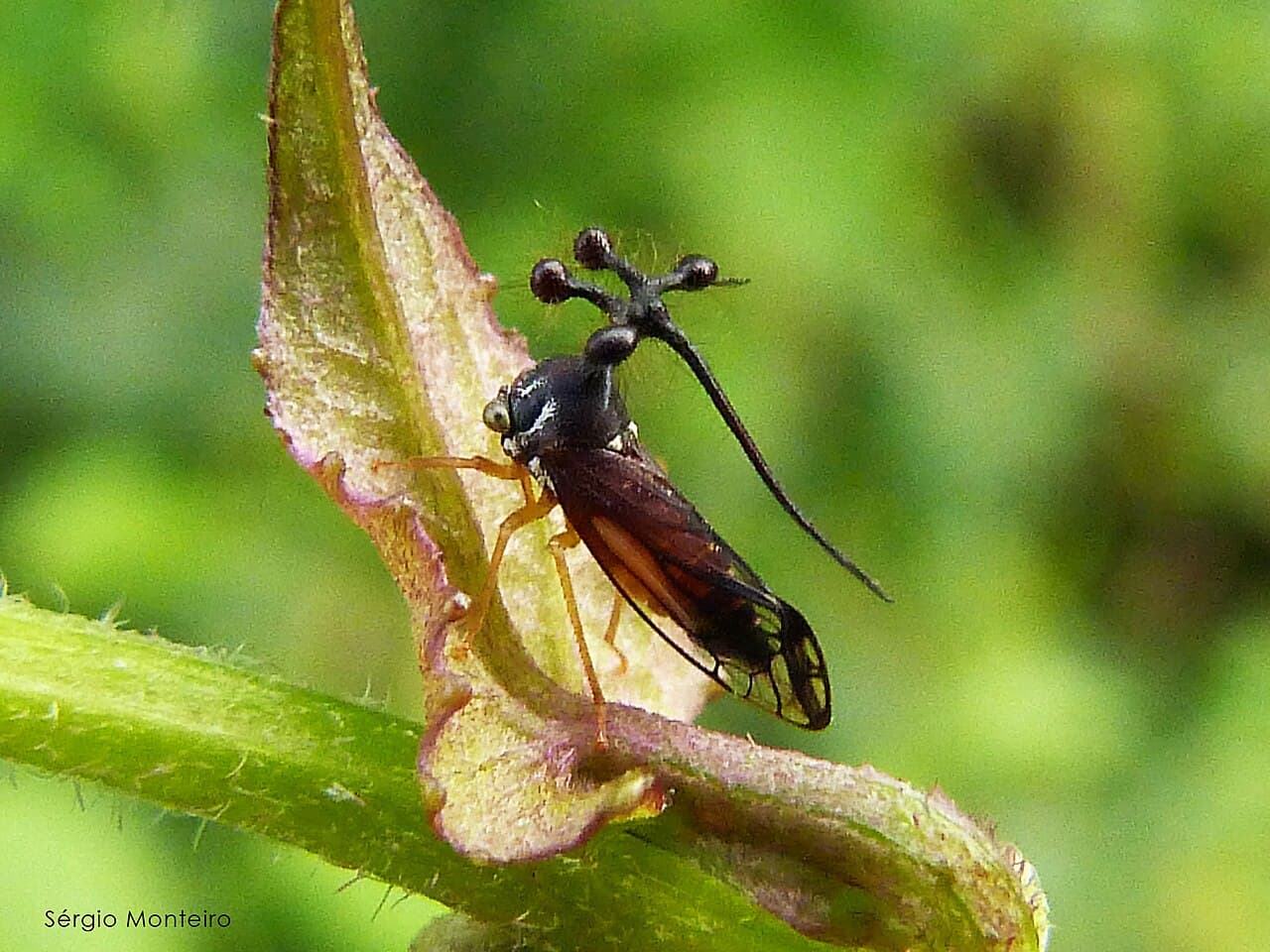
A Brazilian treehopper carries a branching structure tipped with small globes above its body. It looks elaborate enough for a much larger animal, yet the insect is only a few millimeters long.
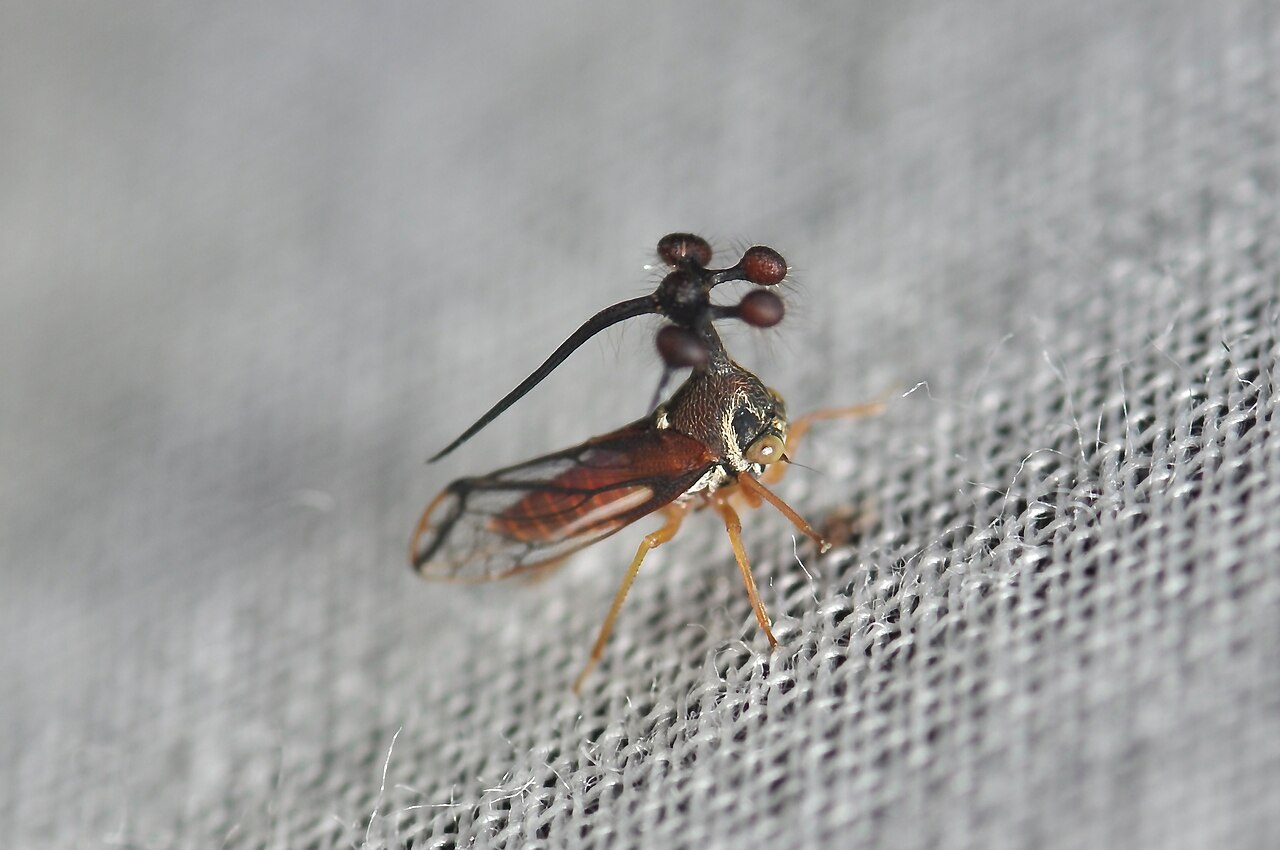
Bocydium globulare belongs to the treehopper family Membracidae. The strange structure is an extension of the pronotum, the plate behind its head.
Globes, not extra eyes
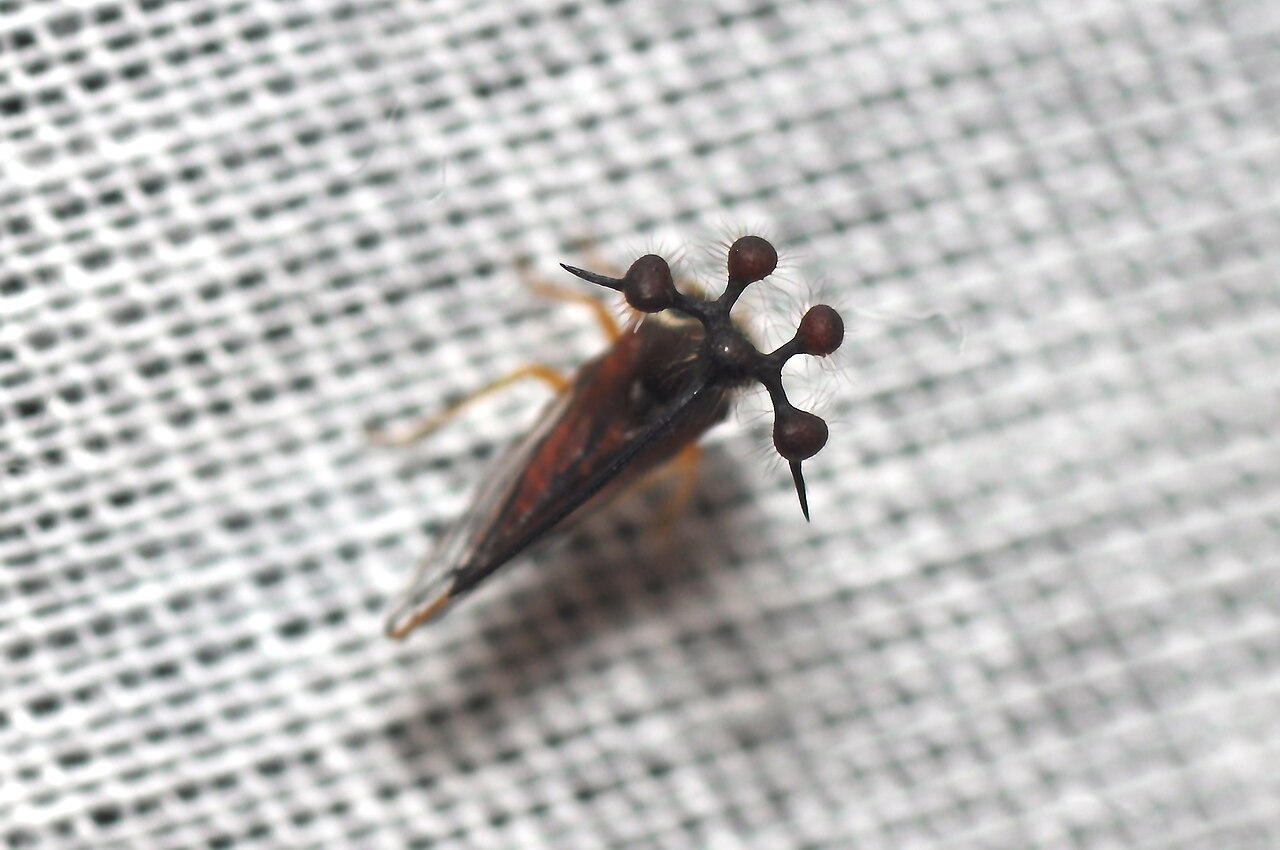
The dark rounded projections are not a second set of eyes. They belong to the insect's body covering.
The Museum für Naturkunde Berlin's account explains the structure through its famous enlarged model.
A model helps visitors see tiny details. The photographs here show actual insects, including one on a plant in Curitiba, Brazil.
Feeding through a tiny straw
The museum describes a plant-feeding insect about six millimeters long. Its piercing mouthparts reach plant tissue and draw out sap.
That quiet feeding routine contrasts with the dramatic outline above its back. An animal can have a remarkable shape while spending its time on ordinary needs.
What might the shape do?
Older explanations proposed camouflage or deterrence. A 2025 PNAS study introduced evidence that unusual treehopper shapes may enhance sensitivity to electric fields.
The researchers demonstrated behavioral responses in another treehopper, Poppea capricornis, and examined several species' structures. This does not establish that every globe on B. globulare has one fully explained function.
Small animals, large questions
The newer research makes the mystery more specific rather than making curiosity unnecessary.
A tiny treehopper can lead from a Brazilian plant to questions about body shape, predators, and electrical signals. Its remarkable headgear is both a beautiful sight and an invitation to keep learning.
Photo credits
Featured image: Membracid - Bocydium globulare.jpg — Sérgio Monteiro; Public domain.

Body image 1: Globe-bearing Treehopper Bocydium globulare (14615694507).jpg — Pavel Kirillov from St.Petersburg, Russia; CC BY-SA 2.0.

Body image 2: Globe-bearing Treehopper Bocydium globulare (14801858422).jpg — Pavel Kirillov from St.Petersburg, Russia; CC BY-SA 2.0.

Photographs resized for web display where available.