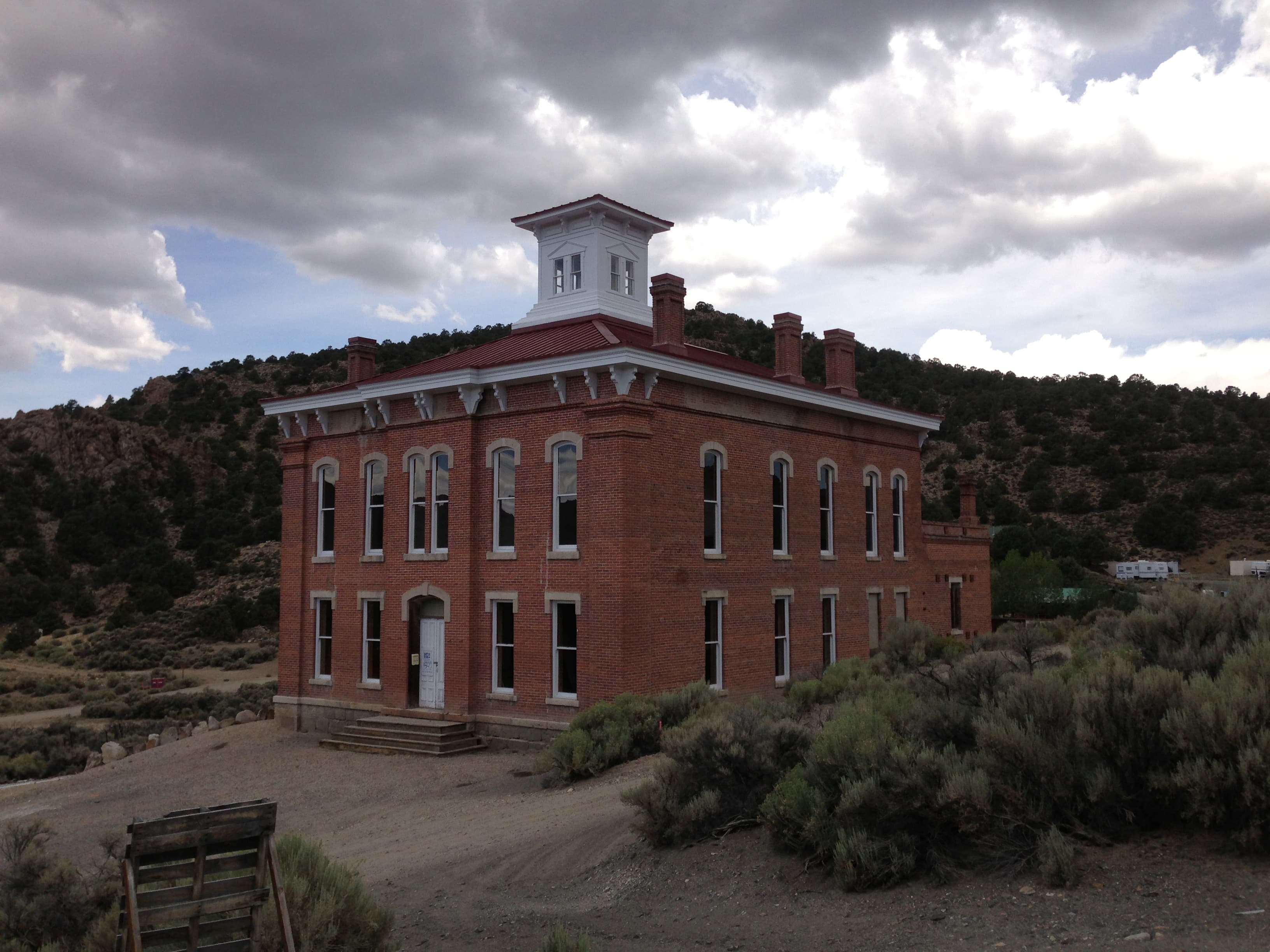
Belmont’s courthouse still looks ready for a busy town that no longer surrounds it.
Belmont ghost town in central Nevada preserves remnants of a silver-mining community that once served as the Nye County seat. Its landmark courthouse was completed in 1876 and remained in government use until the county seat moved to Tonopah in 1905. Today, visitors can view the historic town and arrange courthouse tours through its preservation group. Friends of the Belmont Courthouse
The building is the clearest reason to stop. Its brick walls and formal proportions seem unusually ambitious against the scattered remains of a much smaller community.
How Belmont ghost town began
A silver discovery in 1865 set Belmont’s growth in motion. Nevada’s official historical-marker record identifies that strike as the beginning of the boom and notes the town’s service as county seat from 1867 to 1905. Nevada State Historic Preservation Office’s marker booklet
As miners and businesses arrived, political importance followed. Ione lost the county seat to the newer settlement, illustrating how quickly government could follow a changing mining economy.
Belmont’s early government did not immediately occupy the grand building visitors see today. A courthouse development study describes years of using other premises before officials pursued a more substantial structure in the mid-1870s. Belmont courthouse development plan
That delay is revealing. The large courthouse was a deliberate investment made after the settlement had established itself, rather than a temporary shelter thrown up during the first rush.
A courthouse designed to mean permanence
The courthouse’s Italianate style gave Belmont an imposing civic landmark. Its carefully arranged windows, roofline, and tower communicated the importance of county government.
Architectural historian Julie Nicoletta identifies the 1876 courthouse as a central surviving feature of the town. The building is evidence of the institutions that developed alongside the mines. Society of Architectural Historians’ Belmont overview
A courthouse served a wide area, not just people within walking distance. Its presence brought legal business, records, and public decisions into the town. The building therefore represents a second layer of prosperity beyond the silver industry itself.
Stand back before studying the details. The difference between the courthouse’s scale and the present settlement is part of what makes Belmont memorable. It is a visible measure of expectations that the local economy could not sustain.
When the center of activity moved away
As the silver boom weakened, residents sought opportunities elsewhere. Buildings could be dismantled and their materials taken to other settlements, leaving less behind than a visitor might expect.
The University of Nevada, Las Vegas, traces the county seat’s transfer to Tonopah in 1905, following the growth of that newer mining center. UNLV’s Nye County boomtown history
For Belmont, losing the county seat meant more than an empty courtroom. It removed another reason for people to travel here and for local services to remain.
The Friends of the Belmont Courthouse describe fewer than 100 votes cast in the town’s 1900 election, a small indicator of how far activity had already fallen. The courthouse’s government role ended after only 29 years.
The building then entered a much longer chapter of vulnerability. Weather, neglect, and vandalism threatened a structure whose original purpose had moved elsewhere.
Saving the building after the boom
Nevada State Parks took responsibility for the courthouse in 1974. In 2012, it returned to Nye County following state budget cuts. That history explains why older guides may still call it a state historic park. Nevada Magazine’s courthouse account
The Friends of the Belmont Courthouse now support its preservation and restoration. Travel Nevada describes tours arranged by appointment and ongoing work funded through donations. Current courthouse visitor information
This care is part of the site’s story. A sound roof, repaired surface, or protected opening can look unremarkable in a photograph, but each helps prevent another piece of the town from disappearing.
The courthouse’s survival should not be confused with the survival of an untouched interior. A tour can help distinguish original features, later damage, and restoration work.
Planning a visit to Belmont
Arrange a courthouse visit in advance through the Friends’ website. Do not build an entire journey around the assumption that someone will be available to unlock the building on arrival.
Travel Nevada lists tours as free, with donations encouraged, but availability should be confirmed directly. Exterior exploration and an interior tour are different experiences.
Prepare for a remote Nevada outing. Carry enough fuel, drinking water, and food for the journey, and verify your route and road conditions before leaving the main travel corridor.
Within the settlement, follow public routes and respect occupied or privately owned properties. A “ghost town” label does not mean that all doors, lots, or ruins are available to enter.
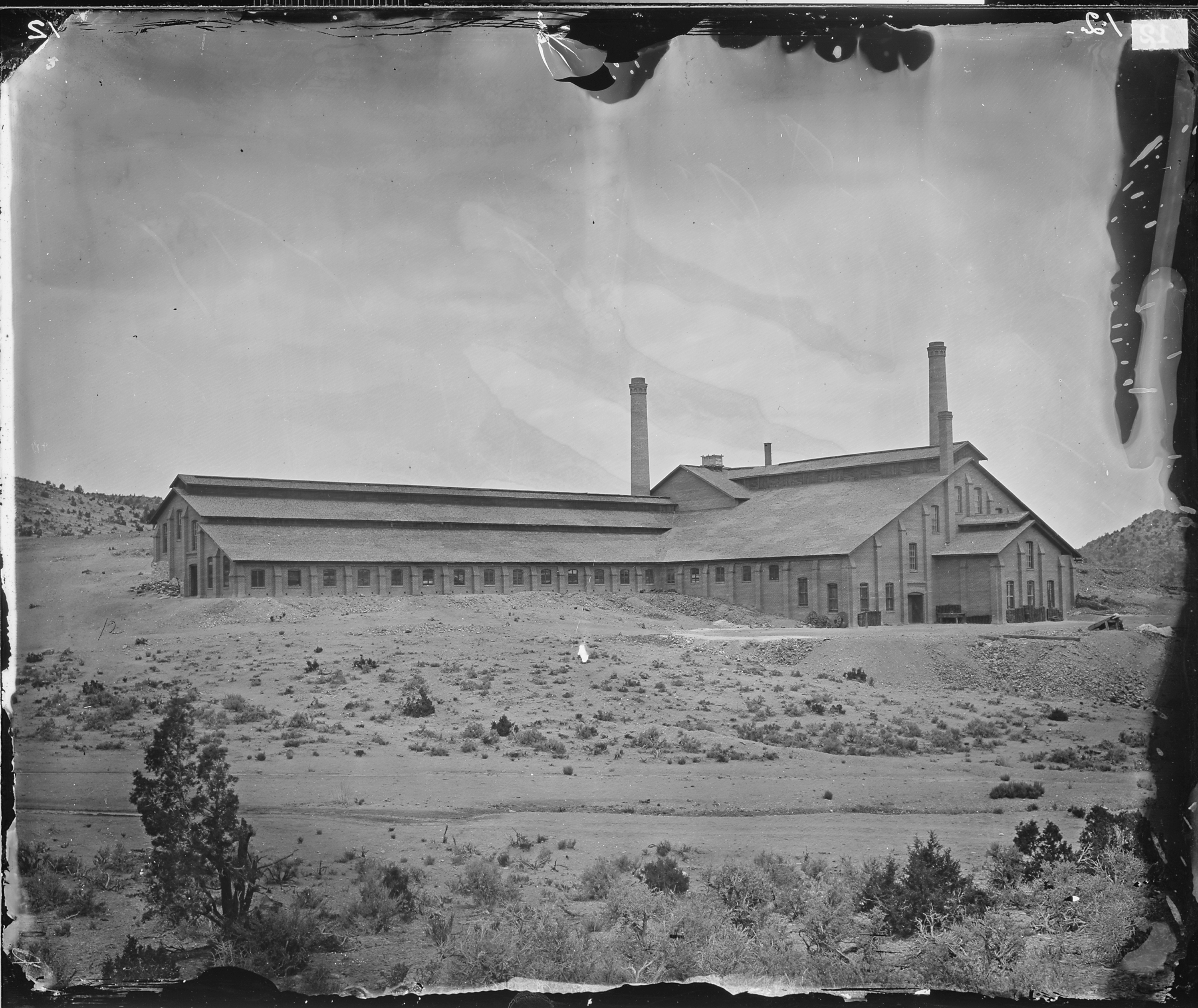
Take time to compare the courthouse with the older mining landscape shown in historic photographs. One records the work that created wealth; the other records how a community hoped to organize life around it.
Belmont’s lasting power lies in that contrast of scale and purpose. The silver boom passed, the county business moved, and a small group of people chose to keep the most remarkable building standing.
Frequently asked questions
What is Belmont, Nevada, known for?
Its preserved 1876 courthouse and the remains of a former silver-mining town that once served as Nye County’s seat.
Why did Belmont decline?
The silver boom weakened, residents moved toward other opportunities, and the county seat transferred to Tonopah in 1905.
Is Belmont Courthouse still a Nevada state park?
It was managed by Nevada State Parks until 2012, when it returned to Nye County. The Friends of the Belmont Courthouse support its care.
How can you tour the courthouse?
Contact the Friends in advance to arrange an appointment. Do not assume daily staffed opening hours.
Photo credits
Featured photo: Famartin, CC BY-SA 4.0.

Body photo: Timothy H. O'Sullivan, Public domain.
