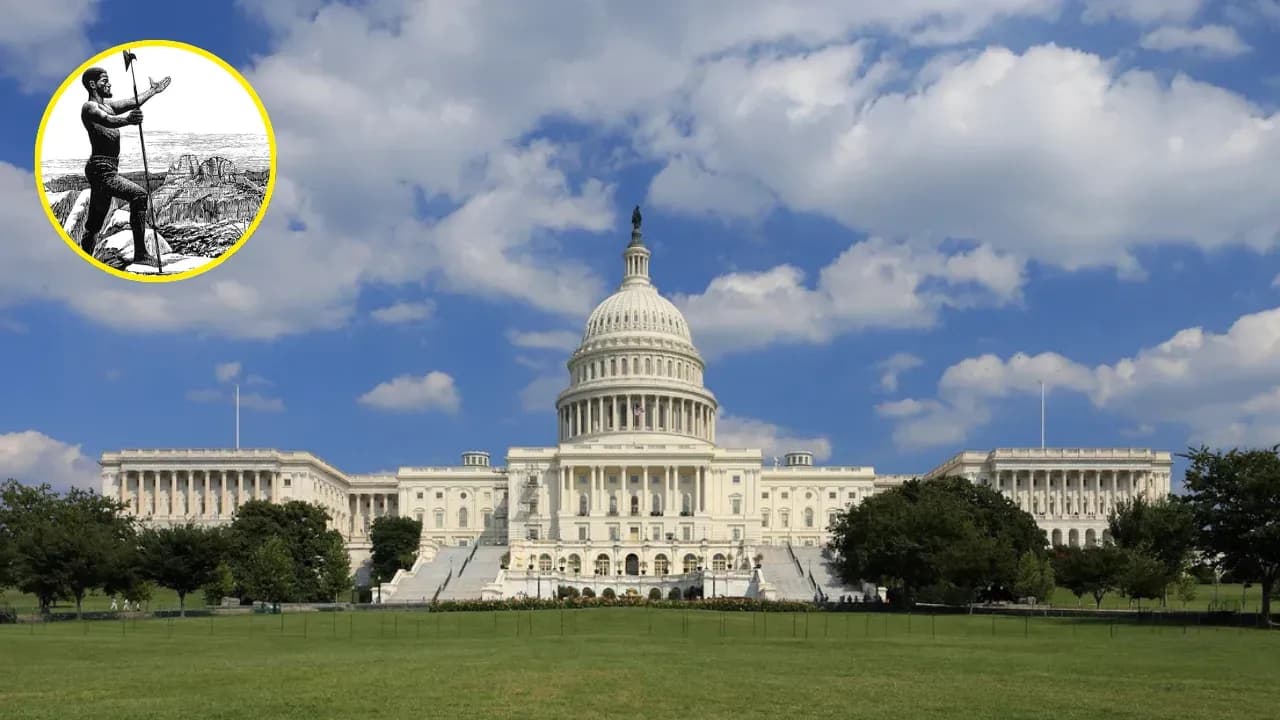
Beneath the iconic dome of the U.S. Capitol, statues and frescoes tell the story of America’s founding. Names like Washington, Lincoln, and Jefferson echo through its marbled halls. But missing from most tours is the tale of Estevanico, a man whose journey across the continent began not with freedom, but in chains.
More than 80 years before the Pilgrims set sail on the Mayflower, Estevanico, born in Morocco, was enslaved and brought to the New World by Spanish explorers. In 1527, he was forced aboard a ship with a 600-man expedition meant to conquer and chart the Gulf of Mexico. But the voyage turned tragic when storms scattered the fleet and wrecked the ships off the coast of what would become Texas.
Of the eighty survivors who made it ashore, only four endured what came next. Estevanico was one of them. Captured by Native tribes, he later escaped and spent eight years trekking across Texas, New Mexico, Arizona, and Mexico on foot. He earned trust from tribe after tribe, using his wit, resilience, and healing knowledge to survive.
By the time he reached the Gulf of California in 1536, Estevanico had become more than just a survivor. He was a guide, a symbol of cross-cultural contact, and the first non-Indigenous man to walk those vast lands.
Today, as the Capitol continues to evolve in whose stories it preserves, Estevanico’s legacy challenges us to expand the lens of American history. Before Plymouth Rock, before independence, there was a Black man who walked the path through America’s wild heart, centuries before freedom had a name.