
Antoinette Tuff was working in a Georgia elementary school's office when an armed man entered. She was the bookkeeper, not a trained negotiator, but she remained with him and kept talking while emergency responders worked outside.
On August 20, 2013, the confrontation at Ronald E. McNair Discovery Learning Academy ended with the man surrendering. No one was injured.
A conversation inside the office
In a CNN interview with Tuff and dispatcher Kendra McCray, the two women described the communication that continued during the emergency.
Tuff listened to the man, spoke about difficulties in her own life and relayed information through the dispatcher. The 911 connection linked the office to the police response.
The situation remained dangerous. The absence of injuries at the end should not obscure the fear and uncertainty people faced while it was happening.
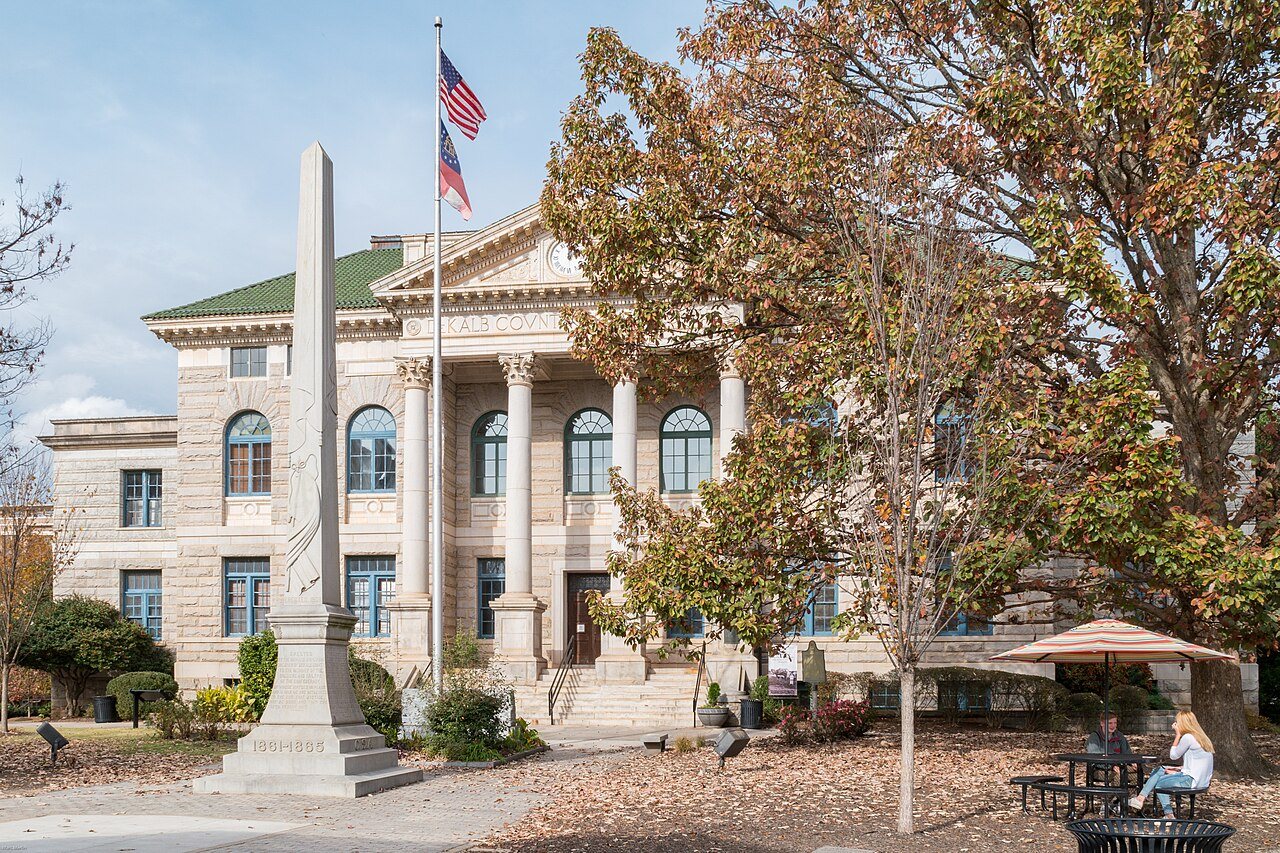
Archival DeKalb County courthouse photograph. This is geographic context, not the school involved. Photo: Marc Merlin, CC BY-SA 4.0. Resized; JPEG conversion. Image adaptation shared under the same CC BY-SA 4.0 license.

The dispatcher was part of the response
The broadcast record of the emergency call shows why this was more than a conversation between two isolated people. Tuff was also communicating with a dispatcher who helped carry information to responders.
Police, school staff and emergency personnel had responsibilities beyond the office. Recognizing Tuff's composure does not require erasing their work.
Her approach in that particular crisis cannot guarantee the same outcome elsewhere. What the record supports is that she stayed engaged and helped communicate a path toward surrender.

Archival Decatur Square street scene. This does not show the school or the 2013 response. Photo: Marc Merlin, CC BY-SA 4.0. Resized; JPEG conversion. Image adaptation shared under the same CC BY-SA 4.0 license.

A public role after a private ordeal
Tuff's intervention received recognition, including an entry in the Congressional Record. Her official biography describes her later work as an author and advocate.
The enduring part of her account is grounded in what she did during those minutes. Faced with a person carrying a weapon into a school, she continued listening, speaking and passing information to the people trying to bring everyone through safely.
Featured image: Archival Decatur, Georgia, location photograph. This does not show Antoinette Tuff or the school emergency. Photo: Lincolnh, CC BY-SA 3.0. Cropped to 16:9 and resized. Image adaptation shared under the same CC BY-SA 3.0 license.
