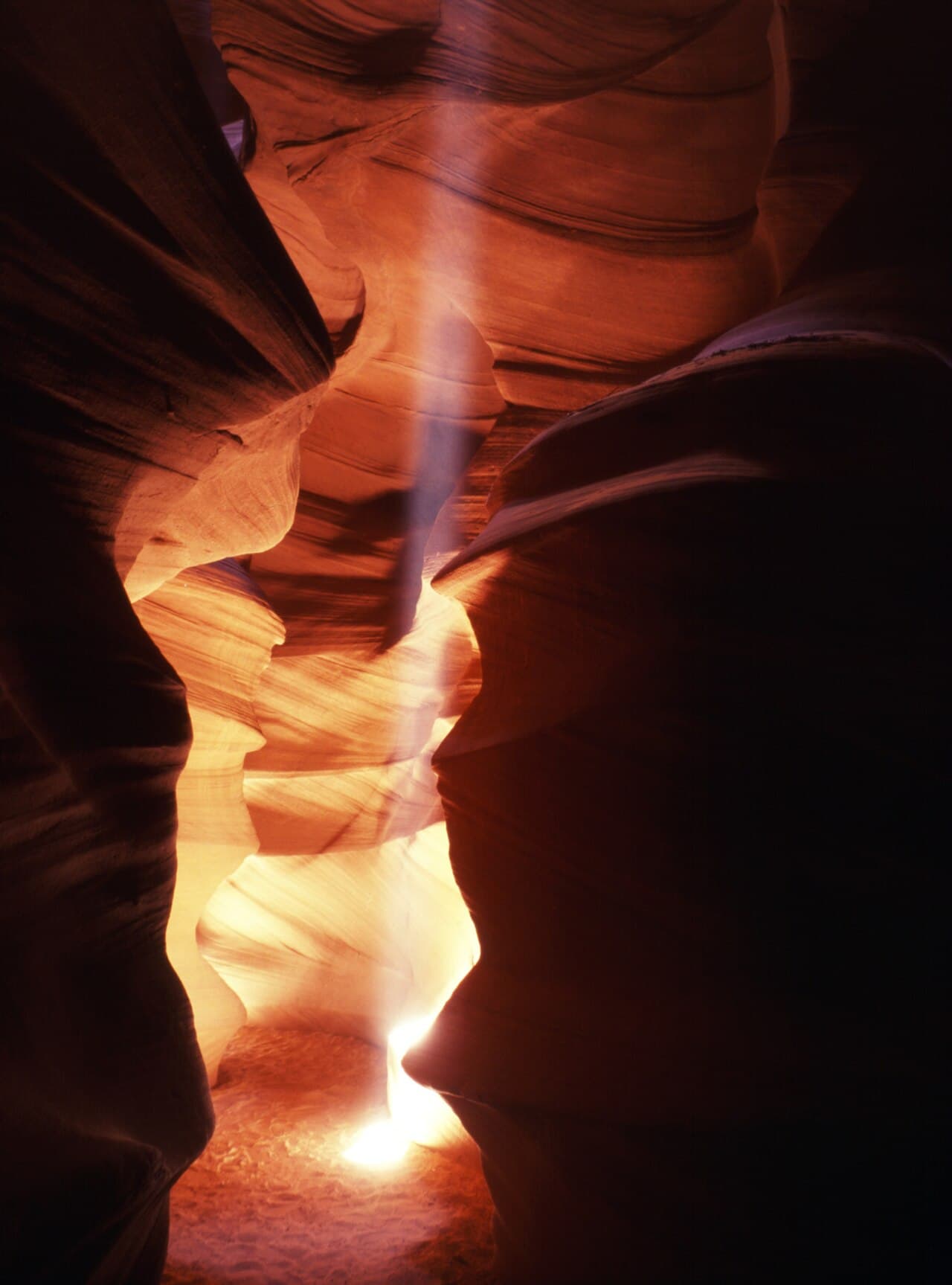
Antelope Canyon's sandstone walls seem to fold like fabric. As sunlight enters the narrow opening above, one curve can glow orange while another falls into purple-brown shadow.
The stone is still, but its flowing shape records the power of moving water.
A canyon on Navajo land
Antelope Canyon lies near Page, Arizona, on Navajo land. Upper and Lower Antelope Canyon are distinct sections with different passage shapes.
Navajo Nation Parks and Recreation gives the Navajo name for Upper Antelope Canyon as Tse’bighanilini, meaning the place where water runs through rocks.
That description points directly to the process behind the beauty. Cultural knowledge and geology meet in the landscape.
Water made the curves
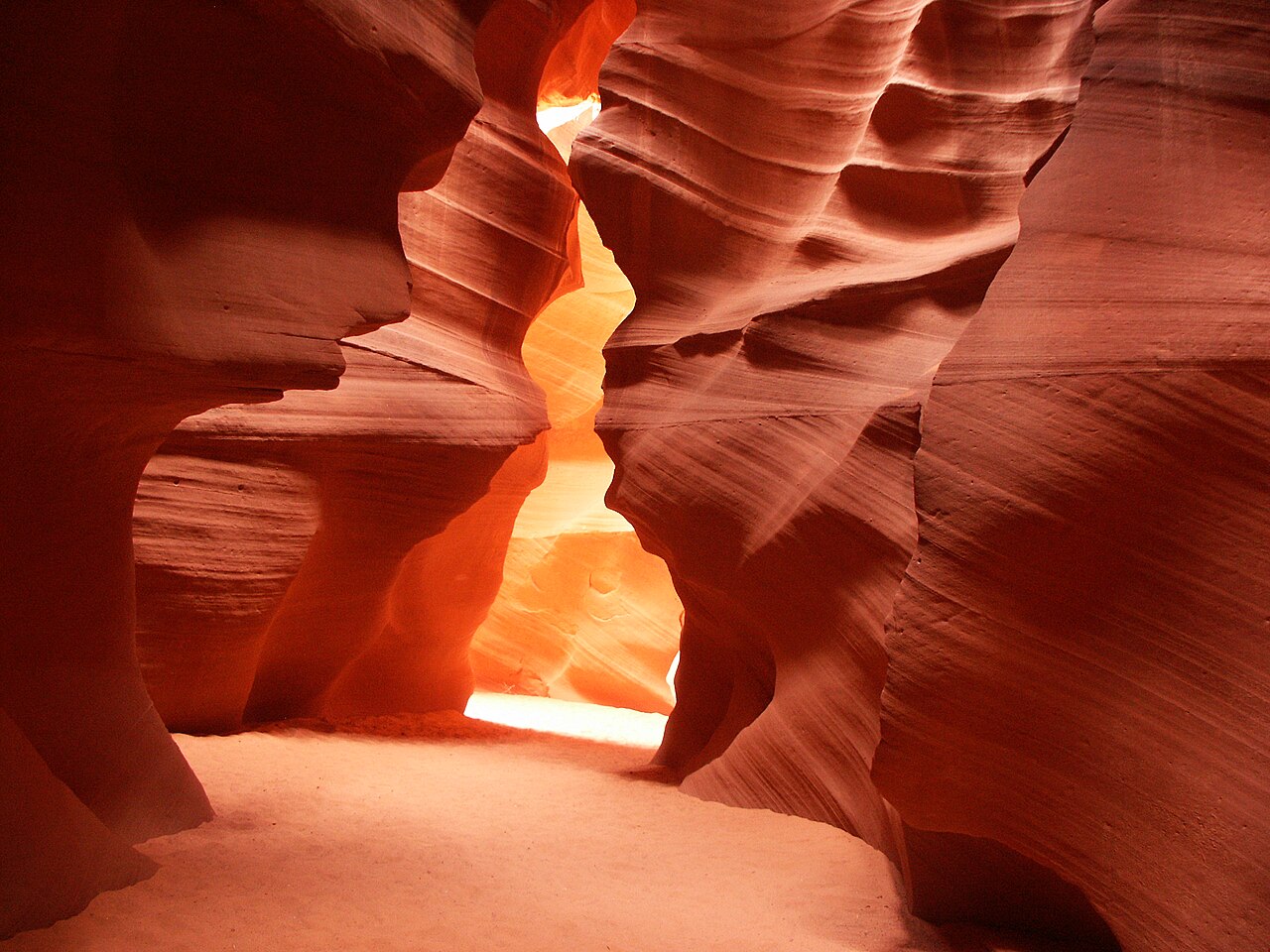
Floodwater moving through narrow sandstone passages can carry abrasive sediment. Over time, erosion widens and sculpts the route.
The smooth surfaces and tight bends are evidence of that work. A dry floor during a visit does not mean water has stopped being important to the canyon.
The same narrow shape that creates an intimate view can also concentrate fast-moving water.
Light changes the scene
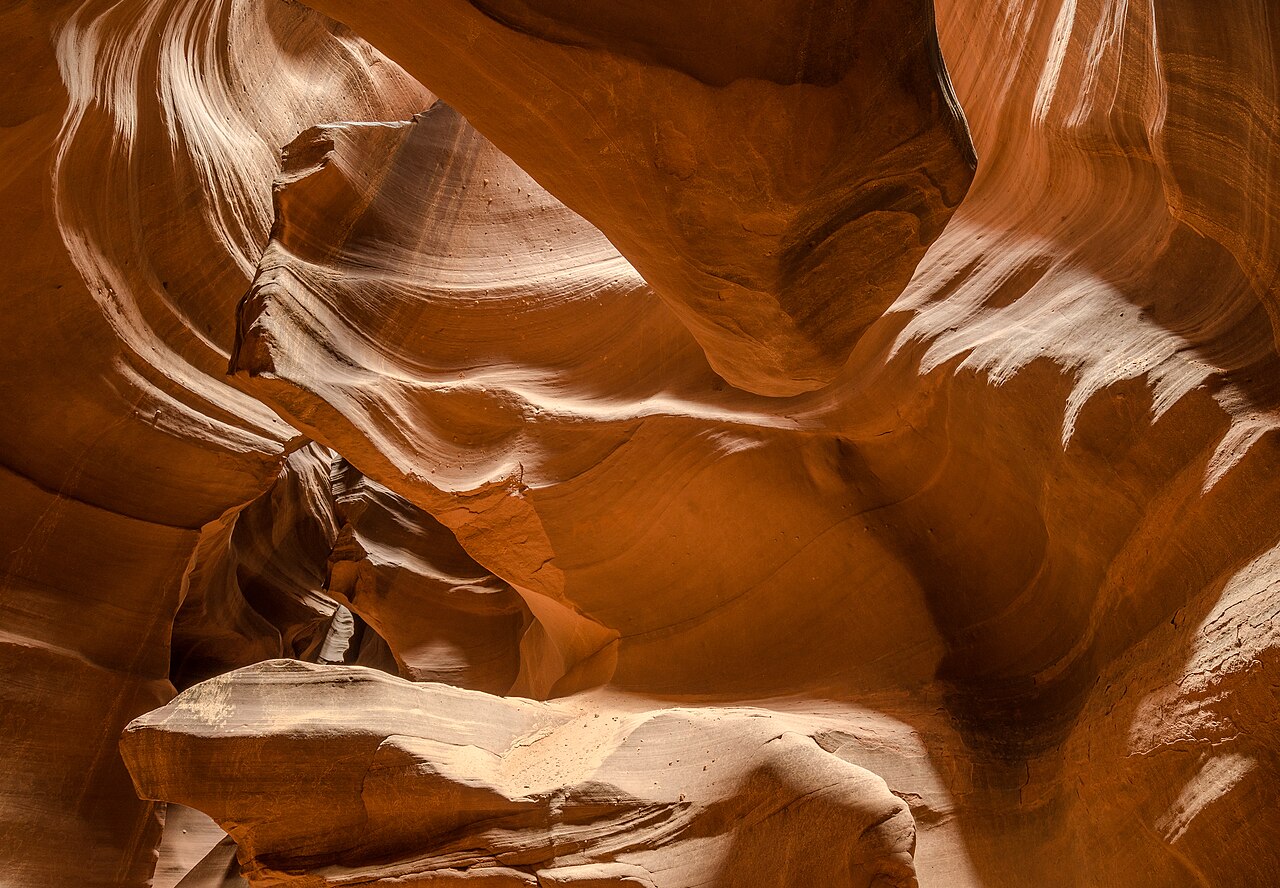
The sun's position affects how light enters and reflects from the walls. Bright shafts appear only under suitable conditions; they are not present everywhere or throughout the day.
The famous photographs capture particular moments. Looking at subtler reflected light can be just as revealing as searching for a single dramatic beam.
Respect the place and its access
Northern Arizona Trails identifies Navajo Nation Parks and Recreation as the land manager and explains that visits use authorized guided tours.
Current official rules and local conditions should guide access. Respect includes the canyon's cultural meaning as well as its physical setting.
Antelope Canyon shows how a narrow opening can reveal a large story. Sand became rock, water carved a passage, and sunlight now lets us see its curves in constantly changing ways.
Photo credits
Featured image: Raimund Marx ([email protected]); Wikimedia Commons source; CC BY-SA 3.0. Resized for web display.

Body image 1: Uploaded by Meckimac; Wikimedia Commons source; CC BY-SA 3.0. Resized for web display.

Body image 2: Tuxyso; Wikimedia Commons source; CC BY-SA 3.0. Resized for web display.
