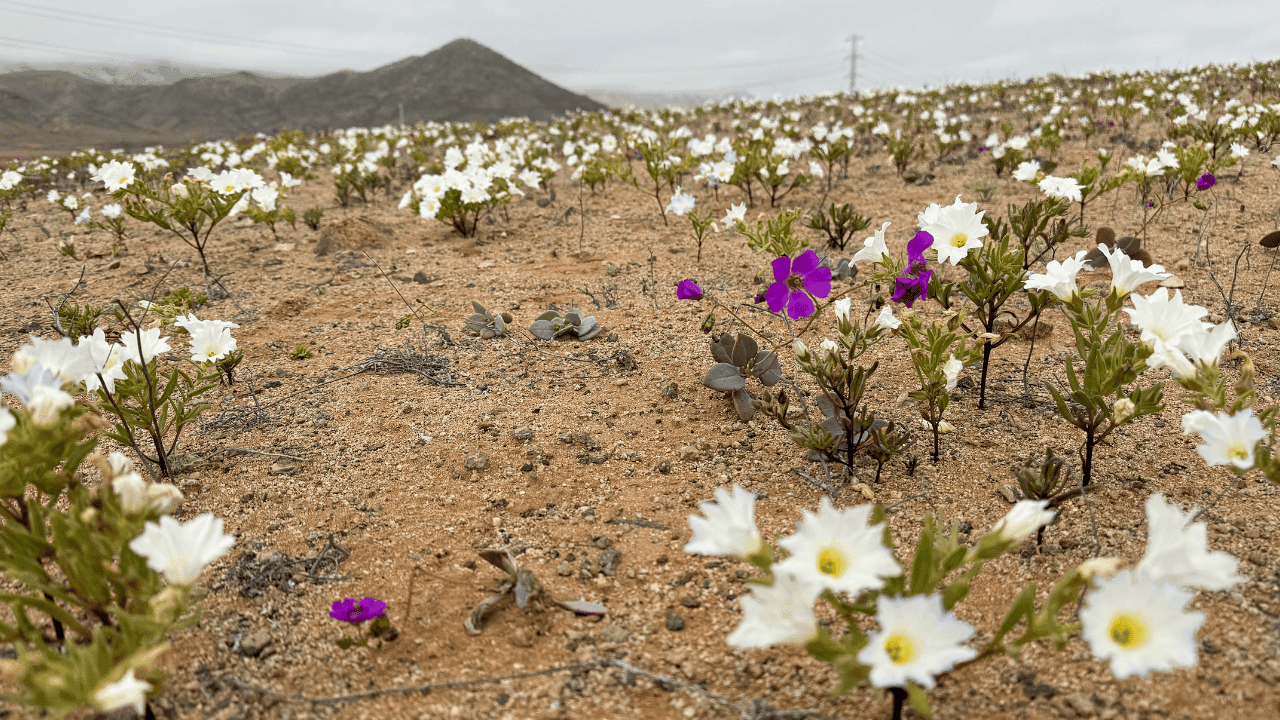
In late September 2025, something extraordinary unfolded in the heart of Chile’s Atacama Desert, known as the driest place on Earth. After an astonishing ten years of desolation and dull hues, the rains arrived, awakening dormant seeds that had lain in waiting beneath the parched soil.
This remarkable event began when a series of unusual weather patterns brought unexpected rainfall to the region. In just a few days, the landscape transformed. The once monotonous expanses of brown and beige erupted with colors—vivid yellows, purples, and whites stretching across the desert floor, each flower a vibrant testament to nature’s power and endurance.
For many, the Atacama Desert is synonymous with scarcity and extreme conditions. Rain is so rare here that when it falls, it is both welcomed and feared. In 2015 and 2017, similar blooms occurred, but occurrences are infrequent, leading to excitement and anticipation each time. As reported by Reuters, this year’s bloom is being described as exceptional, and it has drawn tourists and scientists alike to marvel at this fleeting beauty.
Anyone lucky enough to witness the bloom feels engulfed by a wave of emotions. A local visitor, Clara Gonzalez, exclaimed, ‘It’s as if the desert is celebrating life after years of silence!’ This sentiment echoes across the many blogs and social media posts fueling online discussions about the event.

The surge of flowers brings life to a typically stark environment, but it isn’t just about aesthetics; it offers researchers a unique opportunity. As scientists study this phenomenon, they are uncovering how life can adapt and thrive in extreme environments. The recent bloom provides valuable insights into resilience, highlighting how seemingly lifeless places can spring to life again with just a little rain.
The Atacama’s transformation is not just beautiful; it’s a poignant reminder of nature’s unpredictability. Many writers and environmentalists urge us to appreciate these moments when they occur. After just a few weeks, the bloom will fade, and the desert will return to its arid self, yet the memories and the lessons it imbues will last far beyond the season.
This blooming desert phenomenon shines a light on the fragility of ecosystems and how quickly life can respond to changes in environment. As 2025 progresses, the world watches and wonders what more might be hidden in the earth’s harshest terrains, ready to surprise us all with the beauty of life.

As tourists plan their visits to the Atacama to soak in the vibrant beauty, many are left pondering the question: What other secrets of nature are waiting to be uncovered in the world’s most extreme places? This blooming spectacle invites us to look at life through a lens of hope, resilience, and transformation.
Disclosure: We may earn a commission when you make a purchase through the ads.