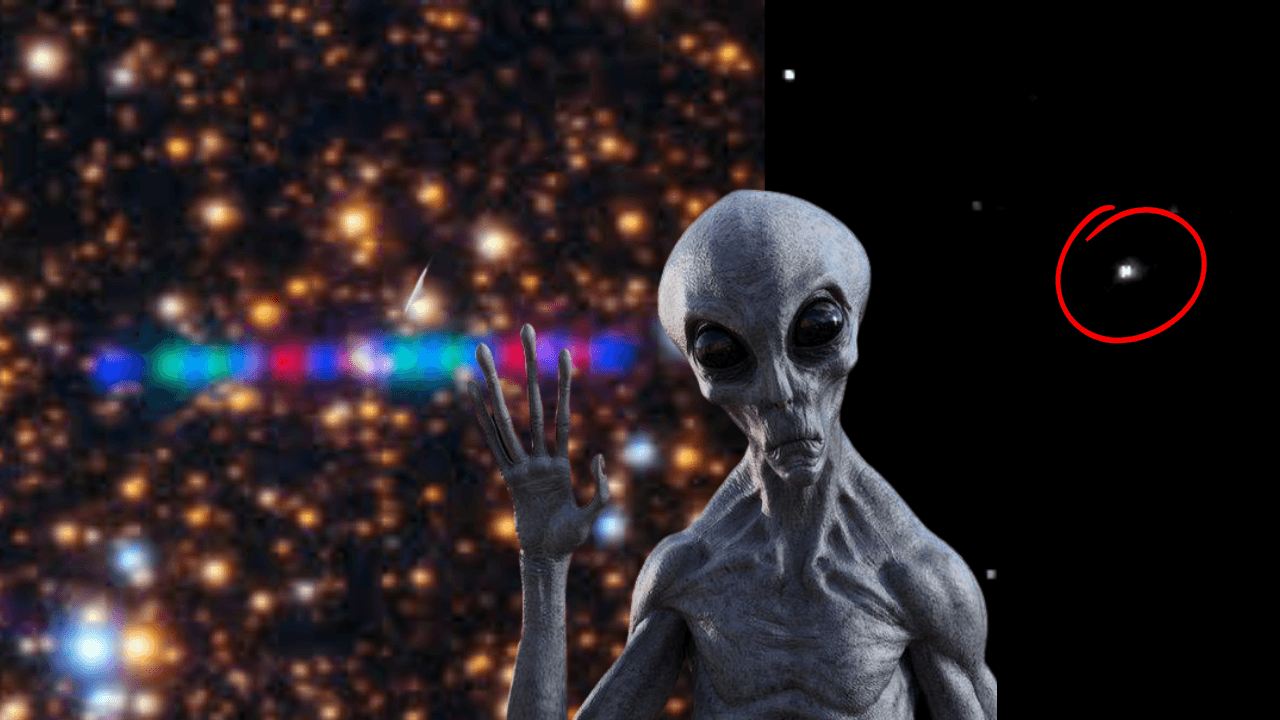
The countdown has officially begun. Only 52 days remain until what some scientists and researchers are calling a potential alien invasion in November 2025. Across the globe, governments, space agencies, and enthusiasts are monitoring the skies closely as unusual cosmic activity raises alarms. Reported sightings of strange interstellar objects, sudden trajectory changes, and unprecedented signals from deep space have sparked a sense of urgency unlike anything we’ve seen before.

This growing concern has stirred a mixture of excitement and dread within the scientific community. According to various reports, a peculiar interstellar object named 3I/ATLAS may arrive close to Earth in late November. This object’s trajectory and sudden anomalies indicate it could be alien technology, provoking serious discussions among policymakers and scientists alike.
Many experts believe that November 2025 could be a pivotal turning point in humanity’s understanding of extraterrestrial life. While some dismiss these warnings as speculative fear-mongering, the mounting evidence cannot be ignored. Just recently, a Harvard scientist suggested that 3I/ATLAS might not be a mere cosmic rock, but a potential threat that humanity has yet to comprehend.
‘We must prepare for an event that could reshape our understanding of the universe,’ he implored. Such statements resonate deeply, as governments worldwide scramble to enhance their planetary defense strategies in anticipation of any potential threats.
Meanwhile, articles and social media forums buzz with theories and speculations. Some posit the idea of government cover-ups, while others theorize that if extraterrestrial beings are observing, they may be harmless, only curious about our planet. Opinions sway wildly from those who advocate for peace to doomsday preppers stocking up on supplies.
Reports suggest that as we approach November, global audiences have become more engrossed in narratives surrounding the potential alien contact. Some have even taken to social media, sharing bizarre encounters and postulating what we might do if actual extraterrestrial beings land on Earth. This frenzy echoes previous instances in history when humankind faced overwhelming uncertainty about future occurrences, but none so far matches the weight of this modern narrative.
In scientific circles, the mixed reactions are palpable. While some researchers push for caution, citing that extraordinary claims require extraordinary evidence, a growing minority acknowledges that something unusual is occurring in our Near-Earth environment. This cautious optimism might be our first step towards understanding what, if anything, is out there.
As preparations ramp up, space agencies are racing against time to develop better tracking technologies. Both NASA and ESA have initiated accelerated research into detecting and predicting extraterrestrial objects, recognizing the ethical and safety implications of encountering intelligent life. There’s a palpable shift toward planetary defense readiness that hasn’t been seen before.
The aftermath of November could lead to profound shifts in philosophy, policy, and even public perception of life beyond Earth. If the purported ‘alien invasion’ does materialize, how will humanity react? Experts speculate that it may either unite us as a planet or plunge us into chaos, spiraling into fear and misunderstanding.
In closing, as the world watches and waits, we’re left to ponder: if we are indeed not alone in the universe, what does that mean for the future of humanity? Are we ready to engage with whatever—or whomever—might be lurking in the vastness of space? The countdown is on, and the answer may arrive sooner than we think.
Disclosure: We may earn a commission when you make a purchase through the ads.