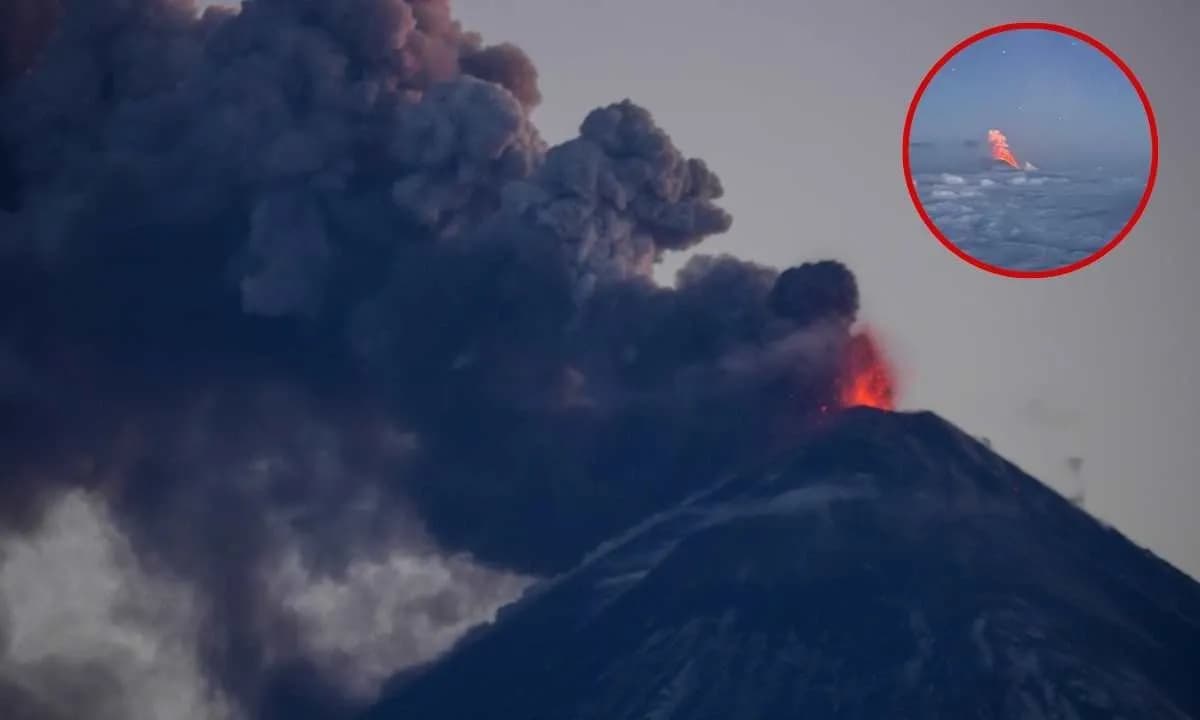
On July 30, 2023, a powerful 8.8 magnitude earthquake struck the Kamchatka Peninsula in Russia, one of the most seismic regions in the world. This was no ordinary event. Within hours, the Klyuchevskoy volcano, one of the world’s highest and most active volcanoes, erupted violently, spewing burning hot lava down its western slopes.
The eruption, accompanied by powerful explosions and a glowing plume of ash, set the stage for a series of events that would affect countries across the Pacific. What followed was a chain of devastating natural phenomena that not only captured the world’s attention but also raised serious questions about the interplay between earthquakes and volcanic eruptions.
Located in Russia’s Far East, Klyuchevskoy stands at 15,597 feet (4,754 meters), making it the tallest active volcano in Asia and Europe. It sits on the Kamchatka Peninsula, which is known for its high level of volcanic activity due to its location on the Pacific Ring of Fire.
This area hosts nearly 300 volcanoes, with 29 of them being active. While eruptions from Klyuchevskoy are not rare, the timing of this eruption, immediately following such a massive earthquake, made it particularly remarkable.
Scientists from Russia’s Academy of Sciences were the first to confirm the eruption. The United Geophysical Service shared dramatic footage of the event on Telegram, showing the descent of molten lava and powerful explosions that lit up the sky above the volcano.
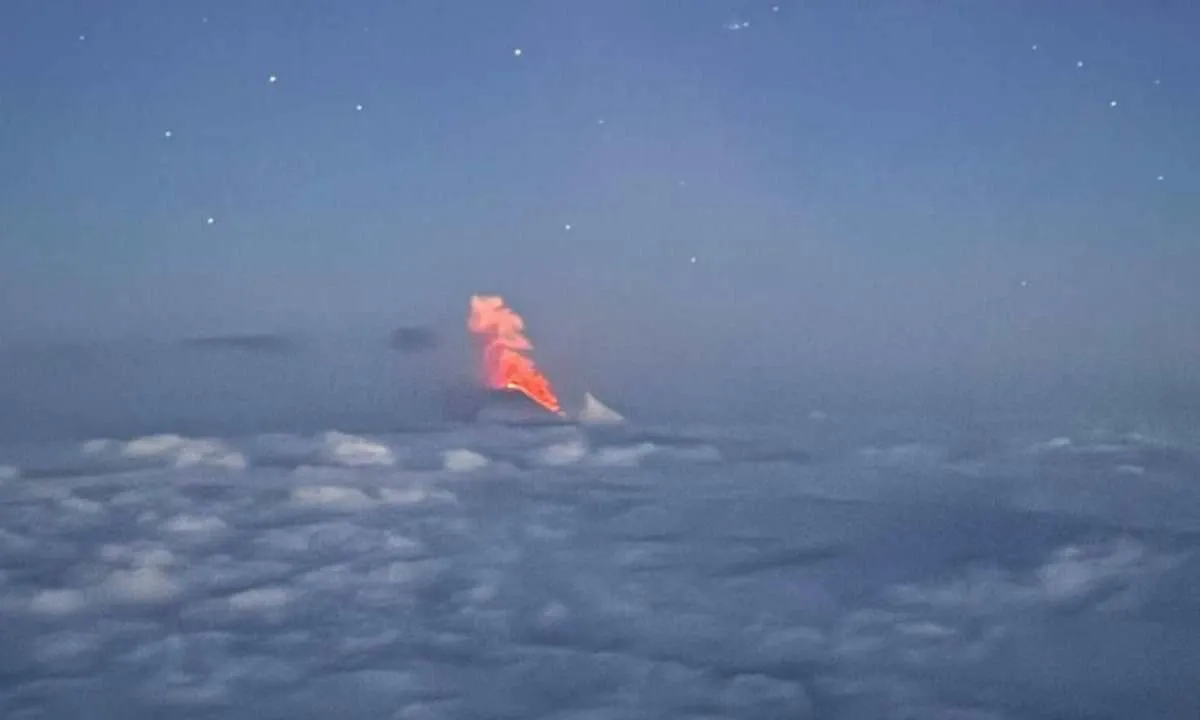
The glow from the volcano could be seen from miles away, further emphasizing the destructive power of this natural phenomenon. As the lava continued to flow, ash plumes extended up to 1.5 miles (2.5 km) above the volcano, and experts warned that explosions could send ash as high as 5 miles (8 km) into the atmosphere.
But the eruption wasn’t the only shocking event. Hours before the volcano erupted, a massive 8.8 magnitude earthquake had struck near the Kamchatka Peninsula at 11:24 AM local time. The earthquake caused significant damage to buildings and injured several people in the remote Russian region.
Fortunately, there were no reported fatalities. In addition to the earthquake’s devastation, the tremors triggered tsunami waves that threatened coastal areas across the Pacific.
Tsunami warnings were issued for countries around the Pacific, including Hawaii, Japan, Chile, and parts of the U.S. West Coast. Hawaii and Japan were particularly affected, with people fleeing inland as the tsunami waves began to hit.
In Kamchatka, the tsunami waves reached heights of up to 13 feet (4 meters), flooding local ports and causing residents to seek shelter in evacuation centers. The U.S. National Tsunami Warning Center reported waves as high as 5 feet (1.5 meters) hitting parts of the U.S. West Coast, including California, Oregon, Washington, and Alaska.
In Japan, the threat of the tsunami was compounded by the country’s memories of the 2011 disaster, where a massive earthquake triggered a deadly tsunami, causing a nuclear meltdown at Fukushima. However, this time, the nuclear plants in Japan reported no abnormalities. Even so, the situation was tense, and evacuation orders were issued, particularly in areas along the northern coast of Japan.
By the time the tsunami waves had subsided, many warnings had been downgraded. Authorities in Hawaii, Japan, and parts of Russia lifted evacuation orders as the immediate threat of the tsunami seemed to lessen. In contrast, other regions like Chile and French Polynesia were still on high alert, with officials warning residents to move to higher ground and prepare for additional waves.
Despite the significant threats posed by the earthquake and tsunami, the volcanic eruption continued to grab the world’s attention. As the lava flowed down the western slopes of Klyuchevskoy, the danger appeared to ease slightly, as aftershocks became less intense. Still, volcanic experts remained on edge, knowing that volcanic activity can change rapidly, especially in an area as geologically active as Kamchatka.
In the days following the eruption, experts weighed in on the cause-and-effect relationship between the earthquake and the volcanic activity. Although the earthquake did not directly trigger the eruption, it is believed that it played a role in intensifying the volcanic activity.
Experts from the U.S. Geological Survey noted that the strong tremors likely increased the vigor of the eruption, particularly in terms of ash emission. Some even pointed to the lava lake that had formed at the summit of the volcano as a sign that the eruption was imminent.
The Kamchatka Peninsula, often referred to as the “land of fire and ice,” is one of the most geologically active places on Earth. While it’s home to some of the planet’s most dangerous and beautiful volcanoes, the region also offers unique insights into the Earth’s inner workings.
The eruption of Klyuchevskoy, combined with the powerful earthquake, highlighted just how interconnected and dynamic Earth’s systems are. Events like these make it clear that nature’s raw power is something that we can only begin to understand, and even then, it remains an unpredictable force.
As scientists continue to monitor the volcano and aftershocks in the region, the impact of this natural disaster will likely be felt for days, if not weeks. With the world still reeling from the earthquake, the eruption, and the tsunami waves, people are left to wonder: what else does the Earth have in store for us?