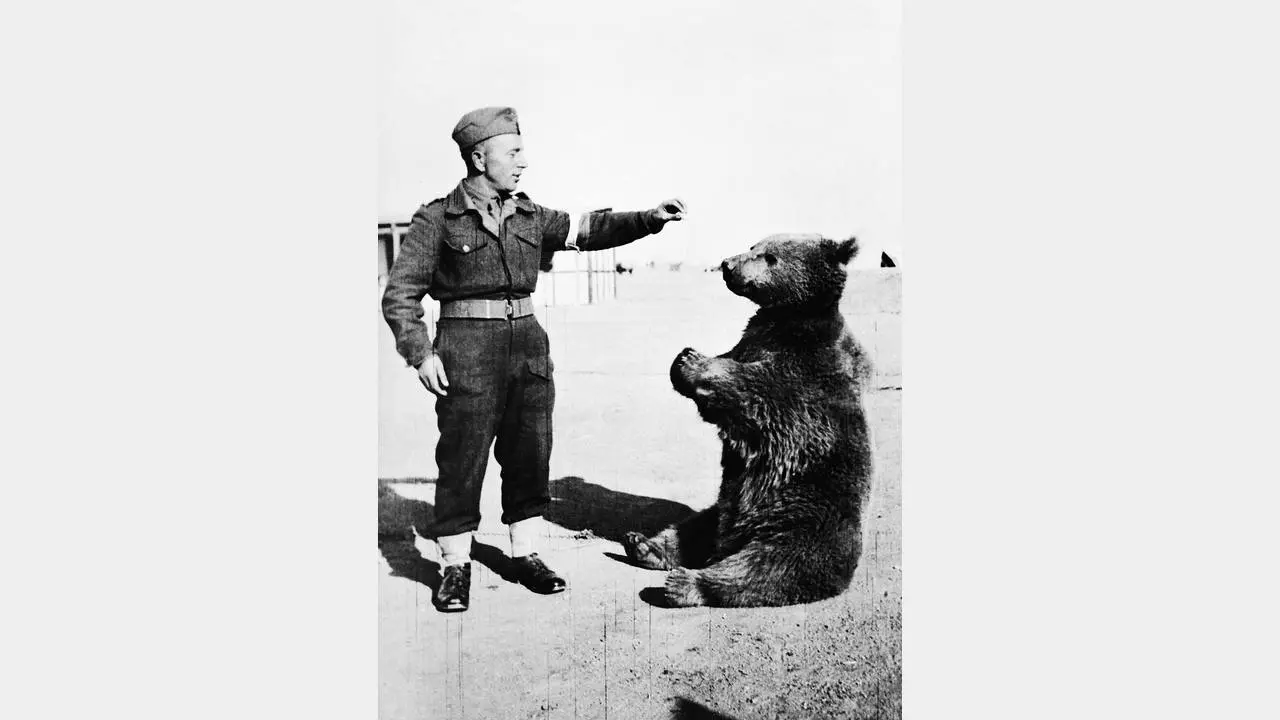
In 1942, Polish soldiers traveling through the Middle East adopted a brown-bear cub. They named him Wojtek, and he became part of the daily life of their unit.
The unusual companion traveled with the troops through the war and later to Scotland. When their military service ended, his connection with the men continued through visits at Edinburgh Zoo.
A cub grew up among soldiers
The British Library's account describes Wojtek's adoption by the 22nd Artillery Supply Company of the 2nd Polish Corps. As a small cub, he was fed diluted condensed milk from a bottle.
He grew into a large bear accustomed to human company. Soldiers described wrestling with him and sharing their camp routines. He became the company's mascot, with a story that followed the unit far beyond its wartime camps.
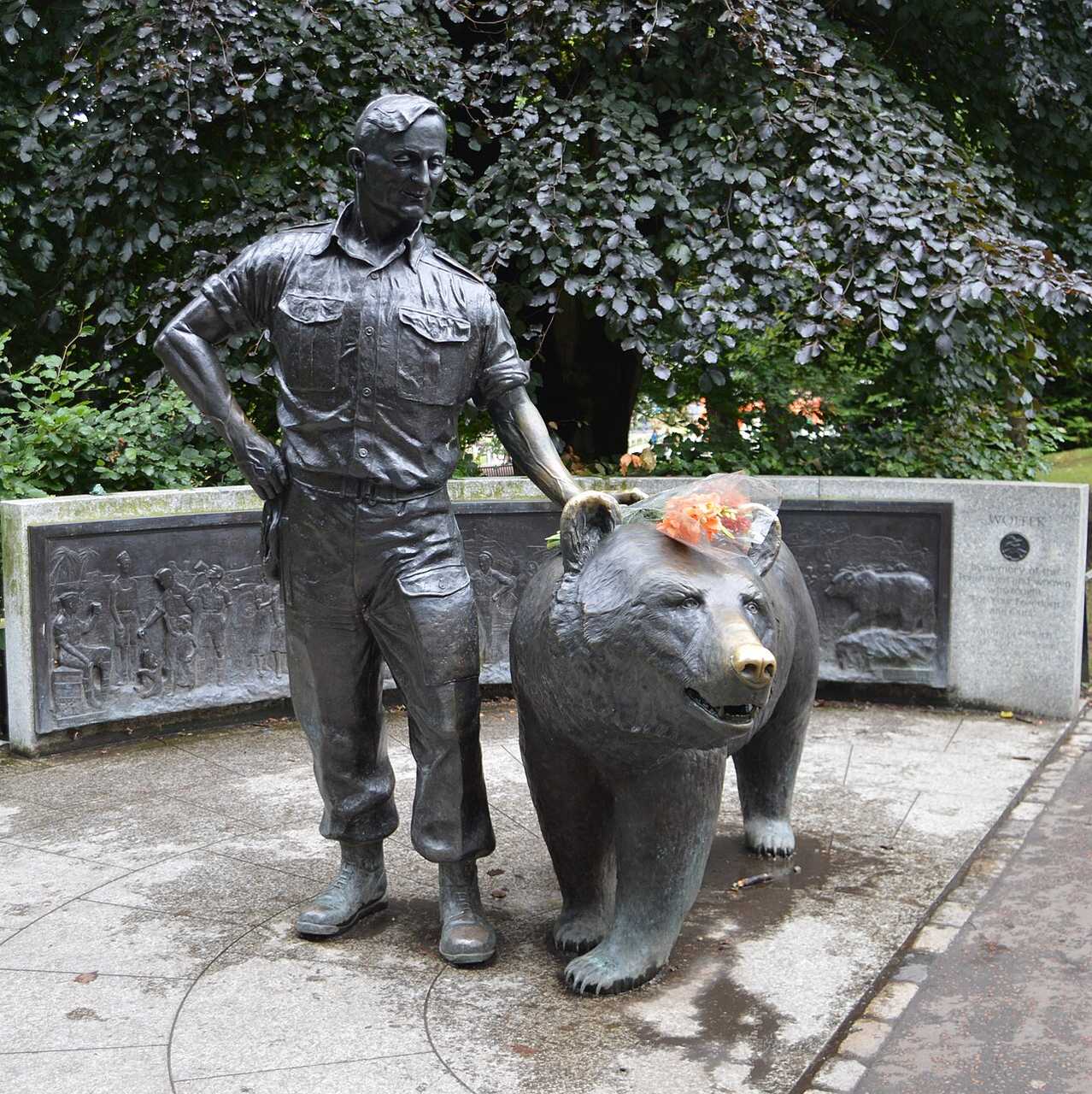
The Wojtek and Polish soldier monument in Edinburgh’s Princes Street Gardens. Photograph of the memorial. Photo: Scotch Mist, CC BY-SA 4.0. Resized; JPEG conversion. Image adaptation shared under the same CC BY-SA 4.0 license.

The company remembered a bear carrying ammunition
Historical accounts connect Wojtek with the Polish forces' service in Italy, including the Battle of Monte Cassino in 1944.
The Polish Institute of National Remembrance describes him carrying ammunition boxes and pulling a supply cart. The company's emblem of a bear holding an artillery shell preserved that association.
The Imperial War Museums' memorial register likewise records the reported ammunition-carrying role in explaining a plaque dedicated to him. These are historical accounts and commemorations of his place in the unit.
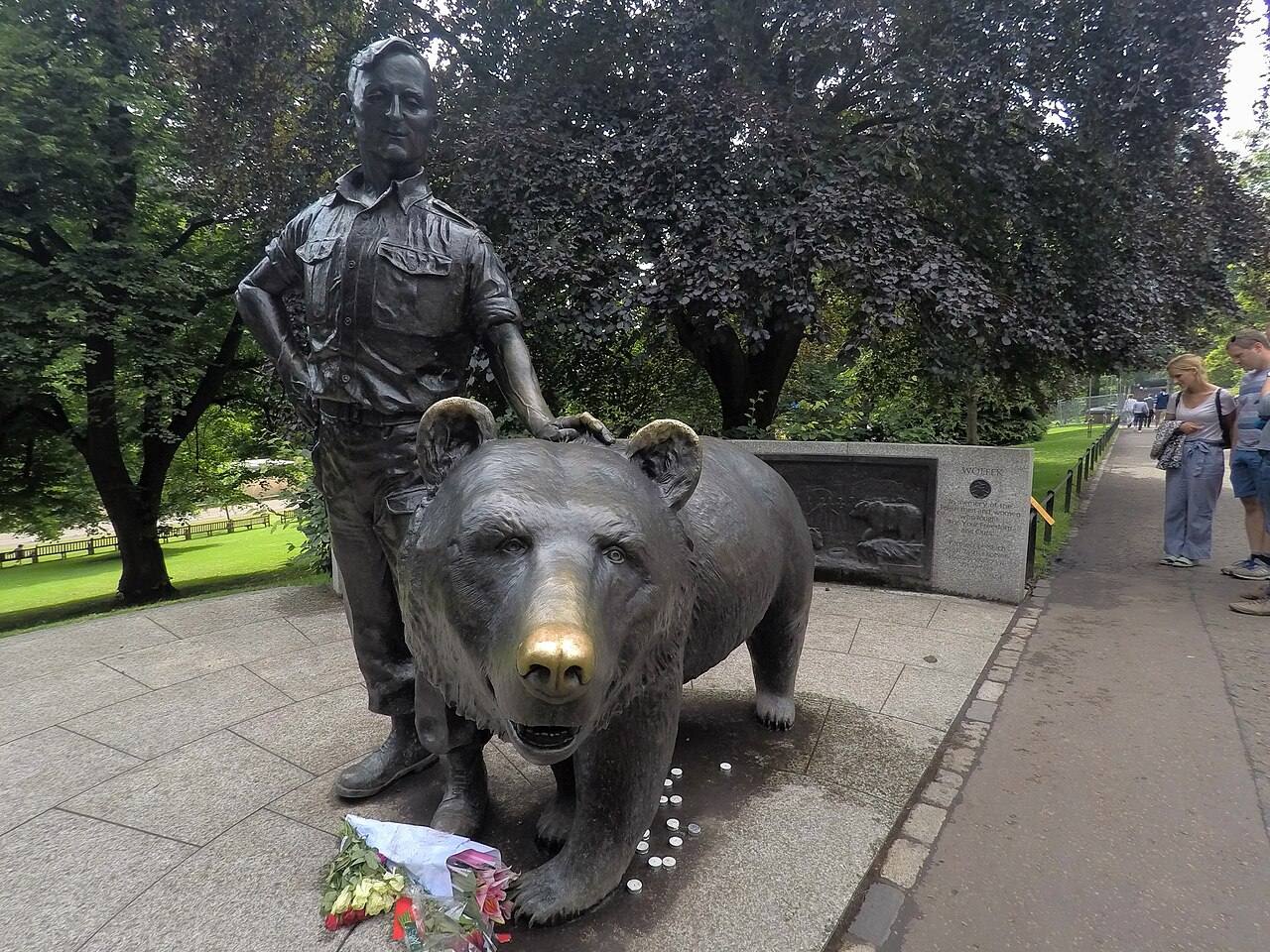
Another view of Edinburgh’s Wojtek memorial. The sculpture commemorates the bear and his Polish companions. Photo: Gpwitteveen, CC BY-SA 3.0. Resized; JPEG conversion. Image adaptation shared under the same CC BY-SA 3.0 license.

His former companions kept visiting
After the war, Wojtek spent time at Winfield Camp in Scotland before moving to Edinburgh Zoo in 1947. Former soldiers visited him there, and accounts describe his response to familiar Polish voices.
He died in 1963. Decades later, a statue in Edinburgh's Princes Street Gardens showed him walking beside a Polish soldier, recalling both his unusual wartime story and the companionship behind it.
Wojtek's history followed the same men across countries, through military service and into civilian life. The monuments remember a bear, but also the people who made room for him along the way.
Featured image: Wojtek with a soldier in an archival wartime photograph held by the Imperial War Museum. Crown copyright has expired. Photo: Imperial War Museum, Public domain. Resized and fitted to a 16:9 canvas.
