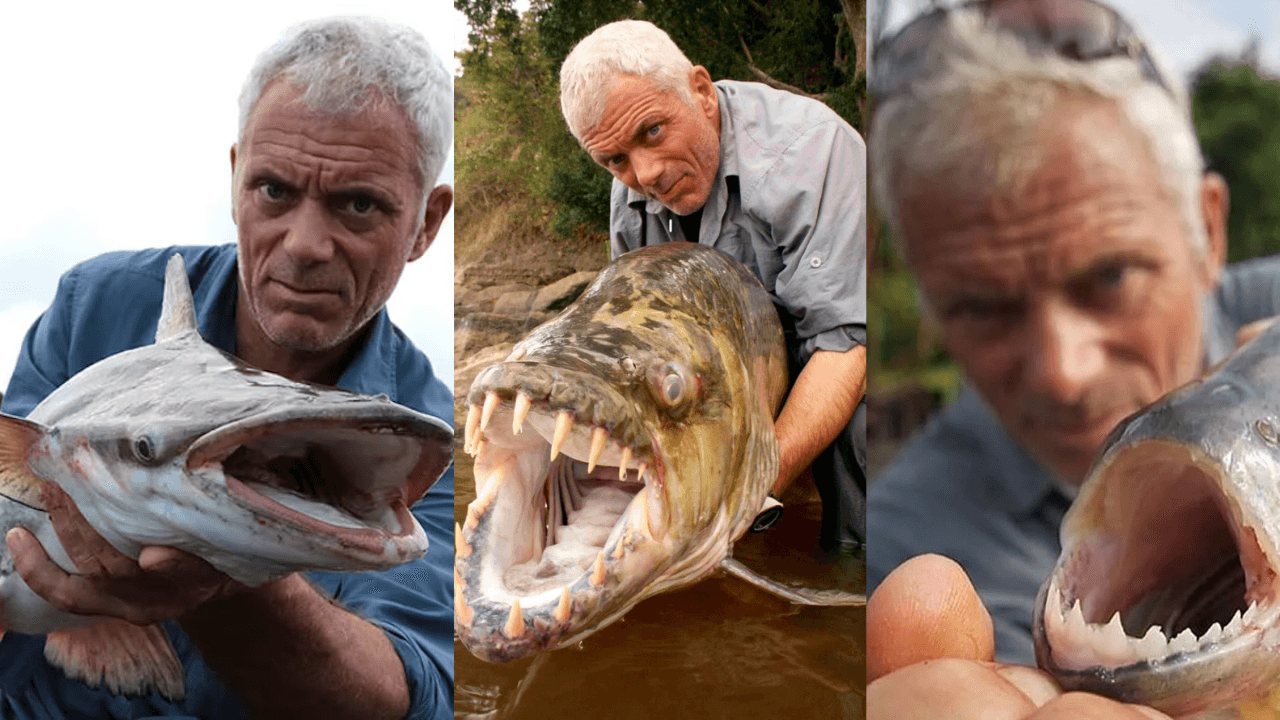
When River Monsters first hit screens in 2009, viewers around the world were captivated. Jeremy Wade, a British biologist and extreme angler, stepped into rivers and lakes with one goal: uncover the truth behind terrifying local legends. Each episode began with tales of people being dragged under by unseen predators or villagers whispering about deadly creatures lurking in muddy waters. By the end, Wade would usually reveal the real animal behind the story, often by pulling a massive, writhing fish out of the river with his bare hands.
The monsters were real. Over the years, audiences watched Wade confirm some of the strangest freshwater giants known to science. There was the arapaima, a fish so large it looked prehistoric. There were giant stingrays stretching wider than a dining table. There was the Goliath tigerfish of Africa, with razor-sharp teeth like a crocodile’s. Each new episode delivered another shocking discovery, and it felt like Wade was chasing myths straight out of folklore.
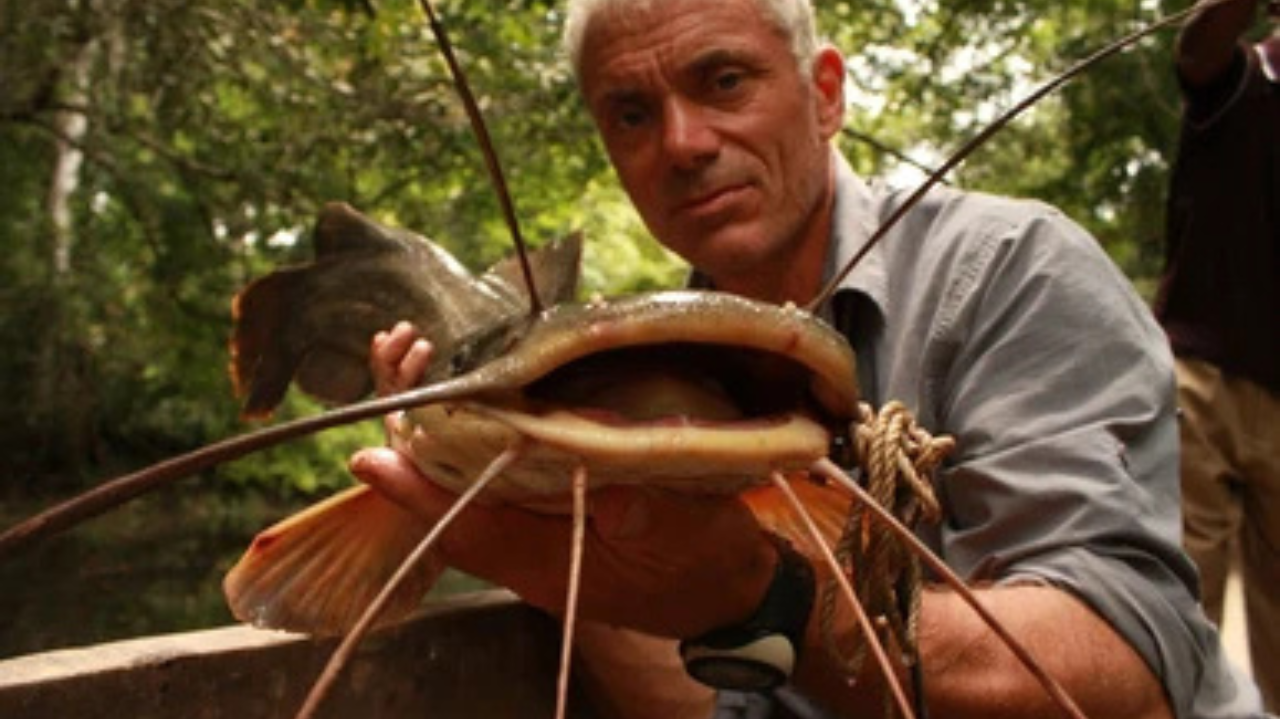
For nearly a decade, River Monsters was Animal Planet’s most popular show. It wasn’t just about the catches; it was about the journey. Wade interviewed locals, listened to survivors’ stories, and then risked his life in dangerous waters to solve the mystery. Fans around the world followed him into the Amazon, Congo, Himalayas, and beyond.
But by 2017, something unusual happened. Many of the legendary creatures that inspired the series had been found, filmed, and explained. Wade himself admitted that most of the big mysteries had been solved. The monsters weren’t gone, but the stories that made the show exciting had largely been told. In April 2017, Animal Planet announced that Season 9 would be the final chapter of River Monsters.
That decision led to a viral claim online: the show ended because Jeremy Wade had “caught every large freshwater fish species on Earth.” It’s a bold statement that captures how the finale felt to fans — but it isn’t entirely true. Scientists continue to discover new species in rivers, and many remain too elusive or endangered to ever be caught. Still, there was truth behind the myth. Wade had revealed most of the known freshwater giants that could realistically be filmed for television. From a storytelling perspective, the journey was complete.
As the series matured, its focus also shifted. The early years leaned on fear and suspense — dangerous attacks, dark legends, deadly creatures. Later episodes showed Wade turning into more of a conservationist. He highlighted how pollution, overfishing, and dams were pushing these giants toward extinction. The monsters were no longer just threats; they were endangered survivors of human impact.
Even after River Monsters ended, Wade didn’t hang up his fishing rod. He launched Jeremy Wade’s Mighty Rivers in 2018, exploring famous waterways like the Amazon and Mississippi to reveal how human activity is reshaping them. He followed with Dark Waters, a series digging into unexplained aquatic mysteries, and Unknown Waters, which sent him to far-off locations to study rare, little-known species. Each new project carried forward the spirit of River Monsters — a mix of mystery, science, and adventure — but with a stronger focus on protecting what’s left.
Looking back, the ending of River Monsters feels less like a cancellation and more like a natural finale. The myths had been explored, the monsters revealed, and the mysteries largely solved. Jeremy Wade hadn’t literally caught every freshwater giant, but he had completed the journey that fans tuned in for: separating truth from legend.
Today, the monsters Wade once wrestled are some of the most endangered creatures on Earth. The Mekong giant catfish is critically endangered, the arapaima is under heavy fishing pressure, and the giant stingray faces threats from pollution and habitat loss. In a way, the scariest part of the story isn’t that the monsters are gone from TV — it’s that they may soon be gone from the rivers themselves.
River Monsters may have ended in 2017, but its legacy still lives on. The series showed audiences that our world’s rivers hide some of the strangest and most extraordinary animals imaginable, and it inspired millions to see these giants not as monsters, but as mysteries worth protecting.