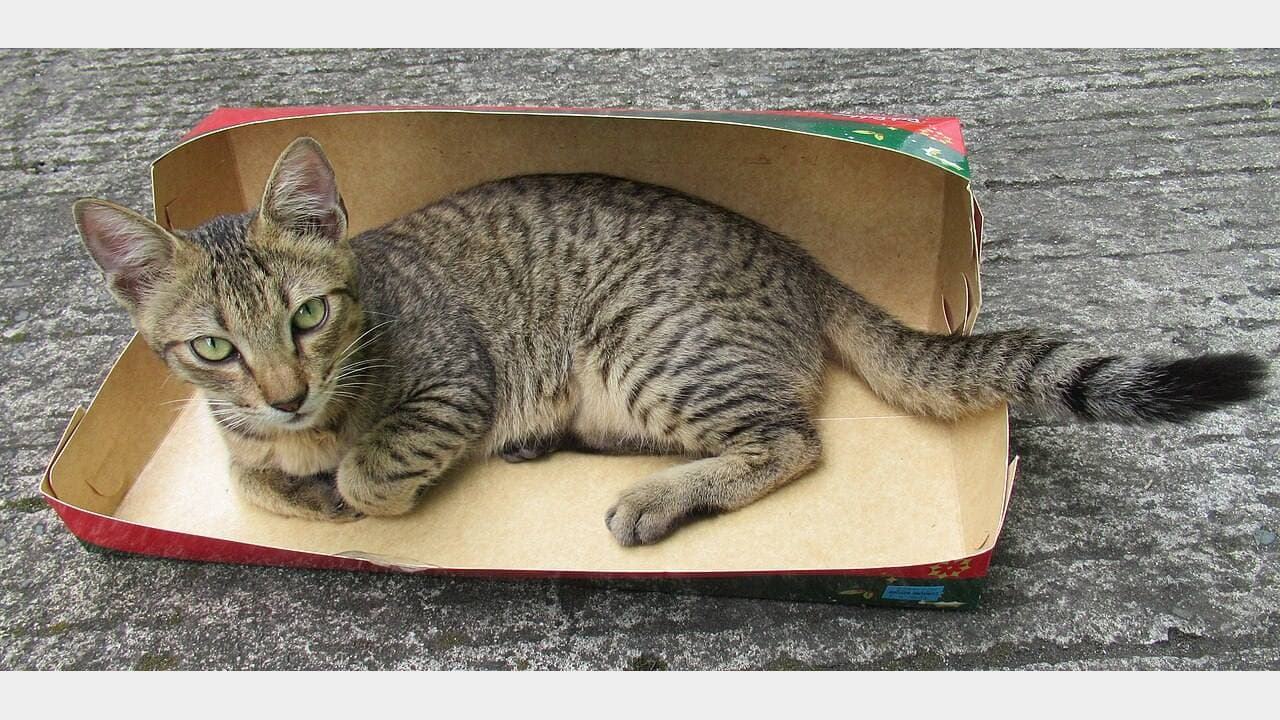
A cardboard box may look like discarded packaging to a person. For a cat entering an unfamiliar shelter, it can offer something useful: a place to retreat from sights and activity it cannot control.
Research from Utrecht University has tested that idea. In a small study, newly admitted cats given hiding boxes reached lower behavioral stress scores sooner than cats without them.
A small study measured the difference
The 2014 study by Claudia Vinke and colleagues involved 19 cats arriving at a Dutch shelter. Ten received a hiding box, and nine did not.
Researchers followed the cats for 14 days using a standardized Cat-Stress-Score based on observed behavior. The box group had lower average scores on days three and four.
By day 14, the groups had reached similar average levels. The difference was the pace of adjustment: cats with a box reached that lower level much earlier.
The result supports providing a retreat during a stressful transition. It does not mean every cat will use a box in the same way or that a box resolves every welfare problem.
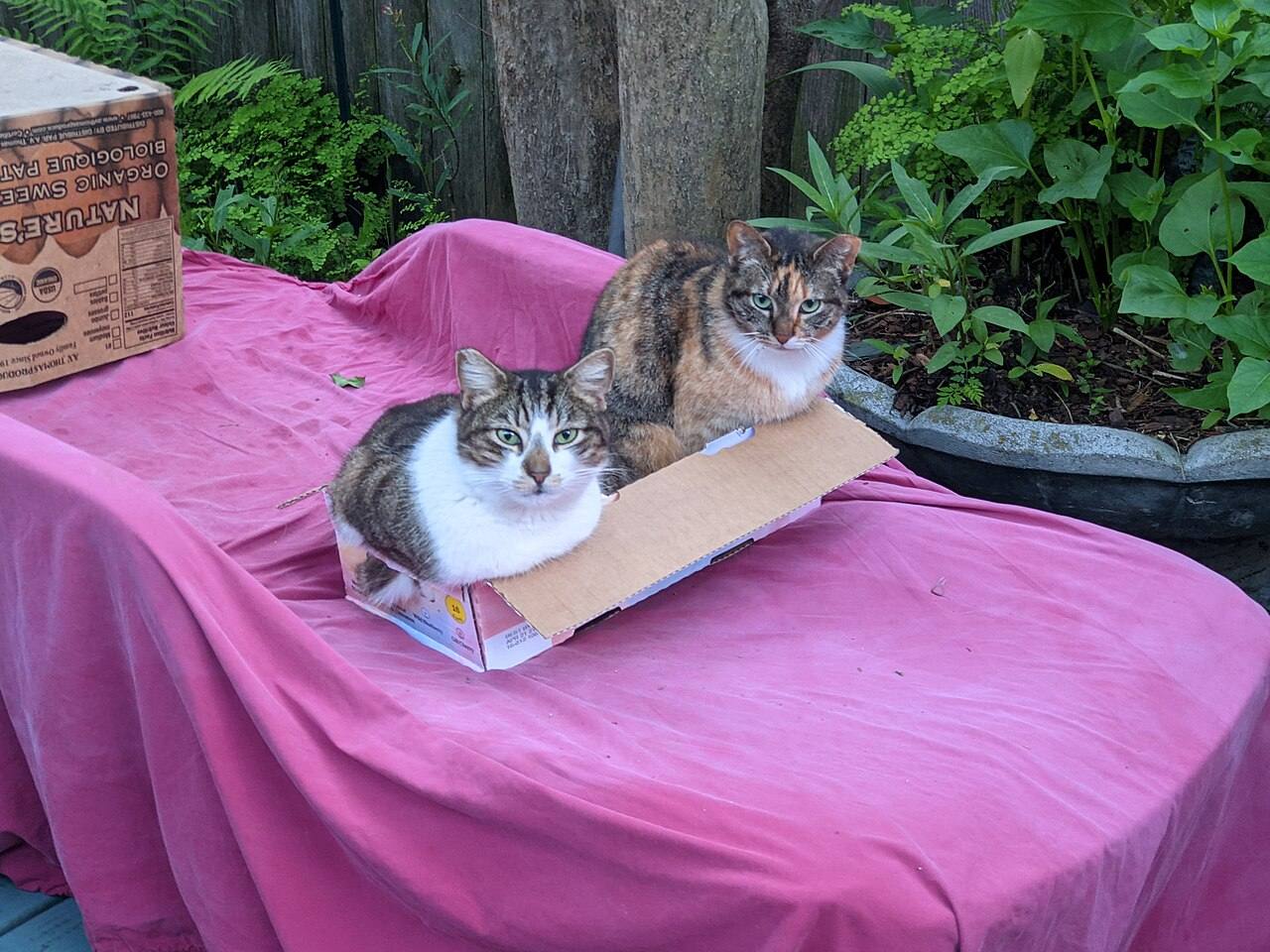
Illustrative photograph of two cats in a box in New Orleans. These are not the research animals. Photo: Bart Everson, CC BY 2.0. Resized; JPEG conversion.

Hiding can be part of settling in
Utrecht University's 2025 account of Ruth van der Leij's research returned to the importance of opportunities to hide in shelter accommodation.
An animal entering a shelter encounters new smells, sounds, routines and people. A protected space can let it choose when to watch and when to withdraw.
The researchers' original conference poster also identified questions needing further study, including longer-term effects and use in group housing.
That matters when translating a small experiment into a broader claim. The measured outcome was behavior over a particular period, not proof that a box prevents illness or guarantees happiness.
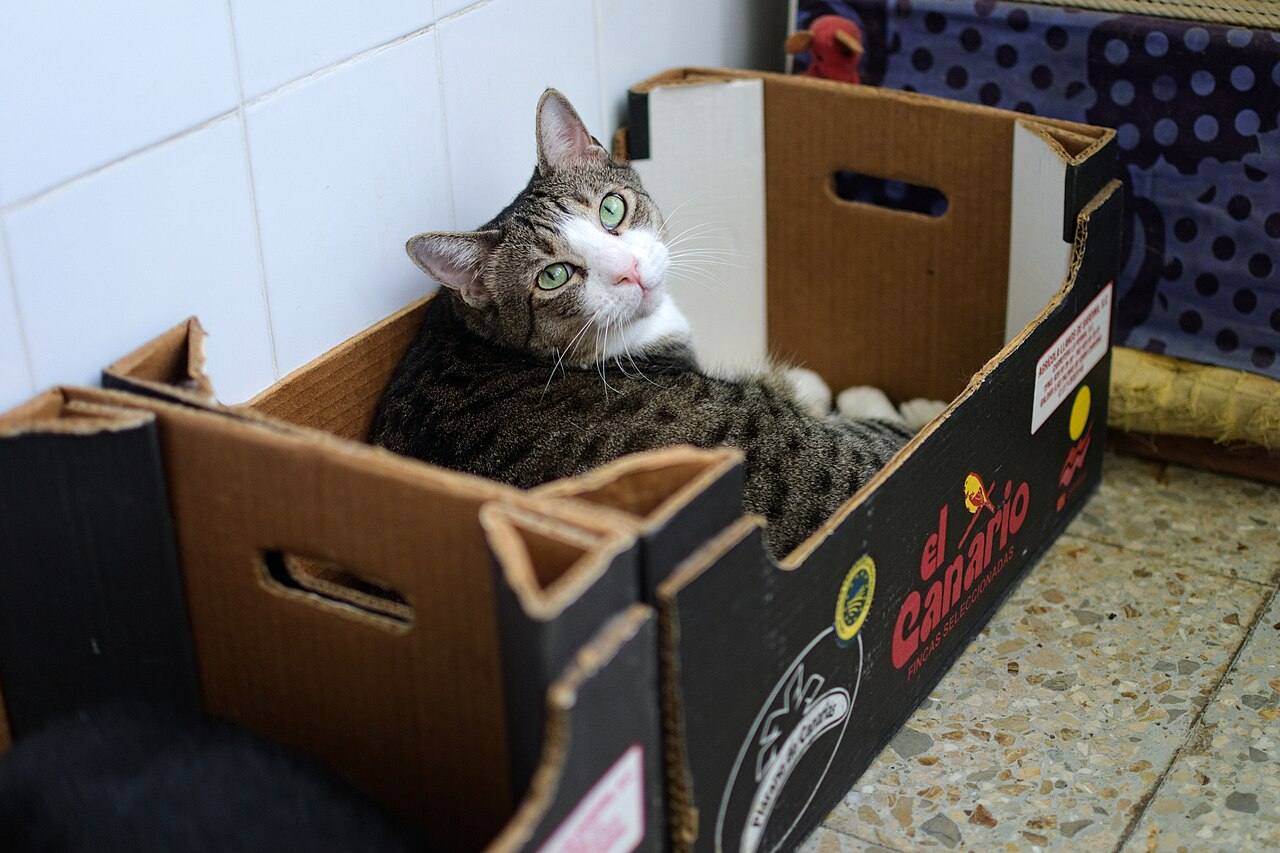
Illustrative cat-in-a-box photograph. This does not show an experimental shelter enclosure. Photo: Ivanhercaz, CC BY-SA 4.0. Resized; JPEG conversion. Image adaptation shared under the same CC BY-SA 4.0 license.

A familiar joke has a more useful question behind it
Pictures of cats squeezing into packaging often circulate with jokes about the animal arriving in its original box. A photograph's exact origin or editing cannot be established simply because the fit looks convincing.
The research offers a firmer point of interest than the joke. A modest object can change what an animal is able to do in an unfamiliar space.
For the cats in the study, having somewhere to hide was not a luxury accessory. It was an option in their surroundings, and their observed adjustment was faster when that option was available.
Featured image: Illustrative photograph of cats using cardboard boxes. These animals were not participants in the cited study. Photo: FBenjr123, CC BY-SA 4.0. Resized and fitted to a 16:9 canvas. Image adaptation shared under the same CC BY-SA 4.0 license.
