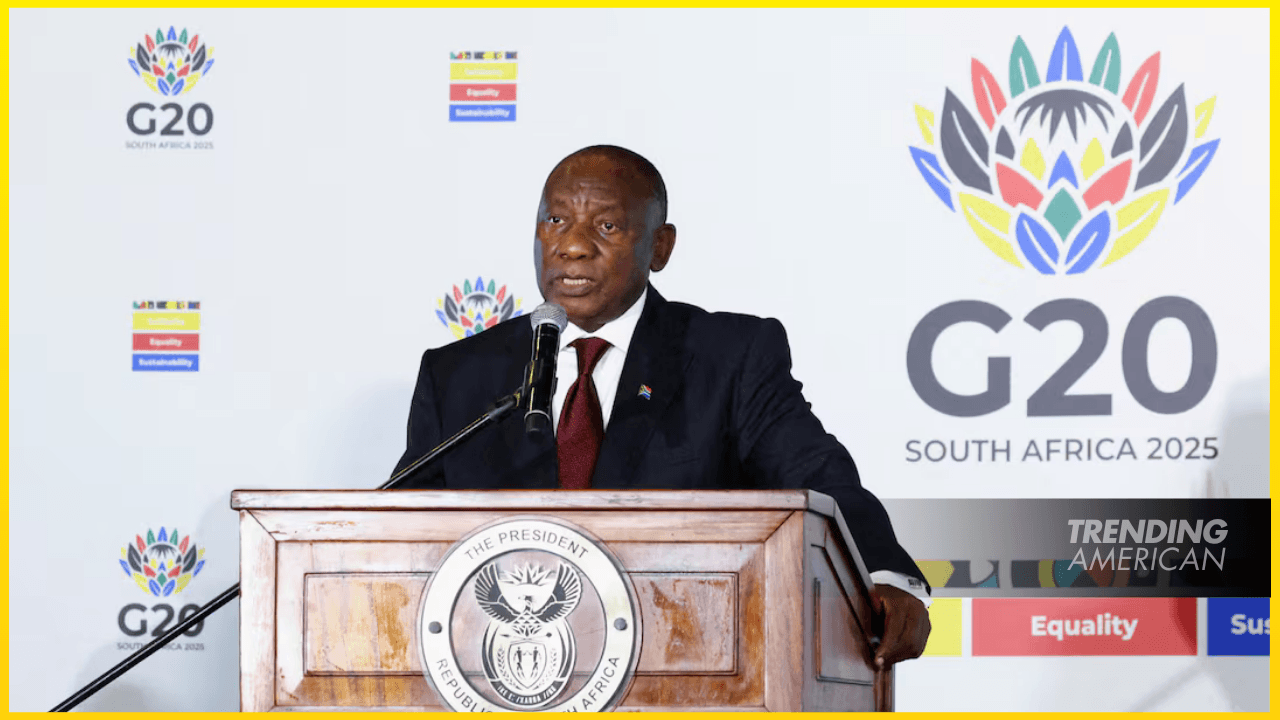
In Johannesburg, the G-20 summit takes on a contentious tone, overshadowed by absent yet influential forces. On the forefront of this diplomatic drama sits the United States under Donald Trump, administering a bold yet isolating decision to boycott the summit. Trump’s administration warned South Africa against issuing a consensus statement without U.S. backing—an ultimatum that visibly mars international tones. US-South Africa relations grow increasingly strained over accusations of genocide against White Afrikaners and land expropriation. Trump, emphasizing his stance with hefty tariffs on South African exports, signals a robust rebuttal.
The G-20 summit, a first for the African continent, becomes a battleground for ideological tussles over solidarity and sustainability, largely supported by the Global South. South Africa, unwavering under President Cyril Ramaphosa’s guidance, aims to secure a joint declaration despite U.S. hesitations. This pursuit aligns with recent efforts from previous Global South presidencies.
However, U.S. absentia, seen as a tactic to balance power dynamics, looms heavily. South African spokesman Chrispin Phiri and others view this as a ploy that risks paralyzing progress. Despite this, solidarity continues among global leaders, including Brazil, India, and much of Europe. “Institutional paralysis and the breakdown of collective action” become the phrases du jour as minds gather for consensus-battling.
Notably, with China represented by Premier Li Qiang, collective action appears possible within the Johannesburg summit halls, aiming to circumvent the United States’ divisive stance.
Disclosure: We may earn a commission when you make a purchase through the ads.