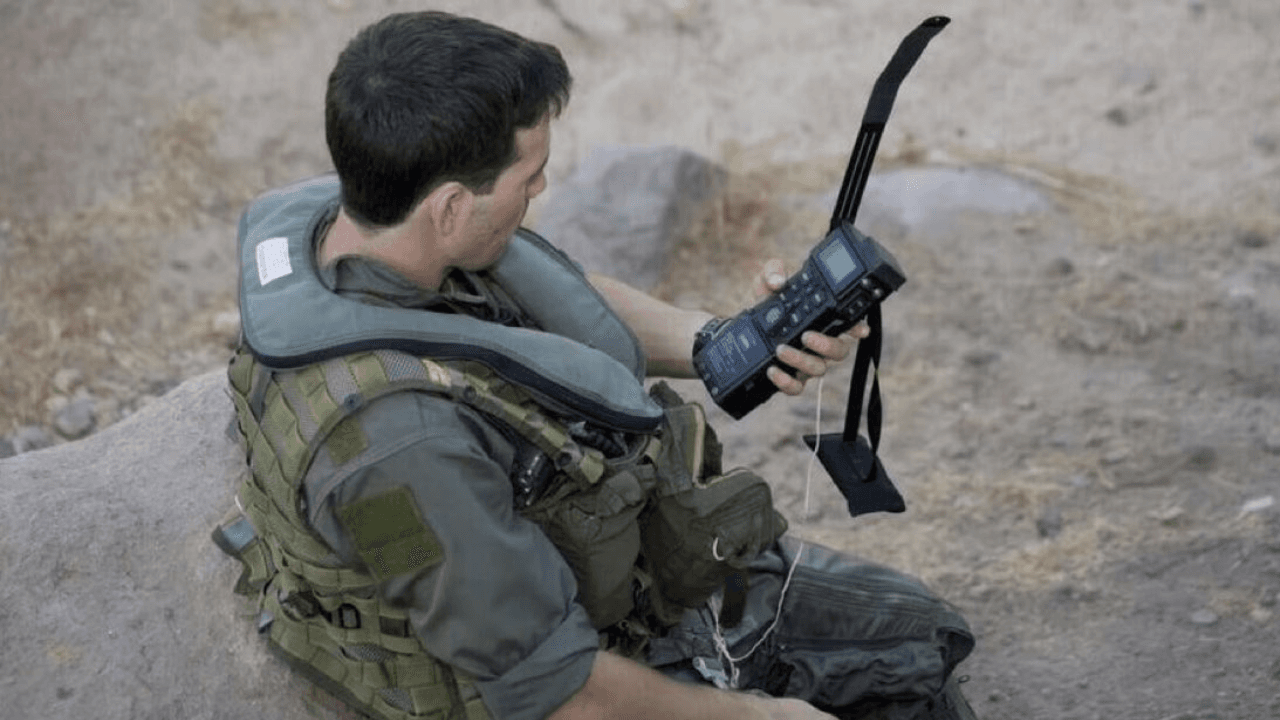
The US airman rescue Iran mission exposed a gripping survival story powered by technology, coordination, and endurance.
A stranded US Air Force crew member used a specialized Boeing survival device to signal rescuers after his aircraft went down in hostile terrain. The operation, which lasted more than 50 hours, involved helicopters, commandos, and intelligence teams working across multiple agencies.
President <:contentReference{index=0}> confirmed the role of the device during a White House briefing. He described it as a “very sophisticated beeper-type apparatus” that helped save the airman’s life in the mountains of Iran.
The Technology That Made Rescue Possible
The device used in the mission is known as the Boeing Combat Survivor Evader Locator, or CSEL. According to the U.S. military, it allows stranded personnel to send secure signals and GPS data to rescue teams in near real time.
As detailed in a U.S. Navy fact sheet, the device provides encrypted communication, precise location tracking, and multiple radio frequencies to improve survival chances.
Once activated, the signal is sent via satellite to a central rescue center. That data is then passed to recovery teams, who can establish voice contact and guide extraction efforts.
A Mission Triggered by a “Lucky Shot”
The incident began when an F-15E fighter jet was hit by what officials described as a shoulder-fired missile. The aircraft carried a two-person crew with call signs “Dude 44 Alpha” and “Dude 44 Bravo.”
The pilot was rescued first during a daylight mission. However, the weapons system operator remained stranded in rough mountain terrain, injured but still evading capture.
General <:contentReference{index=1}> said the rescue operation intensified after confirming active emergency beacons. The mission quickly turned into a race against time.
A 50-Hour Hunt Across Hostile Terrain
The Pentagon’s Joint Personnel Recovery Center coordinated the effort, working closely with intelligence agencies. The search focused on pinpointing the exact location of the injured airman.
According to U.S. Department of Defense updates, such missions rely on coordination between military units, satellites, and intelligence networks.
Despite his injuries, the stranded airman continued to move carefully to avoid detection. His survival depended on both his training and the signals transmitted through the CSEL device.
CIA Joins the Search
The <:contentReference{index=2}> played a critical role in locating the airman. Director <:contentReference{index=3}> described the search as extremely difficult.
He compared it to “hunting for a single grain of sand in the middle of a desert.” The agency used both human intelligence and advanced technology to track the airman’s position.
By Saturday morning, teams confirmed he was alive and hiding in a mountain crevice. He remained undetected by enemy forces.
The final rescue took place Saturday night. By midnight Eastern time on Easter Sunday, both crew members had returned safely to friendly territory.
The mission highlighted the importance of survival technology in modern warfare. More than 50,000 CSEL devices have been delivered to U.S. forces, making them a standard tool for high-risk operations.
For military officials, the outcome showed how training, coordination, and the right equipment can mean the difference between life and death.
In this case, one small device helped turn a dangerous situation into a successful rescue, bringing two airmen home against the odds.